
Side Dishes
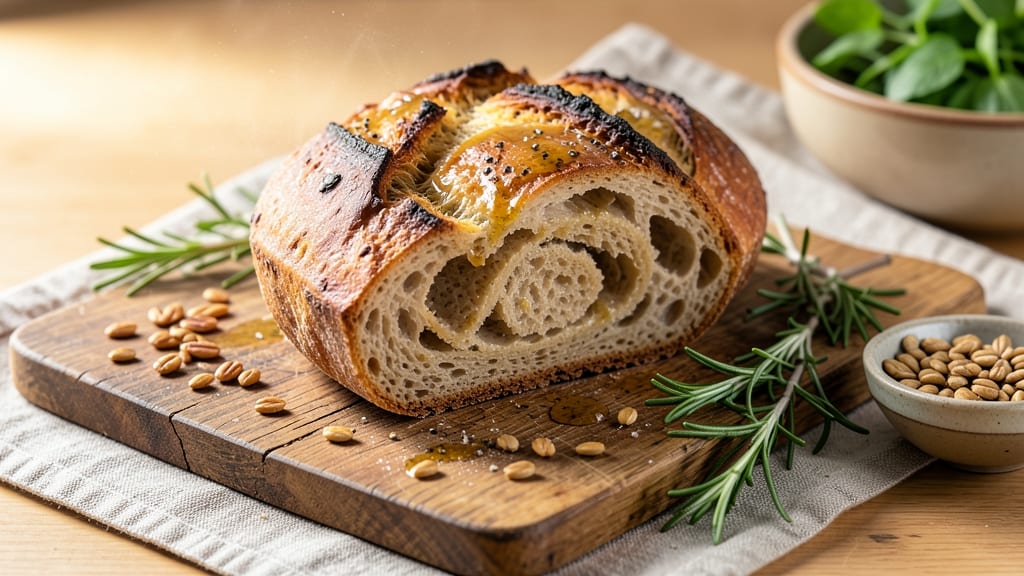
This all whole wheat bread recipe delivers the same satisfying rise and texture as classic white bread—just packed with fiber and nutrients. 🌾 The secret lies in balancing hydration and resting times to prevent dense results, while still achieving that perfect golden crust and airy crumb.
I've perfected this version after years of experimenting with whole grain loaves that often disappoint.
What makes this recipe work is the combination of vital wheat gluten for structure and proper kneading techniques to develop gluten without overworking the dough. Unlike many whole wheat recipes that turn out heavy, this one achieves a light, evenly textured loaf that's ideal for sandwiches or toast.
The dough requires a slightly longer fermentation than white bread, but the results are worth the extra time.
You'll end up with a beautifully risen loaf that's rich in flavor and nutrition—no compromises on taste or texture. The crust develops a satisfying crunch while the interior remains soft and airy, making it perfect for everyday baking.
This recipe also includes troubleshooting tips to help you avoid common pitfalls like excessive browning or dense crumb.
For added versatility, you can incorporate seeds, nuts, or even sweet additions like honey or cinnamon into the dough. The basic recipe serves as a foundation that can be adapted to create everything from classic sandwich bread to specialty loaves. Let's get started on creating your perfect whole wheat loaf.
Ingredients for all whole wheat bread
Perfectly balanced flours, gluten, and hydration create a loaf that rises like white bread but packs whole grain goodness.
| Ingredient | Amount | Notes |
|---|---|---|
| All-Purpose Flour 🌾 | 2 ½ cups | For structure and lightness |
| Whole Wheat Flour 🌾 | 2 ½ cups | Unbleached, high-protein preferred |
| Vital Wheat Gluten 🌾 | ½ cup | Essential for rise and texture |
| Active Dry Yeast 🍞 | 2 ¼ tsp | Ensure it's fresh (test in warm water) |
| Granulated Sugar 🍚 | 1 tbsp | Feeds the yeast for rise |
| Salt 🧂 | 1 ½ tsp | Diamond Crystal preferred |
| Extra-Virgin Olive Oil 🫒 | ½ cup | For moisture and flavor |
| Warm Water 💧 | 1 ½ cups | 110°F for optimal yeast activation |
| Honey 🍯 | 1 tbsp | Enhances browning and flavor |
| Milk Powder 🥛 | 1 tbsp | Improves texture and browning |
| Cornmeal 🌽 | ¼ cup | For dusting bread pan |
| Sesame Seeds 🌿 | 1 tbsp | Optional topping (toasted) |
The whole wheat flour matters—King Arthur or Bob's Red Mill are my go-tos for consistent texture. Vital wheat gluten is non-negotiable; it gives the structure whole wheat lacks naturally. Bob's Red Mill makes the best gluten powder, but any brand works if it's labeled 100% pure. For the yeast, Fresh yeast from the refrigerated section works better than active dry if you're in a hurry—just double the amount. The milk powder is a game-changer for browning and tenderness, but if you're avoiding dairy, powdered coconut milk works too. Toast your sesame seeds in a dry pan for 2 minutes before sprinkling—they'll add crunch and flavor.
No whole wheat flour? Substitute half with white whole wheat flour for a lighter texture. Short on vital wheat gluten? Add 1 tbsp extra flour and 1 tbsp xanthan gum as a makeshift replacement, though it won't rise as high. Honey can be swapped for maple syrup or agave, but honey's caramelization gives the best crust. The milk powder is tricky to find—check the baking aisle or international foods section for powdered whole milk if you can't locate it. For extra flavor, add 1 tsp cinnamon or 1 tbsp poppy seeds to the dough before shaping. The cornmeal is just for dusting—skip it if you're using a nonstick pan.
This dough needs patience—let it rise until doubled, about 1-2 hours. Shape the loaf gently to avoid deflating it. For a crispier crust, brush with extra olive oil before baking. Store wrapped at room temp for 3 days or freeze the whole loaf for up to 3 months. To revive stale bread, wrap in a damp towel and microwave for 20 seconds. The sesame seeds on top? Toast them fresh before baking—they'll add a satisfying crunch to every slice.
Why You'll Love This Recipe
- No-Knead Magic: I swear by this trick—just mix the whole wheat and all-purpose flours with vital wheat gluten (it’s the secret for that perfect crumb), add yeast and sugar, and let the dough rest while you watch one episode. No stand mixer, no overworking, just hands-off rising.
- Nutty Crunch: Honestly, the combo of whole wheat and all-purpose gives it a depth you won’t find in 100% whole wheat loaves. That vital wheat gluten boosts the structure, while the sugar just hints at sweetness—like a grown-up sourdough but with none of the fuss.
- Weeknight Workhorse: Between us, this is my go-to for sandwiches, toast, or even croutons. The dough keeps well in the fridge for days, and a single batch stretches to feed my family for lunch and dinner. (Yes, even on a Tuesday night.)
- Budget-Friendly Staple: I buy flour in bulk, and this recipe stretches my grocery budget without skimping on texture. The vital wheat gluten makes it feel premium, but the cost? A fraction of store-bought artisanal loaves. Plus, leftovers toast up like new—no sad, dry bread here.
Step-by-step instructions for all whole wheat bread
Here's how to transform whole grains into a golden, airy loaf that's packed with nutrition but still tastes amazing.
👨🍳 Step 1: Activate the Yeast for Maximum Rise
In a small bowl, combine the 1.5 cups warm water (should feel like bathwater, around 110°F), 1 tbsp granulated sugar, and 2.25 tsp active dry yeast. Let it sit for 5-10 minutes until it becomes foamy and bubbly. This tells you your yeast is alive and ready to work its magic.
I like to test my yeast first by sprinkling a pinch in warm water with sugar—if it bubbles within 5 minutes, it's fresh. If nothing happens, your yeast might be dead, and you'll need to start over. The foamy mixture should smell slightly sweet and yeasty, not sour or flat.
👨🍳 Step 2: Mix the Dough for Perfect Texture
In the bowl of a stand mixer fitted with the dough hook, combine the 2.5 cups all-purpose flour, 2.5 cups whole wheat flour, 0.5 cup vital wheat gluten, 1.5 tsp salt, and 1 tbsp milk powder. Mix on low speed for 1 minute to blend the dry ingredients completely.
Add the yeast mixture, 0.5 cup extra-virgin olive oil, and 1 tbsp honey to the dry ingredients. Mix on low speed for 2 minutes, then increase to medium speed for 5-7 minutes until the dough pulls away from the sides of the bowl and forms a shaggy mass. The dough should be slightly sticky but not wet—if it's too sticky, add 1 tablespoon more all-purpose flour.
🥘 Step 3: Knead Until Smooth and Elastic
Continue kneading on medium speed for another 5-7 minutes until the dough becomes smooth, elastic, and slightly springy. You'll know it's ready when you press your finger into it and the indentation slowly fills back in—this is called the "windowpane test."
If you're doing this by hand, knead on a lightly floured surface for about 10 minutes until the dough is silky smooth. The whole wheat flour makes this dough denser than white bread dough, so don't be surprised if it feels heavier. The vital wheat gluten is working hard to create that light, airy texture we're after.
⏰ Step 4: First Rise for Flavor Development
Lightly grease a large bowl with olive oil and place the dough inside. Cover with a clean kitchen towel or plastic wrap and let it rise in a warm place for 1-2 hours, or until it has roughly doubled in size. I like to place my oven light on (with the door closed) to create a warm, consistent environment.
Here's the thing—whole wheat dough rises more slowly than white bread dough, so be patient. The dough should be puffy and jiggly when you gently press the center with your finger. If it doesn't rise much, it might need more time or warmer conditions. Don't rush this step—proper rising is what gives bread its beautiful texture and flavor.
🔥 Step 5: Shape, Proof, and Bake to Golden Perfection
Punch down the risen dough to release any air bubbles, then turn it out onto a lightly floured surface. Shape it into a 9x5-inch loaf by gently folding the edges toward the center and rolling it tightly. Place the shaped loaf seam-side down in a greased 9x5-inch loaf pan that's been dusted with 0.25 cup cornmeal.
Cover the pan with a towel and let the dough proof for another 30-45 minutes until it's puffy and just about overflowing the pan. Preheat your oven to 375°F while the dough proofs. When the oven is ready, brush the top of the loaf with a little water or melted butter, then sprinkle with 1 tbsp sesame seeds if using. Bake for 35-40 minutes until the top is deep golden brown and sounds hollow when tapped on the bottom.
⏰ Step 6: Cool and Enjoy Your Nutrient-Packed Loaf
Remove the bread from the pan and place it on a wire rack to cool completely. I know it's tempting to slice into that warm, fragrant loaf immediately, but resisting the urge to cut into it while it's still hot is crucial—it allows the crumb to set properly and prevents a gummy texture.
Once cooled, slice your bread and serve it with your favorite toppings or enjoy it plain. The crust should be crisp and golden, while the interior should be soft, slightly dense, and packed with wholesome whole wheat goodness. Store any leftovers in an airtight container for up to 5 days or freeze for longer storage.
Pro Tips For Making All Whole Wheat Bread
- WEIGH YOUR FLOURS: Whole wheat flour is heavier than all-purpose, and skipping the scale means your bread will either be dense or dry. I learned this the hard way—my first batch turned out like a brick. Use a kitchen scale for both flours and measure by weight, not volume.
- HYDRATE THE GLUTEN: Vital wheat gluten needs a quick soak in warm water before mixing—it clumps like crazy otherwise. Toss it in a bowl with 2 tablespoons of water, let it sit for 5 minutes, then break it up. This makes the dough smoother and prevents lumps that ruin texture.
- KNEAD LESS, STRETCH MORE: Whole wheat dough is tougher and drier than white flour dough, so over-kneading turns it gummy. Instead, do 3-4 sets of stretch-and-folds during the first hour of bulk fermentation. It’s less work and gives you a lighter crumb.
- PROOF IN A WARM DRAFT-FREE SPOT: Yeast in whole wheat bread is slower to activate, so don’t rush the proofing. Place the dough in a lightly oiled bowl, cover it with a damp towel, and let it rise in a spot that’s 75-80°F (like near the oven with the light on). If your kitchen is cold, this cuts proofing time by nearly half.
Creative variations of these flavors
Sweet Variations
Transform this savory loaf into a breakfast favorite by adding 1 tbsp cinnamon and 2 tbsp honey to the dough. For extra richness, fold in ½ cup chopped walnuts or dark chocolate chunks before shaping.
Brush the baked loaf with melted butter and sprinkle with turbinado sugar for a crunchy topping—perfect for French toast or cinnamon rolls. 🍯
Seed & Nut Boosters
Give your bread a nutritious crunch by mixing in ¼ cup sunflower seeds, ¼ cup pumpkin seeds, or 2 tbsp flaxseeds with the wet ingredients. For a savory twist, add 1 tbsp dried rosemary or 1 tsp garlic powder before kneading.
Toast the seeds in a dry pan for 2 minutes before adding to enhance flavor. These additions pack extra fiber and protein without altering the dough's texture. 🌿
Herb & Cheese Twists
For a cheesy loaf, fold in ½ cup shredded cheddar or feta during the final kneading stage. Add 1 tbsp fresh thyme or 1 tsp dried oregano for a Mediterranean flair. For a garlic-infused version, mix 1 tbsp minced garlic into the olive oil before adding it to the dough.
These variations work beautifully with soups or as a side for hearty meals. 🧀
Multigrain Fusion
Swap out ½ cup whole wheat flour for ½ cup rolled oats or ½ cup spelt flour to create a multigrain loaf. For a rustic texture, add ¼ cup chopped dried apricots or raisins along with 1 tsp cinnamon.
This version has a nuttier flavor and chewier bite, perfect for toast or sandwiches. Store in an airtight container to keep it fresh longer. 🌾
Gluten-Free Adaptation
To make this recipe gluten-free, replace all-purpose flour and whole wheat flour with 2.5 cups gluten-free all-purpose blend (like Bob's Red Mill 1:1) and ½ cup vital wheat gluten.
Add 1 tbsp xanthan gum to improve elasticity. Note that the texture will be slightly denser, but still delicious. This version works well for those with gluten sensitivities. 💪
Savory Garlic & Herb
Create a flavor-packed savory loaf by adding 2 tbsp minced garlic, 1 tbsp dried Italian seasoning, and 1 tsp onion powder to the dough. For extra depth, fold in ¼ cup grated Parmesan before shaping.
Brush the baked loaf with garlic-infused olive oil and sprinkle with coarse sea salt for a restaurant-quality result. This version pairs perfectly with pasta dishes or soups. 🧄
Nutrition facts
Frequently asked questions
Why does my whole wheat bread turn out dense instead of light?
Whole wheat flour absorbs more water and lacks gluten compared to white flour, which is why you need vital wheat gluten and proper kneading. The dough should be kneaded until smooth and elastic (about 10-12 minutes total) and allowed to rise until doubled—rushing these steps is the #1 cause of dense bread. Also, ensure your yeast is fresh and your water is 110°F for optimal activation.
Can I make this bread without a stand mixer?
Just knead the dough by hand on a lightly floured surface for about 10-12 minutes until it becomes smooth and springy. Use the "windowpane test"—stretch a small piece of dough thin enough to see light through it. The whole wheat dough will feel heavier than white bread dough, but the gluten development is what creates that light texture.
How do I store whole wheat bread to keep it fresh longer?
Store your loaf in an airtight container at room temperature for up to 5 days, or freeze the whole loaf (wrapped tightly) for up to 3 months. To revive stale bread, wrap it in a damp towel and microwave for 20 seconds. For extra freshness, place a slice of apple or a damp paper towel in the container—it helps maintain moisture.
What can I do if my bread doesn't rise enough?
If your dough isn't doubling in size, check these common issues: your yeast may be dead (test it first in warm water with sugar), the water might be too hot (110°F is ideal), or the room may be too cold. Try placing the dough in a warm oven with the light on (door closed) for a more consistent temperature. Also, ensure you've given it enough time—whole wheat dough rises more slowly than white bread dough.
Can I substitute whole wheat flour with white whole wheat flour?
Yes! White whole wheat flour is a great substitute—it has a lighter color and slightly sweeter flavor while still providing all the nutrition of regular whole wheat. Use a 1:1 ratio, but you may need to adjust hydration slightly (add 1-2 tablespoons more water if the dough feels too dry). The texture will be slightly lighter, but the bread will still be nutritious and delicious.