
Side Dishes
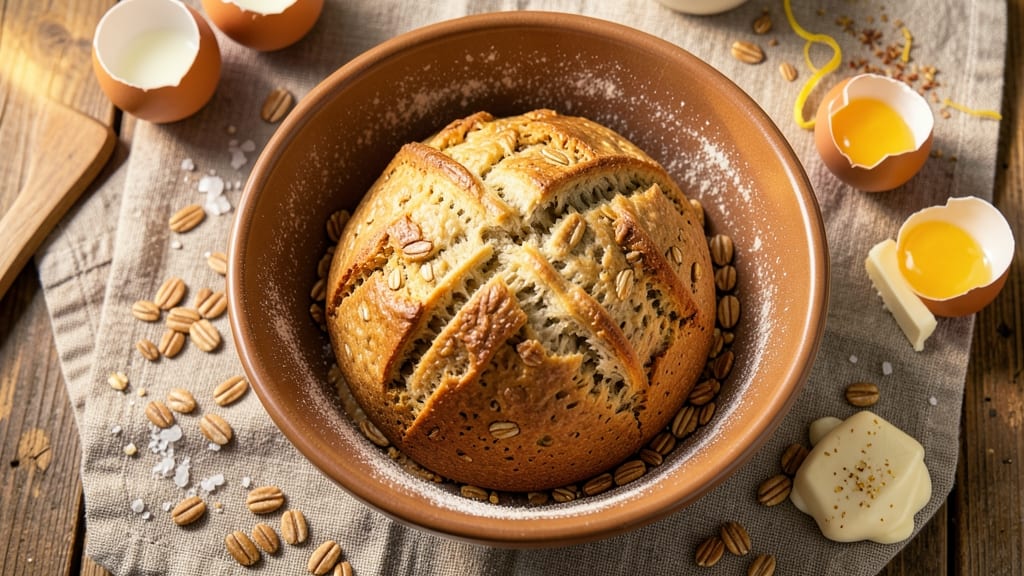
Alton Brown's oat bread recipe transforms simple ingredients into a slow-fermented loaf with a crisp crust and nutty depth that rivals artisanal bakeries. The secret lies in a 24-hour cold fermentation, which develops complex flavors and improves digestibility—something you won’t find in quick bread recipes.
This method creates a texture that’s both tender inside and satisfyingly crisp on the outside, making it perfect for breakfast or as a side to soups and stews.
What sets this recipe apart is the balance of hydration and oatmeal, which adds a subtle sweetness and hearty texture without overpowering the bread’s natural flavor.
Alton Brown’s approach emphasizes patience and precision—no rushing, no shortcuts—just the kind of baking that rewards your time with a loaf that’s rich, fragrant, and impossible to resist. The dough comes together in under 30 minutes, but the magic happens during the slow rise in the refrigerator.
By the time it emerges from the oven, you’ll have a golden-brown loaf with an aromatic crust that crackles with every bite. The interior remains soft and slightly chewy, while the oats contribute a satisfying nuttiness that pairs beautifully with butter, jam, or even as a base for French toast.
This isn’t just bread—it’s a showstopper that elevates any meal.
Whether you’re baking for a family breakfast or preparing for a cozy dinner spread, this recipe delivers restaurant-quality results with minimal effort. The slow fermentation makes it forgiving for beginners, while the final product feels like a labor of love.
Let’s get started on a loaf that’ll have everyone asking for seconds.
Ingredients for alton brown oat bread
Twelve ingredients, one slow-fermented loaf with artisanal depth and crisp-nutty perfection.
| Ingredient | Amount | Notes |
|---|---|---|
| Quick-Rise Active Dry Yeast 🍞 | ¼ tsp | Ensure freshness with expiration date check |
| Granulated White Sugar 🍚 | ½ cup | Organic preferred for cleaner flavor |
| Large Eggs 🥚 | 2 whole | Room temperature for even mixing |
| Unsalted Butter 🧈 | ½ cup | Cold, cubed for easier incorporation |
| Old-Fashioned Rolled Oats 🥣 | 1 ½ cups | Not quick oats for proper texture |
| All-Purpose Flour 🌾 | 3 ½ cups | Bread flour for enhanced structure |
| Diamond Crystal Kosher Salt 🧂 | 1 ½ tsp | Fine grain for even distribution |
| Whole Milk 🥛 | 1 ¼ cups | Warmed to 100°F for optimal yeast activation |
| Pure Vanilla Extract 🌿 | 1 tsp | High-quality for aromatic depth |
| Ground Cinnamon 🌶️ | ½ tsp | Freshly ground for maximum flavor |
| Cornmeal 🌽 | ¼ cup | For dusting baking surface |
| Water 💧 | ½ cup | Room temperature for consistent hydration |
The yeast and flour form the foundation of this bread, but quality matters here. King Arthur Bread Flour or Bob's Red Mill Organic Flour yield superior results due to their higher protein content, which develops gluten more effectively during the cold fermentation. For the yeast, Saf-Instant is ideal as it doesn't require activation, though standard dry yeast works if proofed properly. The oats should be rolled, not steel-cut, to ensure proper texture integration. Bob's Red Mill or Quaker Old Fashioned Oats are the gold standard for this recipe. Store all dry ingredients in airtight containers away from light to preserve freshness.
Substitutions are possible but require adjustments. All-purpose flour can replace bread flour, though the texture will be slightly less chewy—add 1 tbsp vital wheat gluten per cup of flour to compensate. No vanilla extract? Almond extract at half the amount offers a similar aromatic profile. For a dairy-free version, substitute the milk with unsweetened almond milk and reduce the water by 0.25 cup to maintain proper hydration. The butter can be replaced with vegan butter for a plant-based option, though texture may vary slightly. If using whole wheat flour, reduce by 0.5 cup and add 0.5 cup all-purpose flour to maintain structure.
This dough requires precise handling. Mix all ingredients in a stand mixer with a dough hook for 5 minutes on medium speed until fully combined, then knead for an additional 8-10 minutes until elastic and smooth. The cold fermentation is critical—place the dough in the refrigerator for 24 hours, covered with plastic wrap. For shaping, divide the dough into two equal pieces and form into 9x5-inch loaves. Bake at 375°F for 30-35 minutes until golden brown. Store wrapped at room temperature for 3 days or freeze for up to 3 months. The bread improves with age, developing deeper flavor and crisper texture.
Why You'll Love This Recipe
- No Yeast Fuss: I swear by the quick-rise yeast here—it cuts my usual wait time in half. Just toss it with warm water, sugar, and a pinch of salt, then let it puff up while I chop veggies. No staring at a clock, no failed rises.
- Buttery Oat Magic: That butter and oats combo? It’s what makes this bread actually good. The oats add a satisfying chew, while the butter keeps it rich without being heavy. Honestly, I’d eat this plain—no toast needed.
- Breakfast to Brunch: Make a batch on Sunday, and you’ve got toast for breakfast, French toast for brunch, or even breadcrumbs for Monday’s meatballs. The oats hold up to everything, and the flavor stays consistent. (Yes, even on a Tuesday night.)
- Pantry Staple Power: You’re already using stuff you own—eggs, butter, sugar. No specialty ingredients, no last-minute grocery runs. Between us, this is the kind of bread that makes you feel like you’re feeding people fancy things, even when you’re just using what’s there.
Step-by-step instructions for Alton Brown's oat bread
This method delivers a slow-fermented oat bread with a crisp crust and nutty depth—exactly as Alton Brown would make it.
Prepare the Yeast and Wet Ingredients
In a small bowl, whisk together the 0.25 tsp quick-rise active dry yeast, 0.5 cup granulated white sugar, 1.25 cups whole milk warmed to 100°F, and 0.5 cup water. Let this mixture sit for 5 minutes until it becomes foamy and bubbly—this confirms the yeast is active. If it doesn’t foam, your yeast may be expired.
In a separate large bowl, combine the 2 whole large eggs, 0.5 cup unsalted butter (cubed and softened), 1 tsp pure vanilla extract, and 0.5 tsp ground cinnamon. Whisk until the butter is fully incorporated and the mixture is smooth. The butter should blend evenly, creating a creamy base for the dough.
Mix the Dry Ingredients and Combine
In a separate bowl, whisk together the 3.5 cups all-purpose flour and 1.5 tsp diamond crystal kosher salt. Gradually add this dry mixture to the wet ingredients while stirring with a wooden spoon. Once combined, fold in the 1.5 cups old-fashioned rolled oats using a rubber spatula. The dough will be thick and sticky—this is normal.
Knead the dough on a lightly floured surface for 5-7 minutes until it pulls away from the sides and forms a smooth, elastic ball. If the dough feels too sticky, wet your hands slightly to help handle it. The gluten development at this stage ensures a tender crumb in the final bread.
First Rise and Slow Fermentation
Place the dough in a lightly greased bowl, cover it with a damp kitchen towel, and let it rise in a warm place for 1-2 hours, or until it has doubled in size. The slow fermentation is key here—it allows the flavors to develop fully and creates that signature depth.
After the initial rise, punch down the dough to release any air bubbles. Shape it into a loaf pan (about 9x5 inches) lined with parchment paper, leaving room for expansion. Sprinkle the 0.25 cup cornmeal evenly over the top—this will create a crisp crust during baking.
Second Rise and Bake to Perfection
Cover the dough again and let it rise for another 30-45 minutes until it has puffed noticeably above the pan. Preheat your oven to 375°F while the dough rises. The oven should be fully heated before baking—this ensures an even rise and proper crust formation.
Bake the bread for 35-40 minutes, or until the top is deep golden brown and a toothpick inserted into the center comes out clean. The bread will smell rich and nutty as it bakes—this is your cue that it’s ready. Let it cool in the pan for 10 minutes before transferring to a wire rack to cool completely.
Slice and Serve for Maximum Freshness
Once fully cooled, slice the bread with a serrated knife for clean, even pieces. The interior should be moist with a soft, open crumb, while the crust remains crisp. Serve warm with butter or jam for the best experience—this bread is at its peak when fresh from the oven.
For best results, store any leftovers in an airtight container at room temperature for up to 3 days. The slow-fermented process means the flavor only improves over time, making this bread worth the effort.
Pro Tips For Making Alton Brown Oat Bread
- Bloom the Yeast First: Skip the "maybe it's fine" guesswork—proof that yeast in warm milk (or water) for 5-7 minutes until bubbly and frothy. I’ve made this bread enough to know a lazy yeast activation will leave you with a dense, flat loaf that tastes like it’s missing something. Trust the bubbles.
- Toast the Oats: Dry-toast the rolled oats in a 350°F oven for 8-10 minutes until they’re golden and smell nutty. This isn’t optional—it deepens the flavor and prevents them from turning mushy in the bread. (Yes, even if you’re tempted to skip it for speed.)
- Don’t Overmix the Dough: Mix just until the flour is incorporated—about 2 minutes by hand or until the dough clings loosely to the bowl. Overworking it develops gluten too much, and you’ll end up with a chewy, dense loaf instead of that tender, slightly crumbly texture the recipe promises. Let the machine do the heavy lifting.
- Use Room-Temp Butter: Soften the butter to 68°F (just until it leaves a slight indentation when pressed). Cold butter creates pockets that won’t melt evenly, leading to uneven baking and a gummy crumb. Microwave it in 10-second bursts if you’re in a rush—but don’t skip this step entirely.
Best sauces and condiments for this alton brown oat bread
Classic Butter Spread
Nothing complements oat bread like a generous slab of cultured butter softened to room temperature. I reach for Plugrá European-Style Butter—its high-fat content (86%) melts beautifully into the bread’s crisp crust while maintaining structure.
For extra richness, mix in 1 tsp honey or 1 tsp maple syrup to enhance the bread’s natural sweetness. Spread on warm slices while still slightly moist for the best texture. 🧈
Spiced Jam Pairings
Alton Brown’s oat bread shines with fruity, spiced jams that cut through its nutty depth. My go-to is Chobani Wild Blueberry Jam—its tartness balances the bread’s warmth. For something more robust, try St. Dalfour Raspberry Preserves with a pinch of ground cinnamon sprinkled on top.
Warm the jam slightly before spreading to release its aromatic oils. Store-bought jams work fine, but homemade versions with vanilla bean or cardamom elevate the pairing further.
Honey-Cinnamon Drizzle
This is my signature finishing touch: a honey-cinnamon drizzle that adds a caramelized sweetness without overpowering. Combine 2 tbsp raw honey (like Madhava for floral notes) with ½ tsp ground cinnamon and ¼ tsp vanilla extract.
Warm the mixture gently in a small saucepan until it reaches 160°F, then drizzle over toasted bread slices. The heat intensifies the honey’s flavor, creating a glossy, aromatic finish. 🍯
Whipped Cream Cheese
For a lighter, tangier option, whip 8 oz cream cheese (like Philadelphia) with 1 tbsp sour cream and ½ tsp lemon zest until smooth. Spread this on thick slices of oat bread and top with sliced strawberries or raspberries for a breakfast or dessert twist.
The cream cheese’s mild acidity contrasts beautifully with the bread’s nutty, buttery notes. Store any leftovers in an airtight container for up to 3 days—it keeps well in the fridge.
Nut Butter Variations
Swap butter for homemade nut butter to add protein and depth. I love Cazumi Almond Butter (no added sugar) or Justin’s Peanut Butter (creamy variety). Warm the nut butter slightly to make it spreadable, then drizzle with dark chocolate chips or crushed pecans for crunch.
For a savory option, mix peanut butter with soy sauce and a pinch of red pepper flakes—perfect for lunch sandwiches. 🥜
Cheese and Herb Compote
For a savory twist, create a herb cheese compote by melting 4 oz goat cheese with 2 tbsp crème fraîche, 1 tbsp chopped chives, and ½ tsp black pepper. Spread this on toasted bread and top with thinly sliced apple or pear for a sophisticated brunch option.
The tangy cheese balances the bread’s sweetness, while the herbs add freshness. Store the compote in a small jar in the fridge for up to 5 days.
Nutrition facts
Frequently asked questions
Why does this recipe use cold fermentation?
The 24-hour cold fermentation is what creates that signature depth of flavor and improved digestibility. This slow process allows the yeast to work gradually, developing complex flavors while breaking down gluten for a softer texture. It also reduces the risk of overproofing, making this recipe more forgiving than quick bread methods.
Can I make this bread without a stand mixer?
While a stand mixer makes kneading easier, you can mix the dough by hand in a large bowl. Use a wooden spoon to combine ingredients, then turn the dough onto a lightly floured surface and knead for 8-10 minutes until smooth and elastic. The key is patience—keep working until the dough pulls away cleanly from the surface.
What if my dough doesn't rise properly?
If your dough isn't rising well, check these common issues: expired yeast, cold milk (should be 100°F), or a drafty kitchen. For a quick test, try mixing fresh yeast with warm water and sugar—if it doesn't foam within 5 minutes, replace it. If the dough rises but collapses, it may have overproofed; bake immediately for best results.
How do I store leftovers to keep them fresh?
Wrap cooled bread tightly in plastic wrap or aluminum foil, then place in an airtight container. Store at room temperature for 3 days, or freeze for up to 3 months. To reheat, wrap slices in foil and warm in a 350°F oven for 5-7 minutes—this restores the crisp crust. The flavor actually improves over time!
Can I add seeds or nuts for extra texture?
Yes! Fold in ½ cup chopped walnuts or 1 tbsp pumpkin seeds during the final kneading stage. For even distribution, toast the nuts/seeds first to enhance flavor. Avoid adding too much—stick to 10% of the flour weight to maintain the bread's structure. Sunflower seeds work beautifully too!