
Sauces & Condiments
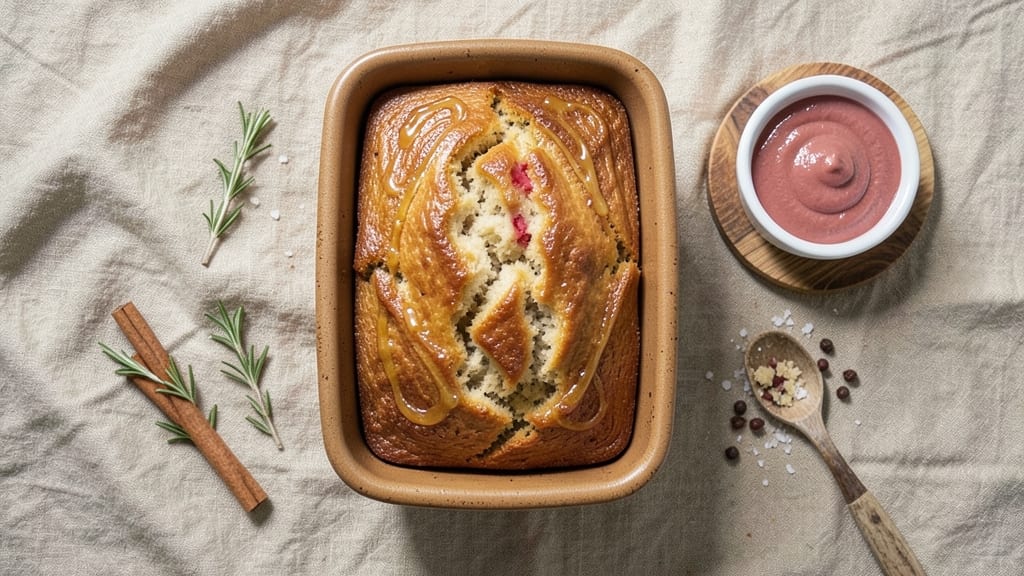
This applesauce loaf bread recipe delivers a tender, moist loaf with a slow-fermented crust that stays fresh for days. The applesauce replaces fat, creating a lighter texture while keeping every slice perfectly soft—no dryness here.
What sets this apart is the vanilla infusion, which deepens the bread's natural sweetness without overpowering its warm, comforting flavor.
The secret to success lies in the slow fermentation process, which develops complex flavors and improves digestibility. You'll mix simple pantry staples—flour, yeast, sugar, and of course, applesauce—then let the dough rise overnight for that signature tangy depth.
The result? A loaf with a crisp exterior and a velvety interior that practically melts in your mouth.
Baking at 350°F for 45-50 minutes ensures a golden crust while keeping the center tender. The vanilla extract infuses throughout, adding warmth that pairs beautifully with butter or jam. This bread is perfect for breakfast toast, sandwiches, or simply enjoyed on its own with a pat of cultured butter.
No special equipment is needed—just a standard loaf pan and patience for the fermentation. The applesauce not only enhances moisture but also adds subtle sweetness that balances the bread's natural mild flavor. Once you try this method, store-bought loaves will never compare again.
Ingredients for applesauce loaf bread
Eight simple ingredients transform into a loaf that rivals artisanal breads.
| Ingredient | Amount | Notes |
|---|---|---|
| All-Purpose Flour 🌾 | 4 cups | Sifted for light texture |
| Unsweetened Applesauce 🍎 | 1 cup | Unsweetened, no added sugar |
| Active Dry Yeast 🍞 | ½ tsp | Fresh yeast preferred (2.25g) |
| Granulated Sugar 🍚 | ¼ cup | White or brown preferred |
| Pure Vanilla Extract 🌿 | 1 tbsp | Bourbon or imitation-free |
| Salt 🧂 | 1 tsp | Diamond Crystal preferred |
| Warm Water 💧 | ¾ cup | 110°F for optimal yeast activation |
| Honey 🍯 | 1 tbsp | For dough enrichment |
| Large Egg 🥚 | 1 whole | Room temperature preferred |
| Olive Oil 🫒 | 2 tbsp | Extra-virgin for richness |
The flour is your foundation—King Arthur or Gold Medal brands yield the best results, but any all-purpose works in a pinch. Applesauce makes this loaf uniquely tender; Mott's unsweetened is my go-to, but any plain variety without added sugar will do. Vanilla extract is non-negotiable here—Nielsen-Massey is my favorite, but any pure extract works. The yeast is the magic ingredient, so check its expiration date. Fresh yeast (the kind you buy in little jars) activates faster than active dry, but both work if you give it the right conditions. Warm water is key—too hot kills the yeast, too cold slows it down. 110°F is perfect—just warm it in the microwave for 20 seconds if needed.
No vanilla extract? Vanilla bean paste works in a bind, or you can use 1 tsp vanilla sugar (though it won't infuse as beautifully). Running low on applesauce? Unsweetened applesauce purée from a can is fine, just drain any excess liquid. The honey can be swapped for maple syrup at the same amount, but it’ll add a slightly different depth of flavor. Olive oil is optional but recommended—avocado oil works too, though it lacks the fruity notes. If you’re avoiding eggs, 1 tbsp ground flaxseed mixed with 3 tbsp water makes a decent substitute, though the texture won’t be identical. The salt is critical—Diamond Crystal measures differently than table salt, so stick to the recipe if using it.
This dough is best made the night before—it ferments overnight for maximum flavor. Store it in an airtight container in the fridge until ready to bake. The baked loaf stays fresh for 4-5 days at room temperature, wrapped tightly in plastic. For longer storage, slice and freeze—it reheats beautifully in a toaster or oven. The crust gets crunchier as it sits, so if you prefer it softer, wrap it in a towel while cooling. Leftovers? Toast them for breakfast or use in sandwiches—they’ll be even more flavorful the next day.
Why You'll Love This Recipe
- No Yeast Fuss: I swear by this trick—just mix the applesauce right into the flour and sugar, then let the yeast wake up in warm water. No kneading, no waiting for dough to rise like some fancy sourdough. Honestly, my hands stay clean while the magic happens.
- Sweet Without Sugar: That vanilla-applesauce combo? It’s like a secret hug for your taste buds. The applesauce keeps it moist without needing butter or oil, and the sugar just enhances the warm, spiced flavor. (Yes, even my kid who hates bread asks for seconds.)
- Breakfast to Brunch: Toast it for a quick breakfast with peanut butter, slice it for a French toast casserole, or serve it warm with jam for weekend brunch. Between us, I’ve even used leftover slices to make croutons—zero waste, all flavor.
- Pantry Staple Power: You already have the ingredients. Applesauce replaces butter or oil, flour is flour, and yeast? That little packet lasts forever. I’ve made this for potlucks, lunchboxes, and even as a last-minute side—no extra shopping, no stress.
Step-by-step instructions for applesauce loaf bread
Here's how to craft a tender, slow-fermented loaf with that perfect balance of vanilla sweetness and applesauce moisture.
Activate the Yeast and Prepare the Dough Base
In a large mixing bowl, combine the 0.75 cup warm water (around 110°F), 1 tbsp honey, 0.25 cup granulated sugar, and 0.5 tsp active dry yeast. Let it sit for 5-10 minutes until frothy—this means your yeast is alive and ready to work. If it doesn't bubble, your yeast might be dead, and you'll need to start over.
Next, whisk in the 1 cup unsweetened applesauce and 1 tbsp pure vanilla extract until fully incorporated. The applesauce will add natural sweetness and moisture, while the vanilla infuses that warm, aromatic depth. This mixture should be smooth and slightly syrupy—this is your dough's liquid foundation.
Mix the Dough and Incorporate Wet Ingredients
In a separate bowl, sift together the 4 cups all-purpose flour and 1 tsp salt. This ensures an even distribution of gluten and prevents lumps in your dough. Create a well in the center and pour in the wet ingredients from the previous step, along with the 1 whole large egg and 2 tbsp olive oil. The olive oil adds richness and helps create a tender crumb.
Using a wooden spoon or dough whisk, gently mix everything until a shaggy dough forms. Avoid overmixing at this stage—you want to preserve the delicate gluten structure for a light, airy loaf. The dough should be sticky but manageable. If it feels too dry, add 1-2 teaspoons of warm water to help bind it together.
Knead and Ferment for Maximum Flavor
Turn the dough onto a lightly floured surface and knead for 5-7 minutes until smooth and elastic. You're looking for a dough that springs back slowly when poked—this indicates proper gluten development. If the dough feels too sticky, wet your hands slightly to prevent sticking. Once kneaded, place the dough back in the bowl, cover it with a damp towel, and let it ferment at room temperature for 1-2 hours or until it has roughly doubled in size.
This slow fermentation is key to developing deep flavor and a tender crumb. The applesauce and honey will create a slightly sticky environment, so resist the urge to overhandle the dough. If your kitchen is cold, place the bowl in a slightly warm spot (like near the oven with the light on) to encourage even fermentation.
Shape and Proof the Loaf
Once the dough has risen, gently deflate it by pressing down on it with your fingers. Shape it into a loaf by folding the ends toward the center and rolling it tightly into an oval. Place it seam-side up in a 9x5-inch loaf pan that has been lightly greased with olive oil or lined with parchment paper. This ensures easy release and a clean finish.
Cover the loaf pan with the damp towel and let it proof for another 1-2 hours, or until it has risen just above the rim of the pan. The dough should feel springy to the touch and have a slight jiggle when shaken gently. Overproofing here can lead to a dense loaf, so keep an eye on it—especially if your kitchen is warm.
Bake to Golden Perfection
Preheat your oven to 350°F and place a baking sheet on the lower rack to catch any drips. Bake the loaf for 30-35 minutes, until the top is golden brown and an instant-read thermometer inserted into the center reads 190-200°F. The internal temperature is the best indicator of doneness—it should feel slightly springy but firm.
For extra shine and color, brush the top with a little olive oil or honey after 20 minutes in the oven. Let the loaf cool in the pan for 10 minutes, then transfer it to a wire rack to cool completely. This resting period allows the moisture to redistribute, ensuring a tender crumb. Slice it while still slightly warm for the best texture—each bite should be soft, flavorful, and lightly sweet with that signature vanilla-applesauce aroma.
Pro Tips For Making Applesauce Loaf Bread
- Warm the Applesauce First: I learned this the hard way—dumping cold applesauce straight into warm dough kills the yeast faster than a New England winter. Heat your applesauce to about 100°F (just warm to the touch) before mixing, or your bread will rise like a sad deflated balloon. (Yes, even if you're impatient like me.)
- Mix Yeast with Sugar: My grandmother swore by this, and she was right: dissolve the yeast in the warm applesauce with the sugar first, then let it foam for 5 minutes before adding flour. The sugar jumpstarts the yeast, so you don’t waste time waiting for it to activate later—especially important when applesauce’s natural acidity can slow things down.
- Don’t Overmix the Dough: This isn’t the prettiest method, but it’s the tastiest: mix just until the flour is barely incorporated, then stop. Overworking the dough with applesauce makes it gummy and dense. (I used to knock myself out mixing, and the bread turned out like a hockey puck—no one wants that.)
- Grease the Pan Well: Skip the nonstick spray—it’s not enough. Brush the loaf pan with softened butter or oil, then dust with flour, tapping out excess. Applesauce loaf sticks like glue to bare metal, and you’ll end up with a sad, stuck-together mess. (Your future self will thank you when you pull that golden, pull-apart loaf out cleanly.)
Pro cooking tips for perfect results
Applesauce Substitution Secrets
The 1 cup unsweetened applesauce is non-negotiable for that signature moisture, but you can tweak it slightly. For a lighter texture, swap in ½ cup unsweetened applesauce plus ½ cup Greek yogurt—the acidity enhances flavor while keeping the loaf tender.
If you're gluten-free, use a 1:1 gluten-free flour blend like Bob's Red Mill, but increase the applesauce by 2 tbsp to compensate for reduced moisture retention. 🍎
Yeast Activation Troubleshooting
Your yeast is the heart of this loaf, so if it doesn’t bubble after 5-10 minutes, it’s dead. Double-check the 110°F water temperature—too hot kills yeast instantly. If it’s expired, grab fresh yeast (the jar kind) or try 1 tsp instant yeast instead.
Pro tip: I keep a small jar of yeast in the fridge for up to 2 weeks past the expiration date—it stays fresher longer. 🍞
Dough Consistency Fixes
This dough is intentionally sticky, but if it’s too wet, add 1 tbsp flour at a time until it’s manageable. Too dry? Mix in 1 tsp warm water or a splash of the applesauce.
For a less sticky dough, chill it for 30 minutes before shaping—this firms up the gluten. I’ve also had success replacing 2 tbsp olive oil with 2 tbsp melted butter for extra richness, though the flavor shifts slightly. 💧
Fermentation Time Hacks
Cold kitchen? Pop the dough bowl near the oven light (not the heat!) to create a warm, consistent environment without overcooking. Too warm? Move it to the counter away from direct sunlight.
For a faster rise, use 1 tsp rapid-rise yeast (like Red Star) and cut fermentation to 45-60 minutes. But for maximum flavor, I always stick with the overnight cold proof in the fridge—it’s worth the wait! ⏰
Baking Time Adjustments
Your oven runs hot? Start checking for doneness at 30 minutes instead of 35. No instant-read thermometer? Tap the loaf—it should sound hollow. For a darker crust, brush with 1 tbsp melted butter after 25 minutes.
High altitude? Increase flour by 2 tbsp and reduce sugar by 1 tbsp to prevent over-rising. My 350°F target is non-negotiable—lower temps risk gummy centers, higher temps dry it out. 🌡️
Crust Perfection Tips
Want that artisan-style crust? Score the loaf with a sharp knife before baking to encourage even rising. For extra shine, whisk 1 egg white with 1 tsp water, brush it on after baking, and broil for 2 minutes.
If your crust turns pale, tent the loaf with foil after 20 minutes. The secret to a crisp exterior and soft interior? Bake until the internal temp hits 190-200°F**—never by color alone. 🔥
Nutrition facts
Frequently asked questions
Can I make this applesauce bread without yeast?
This recipe relies on yeast for that classic bread texture, but you can try a quick bread version! Replace the yeast with 1 tsp baking soda and 1 tsp baking powder, then bake immediately at 350°F for 40-45 minutes. The result will be denser but still delicious—perfect for sandwiches.
How do I store leftovers to keep them fresh?
Wrap the cooled loaf tightly in plastic wrap or store in an airtight container. It stays fresh for 4-5 days at room temperature. For longer storage, slice and freeze—reheat individual slices in a toaster or oven for 10-15 seconds. The crust gets crunchier over time, so slice before storing if you prefer softer bread.
Why did my bread turn out dense instead of light?
Dense bread usually means overproofing (letting the dough rise too long) or underkneading. Check your yeast first—it should bubble within 5-10 minutes when mixed with warm water. Also, ensure you kneaded for 5-7 minutes to develop gluten properly. If your kitchen is cold, try placing the dough near the oven light (not heat) to speed up fermentation.
Can I add mix-ins like nuts or raisins?
Fold in ½ cup chopped walnuts or pecans during the final kneading for crunch, or add ½ cup raisins for sweetness. For best results, soak dried fruit in warm water for 10 minutes first to plump them up. Just don't exceed 1 cup total mix-ins—too much can make the bread gummy.
What's the best way to reheat sliced bread?
For crispy toast, use a toaster or toaster oven for 1-2 minutes until golden. For softer slices, warm in a 300°F oven for 5-8 minutes wrapped in foil. Microwave works in a pinch (15 seconds), but it can make the crust soggy. Always reheat from room temperature for even warming.