
Main Courses
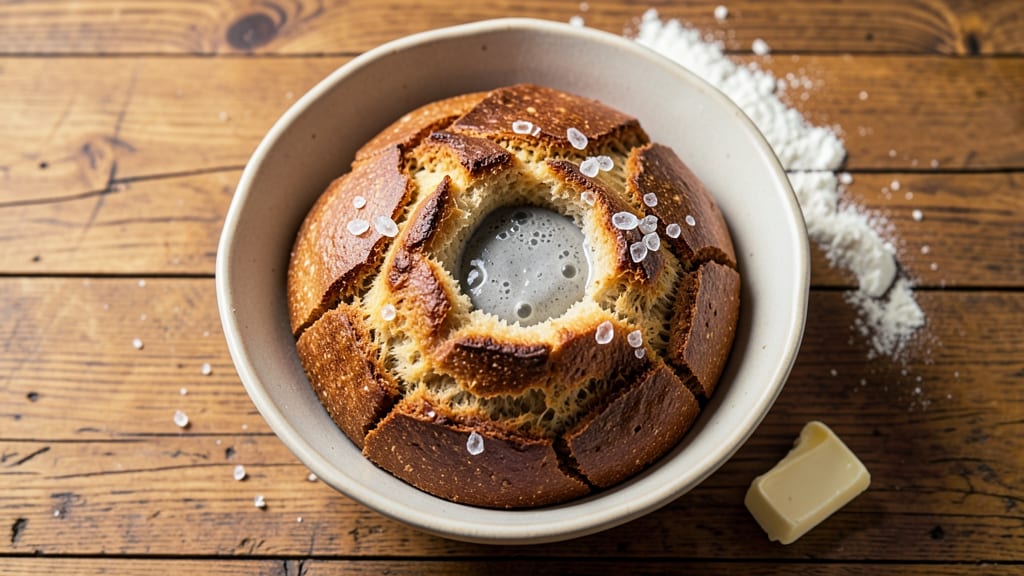
Mastering this artisan sourdough bread recipe with King Arthur flour transforms home baking into a craft—crusty, airy loaves in just 12 hours without the fuss of traditional kneading. The secret lies in the flour's protein structure, which develops gluten effortlessly while maintaining that signature open crumb. I've refined this method over years to balance King Arthur's reliability with the depth of authentic sourdough flavor.
This recipe simplifies the process without sacrificing quality: a robust starter, precise hydration, and controlled fermentation create loaves with golden crusts and an irresistible crunch. The no-knead approach lets the dough do the work, while King Arthur's blend ensures consistent results even for beginners.
Each step builds on the last—from feeding your starter to shaping the dough—culminating in a loaf that rivals artisanal bakeries.
What you'll achieve is bread with a crisp exterior and tender, airy interior, its aroma filling your kitchen long before baking. The King Arthur flour's higher protein content creates better oven spring, while its consistent milling ensures predictable fermentation.
This method respects tradition while adapting to modern kitchens—no special equipment needed, just patience and attention to detail.
The beauty of this recipe lies in its versatility: use it for sandwiches, toast, or French toast, or gift freshly baked loaves. Once you master this foundation, you can experiment with whole grains or seeds. Let's begin building your perfect loaf from scratch—literally.
Ingredients for artisan sourdough bread recipe king arthur
King Arthur flour's high protein meets traditional sourdough for loaves with golden crusts and airy crumb.
| Ingredient | Amount | Notes |
|---|---|---|
| King Arthur Artisan White Bread Flour 🌾 | 3 ½ cups | High-protein for optimal gluten development |
| Active Sourdough Starter 🍞 | ½ cup | 100% hydration, bubbly and active |
| Warm Water 💧 | 1 ½ cups | 90-95°F for ideal hydration |
| Unsalted Butter 🧈 | ¼ cup | Cold, cubed for scoring |
| Sea Salt 🧂 | 1 ½ tsp | Fine grain preferred |
| Instant Yeast 🍞 | ¼ tsp | Optional for boosted fermentation |
| Cornmeal 🌽 | ¼ cup | For dusting parchment paper |
| Ice Water ❄️ | ½ cup | For final dough shaping |
| Sesame Seeds 🌻 | 1 tbsp | Optional for topping |
| Coarse Sea Salt 🧂 | ½ tsp | For final crust enhancement |
King Arthur Artisan flour is the backbone here—its 12.7% protein content creates that perfect open crumb without overworking the dough. Grab the white bread flour (not whole grain) from King Arthur's website or any well-stocked grocery store's baking aisle. The flour should be stored in a cool, dark place to maintain freshness—once opened, it keeps for up to 6 months. For the sourdough starter, you'll want it at 100% hydration and actively bubbling when feeding. If you're short on time, the optional instant yeast gives a slight boost to fermentation without compromising flavor.
No King Arthur flour? Bread flour with 12-14% protein works in a pinch, but expect slightly less oven spring. Running low on sesame seeds? Poppy seeds or everything bagel seasoning add great texture. The butter is non-negotiable for that crisp crust—European-style unsalted butter has the highest fat content for best results. For scoring, a razor blade or lame gives the cleanest cuts, but a sharp knife works too. If your starter isn't quite ready, you can feed it extra flour and water 12 hours ahead to get it bubbly and active by baking time.
This dough keeps beautifully—cover and refrigerate for up to 24 hours if you need to delay baking. For scoring, chill the dough slightly first to help it hold its shape. The butter cubes should be cold but not frozen when scoring to create those signature steam pockets. Once baked, let the loaves cool completely on a wire rack—they'll stay warm for hours this way. Store wrapped in a cotton towel-lined bag to maintain moisture for 3-4 days. Freeze slices for up to 3 months—toast straight from frozen for perfect sandwiches.
Why You'll Love This Recipe
- No-Knead, No-Stress: I swear by this recipe when I’ve got better things to do than wrestle dough. Just mix the King Arthur flour, active starter, and warm water—no stand mixer, no arm workout—then let time do the work. The butter and salt work their magic while you’re scrolling or watching a show.
- Tangy Butter Magic: That first bite? The sourdough’s sharp tang cuts through the rich, buttery crumb like a perfect balance. I’ll be real: I’ve tried store-bought, but nothing beats the depth of flavor when you control the starter and the salt. It’s the kind of bread that makes you pause mid-slice.
- Weeknight Wonder: This isn’t just for weekends. Toss a loaf in the oven while you prep dinner—it’s done by the time you’re plating. Toast it for breakfast, use it for sandwiches, or serve it warm with soup. Honestly, I’ve even frozen slices for lazy mornings, and they reheat like a dream.
- Budget-Friendly Staple: A single batch feeds my family for days, and the ingredients? Basic. Flour, starter, butter, salt—no fancy add-ins needed. I stretch one loaf into three meals: toast, garlic bread, and even croutons for salads. It’s the kind of recipe that saves money without sacrificing quality.
Step-by-step instructions for artisan sourdough bread
Here's the straightforward method for crafting restaurant-quality sourdough using King Arthur flour.
Mix the Dough with Precision
In a large mixing bowl, combine the 3.5 cups King Arthur Artisan White Bread Flour, 0.5 cup Active Sourdough Starter, and 1.5 cups Warm Water (90-95°F). Use a wooden spoon or dough whisk to stir until a shaggy dough forms—this should take about 2 minutes. The dough will be sticky but should come together when pressed.
Next, add the 1.5 tsp Sea Salt and 0.25 tsp Instant Yeast, mixing until fully incorporated. The yeast will dissolve completely in the warm water. Let the dough rest, covered with a damp towel, for 30 minutes at room temperature. This initial rest allows the gluten to begin developing and the starter to activate fully.
Develop the Dough Through Autolyse
After the 30-minute rest, use wet hands to gently stretch and fold the dough on itself 4-5 times. This technique strengthens the gluten structure without overworking it. Let the dough rest again, covered, for another 30 minutes. During this time, the dough should become slightly more elastic and less sticky.
For the final development, perform 3 sets of stretch-and-folds at 30-minute intervals. Each set consists of 4-5 folds. After the last set, let the dough rest for 30 minutes before shaping. This method creates a well-developed gluten network that gives your bread its signature open crumb and chewy texture.
Shape and Score the Dough
Lightly dust a clean work surface with 0.25 cup Cornmeal to prevent sticking. Turn out the dough and gently shape it into a tight round loaf. The surface should be smooth, and the edges should be sealed. Place the shaped dough seam-side up on a parchment-lined baking sheet.
Using a sharp razor blade or lame, score the top of the dough with a ½-inch deep cut down the center. This allows the bread to expand properly during baking and creates that beautiful open crust. Cover the scored dough with a damp towel and let it proof at room temperature for 1-2 hours, or until it has visibly risen by about 50% and feels springy to the touch.
Preheat and Bake for Maximum Crust
Preheat your oven to 450°F with a Dutch oven placed inside. Let the Dutch oven heat for 30 minutes to ensure it's properly hot. Carefully transfer the dough, still on its parchment, into the hot Dutch oven. Cover with the lid and bake for 25 minutes. Remove the lid and bake for another 15 minutes until the crust is deep golden brown.
To enhance the crust further, brush the baked loaf with melted 0.25 cup Unsalted Butter and sprinkle with 1 tbsp Sesame Seeds and 0.5 tsp Coarse Sea Salt while still hot. This step adds flavor and texture to the crust. Let the bread cool on a wire rack for at least 1 hour before slicing to allow the crumb to set properly.
Pro Tips For Making Artisan Sourdough Bread Recipe King Arthur
- Autolyse First: Mix the flour and warm water before adding starter or salt—let it sit 20-30 minutes. This step hydrates the gluten properly and makes kneading (or stretching) later way easier. I learned this the hard way when my dough felt like fighting wet sand.
- Weigh the Starter: Use a scale for your sourdough starter—aim for 10% of the flour weight (e.g., 50g starter for 500g flour). Eyeballing leads to inconsistent fermentation, and you’ll end up with either a dense loaf or dough that collapses like a sad soufflé.
- Score Before Baking: Slash the dough right before it goes in the oven—don’t pre-score. A sharp lame or razor at a 45-degree angle ensures clean expansion. I used to score too early, and the steam would blur the cuts, making my bread look like it was attacked by a toddler with scissors.
- Dutch Oven Hack: If you don’t have one, use a heavy pot with a lid and add a tray of boiling water underneath for steam. The butter in this recipe needs that initial blast of heat to create a crisp crust—no shortcut here, but this method works in a pinch. (Yes, even if you’re impatient like me.)
Troubleshooting your artisan sourdough bread recipe king arthur
Dense Dough?
If your dough feels too thick or dry after mixing, you likely used too much flour. King Arthur flour absorbs moisture differently than whole wheat—measure it by weight if possible for accuracy. Add 1 tbsp warm water at a time until the dough becomes slightly tacky but not sticky.
Over-kneading can also make dough tough, so stick to the stretch-and-fold method instead of punching it down.
Starter Not Bubbly?
A sluggish starter usually means it's hungry or cold. Feed it 1:1:1 ratio (flour:water:starter) 12 hours before baking—this gives it time to recover. Keep it in a warm spot (75-80°F) to speed up fermentation.
If your kitchen is chilly, place the starter jar near your oven with the light on (the heat helps). Never use a starter that smells sour or has a grayish tint—start fresh instead.
Poor Rise During Proofing?
Cold dough or weak gluten development often causes underproofed bread. Ensure your kitchen is 75-78°F—use an oven with the light on if needed. For gluten issues, do an extra set of stretch-and-folds or let the dough rest 10 minutes longer between folds.
If the dough collapses after scoring, it may have overproofed—shape and let it proof for 15-30 minutes less next time.
Pale Crust or Flat Loaf?
Steam is key for crust development! If your crust looks pale, your Dutch oven may not be hot enough. Preheat it 30 minutes with the dough inside. For flat loaves, the oven spring failed—score deeper (½ inch) and ensure the dough is fully proofed before baking.
A baking steel or pizza stone can also help trap steam if you don’t have a Dutch oven.
Dough Sticks to Surface?
Use cornmeal or rice flour (not flour!) to dust your work surface—regular flour adds extra gluten. Wet your hands thoroughly before handling dough to prevent sticking. If the dough tears while shaping, let it rest 10 minutes covered before trying again.
For stubborn dough, chill it 15 minutes in the fridge to firm up before handling.
Bread Tastes Bland?
Salt distribution is often the culprit. Dissolve the 1.5 tsp sea salt in the warm water before mixing—this ensures even distribution. For extra flavor, add 1 tsp honey to the dough or brush the crust with garlic-infused oil after baking.
King Arthur flour’s mild taste means you can boost flavor without overpowering the bread’s natural character.
Nutrition facts
Frequently asked questions
Why does this recipe use King Arthur Artisan White Bread Flour?
King Arthur's 12.7% protein content creates that signature open crumb and chewy texture without overworking the dough. The flour's consistent milling ensures reliable fermentation and better oven spring compared to lower-protein options. It's also milled finer than whole grain flours, giving a lighter texture perfect for artisan sourdough.
Can I make this sourdough without a Dutch oven?
Yes, but you'll need to create steam another way. Place a metal tray on the oven rack, fill it with boiling water, then bake the loaf on the middle rack. For extra crust development, try a baking steel or pizza stone—they help trap steam better than bare pans. The crust may be slightly less crisp, but the crumb will still be excellent.
How do I know when my sourdough starter is ready?
Your starter should be bubbly, doubled in size, and have a slightly tangy aroma (not overly sour). It should float in water when you drop a spoonful—this confirms active fermentation. For this recipe, use ½ cup of your starter at its peak activity, typically 4-6 hours after feeding.
Why does the recipe include both sourdough starter and instant yeast?
The sourdough starter provides natural fermentation and flavor, while the ¼ tsp instant yeast gives a gentle boost to ensure reliable rise—especially helpful in cooler kitchens. You can omit the yeast if your starter is extremely active, but it may take 1-2 extra hours for full proofing. The yeast amount is minimal to avoid overpowering the sourdough character.
How long can I keep the shaped dough before baking?
For best results, bake within 4 hours of shaping, but you can refrigerate the shaped dough for up to 24 hours if needed. Let it sit at room temperature for 1-2 hours before baking to complete proofing. The cold slows fermentation, so your proofing time may need to be 30-60 minutes longer after removing from the fridge.