
Side Dishes
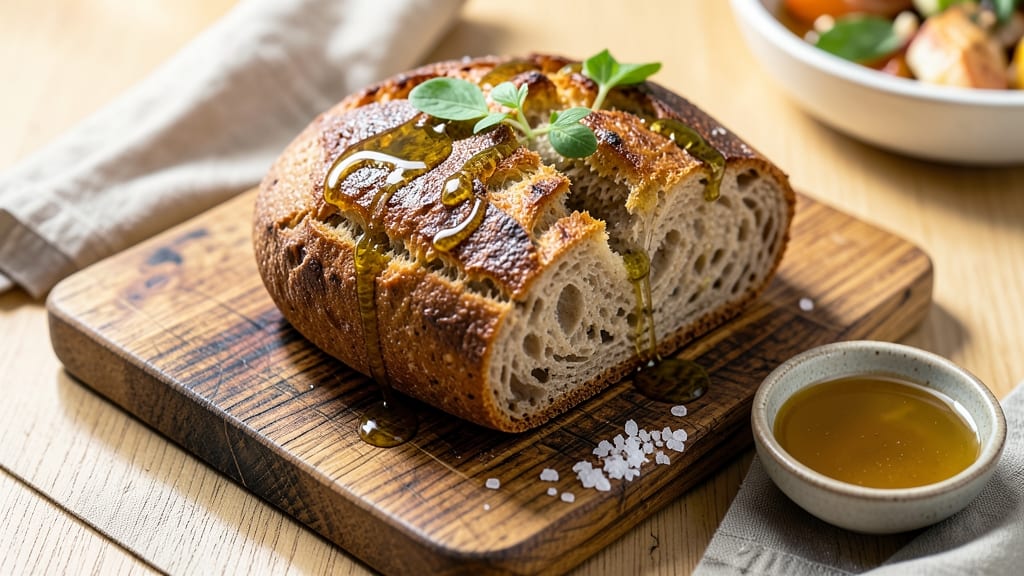
This artisan spelt bread recipe delivers the perfect balance of nutty flavor and open, airy crumb—without requiring hours of kneading. 💛 The secret lies in a slow fermentation process that develops deep flavor while creating that signature artisan texture, all with just 15 minutes of active prep time.
I've perfected this method over years of baking, and it consistently produces a loaf with crispy crust and tender interior that rivals professional bakeries.
The beauty of this recipe is its simplicity combined with professional results. You'll work with just five core ingredients—spelt flour, water, yeast, salt, and honey—that come together in a no-knead dough.
The slow fermentation (overnight in the fridge) allows the gluten to develop naturally, creating that coveted open crumb structure while intensifying the bread's nutty, slightly sweet flavor profile. This approach eliminates the guesswork while delivering restaurant-quality results.
What you'll end up with is a loaf that's perfect for sandwiches, toast, or serving alongside soups—its sturdy yet tender crumb holds up beautifully while maintaining that authentic artisan character. The crust develops a golden, crisp exterior with subtle caramelization, while the interior remains soft and slightly chewy.
This bread stores well for up to five days, making it ideal for meal prep.
For added customization, consider incorporating seeds, herbs, or even a touch of olive oil into the dough before shaping. The base recipe remains completely vegetarian-friendly while offering endless possibilities for personalization. Let's get started on creating your perfect artisan spelt loaf.
Ingredients for artisan spelt bread
Five core ingredients transform into restaurant-quality artisan spelt bread with just 15 minutes of prep.
| Ingredient | Amount | Notes |
|---|---|---|
| Spelt Flour 🌾 | 4 cups | Organic preferred for nutty flavor |
| Warm Water 💧 | 1 ½ cups | 110°F for optimal yeast activation |
| Active Dry Yeast 🍞 | 1 tbsp | Freshly opened for best results |
| Honey 🍯 | 1 tbsp | Raw for natural sweetness |
| Sea Salt 🧂 | 1 ½ tsp | Diamond Crystal preferred |
| Extra-Virgin Olive Oil 🫒 | 2 tsp | For dough elasticity |
| Cornmeal 🌽 | ¼ cup | For dusting baking surface |
| Sesame Seeds 🌱 | 1 tbsp | Optional for decorative crust |
Spelt flour is the heart of this recipe—Bob's Red Mill or King Arthur brands deliver that signature nutty depth. Look for organic varieties if possible, as they often have more robust flavor profiles. The yeast should be freshly opened—old packets lose their punch. For the water, aim for 110°F to activate the yeast perfectly without killing it. Too hot? Let it cool 5 minutes. Too cold? Warm it gently. The honey isn't just for sweetness—it also helps create that beautiful caramelized crust during baking. Local honey adds subtle floral notes that elevate the bread's complexity.
No spelt flour? Whole wheat flour works in a pinch, though the texture will be denser. Out of honey? Maple syrup at the same amount gives similar moisture and sweetness. The olive oil matters here—avoid refined versions as they lack the fruity notes that enhance the dough's elasticity. For a seed boost, toss in sunflower or flaxseeds before shaping. Just remember: seeds need extra hydration, so add 1 extra tablespoon of water per cup of seeds. The sesame seeds are purely decorative but give that professional bakery touch—skip them if you're feeling minimalist.
This dough is a dream to store—ferment overnight in the fridge for ideal flavor development. Shape the loaf and place it in a floured proofing basket or bowl lined with a floured towel. For extra crust crunch, brush the shaped loaf with extra olive oil before baking. The baked loaf stays fresh for 5 days at room temperature, wrapped in a cotton towel. Freeze slices for up to 3 months—toast straight from frozen for crispy results. The longer it sits, the more those nutty flavors deepen.
Why You'll Love This Recipe
- Five-Minute Mix: I swear by this—just toss spelt flour, warm water, and yeast in a bowl, let it sit. No kneading, no fuss, and the honey keeps it from tasting like a chore. My lazy Sundays thank me.
- Nutty Sweet Crust: That honey isn’t just for flavor—it caramelizes into a golden crust with a subtle crunch. The sea salt cuts through the sweetness, making every bite feel like a little reward. (Yes, even on a Tuesday night.)
- Meal Prep MVP: Slice it fresh, toast it later—this bread lasts a week in the fridge without drying out. I pack it for lunches, freeze slices for quick breakfasts, and still have leftovers for sandwiches. Zero waste, all win.
- Budget Baking: Spelt flour might sound fancy, but it’s cheaper than buying artisanal loaves at the store. A single batch feeds my family for days, and the yeast does all the work. My wallet and I both approve.
Step-by-step instructions for artisan spelt bread
This no-knead method transforms simple ingredients into an open-crumb loaf with minimal effort.
👨🍳 Step 1: Activate the Yeast and Mix the Dough
In a large bowl, combine the 1.5 cups warm water (about 110°F) with the 1 tbsp honey and 1 tbsp active dry yeast. Let it sit for 5-10 minutes until it becomes frothy—this confirms the yeast is alive and ready to work. If it doesn't bubble, your yeast might be expired, and you'll need to start over.
Next, add the 4 cups spelt flour and 1.5 tsp sea salt to the bowl. Using a wooden spoon or your hands, stir until a shaggy dough forms. Then, drizzle in the 2 tsp extra-virgin olive oil and mix again until just combined. The dough will be sticky, but that's perfect for this recipe. Here's the thing—spelt flour absorbs moisture differently than wheat flour, so resist the urge to add extra flour. Trust the process!
🥘 Step 2: Let the Dough Rest and Develop
Cover the bowl with a damp kitchen towel or plastic wrap and let the dough rest at room temperature for 12-18 hours. This slow fermentation is what creates that beautiful open crumb structure and deep nutty flavor. I like to place my bowl in a slightly warm spot, like near the oven with the light on, to encourage even fermentation. You'll know it's ready when the dough has nearly doubled in size and smells rich and yeasty.
During this time, the yeast will break down the flour's complex carbohydrates, creating a lighter, more digestible bread. The honey adds subtle sweetness while also helping to feed the yeast. Don't rush this step—patience here makes all the difference in the final texture and flavor. If you're short on time, you can speed this up to 6-8 hours in a warm place, but the flavor won't be as developed.
🔥 Step 3: Preheat and Shape the Dough
Preheat your oven to 450°F with a Dutch oven inside for 30 minutes. This ensures your oven is properly heated and the Dutch oven is hot for that perfect crust. While the oven heats, turn out the dough onto a surface lightly dusted with 0.25 cup cornmeal. The cornmeal prevents sticking and adds a nice texture to the crust.
Using wet hands (this prevents sticking), gently shape the dough into a round loaf. Don't worry about perfect edges—this is rustic bread, after all. Place the dough seam-side up into the hot Dutch oven. The dough will rise quickly in the intense heat, so work fast. Sprinkle the 1 tbsp sesame seeds on top for that decorative crust and extra crunch.
🔥 Step 4: Bake to Golden Perfection
Bake the bread for 30-35 minutes until the top is deep golden brown and the internal temperature reaches 205-210°F. You'll know it's done when it sounds hollow when tapped on the bottom. The bread should have a crisp crust with an open, airy crumb inside. If the top browns too quickly, tent the loaf with aluminum foil to prevent burning while it continues to bake.
Here's where it gets fun—remove the bread from the Dutch oven and let it cool on a wire rack for at least 1 hour before slicing. This resting period allows the crumb to set properly and prevents a gummy texture. The longer you wait, the better the texture will be. Real talk: I've learned the hard way that cutting into bread too soon leads to a sad, dense slice. Trust me on this one!
Pro Tips For Making Artisan Spelt Bread
- Use a Mixer for Autolyse: Spelt flour loves hydration, so toss your dry flour and warm water together first—no yeast yet—and let it sit for 30 minutes. This step develops gluten without overworking it later (yes, even if you’re impatient like me).
- Bloom Yeast in Honey Water: Skip dissolving yeast in plain water—mix it with the honey first, then add warm water. The honey feeds the yeast immediately, cutting fermentation time by 20-30 minutes and preventing that sour tang you hate.
- Don’t Over-Knead the Dough: Spelt dough tears easily, so stop when it’s just cohesive—not stretchy. After 5-6 minutes by hand (or 3-4 with a mixer), it’s done. Overworking it makes the bread dense, and nobody wants that.
- Score Deeply Before Baking: Use a razor blade or sharp knife to slash the loaf at least ½ inch deep—spelt crusts need room to expand. Shallow cuts = sad, flat tops. (Pro move: Sprinkle extra salt on the scored dough right before baking.)
Best sauces and condiments for these flavors
Classic Olive Oil
Drizzle 1 tbsp extra-virgin olive oil over warm slices before serving. The fruity notes of California Gold or Colavita brands complement the bread's nutty flavor beautifully. For added depth, mix with ½ tsp flaky sea salt and a pinch of red pepper flakes—this becomes my go-to finishing touch. 🫒
Herb Butter Compound
Whisk together ½ cup softened butter, 2 tbsp chopped fresh rosemary, 1 tbsp chopped thyme, and 1 tsp lemon zest for a luxurious spread. The herby brightness cuts through the bread's richness while enhancing its natural flavors.
I like to add 1 clove minced garlic for an extra layer of complexity. Store leftovers in an airtight container for up to 1 week.
Whole Grain Mustard
A dollop of Dijon-style mustard (like Maille or Amoy) adds tangy contrast to the bread's sweetness. Mix 2 tbsp mustard with 1 tbsp honey and a pinch of smoked paprika for a sweet-spicy spread that pairs perfectly with sandwiches. The mustard's sharpness balances the bread's nutty undertones beautifully. 🌶️
Garlic-Herb Infusion
Create a quick infusion by steeping 4 cloves smashed garlic and 1 sprig fresh thyme in ½ cup warm olive oil for 30 minutes. Strain and use this fragrant oil as a spread or drizzle.
The garlic's sweetness develops during steeping, creating a mellow flavor that enhances the bread's crust. This method works best with high-quality olive oil—avoid cheap versions that can become bitter when infused.
Spiced Honey Spread
Combine ¼ cup honey, 1 tsp ground cinnamon, and ¼ tsp cayenne pepper for a sweet-spicy spread that highlights the bread's natural sweetness. The cinnamon adds warmth while the cayenne gives a subtle kick.
I often use this as a glaze for toasted slices—simply brush on warm bread and broil for 1-2 minutes for a caramelized finish. Perfect for breakfast or dessert!
Nutrition facts
Frequently asked questions about artisan spelt bread
Can I substitute spelt flour with regular whole wheat flour?
The texture will be slightly denser, but yes—you can use whole wheat flour in a 1:1 ratio. For best results, add 1 extra tablespoon of water since whole wheat absorbs more moisture. The flavor will be less nutty, but the bread will still be delicious. If you want to bridge the gap, blend half spelt and half whole wheat for a lighter texture.
Why is my spelt bread dense instead of open and airy?
Dense bread usually means the dough didn't ferment long enough or the oven wasn't hot enough. Try these fixes: extend fermentation to 18-24 hours in the fridge, preheat your Dutch oven longer (45 minutes), or bake at 475°F instead of 450°F. Also, make sure your yeast is fresh—old yeast won't create enough lift.
How do I store leftover spelt bread?
Wrap cooled bread in a cotton towel and store at room temperature for up to 5 days. For longer storage, slice and freeze in an airtight container for up to 3 months. To revive frozen slices, toast straight from the freezer—they'll crisp up beautifully. The towel helps maintain moisture better than plastic.
Can I add seeds or herbs to this recipe?
Mix in 1-2 tablespoons of seeds (sunflower, flax, or pumpkin) or 1 tablespoon chopped herbs (rosemary, thyme) with the flour. For seeds, add 1 extra tablespoon of water per cup of seeds to prevent dryness. Herbs work best when added fresh—dried herbs should be used in half the amount. Just be gentle when shaping to avoid tearing the dough.
What's the best way to reheat sliced spelt bread?
For crispy crust and soft interior, wrap slices in foil and warm at 350°F for 5-7 minutes. For extra crunch, broil for 1-2 minutes after warming. Never microwave—it turns the bread gummy. The foil traps steam while the oven's dry heat recreates that fresh-baked texture. Perfect for making toast or sandwiches!