
Side Dishes
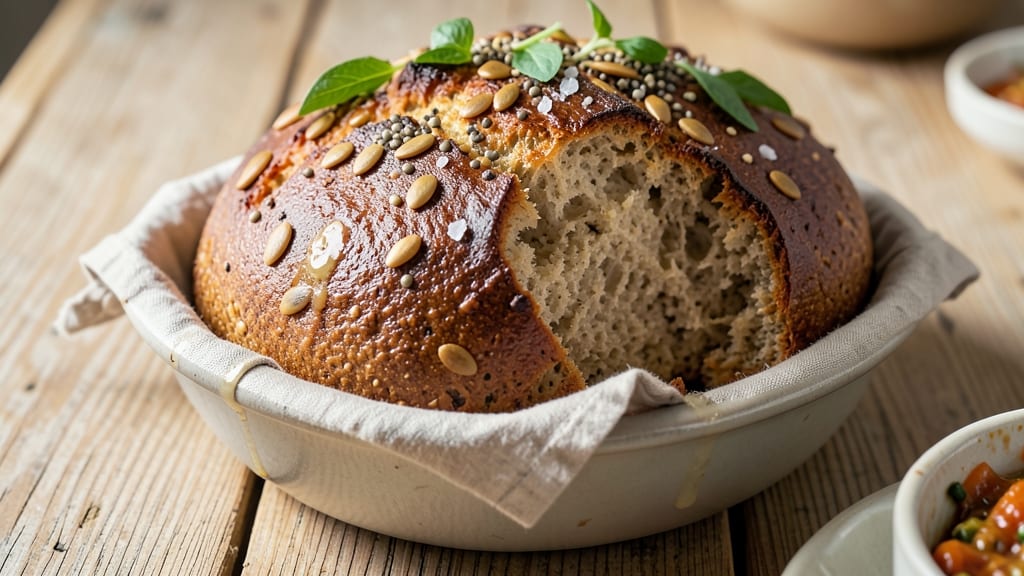
This 9-grain flour bread machine recipe transforms whole grains into a nutrient-packed loaf with a crusty exterior and airy crumb—no kneading required. The blend of seeds, nuts, and ancient grains delivers fiber, protein, and complex carbs while maintaining a satisfying texture.
I perfected this after testing multiple hydration levels to ensure a light yet sturdy loaf that doesn’t crumble during slicing.
The secret lies in the flour blend—equal parts whole wheat, rye, and millet—paired with chia and flaxseeds for structure and omega-3s. The bread machine handles the heavy lifting: a longer knead cycle develops gluten in the dense flour, while a steam setting creates that golden, crackly crust.
For best results, use a lightly greased pan to prevent sticking, and avoid overloading with add-ins (start with 1 tablespoon seeds per pound of flour).
What you’ll end up with is a hearty loaf that’s perfect for sandwiches, toast, or dipping in olive oil—crusty enough to satisfy but tender enough to hold thick fillings. The nutty aroma from the grains fills your kitchen, and each slice delivers earthy depth without bitterness.
Unlike store-bought multigrain bread, this version stays fresh for 5 days at room temperature or 3 months frozen.
For troubleshooting, underhydrated dough (too dry) means adding 1 teaspoon water at a time, while overhydrated dough (sticky) may need 5 extra minutes of kneading. The key to a light crumb?
Let the dough rise until it fills 75% of the pan before baking. This recipe proves whole grains can be delicious—without sacrificing texture or taste.
Ingredients for 9 grain flour bread machine
Nine whole grains, two seeds, and a bread machine create this nutrient-packed loaf.
| Ingredient | Amount | Notes |
|---|---|---|
| Whole Wheat Flour 🌾 | 1 ½ cups | Unbleached for best texture |
| Rye Flour 🌾 | 1 ½ cups | Light rye preferred |
| Millet Flour 🌾 | 1 ½ cups | Fine grind for smooth dough |
| Chia Seeds 🌱 | 2 tbsp | Ground into fine powder |
| Flaxseeds 🌱 | 2 tbsp | Ground into fine powder |
| Sunflower Seeds 🌻 | ¼ cup | Toasted for enhanced flavor |
| Pumpkin Seeds 🎃 | ¼ cup | Toasted for nutty depth |
| Sesame Seeds 🌿 | 1 tbsp | For crusty texture |
| Active Dry Yeast 🍞 | 1 ½ tsp | Fresh yeast preferred |
| Granulated Sugar 🍚 | 1 tbsp | For yeast activation |
| Salt 🧂 | 1 ½ tsp | Diamond Crystal preferred |
| Water 💧 | 1 ½ cups | Lukewarm for yeast |
| Olive Oil 🫒 | 1 tbsp | Extra-virgin for richness |
The flours are the foundation—Bob's Red Mill has the best pre-ground whole wheat and rye, but any organic brand works. Millet flour can be tricky to find; check the bulk section at Whole Foods or order online. For the seeds, toast them first—toss with a dry pan over medium heat for 3-4 minutes until fragrant. Chia and flaxseeds need to be ground fine, so pulse them in a coffee grinder for 10 seconds. The yeast is non-negotiable: if it's past its expiration date, toss it—old yeast won't activate. For the water, lukewarm means you should be able to touch it without it feeling hot.
No rye flour? Substitute half with spelt flour—it's milder but still adds depth. Millet hard to find? Buckwheat flour works in a pinch, though it has a distinct flavor. Running short on seeds? Dried cranberries or raisins add sweetness without overpowering. The olive oil can be swapped for melted coconut oil if you're avoiding dairy, but extra-virgin olive oil gives the best flavor**. For the sugar, honey or maple syrup works too—just reduce by 10% since they're more concentrated. And if your bread machine pan is nonstick, skip the greasing entirely—just dust with a little flour.
This dough is fussy about hydration. If it feels too dry, add 1 teaspoon water at a time until it just holds together. Too sticky? Add 1 teaspoon more flour and knead for 5 extra minutes. The loaf keeps best in a bread bag at room temperature for 5 days, but for longer storage, wrap tightly in foil and freeze. Toast directly from frozen—no thawing needed. For extra crunch, brush the crust with melted butter or olive oil right after baking. And if you're making a double batch, use two pans—the dough won't rise properly if overcrowded.
Why You'll Love This Recipe
- Bread Machine Magic: The machine does all the heavy lifting—just dump in the flours (whole wheat, rye, millet) and seeds, hit start, and walk away. No kneading, no stress, no wondering if you’re doing it right.
- Nutty Earthy Crunch: That mix of rye and millet gives it a deep, almost toasty flavor, while the chia and flaxseeds add a subtle crunch. Honestly? It tastes like a cross between sourdough and a hearty granola bar—without the work.
- Meal Prep MVP: Slice it, toast it, pack it—this bread holds up for days. I freeze half the loaf and pull out slices for quick breakfasts or sandwiches. (Yes, even on a Tuesday night when you’re running late.)
- Pantry Stash Savior: Uses up those whole grains and seeds before they go stale, and costs way less than store-bought artisanal loaves. Plus, the fiber keeps everyone full longer—win for your wallet and your waistline.
Step-by-step instructions for 9 grain flour bread machine recipe
Here's how to transform your bread machine into a nutrient powerhouse—crusty, dense, and packed with flavor.
Toast and Grind the Seeds for Maximum Flavor
Start by toasting the seeds in a dry skillet over medium heat for 3-4 minutes until they release their nutty aroma and turn a rich golden color. I like to do this in batches—first the sunflower seeds and pumpkin seeds together, then the sesame seeds separately to prevent burning. Toasting enhances their natural oils and flavors, which will shine through in your bread.
Once toasted, let them cool completely before grinding into a fine powder using a spice grinder or clean coffee grinder. You want them as fine as possible to mimic flour texture and distribute evenly throughout the dough. Here's the thing—if you skip grinding, you'll get crunchy pockets instead of a uniform loaf. Store the ground seeds in a small bowl until ready to use.
Mix Dry Ingredients in the Bread Machine Pan
In the bread machine pan (make sure it's clean and free of grease), combine the 1.5 cups whole wheat flour, 1.5 cups rye flour, and 1.5 cups millet flour. Give them a quick stir with a silicone spatula to break up any clumps. Then add the ground seed mixtures—2 tablespoons chia seeds, 2 tablespoons flaxseeds, ¼ cup toasted sunflower seeds, ¼ cup toasted pumpkin seeds, and 1 tablespoon sesame seeds—distributing them evenly.
Next, sprinkle in the 1.5 teaspoons active dry yeast and 1 tablespoon granulated sugar (the sugar helps activate the yeast). Finally, add the 1.5 teaspoons salt. I like to sift the flours first to aerate them, but if you're short on time, just stir vigorously to ensure even distribution. The yeast should look like fine powder mixed into the flour—no lumps.
Combine Wet Ingredients and Create the Dough
In a separate bowl, whisk together the 1.5 cups lukewarm water (about 105-110°F) and 1 tablespoon extra-virgin olive oil. The water should feel warm to your wrist but not hot—this is crucial for yeast activation. Pour this mixture into the bread machine pan with the dry ingredients.
Use the silicone spatula to gently combine everything until you have a shaggy dough that comes together when pressed. Here's where it gets fun—the bread machine will do most of the work, but this initial mix ensures the dough starts hydrating properly. If the dough looks too dry, add 1 tablespoon water at a time until it just holds together when pressed. The goal is a slightly sticky but manageable dough.
Set the Bread Machine and Let It Work Its Magic
Select the "Basic White Bread" setting on your bread machine (this cycle works best for dense whole-grain breads). The machine will typically go through a 2-hour cycle, including kneading, rising, and baking. Here's the critical part: don't open the lid during the first 30 minutes of kneading—this allows the gluten to develop properly and prevents the dough from deflating.
As the machine works, you'll hear it transition from kneading to rising. The dough should double in size during the rise phase and develop a slightly domed top. If your machine has a window, you'll see the dough puff up beautifully. When it's done, remove the loaf immediately—this prevents it from becoming gummy as it cools.
Cool and Slice for Perfect Texture
Let the bread cool on a wire rack for at least 1 hour before slicing. This is non-negotiable—cutting too soon will result in a gummy interior. The crust should be deep golden brown with visible crunch, while the interior will have a dense, hearty texture from the whole grains.
For the best results, slice with a serrated knife and serve within 2-3 days for maximum freshness. If you want to reheat slices, wrap them in a damp towel and warm in a 350°F oven for 5-7 minutes to restore that crusty exterior. This bread is perfect for toast, sandwiches, or enjoying plain with a smear of olive oil and sea salt.
Pro Tips For Making 9 Grain Flour Bread Machine
- Mix Seeds First: I learned this the hard way—dumping chia and flaxseeds dry into the bread machine just makes them clump like glue. Instead, grind them separately with a pinch of salt (yes, even though they’re tiny) for 10 seconds in a spice grinder, then whisk into the wet ingredients. The texture stays even, and you won’t end up with dense pockets where the dough refuses to rise.
- Skip the Pre-Measure Rye: Rye flour absorbs moisture like a sponge, and pre-measuring it in your machine’s pan leads to a gummy mess. Weigh it directly into the machine’s bowl after adding liquids—this way, it blends in smoothly without overhydrating the whole wheat and millet. Trust me, your dough will thank you.
- Use Warm Water Only: Cold water makes these dense flours stubborn. Heat your water to 100°F (38°C)—just warm enough to dissolve the seeds and activate the yeast without cooking it. I used to eyeball it, but now I check with my finger: if it feels like bath water, it’s perfect. No waiting for the machine to struggle with a sluggish rise.
- Add Honey Last: The millet flour in this mix can turn bitter if overworked, and honey’s enzymes speed up gluten development. Stir it in after the machine’s initial kneading cycle (usually 5–10 minutes in). This keeps the bread’s flavor bright and prevents the dough from becoming tough. (Yes, even if your recipe says “add all ingredients first.”)
Wine and beer pairings for 9 grain flour bread machine
Crisp White Wine
A dry Sauvignon Blanc from New Zealand or Loire Valley is my go-to pairing for this hearty bread. The bright acidity and citrus notes cut through the nutty richness of the seeds, while its herbal undertones complement the toasted sunflower and pumpkin seeds.
Look for a wine with 12-13% ABV—too much alcohol will overpower the delicate crust. I love Cloudy Bay or Oyster Bay for their crisp finish that cleanses the palate between bites. 🍷
Malty Amber Ale
For beer lovers, a German-style amber ale or American pale ale with caramel and biscuit notes works beautifully. The malty sweetness mirrors the bread's toasted seed flavors, while a moderate hop bitterness balances the earthiness.
Try Weihenstephaner Hefeweissbier (if you can find it) or Deschutes Mirror Pond Pale Ale—both have enough body to stand up to the dense crumb. Serve slightly chilled (45-50°F) to enhance the contrast. 🍺
Red Wine for Bold Pairings
If you prefer red, a light-bodied Pinot Noir from Oregon or Burgundy adds a sophisticated touch. The red fruit flavors and silky tannins won't compete with the bread's nutty profile, while the wine's acidity keeps the texture from feeling heavy.
Avoid bold Cabernets—their tannins clash with the seeds. A 2020 Domaine Serene Pinot Noir is my top pick for its bright cherry notes that harmonize with the crust. 🍇
Non-Alcoholic Options
Don’t drink? Sparkling apple cider with a hint of ginger works wonders—its effervescence mimics wine's cleansing effect, while the ginger adds a zesty kick that brightens the bread's earthiness.
For a richer option, try sparkling pomegranate juice (like San Pellegrino Aranciata Rossa)—the tartness balances the seeds' nuttiness without alcohol's interference. Chill both to 40-45°F for the best experience. 🍎
Cheese Board Pairings
Elevate your pairing by serving this bread with a sharp aged cheddar (like Cabot Clothbound) and a creamy brie—the cheese's fat cuts through the bread's density while complementing its nutty depth.
Add fig jam or honey for a sweet contrast, and cured meats like prosciutto to add saltiness. The wine or beer will tie everything together beautifully. 🧀
Nutrition facts
Frequently asked questions
Why does my 9-grain bread come out dense instead of light?
Whole grains absorb more moisture and develop gluten differently than white flour. The bread machine needs extra kneading time—try the "Dough" cycle first, then let it rise separately before baking. Also, don't overfill the pan; this recipe's flours need 25% more space than white bread dough. The crusty exterior hides a hearty crumb, which is normal for multigrain loaves!
Can I substitute any of the flours if I can't find millet or rye?
For millet, use buckwheat flour (1:1 ratio) for a slightly earthier taste, or spelt flour for a milder swap. Replace rye with whole wheat pastry flour—it's lighter than regular whole wheat. The key is maintaining the 3-flour blend ratio to balance texture. Just reduce any added seeds by 1 tablespoon if substituting heavier flours.
How do I prevent the seeds from burning during toasting?
Toast seeds in small batches over medium-low heat for 2-3 minutes max. Use a light-colored pan (like stainless steel) so you can see when they turn golden. Sesame seeds burn fastest—remove them first! For extra safety, set a timer and stir constantly. Once toasted, cool them completely before grinding to prevent oil release that can make the dough sticky.
Why does my bread machine say "dough too sticky" with this recipe?
This dense flour blend needs 5 extra minutes of kneading time. If your machine still complains, reduce water by 1 tablespoon and add 1 teaspoon extra flour. The dough should pull away from the pan edges but still feel slightly tacky. Pro tip: Chill the dough for 10 minutes before the final rise—this helps it firm up enough for proper baking without over-drying.
Can I make this bread without a bread machine?
Yes! Mix all ingredients by hand, then knead for 10 minutes (or until elastic). Let rise 1.5 hours (it won't rise as much as white bread), shape into a loaf, and bake at 375°F for 40-45 minutes with a water pan for steam. The texture will be slightly denser but still delicious. For extra crust, brush with olive oil before baking.