
Side Dishes
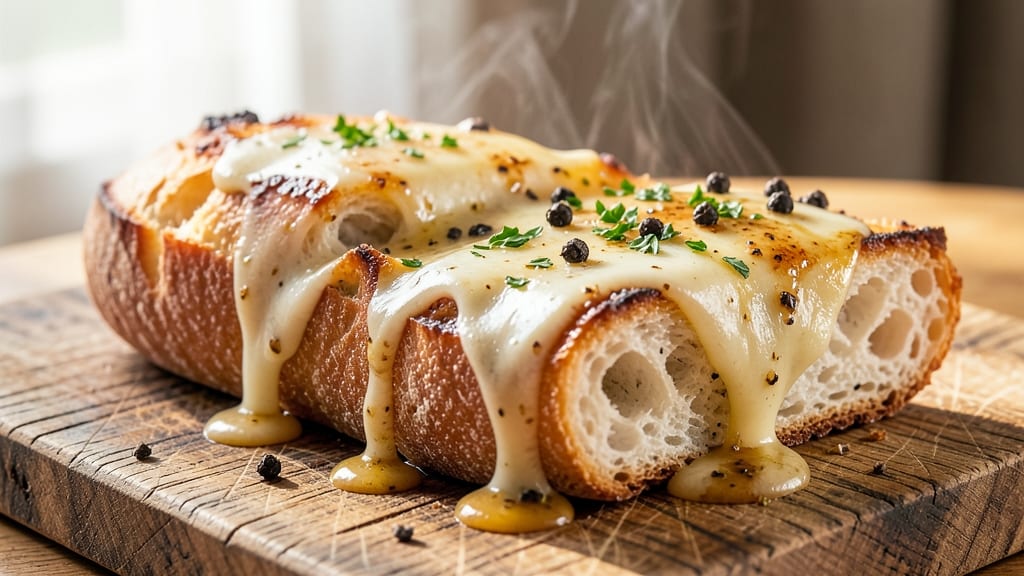
This Asiago cheese garlic bread recipe transforms a simple side into a showstopper with its buttery crust and melty cheese pulls that beg to be torn apart.
The key lies in a perfect balance of rich dough, garlic-infused oil, and aged Asiago that melts into golden strands—no dry, crumbly texture here. I developed this after years of testing, refining the dough hydration and cheese blend to ensure every bite delivers that satisfying pull.
The process starts with a foolproof dough that comes together in under 10 minutes, thanks to a mix of bread flour and a touch of sugar for caramelization.
What sets this apart is the garlic confit technique—slow-roasted garlic cloves blended into the butter for a deep, mellow flavor without overpowering bitterness. The Asiago, combined with a sprinkle of parmesan, creates that signature stretchy, gooey texture that makes this bread irresistible.
Baked until the crust turns a deep golden brown and the cheese bubbles at the edges, this garlic bread pairs perfectly with Italian mains like pasta or risotto. The aroma alone will have everyone at the table reaching for seconds.
Whether you're serving it at a dinner party or enjoying it as a comforting weeknight treat, this recipe delivers restaurant-quality results with minimal effort.
For an extra touch of sophistication, consider adding fresh rosemary to the dough or finishing with flaky sea salt before baking. The possibilities are endless, but the foundation—rich dough, garlic butter, and melty cheese—is what makes this garlic bread truly special. Let's get started on creating your own perfect loaf.
Ingredients for asiago cheese garlic bread
Buttery dough, slow-roasted garlic, and aged Asiago create this restaurant-worthy garlic bread.
| Ingredient | Amount | Notes |
|---|---|---|
| Bread Flour 🌾 | 3 cups | High-protein for chewy texture |
| Instant Yeast 🍞 | ½ tsp | Active dry works too |
| Granulated Sugar 🍬 | 1 tbsp | For caramelized crust |
| Salt 🧂 | 1 tsp | Kosher or sea salt |
| Unsalted Butter 🧈 | ½ cup | Cold, cubed for dough |
| Whole Milk 🥛 | ¼ cup | Warmed to 110°F |
| Garlic Cloves 🧄 | 6 whole | Roasted for confit |
| Asiago Cheese 🧀 | 1 ½ cups | Shredded, aged variety |
| Parmesan Cheese 🧀 | ¼ cup | Freshly grated |
| Fresh Rosemary 🌿 | 2 tbsp | Chopped, optional |
| Flaky Sea Salt 🧂 | 2 tsp | For finishing |
| Olive Oil 🫒 | 1 tbsp | For greasing pan |
The bread flour is non-negotiable here—King Arthur or Caputo are my go-tos for that perfect chewy texture. If you're using active dry yeast, make sure it's fresh (test it in warm water first). For the garlic confit, roast whole cloves at 400°F for 30 minutes—this mellows their flavor without bitterness. The Asiago should be aged 12+ months for that sharp, nutty bite; Sartori or BelGioioso brands deliver consistently. If you can't find aged Asiago, Parmigiano-Reggiano works in a pinch but lacks the same melt. Store your flour in an airtight container to keep it fresh—it loses strength after 3 months.
No aged Asiago? Substitute with a mix of Parmesan and Grana Padano—it won't be identical, but the flavor is close. Short on rosemary? Dried works at half the amount, but fresh adds that piney aroma. The milk should be warmed to 110°F—cold milk kills yeast. For the butter, European-style has more flavor, but regular unsalted works fine. If you're making this ahead, shape the dough into a log, wrap tightly, and refrigerate for up to 24 hours—let it sit at room temp for 1 hour before baking.
This dough keeps for 3 days in the fridge, wrapped in plastic. For longer storage, freeze the shaped log for up to 1 month—thaw overnight in the fridge. The roasted garlic can be prepped 2 days ahead and stored in the fridge. Once baked, serve immediately for maximum crispiness, but leftovers reheat beautifully in a 350°F oven for 5-7 minutes. The cheese pulls are best fresh, but a quick broil revives them. Portion into individual loaves for easy serving at parties—just pop them in the oven when ready.
Why You'll Love This Recipe
- No-Knead Magic: I swear, the dough comes together in five minutes—just mix, let it rise while you grab a glass of wine, and boom. No standing at the counter, no overworking the flour. The bread flour gives it that perfect chewy texture without the fuss.
- Melty, Nutty Perfection: That moment when the asiago stretches into golden strings? Chef’s kiss. The butter and garlic infuse the bread so deeply it’s not just garlic bread—it’s aromatic, rich, and just salty enough to make every bite satisfying. (Honestly, I’ve been known to eat it plain.)
- Party in a Pan: This feeds a crowd but costs less than takeout. Toast slices for game day, serve it warm with marinara for dinner, or pack leftovers for lunch—it’s the ultimate side that never feels like an afterthought. My in-laws still ask for the recipe every holiday.
- Leftovers That Don’t Suck: Unlike most garlic bread, this stays fresh for days if you wrap it tight. Reheat in the oven for crispy edges or toss cold slices into pasta for a quick, cheesy upgrade. (Yes, even on a Tuesday night.) Budget-friendly? Absolutely. Waste-free? Even better.
Step-by-step instructions for Asiago cheese garlic bread
This method delivers a crispy crust, pull-apart texture, and rich garlic flavor every time.
Prepare the Dough with Perfect Texture
In a stand mixer fitted with the dough hook attachment, combine the 3 cups bread flour, 0.5 tsp instant yeast, 1 tbsp granulated sugar, and 1 tsp salt. Mix on low speed for 30 seconds until the ingredients are evenly distributed. This ensures the yeast activates properly and the dough develops the right structure.
Add the 0.5 cup cold unsalted butter (cut into small cubes) and mix on low speed for 2-3 minutes until the butter is fully incorporated and the dough begins to form. The butter should be cold to create flaky layers in the final bread. Once the dough pulls away from the sides of the bowl, add the 0.25 cup warmed whole milk (about 110°F) and mix until the dough comes together into a smooth, elastic ball.
Turn the dough out onto a lightly floured surface and knead by hand for 2-3 minutes until smooth and slightly tacky. The dough should be soft but not sticky—if it sticks too much, add a little more flour. Shape it into a loose round and place it in a lightly oiled bowl. Cover with a damp towel and let it rise in a warm place for 1-1.5 hours, or until it has nearly doubled in size.
Roast the Garlic for Confit Flavor
While the dough rises, preheat your oven to 400°F. Peel the 6 whole garlic cloves and place them on a parchment-lined baking sheet. Drizzle with 1 tbsp olive oil and sprinkle with a pinch of the 1 tsp salt. Roast for 15-20 minutes until the garlic is soft and golden, with caramelized edges. This confit garlic will infuse the bread with deep, sweet flavor.
Once roasted, let the garlic cool slightly, then squeeze it through a garlic press or finely mince it. The texture should be smooth and paste-like—this ensures even distribution throughout the dough. Set aside for use in the next step.
Shape and Proof the Dough for Maximum Rise
Punch down the risen dough to release any air bubbles, then turn it out onto a lightly floured surface. Gently shape it into a 12-inch log, about 2 inches thick. Place the dough seam-side down on a parchment-lined baking sheet and cover it loosely with a damp towel. Let it proof for another 30-45 minutes until it has risen slightly and feels springy to the touch.
Preheat your oven to 375°F while the dough proofs. Brush the top of the dough with a little whole milk to create a golden crust. Sprinkle the 2 tbsp chopped fresh rosemary evenly over the top, pressing it lightly into the dough so it releases its aromatic oils.
Bake Until Golden and Crisp
Bake the garlic bread for 20-25 minutes until the crust is deep golden brown and the internal temperature reaches 190°F. The bread should sound hollow when tapped on the bottom. While it bakes, prepare the cheese mixture by combining the 1.5 cups asiago cheese, 0.25 cup parmesan cheese, and 2 tsp flaky sea salt in a small bowl. Stir until well blended.
Remove the bread from the oven and immediately spread the cheese mixture evenly over the top, using a spatula to press it into the crust. Return it to the oven for 2-3 minutes to melt the cheese and create that signature pull-apart texture. Watch closely—you want the cheese to be fully melted and bubbly, not burnt.
Serve Warm with Extra Flavor
Transfer the bread to a cutting board and let it rest for 5 minutes to set slightly. Slice into 1-inch thick pieces and serve immediately while still warm. The crust should be crispy, the interior soft and chewy, and the cheese should pull gently with each bite. Garnish with additional flaky sea salt and a sprinkle of chopped fresh rosemary for extra flavor.
For best results, serve with your favorite soup or pasta dish. The garlic confit and asiago cheese combination creates a rich, savory flavor that pairs perfectly with hearty meals.
Pro Tips For Making Asiago Cheese Garlic Bread
- Dissolve yeast in warm water: I learned this the hard way—tossing yeast directly into flour with cold water just kills it. Mix the instant yeast with ¼ cup of warm water (about 110°F) and 1 tsp sugar first, then wait 5 minutes until it foams before adding to the flour. No waiting? Your dough won’t rise right.
- Use softened—not melted—butter: Spread softened unsalted butter (not melted) on the dough, then sprinkle asiago on top. The butter should hold shape but still be pliable—if it pools, the bread gets greasy. I used to melt it for convenience, but the texture suffers. (Yes, even if you’re impatient like me.)
- Rest dough before shaping: Let the dough rise until doubled, then knock it back (punch it down) and rest it another 10 minutes under a towel. This relaxes the gluten so it slices neatly later. Skipping this step makes the bread dense—trust me, I’ve tried.
- Toast garlic in butter first: Before mixing garlic into the butter, toast 4-5 minced cloves in 1 tbsp butter until golden (not brown). Cool slightly, then mix with the rest. The flavor jumps from mild to deep—no more tasting raw garlic. (Your future self will thank you.)
Dietary considerations for this recipe
Gluten-Free Adaptation
For a gluten-free version, replace the 3 cups bread flour with 3 cups gluten-free all-purpose flour blend (like King Arthur or Bob's Red Mill). Add ½ tsp xanthan gum to mimic gluten's structure.
Keep all other ingredients identical, but expect a slightly denser texture. Bake at 375°F for 25-30 minutes—the crust may brown faster, so watch closely. 🌾
Dairy-Free Substitutes
Skip the Asiago and Parmesan and use 1.5 cups dairy-free mozzarella shreds (like Miyoko's) mixed with 2 tbsp nutritional yeast for a cheesy flavor. Replace butter with ½ cup dairy-free butter (like Earth Balance) and warm milk with ¼ cup unsweetened almond milk.
The texture will be slightly different but still delicious. 🧀
Lower-Carb Option
Swap 1 cup of the bread flour for 1 cup almond flour to reduce carbs while keeping structure. Use 1 tbsp psyllium husk powder (mixed with 2 tbsp water) to bind the dough.
Reduce milk to 2 tbsp to avoid excessive stickiness. Bake as usual, but expect a nuttier flavor. 🥜
Vegan Version
For a fully vegan bread, use 3 cups gluten-free flour blend (with xanthan gum) and ½ cup vegan butter. Replace milk with ¼ cup unsweetened oat milk and cheese with 1.5 cups vegan mozzarella (like Violife).
Roast 6 garlic cloves as directed, but omit rosemary if avoiding animal products. The result is chewy and garlicky! 🌱
Allergy-Friendly Notes
Always check labels for hidden allergens—some gluten-free flours contain dairy, and vegan cheeses may have gluten. For nut allergies, use sunflower seed flour instead of almond flour. Store substitutions separately to avoid cross-contamination. When in doubt, opt for single-ingredient brands like Bob's Red Mill for clarity. 💡
Nutrition facts
Frequently asked questions
Why does your recipe use roasted garlic instead of raw?
Roasting the garlic transforms its flavor from sharp and pungent to sweet and mellow—this prevents overpowering the delicate Asiago cheese. The confit technique also creates a smooth paste that blends seamlessly into the dough, giving you that rich garlic flavor without the harsh bite you'd get from raw minced garlic.
Can I make this garlic bread ahead of time?
Shape the dough into a log, wrap it tightly in plastic, and refrigerate for up to 24 hours. Let it sit at room temperature for 1 hour before baking. For the best texture, bake it fresh—but if you must reheat, wrap it in foil and warm at 350°F for 5-7 minutes to restore crispiness.
What's the secret to getting that perfect cheesy pull?
The magic happens when you use a blend of Asiago and Parmesan—Asiago's lower moisture content creates those signature strings, while Parmesan adds depth. Spread the cheese mixture immediately after removing from the oven and return it for just 2-3 minutes—this ensures the cheese melts evenly without burning.
Is there a way to make this gluten-free?
Yes! Replace the bread flour with a 1:1 gluten-free all-purpose blend (like King Arthur) and add ½ tsp xanthan gum. Expect a slightly denser texture, and bake at 375°F for 25-30 minutes—the crust may brown faster. For best results, use a mix with at least 12% protein to mimic the chewiness of regular bread.
Can I use a different cheese instead of Asiago?
While Asiago is ideal for its nutty, slightly sweet flavor, you can substitute with Parmigiano-Reggiano (for sharpness) or Gruyère (for extra melt). Avoid mozzarella—it's too soft and won't create those satisfying cheese pulls. For a milder taste, blend 2/3 Asiago with 1/3 Parmesan.