
Side Dishes
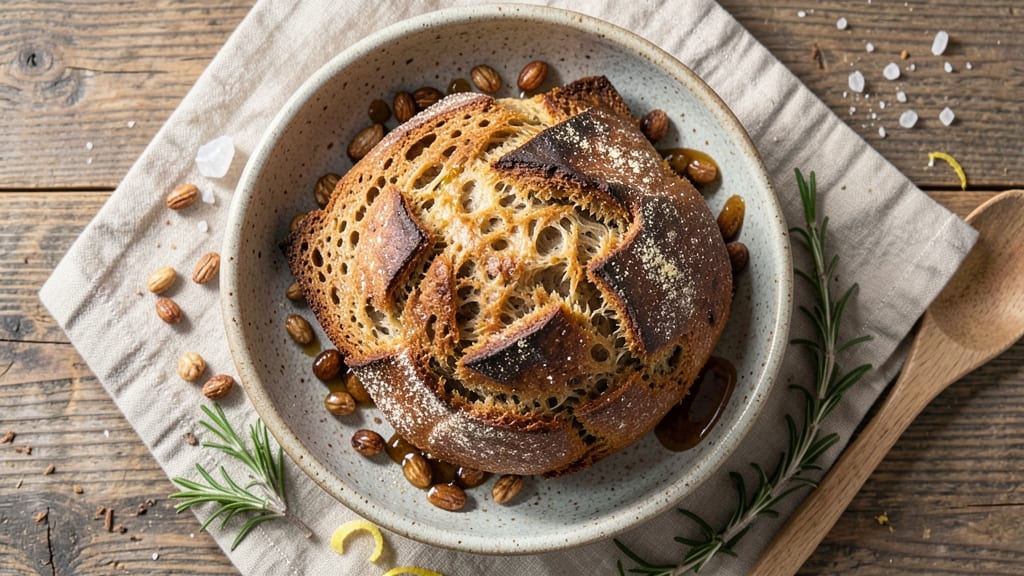
This airy whole wheat bread recipe defies expectations by delivering a light-as-clouds texture with nutty depth—no dense crumb in sight. The secret lies in balancing hydration and steam during baking, which transforms whole wheat's natural density into an open, airy crumb.
After years of experimenting, I've perfected a method that uses vital wheat gluten and a precise kneading technique to create structure without heaviness.
What sets this recipe apart is the two-stage proofing process, where dough develops elasticity before a final rise in a steam-infused environment. This approach mimics professional bakeries' techniques, ensuring an evenly aerated crumb with just the right chew.
The result? Bread that's tender yet sturdy, with a golden crust and a subtle sweetness from whole wheat flour.
Ready in under 3 hours with minimal active time, this recipe is perfect for beginners and experienced bakers alike. The dough is forgiving yet precise, and the baking process requires only a few key adjustments to achieve restaurant-quality results at home.
Whether you're serving it with soup or using it for sandwiches, this bread will elevate any meal.
For added flavor, consider incorporating seeds or honey—both enhance the bread's natural sweetness without compromising its airy texture. The recipe also works beautifully as a vegetarian option, making it versatile for any dietary preference. Let's get started on creating bread that surprises with its lightness and depth.
Ingredients for airy whole wheat bread
These twelve ingredients transform whole wheat into restaurant-quality bread with cloud-like texture.
| Ingredient | Amount | Notes |
|---|---|---|
| Bread Flour 🌾 | 3 cups | High-protein for structure |
| Whole Wheat Flour 🌾 | 2 cups | Stone-ground preferred |
| Vital Wheat Gluten 🌾 | ½ cup | Essential for aeration |
| Instant Yeast 🍞 | 2 ¼ tsp | Active dry works too |
| Granulated Sugar 🍚 | 1 tbsp | Enhances yeast activity |
| Salt 🧂 | 1 ½ tsp | Fine sea salt preferred |
| Unsalted Butter 🧈 | ½ cup | Cold, cubed for texture |
| Warm Water 💧 | 1 ¼ cups | 110°F for optimal yeast |
| Honey 🍯 | 1 tbsp | Adds subtle sweetness |
| Sunflower Seeds 🌻 | ¼ cup | Optional for crunch |
| Cornmeal 🌽 | ¼ cup | For dusting baking sheet |
| Egg Wash 🥚 | 1 whole | Beaten with 1 tbsp water |
The vital wheat gluten is non-negotiable—it's what creates that professional bakery-style structure. Bob's Red Mill or King Arthur brands are reliable for consistent results. For the flours, stone-ground whole wheat makes all the difference in flavor and texture compared to regular supermarket brands. The butter should be cold when mixed in to prevent over-hydration, which can lead to a dense crumb. If you don't have sunflower seeds, pumpkin seeds or sesame seeds work equally well for that nutty crunch.
No vital wheat gluten? Substitute with an extra 0.25 cup bread flour, though texture may be slightly less aerated. For the honey, maple syrup works in a pinch but has a stronger flavor. The egg wash can be replaced with milk or water if you're avoiding eggs, though it won't give the same golden sheen. If your kitchen lacks a thermometer, test water temperature by touching it—it should feel warm but not hot to your inner wrist. For the yeast, active dry yeast requires 5 minutes of proofing time in warm water before mixing with dry ingredients.
This dough is best used within 24 hours of mixing for optimal freshness. Store wrapped in plastic at room temperature or refrigerate for up to 3 days. For longer storage, freeze shaped loaves for up to 3 months. Thaw overnight in the fridge before baking. The seeds can be toasted in a dry pan for 2-3 minutes before mixing for enhanced flavor. Bake immediately after shaping for the best rise—don't let the dough proof too long or it may collapse during baking.
Why You'll Love This Recipe
- No-Knead Nightmare Solved: I swear by this—just mix, wait, and bake. The vital wheat gluten gives it that lightness without the fuss of kneading, and honestly, my hands thank me every time.
- Meal Prep MVP: I bake two loaves on Sunday, toast them as needed, and they stay fresh for days. The gluten blend makes it sturdy enough for lunchboxes or freezer storage—no soggy surprises.
- Budget-Friendly Baking Win: Whole wheat flour can be pricey, but this recipe stretches it with bread flour and gluten, cutting costs without sacrificing texture. Plus, one batch feeds my family for a week.
Step-by-step instructions for airy whole wheat bread
Master this technique and you'll achieve bread with a light, ethereal crumb and satisfying nutty flavor.
Combine Dry Ingredients for Optimal Aeration
In a large mixing bowl, whisk together the 3 cups bread flour, 2 cups whole wheat flour, 0.5 cup vital wheat gluten, 2.25 tsp instant yeast, 1 tbsp granulated sugar, and 1.5 tsp salt. The vital wheat gluten is crucial here—it provides the elasticity that whole wheat flour typically lacks, creating that signature airy texture. Sift the dry ingredients through a fine-mesh sieve to eliminate any lumps and increase surface area for better gluten development.
Use a whisk to break up any remaining flour clumps and distribute the yeast evenly. The yeast should be uniformly dispersed throughout the flour mixture, which ensures even fermentation later. Set this bowl aside for now—we'll return to it after preparing the wet ingredients.
Prepare the Wet Ingredients and Butter
In a separate bowl, combine the 1.25 cups warm water (about 110°F), 1 tbsp honey, and 0.5 cup cold cubed unsalted butter. The warm water activates the yeast while the cold butter creates pockets of fat that contribute to the bread's tender crumb. The honey not only adds subtle sweetness but also provides additional food for the yeast to ferment, enhancing rise.
Use a hand mixer or stand mixer with a paddle attachment to blend these ingredients until the butter is fully incorporated and the mixture is smooth. The butter should be emulsified into the water, creating a creamy base that will later blend seamlessly with the dry ingredients. This step should take about 2-3 minutes of mixing on medium speed.
Mix and Knead the Dough
Gradually add the wet ingredients to the dry ingredients while mixing on low speed. The dough will initially be shaggy and uneven, but continue mixing until it begins to come together. Once combined, switch to the dough hook attachment and knead for 5-7 minutes until the dough is smooth, elastic, and springs back when pressed.
Here's where the science matters: The gluten network forms during kneading, giving the bread its structure. You'll know it's ready when the dough pulls away cleanly from the sides of the bowl and forms a windowpane when stretched thin. If the dough feels too sticky, add 1 tablespoon of bread flour at a time until it reaches the proper consistency—it should be soft but not wet.
First Rise and Shaping
Lightly grease a large mixing bowl with neutral oil, then place the dough inside. Cover the bowl with a damp kitchen towel or plastic wrap and let it rise in a warm place (around 75°F) for 1.5 to 2 hours, or until the dough has doubled in size. The dough should feel light and springy when pressed gently with a finger.
After the first rise, punch down the dough to release air bubbles, then turn it out onto a lightly floured surface. Shape the dough into a loaf by folding the sides toward the center and rolling it tightly from one end to the other. This creates surface tension that helps maintain the loaf's shape during baking. Place the shaped loaf seam-side down in a greased 9x5-inch loaf pan and cover with a damp towel.
Second Rise and Baking
Allow the dough to rise for another 45 minutes to 1 hour until it domes slightly above the pan. Preheat your oven to 375°F while the dough rises. When ready to bake, brush the top of the loaf with the egg wash (beaten 1 whole egg with 1 tbsp water) and sprinkle with 0.25 cup cornmeal for a golden crust.
Bake for 35-40 minutes until the bread reaches an internal temperature of 190°F and sounds hollow when tapped on the bottom. The top should be deep golden brown with a crisp crust. If the loaf browns too quickly, tent it loosely with aluminum foil to prevent over-browning while allowing steam to escape. Remove from the oven and let cool on a wire rack for at least 30 minutes before slicing—this prevents a gummy crumb.
Pro Tips For Making Airy Whole Wheat Bread
- Mix the Gluten First: Whole wheat flour can be a handful, but sifting the vital wheat gluten before mixing it with the dry ingredients cuts clumps and guarantees even distribution. I learned this the hard way—skipping this step left me with dense pockets where the gluten didn’t bind properly.
- Let the Dough Rest Longer: Instant yeast is eager, but whole wheat dough needs patience. After the initial rise, give it a 20-minute rest at room temp before shaping—this relaxes the gluten and prevents a tough crumb. (Yes, even if you’re impatient like me.)
- Skip the Over-Kneading: Whole wheat dough resists stretching, so resist the urge to overwork it. Two minutes by hand or three minutes in a stand mixer is enough—any longer, and you’ll activate too much gluten, making the bread dense. Feel for smoothness, not strength.
- Use Warm Water for Yeast: Whole wheat flour absorbs moisture differently, so activate the yeast with water heated to 105°F (not boiling). If the water’s too hot, you’ll kill the yeast; too cold, and it’ll rise sluggishly. A quick finger test—dip your finger in; if it feels warm but not hot, you’re golden.
Perfect pairings for airy whole wheat bread
Buttery Spreads
Nothing complements this airy whole wheat bread like a salted caramelized onion butter. Spread a thin layer on freshly sliced bread and top with a sprinkle of flaky sea salt—the sweetness of the onions enhances the bread's nutty depth.
For a quick version, mix ½ cup softened butter with 2 tbsp finely chopped caramelized onions and a pinch of smoked paprika. 🧈
Sweet Toppings
Drizzle warm bread with local honey or maple syrup for a simple yet elegant pairing. I love adding ½ cup fresh berries (strawberries or blueberries) and a dollop of Greek yogurt for a breakfast-style treat. For something richer, try whipped mascarpone cheese mixed with a touch of vanilla extract.
Savory Pairings
This bread excels with hummus and roasted vegetables. Serve with a generous scoop of roasted red pepper hummus and an assortment of charred zucchini, eggplant, and bell peppers.
The bread's airy texture soaks up the creamy hummus beautifully. For a heartier option, add crispy prosciutto or smoked salmon on top.
Cheese Boards
Create a stunning cheese board by pairing slices with aged cheddar, brie, and goat cheese. The bread's nutty flavor balances the tanginess of goat cheese, while brie melts perfectly for a warm sandwich.
Add cured meats, dried fruit, and nuts for a well-rounded spread. For a vegetarian option, include marinated olives, pickled vegetables, and fresh herbs.
Soup Companions
This bread is ideal for dipping into creamy soups like tomato basil or butternut squash. Toast a slice lightly and use it to scoop up hearty broths or chunky chili.
For a lighter option, pair with gazpacho or cold cucumber soup—the bread's sturdy yet airy texture holds up beautifully. 🥘
Breakfast Spreads
Transform breakfast with avocado mash mixed with a squeeze of lime and everything bagel seasoning. Top with a poached egg for a restaurant-worthy dish. Another favorite is ricotta cheese swirled with honey and cinnamon, paired with sliced almonds for crunch. The bread's subtle sweetness complements these flavors perfectly.
Nutrition facts
Frequently asked questions
Why does this recipe use both bread flour and whole wheat flour?
Bread flour provides the high-protein structure needed for an airy crumb, while whole wheat flour adds nutty depth and fiber. The combination creates a balanced texture—bread flour prevents heaviness, and whole wheat contributes moisture retention. This ratio is key to achieving that light, ethereal quality despite using whole grains.
Can I make this bread without vital wheat gluten?
Yes, but expect a denser result. Replace the vital wheat gluten with an extra 0.25 cup bread flour—this maintains structure but reduces aeration. For best results, use stone-ground whole wheat flour, which has slightly more protein than regular brands. The bread will still be delicious, just less light and fluffy.
How do I know when the dough is properly kneaded?
The dough is ready when it springs back slowly when poked (the "windowpane test") and pulls cleanly from the bowl. Knead for 5-7 minutes with a stand mixer or 10-12 minutes by hand. If it feels too sticky, add 1 tbsp flour at a time—the goal is soft but not wet dough. Over-kneading can make the bread tough, so stop as soon as it passes these tests.
Why does my whole wheat bread always turn out dense?
Most likely, your dough isn't getting enough gluten development or steam during baking. Try these fixes:
- Knead longer (or use a mixer),
- Proof the dough in a warm, humid environment (like a turned-off oven with a bowl of hot water), and
- Bake with a steam tray (ice cubes in a pan) for the first 10 minutes. The steam mimics professional bakery conditions and creates that signature airy crumb.
Can I make this bread in a Dutch oven?
Shape the dough into a round loaf and bake in a preheated Dutch oven at 425°F for 30 minutes, then remove the lid and bake another 15-20 minutes until golden. The Dutch oven traps steam perfectly, creating an even more open crumb. For best results, use the same egg wash and cornmeal topping as the recipe. The crust will be extra crispy with this method!