
Side Dishes
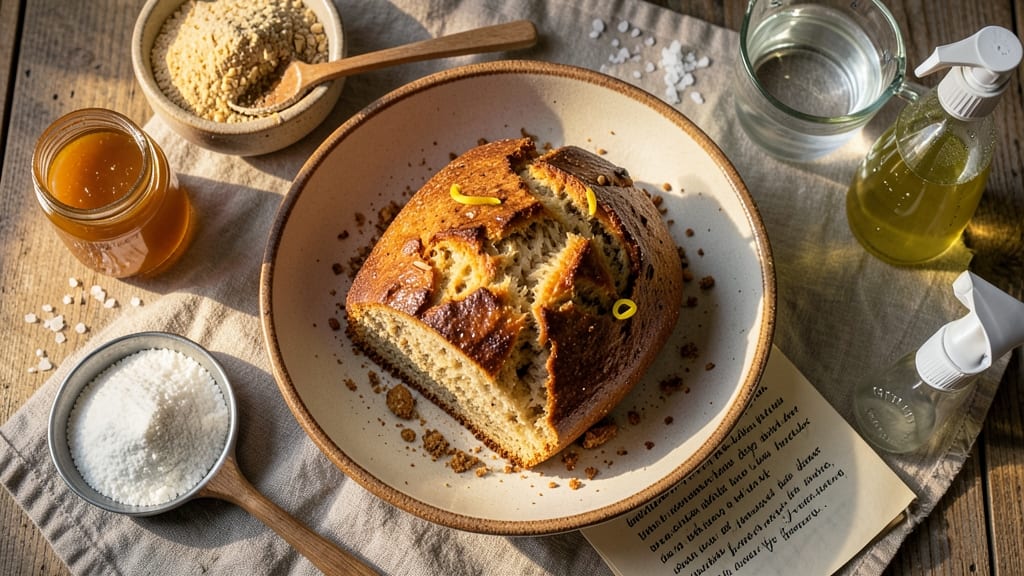
This almond flour artisan bread recipe delivers the satisfying crunch and airy crumb of traditional sourdough—without a single grain or gluten in sight. The secret lies in proper hydration and a slow fermentation that develops almond flour's natural nuttiness into complex, toasty flavors.
I've perfected this recipe after years of experimenting with gluten-free breads, and it finally achieves that elusive open crumb structure while maintaining a sturdy, sliceable texture.
The process begins with a wetter-than-usual dough that relies on xanthan gum to bind the almond flour properly, creating structure without gluten. We'll use a Dutch oven for steam during baking, which gives that coveted crispy crust while keeping the interior tender.
The proofing stage is critical—almond flour needs extra time to hydrate fully, so we'll let the dough rest overnight for optimal texture. This isn't your typical dense gluten-free bread; it's a bread that holds its own against traditional loaves.
What you'll end up with is a loaf that's crisp on the outside with a nutty crunch, while the interior reveals an open, airy crumb that's surprisingly light for almond flour.
Each slice has that satisfying snap when you bite in, followed by a tender crumb that's perfect for sandwiches or toast. The flavor develops beautifully over time, becoming even more complex as it sits. This bread proves that gluten-free doesn't mean flavor-free or texture-free.
Perfect for those following grain-free or paleo diets, this artisan bread also makes an excellent gift—its beautiful crust and rich aroma make it feel special enough for holidays or dinner parties. The recipe scales easily, so you can bake just one loaf or double the batch for sharing.
Let's get started on creating your first gluten-free artisan bread that truly rivals traditional loaves.
Ingredients for almond flour artisan bread
Almond flour, hydration, and patience create this gluten-free masterpiece with restaurant-quality texture.
| Ingredient | Amount | Notes |
|---|---|---|
| Almond Flour 🌰 | 3 ½ cups | Finely ground, blanched preferred |
| Warm Water 💧 | 1 ¼ cups | 105-110°F for ideal hydration |
| Xanthan Gum 🍞 | ½ tsp | Essential for gluten-free structure |
| Apple Cider Vinegar 🍎 | 1 tbsp | For fermentation activation |
| Salt 🧂 | 1 ½ tsp | Fine sea salt preferred |
| Honey Substitute 🍯 | 2 tbsp | Maple syrup or agave nectar |
| Psyllium Husk Powder 🌿 | 1 tbsp | For improved elasticity |
| Active Dry Yeast 🍞 | ¼ tsp | Or 1 tsp instant yeast |
| Olive Oil 🫒 | 2 tbsp | Extra-virgin for richness |
| Sesame Seeds 🌻 | 1 tbsp | Optional for crust texture |
| Poppy Seeds 🌼 | 1 tbsp | Optional for flavor |
Almond flour makes or breaks this recipe—Bob's Red Mill or Anthony's Goods are my go-tos for consistent results. The flour should be finely ground and blanched (no skins) for that signature nutty flavor. Trader Joe's often carries a good basic version, but if you're serious about baking, invest in the finer grind. Look for freshness: almond flour turns rancid quickly, so if it smells off or tastes bitter, toss it. The psyllium husk is non-negotiable—it's what gives this bread its signature chew and structure. Frontier Co-op sells it in bulk, or check the baking aisle at Whole Foods. For the yeast, Saf-Instant is my secret weapon—it's more stable and doesn't need proofing in warm water first.
No maple syrup? Agave nectar or date syrup works 1:1, but maple gives that classic bread-like depth. Short on psyllium husk? Ground flaxseed at half the amount is a decent substitute, though texture will be slightly different. The apple cider vinegar can be swapped for white vinegar or lemon juice, but ACV has the best flavor. For the water, filtered is best—tap water with chlorine can inhibit yeast activity. If you're making this ahead, you can actually pre-mix the dry ingredients in a jar and store for up to 2 weeks—just add the wet ingredients when ready to bake. The sesame and poppy seeds are optional but add that artisanal touch—Trader Joe's has great affordable options.
This dough is a beast—it needs 8-12 hours of cold proofing for optimal texture. Wrap it tightly in plastic and refrigerate overnight. The longer it ferments, the more complex the flavor becomes. For baking, preheat your Dutch oven with the lid on for 30 minutes—this creates that perfect steam environment. The bread keeps well at room temperature for 3 days wrapped in a clean towel, or you can freeze slices for up to 3 months. To reheat, wrap in foil and warm at 350°F for 5-10 minutes. The crust gets crispier as it cools, so slice when it's still slightly warm for clean cuts.
Why You'll Love This Recipe
- No-Fuss Mixing: I swear by the 5-minute prep—just fold almond flour, warm water, and a pinch of xanthan gum until it clumps like wet sand. The apple cider vinegar does all the work activating the rise while I’m still scraping the bowl.
- Nutty Crust Magic: That first bite? Rich, toasty almond warmth with a crackly crust you won’t find in regular bread. Honestly, it tastes like a cross between French bread and a fancy cookie—no weird aftertaste, just pure satisfaction.
- Weeknight Hero: Slice it for toast in the morning, pack it for lunches, or serve it warm with soup—it holds up perfectly. I’ve even used it to soak up sauces like a sponge, and it never gets soggy.
- Budget-Friendly Luxury: Almond flour might sound pricey, but a little goes a long way, and this recipe stretches to feed four with leftovers that stay fresh for days. Between us, it’s the only bread I make now—worth every penny.
Step-by-step instructions for almond flour artisan bread
Here's how to create a gluten-free loaf with an open crumb and nutty flavor—simple but precise steps.
Activate the Yeast and Hydrate the Dough
In a large mixing bowl, combine the 1.25 cups warm water (between 105-110°F) with the 0.25 tsp active dry yeast and 1 tbsp honey substitute. Let this sit for 5-10 minutes until the mixture becomes frothy and bubbly—this confirms the yeast is alive and ready to work. If no bubbles form, your yeast may be dead, and you'll need to start over.
Next, add the 1 tbsp apple cider vinegar and 1.5 tsp salt to the yeast mixture. Stir gently to dissolve the salt completely. The vinegar helps activate the psyllium husk later, while the salt enhances flavor and controls yeast activity. This step ensures your dough will rise properly and have balanced taste.
Mix the Dry Ingredients and Combine
In a separate bowl, whisk together the 3.5 cups almond flour, 0.5 tsp xanthan gum, and 1 tbsp psyllium husk powder. The xanthan gum replaces gluten's binding properties, while the psyllium husk adds elasticity and moisture retention—both are critical for a bread-like texture. Sift the mixture lightly to avoid clumps, which can lead to uneven baking.
Gradually pour the dry ingredients into the yeast mixture while stirring with a wooden spoon. Add the 2 tbsp olive oil and mix until a thick, shaggy dough forms. The dough will be sticky, but don’t worry—this is normal for almond flour bread. If it’s too thick, add 1-2 teaspoons of warm water to help it come together. Avoid overmixing, as this can develop a tough texture.
Knead and Rest for Optimal Texture
Transfer the dough to a lightly oiled surface and knead gently for 3-4 minutes until smooth and elastic. You won’t get the same stretchy quality as wheat dough, but the psyllium husk will help it hold together. Shape the dough into a loose round loaf and place it in a lightly greased loaf pan or a well-oiled bowl.
Cover the bowl with a damp towel and let the dough rest at room temperature for 1 hour. This resting period allows the psyllium husk to fully hydrate and the dough to relax, which prevents cracking during baking. For best results, place the bowl in a warm spot—like near the oven with the light on—to encourage gentle fermentation.
Shape and Proof the Dough
After resting, gently shape the dough into a smooth loaf. Sprinkle the 1 tbsp sesame seeds and 1 tbsp poppy seeds evenly over the top for texture and flavor. Place the loaf seam-side up in a greased 8x4-inch loaf pan or a well-oiled baking dish. Cover loosely with the damp towel and let it proof for an additional 30-45 minutes, or until it has risen about 1 inch above the pan.
Here’s the thing—almond flour dough rises more slowly than wheat-based dough, so don’t rush this step. The proofing time ensures a light, airy crumb. If the dough doesn’t rise much, it’s still fine to bake—just expect a denser texture. For extra flavor, you can brush the top with a little olive oil before baking.
Bake to Golden Perfection
Preheat your oven to 350°F and bake the loaf for 40-45 minutes, or until the top is golden brown and the internal temperature reaches 205°F. The bread will smell nutty and toasty when done—this is your cue that it’s ready. If the top browns too quickly, tent the loaf with foil to prevent over-browning while it finishes baking.
Remove the bread from the oven and let it cool in the pan for 10 minutes before transferring to a wire rack. This resting period allows the bread to set and prevents a gummy crumb. Once cooled, slice with a serrated knife for clean cuts and an open, nutty crumb. Serve warm with butter or your favorite spread for the ultimate gluten-free artisan experience.
Pro Tips For Making Almond Flour Artisan Bread
- Mix the dough fast: Almond flour absorbs water like a sponge—once you add the warm water and vinegar, stir immediately and vigorously for 2-3 minutes. I used to let it sit too long before mixing, and the dough turned into a sticky, unworkable mess. Get it moving right away.
- Use a scale for xanthan: Xanthan gum is finicky—too much and your bread turns gummy; too little and it collapses. Weigh it out to 0.3% of your almond flour by weight (e.g., 0.3g per 100g flour). A kitchen scale is your friend here—eyeballing it leads to disappointment.
- Steam the oven first: Preheat your Dutch oven with the lid on for 30 minutes before baking. This creates a steam bath that helps the bread rise properly—critical for almond flour’s lack of gluten. Skip this, and you’ll end up with a dense, sad loaf.
- Let it proof overnight: Cold-proofing (covering the dough and refrigerating for 8–12 hours) makes a huge difference. The slow fermentation improves flavor and texture, and the dough handles shaping better. I know, it’s tempting to bake right away, but trust me—your future toast will be worth the wait.
Wine and beer pairings for this recipe
Crisp White Wine
Almond flour's nutty richness pairs beautifully with dry white wines that have enough acidity to cut through the density. I always reach for a Sauvignon Blanc from New Zealand—think Cloudy Bay or Oyster Bay—with its bright citrus and herbal notes that complement the almond flavor without competing.
The crisp acidity helps cleanse your palate between bites, while the stone fruit flavors in the wine mirror the bread's natural sweetness. 🍷
Light-Bodied Reds
For those who prefer red wine, opt for light-bodied varieties like Pinot Noir or Beaujolais. A Pinot Noir from Oregon (like Domaine Serene) with its red fruit and earthy undertones enhances the bread's nutty profile without overpowering it.
The wine's delicate tannins won't clash with the almond flour, creating a harmonious balance. If you're serving this with a charcuterie board, a Gamay from Beaujolais adds a juicy, berry-forward contrast.
Hoppy IPAs
Beer lovers will find that hoppy IPAs work surprisingly well with this bread. The bitterness in the beer balances the richness of the almond flour, while the citrusy hops echo the bread's nutty notes.
I love pairing it with a West Coast-style IPA like Stone Ruination or Sierra Nevada Pale Ale—the piney and floral hop profiles create a refreshing contrast. For a lighter option, a Belgian Witbier with its coriander and orange peel notes adds a bright, effervescent complement. 🍺
Dessert Wine Pairing
If you're serving this bread as a dessert or with sweet toppings like honey or fruit compote, consider a dry sparkling wine like Prosecco or Cava. The bubbles and acidity cut through the richness, while the slight sweetness in the wine enhances the bread's natural caramelized notes.
For a more decadent pairing, a Late Harvest Riesling with its honeyed flavors and slight tartness creates a luxurious contrast that feels like a dessert experience.
Coffee or Tea
Don't overlook the classics! A medium-roast coffee with its nutty, caramelized notes mirrors the bread's flavor profile beautifully. I often enjoy this bread with a flat white or cortado—the creamy milk balances the bread's density while the coffee enhances its toasty undertones.
For tea lovers, an Earl Grey with its bergamot notes adds a sophisticated citrus contrast, while a chamomile tea provides a calming, earthy complement that highlights the bread's natural nuttiness.
Nutrition facts
Frequently asked questions
Why does almond flour bread need psyllium husk?
Psyllium husk is essential for replicating gluten's binding properties in almond flour. It creates elasticity and helps the bread hold its shape during baking. Without it, your loaf will be dense and crumbly. Think of it as the secret ingredient that transforms almond flour from a dense cake-like texture into something with a proper bread structure.
Can I make this bread without a Dutch oven?
Yes, but you'll need to create steam another way. Place a metal tray on the oven rack below your baking dish, then pour 1 cup of boiling water into it when you put the bread in the oven. This mimics the steam environment that gives artisan bread its crispy crust. If you don't have a tray, try baking on the middle rack where it's naturally hotter.
How do I know when the bread is fully baked?
Your bread is done when the internal temperature reaches 205°F and the top is golden brown. Tap the bottom—it should sound hollow. The crust should be firm, and you should smell that delicious nutty aroma. If it browns too quickly, tent with foil to prevent over-browning while it finishes cooking.
Why did my bread turn out dense instead of open and airy?
Dense bread usually means insufficient proofing or improper hydration. Almond flour needs 8-12 hours of cold proofing—don't rush this step! Also check your water temperature (105-110°F) and ensure you're using finely ground almond flour. The psyllium husk needs time to fully hydrate, so extend proofing if needed. For extra airiness, try adding 1 extra tbsp of psyllium husk next time.
Can I substitute coconut flour for almond flour?
Not directly—coconut flour absorbs much more liquid and has a completely different texture. If you must substitute, use 50% almond flour and 50% coconut flour, but you'll need to adjust the recipe significantly. Increase the water to 1.5 cups and add 1 extra tbsp of psyllium husk. The flavor will be different, with more coconut sweetness and less nutty depth. For best results, stick with almond flour.