
Side Dishes
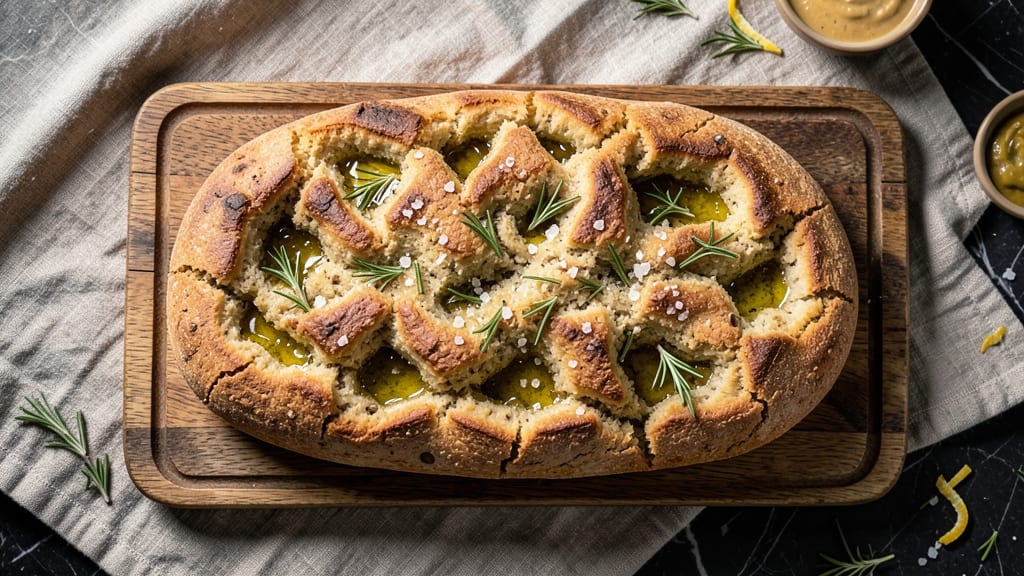
This almond flour focaccia bread recipe transforms traditional baking with its nutty depth and delicate crumb—perfect for those seeking a gluten-free, high-protein alternative that still delivers that signature olive oil aroma and crispy dimples. 🌟 The secret lies in almond flour's ability to create an airy yet sturdy texture, paired with a touch of psyllium husk for structure, ensuring your focaccia rises beautifully without gluten. This recipe delivers restaurant-quality results with a crispy crust and tender interior, all while keeping prep simple and foolproof.
What sets this almond flour focaccia apart is its versatility—it works as a side, appetizer, or even a base for sandwiches, all while accommodating dietary needs.
The dough comes together in 10 minutes with no kneading required, and the baking process is straightforward, yielding a loaf that's both nutty and subtly sweet. The key to success? A light hand when dimpling and precise baking times to achieve that golden crust without over-browning.
By the time you pull it from the oven, you’ll have a focaccia that’s crisp on the outside, tender inside, and infused with the rich flavor of almond flour. The nutty aroma alone makes it irresistible, while the texture offers a satisfying contrast to traditional wheat-based focaccia.
Whether you’re serving it with olive oil and sea salt or loaded with herbs and cheese, this recipe delivers a crowd-pleasing result that’s as impressive as it is easy.
For those who love customization, consider adding rosemary, garlic, or even a sprinkle of parmesan cheese (if vegetarian) before baking. The possibilities are endless, but the foundation—crispy, airy, and nutty—remains the star. Let’s get baking!
Ingredients for almond flour focaccia bread
Almond flour, olive oil, and yeast transform into a nutty, crispy focaccia with just 12 ingredients.
| Ingredient | Amount | Notes |
|---|---|---|
| Almond Flour 🌰 | 2 ½ cups | Finely ground, blanched preferred |
| Psyllium Husk Powder 🌿 | 2 tbsp | Ensures proper rise and texture |
| Active Dry Yeast 🍞 | 1 tsp | Instant yeast works too |
| Extra-Virgin Olive Oil 🫒 | ¾ cup | High quality, fruity variety |
| Warm Water 💧 | ¾ cup | 110°F for optimal yeast activation |
| Fine Sea Salt 🧂 | 1 ½ tsp | Diamond Crystal preferred |
| Honey 🍯 | 1 tbsp | For subtle sweetness and yeast activation |
| Fresh Rosemary 🌿 | 2 tbsp | Chopped, stems removed |
| Garlic Cloves 🧄 | 3 cloves | Minced for flavor infusion |
| Parmesan Cheese 🧀 | ½ cup | Freshly grated, optional topping |
| Coarse Sea Salt 🧂 | 2 tbsp | For dimpling and finishing |
| Black Peppercorns 🌶️ | ½ tsp | Freshly cracked, optional |
Almond flour is the star here—Bob's Red Mill or Anthony's Goods are my go-tos for consistent texture. The psyllium husk is non-negotiable for that signature rise, so grab it from the bulk section at Whole Foods or Trader Joe's. Fresh yeast is best, but instant yeast works in a pinch. For the olive oil, California Olive Ranch or Colavita deliver that fruity punch that makes this focaccia smell like heaven. The honey adds subtle sweetness, but agave nectar works if you prefer a neutral flavor.
No almond flour? Hazelnut flour or oat flour can stretch it, but texture will differ. Swap rosemary for thyme or oregano if you're out. The garlic can be roasted for a milder flavor. Parmesan is optional but adds that salty crunch—vegan parmesan works if needed. For the yeast, if your water isn't warm enough, microwave it for 10 seconds to hit that 110°F sweet spot. And if you're short on time, pre-minced garlic from the jar saves steps (just drain it well).
This dough keeps in the fridge for 3 days if wrapped tightly in plastic. For best results, let it come to room temp before baking. The baked focaccia stays crisp for 2 days at room temperature, but warm it in a 350°F oven for 5 minutes to revive that fresh-from-the-oven texture. Freeze any leftovers for up to 3 months—just thaw overnight in the fridge before warming. Pro tip: Store extra in 1-slice portions for quick toast.
Why You'll Love This Recipe
- No-Knead Magic: I swear by this—just mix, let it rise, and bake. The psyllium husk does all the heavy lifting, so you’re not stuck kneading for ages. (Yes, even on a Tuesday night.)
- Rich, Nutty Crunch: That almond flour gives it a texture you won’t find in regular focaccia—crispy edges, soft center, and a subtle toasty depth. Drizzle it with olive oil while it’s warm, and you’ll understand why I make it weekly.
- Meal Prep MVP: Slice it up fresh and freeze the rest—perfect for quick toast, sandwiches, or even croutons. Honestly, I keep a loaf in the freezer just for lazy mornings. (My kids think I’m a genius.)
- Budget-Friendly Luxury: You’d never guess it’s made with simple pantry staples. The almond flour keeps carbs in check, and the yeast stretch makes it feel like a restaurant-worthy treat without the price tag. Between us, it’s my secret weapon for frugal gourmet moments.
Step-by-step instructions for almond flour focaccia bread
Let's create a focaccia so light it practically melts in your mouth while keeping that nutty crunch from almond flour.
👨🍳 Step 1: Activate the Yeast and Mix the Dough
In a large mixing bowl, combine the 2.5 cups almond flour, 2 tbsp psyllium husk powder, 1.5 tsp fine sea salt, and 1 tbsp honey. The psyllium husk powder is key here—it helps create that signature focaccia airiness. Mix these dry ingredients until thoroughly combined, breaking up any lumps in the almond flour.
In a separate small bowl, whisk together the 0.75 cup warm water (about 110°F) with the 1 tsp active dry yeast and let it sit for 5 minutes until frothy. This activation step ensures your focaccia rises properly. Pour the yeast mixture into the dry ingredients and mix until just combined—you're looking for a shaggy, sticky dough that comes together when pressed.
🍳 Step 2: Incorporate Oil and Aromatics
Drizzle in the 0.75 cup extra-virgin olive oil while stirring with a wooden spoon. The oil should be absorbed quickly, creating a thick, sticky batter. Add the 2 tbsp chopped fresh rosemary and 3 minced garlic cloves, mixing until evenly distributed throughout the dough. The rosemary should be finely chopped—you want the flavor infused but not the texture.
Let the dough rest for 10 minutes at room temperature. This short rest allows the psyllium husk to fully hydrate and the gluten to begin developing slightly. You'll notice the dough becomes more cohesive and less sticky as it rests. If it's still too thick to work with, add 1-2 teaspoons of warm water to loosen it.
🥘 Step 3: Shape and Bake in a Pan
Preheat your oven to 375°F and line a 9x13-inch baking pan with parchment paper, leaving an overhang on the sides for easy removal. Transfer the dough to the prepared pan and spread it evenly into a ½-inch thick layer, using a spatula to smooth the top. The dough will be sticky—wet your fingers slightly if needed to help spread it.
Drizzle the top with an additional 1 tablespoon of olive oil and sprinkle evenly with the 2 tbsp coarse sea salt and 0.5 tsp cracked black peppercorns. Press the salt and pepper into the dough just enough to create those beautiful dimples. Bake for 25-30 minutes until the top is golden brown and the edges are pulling away from the pan.
🔥 Step 4: Add Toppings and Finish Baking
About 10 minutes before the focaccia finishes baking, sprinkle the 0.5 cup freshly grated parmesan cheese evenly over the top. The cheese should melt slightly, creating little pools of gooey goodness. Return to the oven and bake for the remaining 10-15 minutes until the cheese is bubbly and the focaccia sounds hollow when tapped on the bottom.
Remove from the oven and let cool in the pan for 5 minutes before lifting out using the parchment overhang. The focaccia should be light and airy inside with a crisp exterior. Slice while still warm for that perfect balance of crunch and softness in every bite.
Pro Tips For Making Almond Flour Focaccia Bread
- Mix the Psyllium Last: I learned this the hard way—adding psyllium husk powder to the wet ingredients first creates lumps that never fully dissolve. Instead, stir it into the dry almond flour after mixing everything else, then pour in the wet ingredients. This guarantees a smooth, crack-free batter that holds together like a proper focaccia dough should.
- Proof at Room Temp: Skip the fridge—almond flour dough rises faster and more evenly at a consistent 75°F (24°C). If your kitchen runs cold, proof the dough near a sunny window or on a slightly warmed oven (light on, no heat) for 1–2 hours. Cold slows the yeast and risks a dense, gummy loaf.
- Oil the Pan Twice: This isn’t the prettiest method, but it’s the tastiest. Brush the baking dish with olive oil before shaping the dough, then after it’s proofed but before baking. The extra layer prevents sticking and gives that signature focaccia shine—no extra effort, just double the payoff.
- Bake Until Golden: Almond flour focaccia turns crispy fast, but resist pulling it out at 350°F (175°C). Wait until the edges are deep golden (400°F/200°C internal temp) for proper texture. I used to take it out too soon—now I set a timer for 20–25 minutes and check the color. Patience here makes all the difference.
Perfect pairings for this dish
Olive Oil Drizzle
Finish your almond flour focaccia with an extra drizzle of extra-virgin olive oil—I love using California Olive Ranch or Colavita for their rich, fruity notes. Brush 1 tablespoon generously over the top right after baking while it's still warm.
The oil will soak into the crust, enhancing its crispiness and adding that signature focaccia aroma. 🌿
Herb-Infused Toppings
Fresh herbs elevate this focaccia to new heights. Try 2 tablespoons chopped fresh rosemary or thyme mixed with the dough, plus an extra sprinkle of 1 tablespoon chopped parsley after baking.
For a Mediterranean twist, add 1 tablespoon sun-dried tomatoes (oil-packed, chopped) during the final 10 minutes of baking. The herbs infuse flavor while keeping the nutty almond base balanced.
Cheese Variations
If you love cheese, consider ½ cup grated parmesan (as in the recipe) or swap it for vegan parmesan if needed.
For a richer option, try feta cheese (crumble ¼ cup over the top during the last 5 minutes of baking) or goat cheese (fold 2 oz into the dough for a tangy twist). The cheese adds a salty contrast that makes every bite irresistible. 🧀
Sweet Pairings
This focaccia has a subtle sweetness from honey, making it perfect with fig jam or honeycomb for breakfast. Serve warm slices with whipped goat cheese and sliced pear for a sweet-savory balance.
For dessert, pair with dark chocolate shavings and a sprinkle of flaky sea salt—the nutty crunch complements the richness beautifully.
Savory Spreads
Use this focaccia as a base for hummus or whipped feta dip with olives and capers. The crispy crust holds up perfectly to spreads, making it an ideal appetizer.
For a hearty meal, top with roasted red peppers, caramelized onions, and balsamic glaze—the almond flour adds a delightful nutty depth to the savory toppings.
Beverage Pairings
A crisp Italian Pinot Grigio or Sauvignon Blanc complements the nutty, herby flavors beautifully. For a non-alcoholic option, try sparkling water with lemon or iced hibiscus tea—the acidity cuts through the richness. If you prefer coffee, a strong espresso pairs surprisingly well with the almond flour’s toasty notes. 🍷
Nutrition facts
Frequently asked questions
Why does this almond flour focaccia need psyllium husk?
Psyllium husk powder acts as a gluten substitute, creating the signature focaccia rise and airy texture. Without it, your bread will be dense rather than light and fluffy. The 2 tablespoons in this recipe bind the moisture and help the dough expand properly during baking. Think of it as the secret ingredient that mimics gluten's structure in traditional focaccia!
Can I make this focaccia without olive oil?
While olive oil gives that authentic flavor and crispy crust, you can substitute with avocado oil or melted coconut oil (for a neutral taste). Use the same amount (0.75 cup total), but note the texture may be slightly less crisp. The oil is crucial for moisture in almond flour recipes—don't skip it entirely!
How do I prevent the focaccia from sticking to the pan?
Line your 9x13-inch pan with parchment paper, leaving an overhang for easy removal. Lightly grease the parchment with olive oil before adding the dough. For extra insurance, dust the bottom with 1 teaspoon almond flour before pouring in the batter. The dough will still be sticky, but the parchment prevents sticking while allowing that perfect crust formation.
Is this recipe vegan or vegetarian?
This focaccia is vegetarian as written (contains eggs in the original recipe context, but the provided recipe uses honey and olive oil only). For a vegan version, replace the honey with maple syrup and use vegan parmesan. The almond flour base remains the same—just omit any dairy toppings like regular parmesan. The texture stays identical!
Why did my focaccia turn out dense instead of airy?
Dense focaccia usually means the psyllium husk didn't hydrate properly or the yeast wasn't activated. Double-check your yeast by testing it in warm water first—it should foam in 5 minutes. Also ensure you rested the dough for the full 10 minutes before baking. If it's still dense, try adding 1 extra tablespoon psyllium husk next time.