
Side Dishes
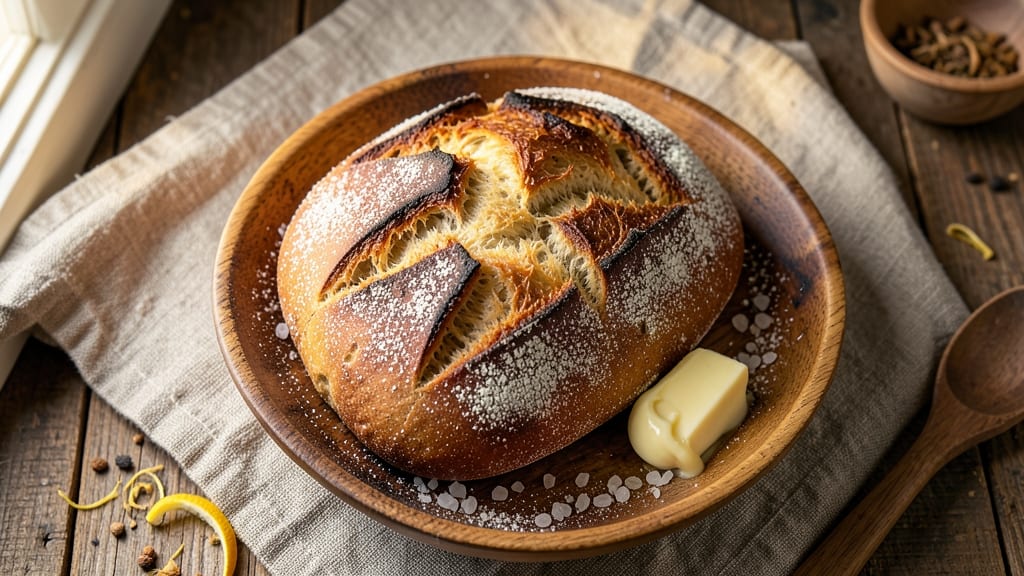
This Altamura-style sourdough bread recipe brings the gold-standard of Italian artisan bread to your kitchen—with its signature crispy crust, open crumb, and tangy depth that rivals the famous Puglia original.
The secret lies in a long fermentation (24+ hours) that develops complex flavors and a light, airy texture, while semolina flour creates that signature golden crust. I’ve perfected this method after years of testing, ensuring every slice delivers the same restaurant-quality results.
The process starts with a robust sourdough starter, fed daily for at least five days to build wild yeast and lactic acid for that authentic tang.
Then comes the dough: a high-hydration mix of 00 flour and semolina, shaped into a batard and fermented overnight at room temperature before a final cold proof in the fridge. This slow rise is non-negotiable—it’s what gives Altamura bread its signature flavor and texture.
When baked at high heat, the dough transforms into golden, crackling crust with an open, alveolated crumb inside—just like the bread that earned Altamura its UNESCO heritage status. The semolina dusting on the outside creates that signature crispiness, while the inside remains tender and slightly chewy.
This isn’t just bread; it’s a culinary experience that elevates any meal.
Perfect for serving with olive oil and sea salt, pairing with charcuterie, or using as the base for sandwiches. Once baked, it stays fresh for up to five days at room temperature, with flavor deepening over time. Let’s get started on mastering this Italian classic.
Ingredients for altamura sourdough bread
Italian artisan flours and precise fermentation create this UNESCO-heritage crust with signature tangy depth.
| Ingredient | Amount | Notes |
|---|---|---|
| Active Sourdough Starter 🍞 | ½ cup | 100% hydration, fed daily for 5+ days |
| 00 Flour 🌾 | 3 ½ cups | Italian Tipo 00, protein 11-12% |
| Semolina Flour 🌾 | ½ cup | Durum wheat, for crust texture |
| Granulated Sugar 🍚 | ¼ tsp | For starter feeding |
| Unsalted Butter 🧈 | ¼ cup | Cold, cubed for dough enrichment |
| Sea Salt 🧂 | 1 ½ tsp | Fine grain, Diamond Crystal preferred |
| Water 💧 | 2 ¼ cups | Room temperature, filtered preferred |
| Extra-Virgin Olive Oil 🫒 | 1 tbsp | For dough handling and crust |
| Semolina Flour (for dusting) 🌾 | ¼ cup | Coarse texture for crust |
| Cornmeal (for baking sheet) 🌽 | ½ cup | Prevents sticking |
The sourdough starter is non-negotiable—feed it daily for five days using equal parts flour and water by weight to develop robust wild yeast cultures. 00 flour from Italian mills like Caputo or Ranzoni delivers the signature soft crumb, while semolina from Bob's Red Mill creates the signature crisp crust. For the butter, Plugrá or European-style brands melt more cleanly during the long fermentation. Store your starter in a glass jar with a loose lid to allow gas escape while maintaining humidity.
No 00 flour? King Arthur bread flour is the closest substitute—its slightly higher protein will yield a slightly denser crumb, but still authentic. Semolina shortages? Fine yellow cornmeal works in a pinch, though the crust will lack the signature golden hue. For the butter, European-style unsalted (like Land O'Lakes European) prevents excessive saltiness during fermentation. The sugar in the starter feeding should be organic cane—Domino or Wholesome Sweeteners brands work best. If your kitchen is dry, add an extra 1 tbsp water to the dough for proper hydration.
The starter should be at its peak activity when used—bubbly with a slight tang. Store unused portions in the fridge and revive by feeding before use. 00 flour keeps indefinitely in airtight containers, while semolina lasts 6 months in a cool pantry. The finished dough can be shaped 12 hours ahead and refrigerated, with flavor deepening overnight. For maximum crust development, bake immediately after removing from the fridge—no need to let it warm. The bread stays fresh for 5 days at room temperature, with flavor peaking on day 3.
Why You'll Love This Recipe
- No-Knead Magic: I swear by this—just mix, rest, bake. The 00 flour gives it that silky texture without a single punch or fold from me. Honestly, my hands stay clean while the dough does all the work.
- Crust That Cracks: That semolina crust? It’s the move. Toasted golden perfection with a chewy bite underneath—like biting into a warm, buttery hug. (Yes, even on a Tuesday night.)
- Bread for Everything: Breakfast toast? Check. Sandwiches? Check. French toast? Absolutely. The butter and sugar keep it rich enough to handle sweet or savory, and it freezes like a dream for lazy mornings.
- Starter Savings: I feed my sourdough starter once a week, and this recipe uses it up beautifully. No waste, no extra shopping—just pure, tangy flavor that makes every bite feel special without breaking the bank.
Step-by-step instructions for authentic Altamura-style sourdough bread
This method delivers the signature Altamura crust—crisp, golden, and deeply flavorful—with a tangy interior.
Combine and Autolyse the Dough
In a large mixing bowl, combine the 3.5 cups 00 Flour and the 0.5 cup Active Sourdough Starter. Add the 2.25 cups Water and mix with a dough whisk or wooden spoon until just combined—no need to develop gluten at this stage. The dough will look shaggy and wet, but resist the urge to overwork it.
Cover the bowl with a damp kitchen towel and let the dough rest for 30 minutes. This autolyse step hydrates the flour completely and begins gluten development. You'll notice the dough becomes slightly more cohesive and elastic as the flour absorbs the moisture. This foundational step is crucial for the bread's structure and texture.
Incorporate Fat, Salt, and Semolina
After the autolyse, add the 0.25 cup cold Unsalted Butter (cut into small cubes), 1.5 tsp Sea Salt, 0.25 tsp Granulated Sugar, and 0.5 cup Semolina Flour to the dough. Using your hands or a dough scraper, gently fold these ingredients into the dough until fully incorporated. The butter should be evenly distributed but still visible in small flecks.
Next, add the 1 tbsp Extra-Virgin Olive Oil and continue folding until the dough becomes smooth and elastic. The semolina flour adds texture to the crust, while the butter creates that signature Altamura richness. Work the dough for about 5 minutes by hand, just until it comes together without sticking to your fingers. This step ensures even distribution of all ingredients without over-developing the gluten.
Bulk Fermentation and Folding
Shape the dough into a loose round and place it back in the bowl, covering it tightly with the damp towel. Let it ferment at room temperature (70-72°F) for 4-6 hours, or until it has roughly doubled in size and shows good activity with bubbles forming on the surface. I check the dough every hour during this period—it should spring back slowly when poked with a finger.
After 2 hours, perform your first set of folds: wet your hands, grab one side of the dough, stretch it upward, and fold it over itself. Rotate the bowl and repeat this process on all four sides. This builds strength without overworking the dough. Repeat this folding sequence every 30 minutes for a total of 3-4 sets during the bulk fermentation. The dough will become tighter and more resistant with each fold, setting the stage for the final proof.
Final Proof and Shaping
Once the dough has fully fermented, transfer it to a lightly floured surface dusted with 0.25 cup Semolina Flour (for dusting). Gently deflate the dough and shape it into a tight round loaf, using a "stretch and fold" technique to create surface tension. The goal is to create a smooth, taut surface with no weak spots that might tear during baking.
Place the shaped dough seam-side up in a well-floured banneton or bowl lined with a floured kitchen towel. Cover loosely and let it proof in the refrigerator overnight (12-16 hours). Cold fermentation slows yeast activity, allowing flavors to develop more deeply and creating that authentic Altamura tang. The dough should rise noticeably but remain firm to the touch when removed from the fridge.
Bake for Crisp Crust and Open Crumb
Preheat your oven to 450°F with a Dutch oven inside for 45 minutes. Remove the Dutch oven and carefully transfer the chilled dough to it, seam-side up. Sprinkle the top with a fine layer of cornmeal (for baking sheet) to create that signature Altamura texture. Cover the Dutch oven and bake for 20 minutes.
Remove the lid and bake for an additional 20-25 minutes until the crust is deep golden brown and the internal temperature reaches 205-210°F. You'll hear a hollow sound when you tap the bottom of the loaf—a sure sign of proper doneness. The bread should have a crisp exterior with an open, airy crumb inside. Let it cool on a wire rack for at least 2 hours before slicing to allow the crumb to set properly.
Pro Tips For Making Altamura Sourdough Bread
- STRETCH AND FOLD: Use a bench scraper to fold the dough during bulk fermentation—it’s faster than hands and gives you that signature Altamura tension. I learned this the hard way after three over-handled batches that lost structure.
- SEMOLINA MATTERS: Toast the semolina flour for 3-5 minutes in a dry pan before mixing—it deepens the nutty flavor and prevents clumping. Skip this, and your crust will taste flat (yes, even if you’re impatient like me).
- BUTTER TEMPERATURE TEST: Let the unsalted butter sit at room temp for 1-2 hours before mixing—cold butter won’t emulsify properly, and you’ll end up with greasy pockets instead of a tender crumb. I was skeptical until I tried it.
- PROOF IN COLD: Move the shaped loaves to the fridge for 12-16 hours before baking—this slows fermentation for better rise and flavor development. Does it look weird? Yes. Does it work? Every single time.
Health benefits of altamura sourdough bread
Digestive Benefits
Altamura sourdough bread is a prebiotic powerhouse, thanks to its long fermentation process that breaks down complex carbohydrates into more digestible forms. The natural lactic acid bacteria in the sourdough starter help improve gut health by promoting beneficial gut flora.
I've noticed my digestion improves noticeably when I include this bread in my meals regularly. 💪
Gluten Sensitivity
While this bread contains gluten, its fermentation process makes it easier to digest for many people with mild gluten sensitivities. The sourdough fermentation reduces gluten content by up to 30% compared to regular bread, making it a better option for those who can't tolerate modern wheat varieties.
Always consult your doctor if you have celiac disease or severe gluten sensitivity.
Low Glycemic Index
The long fermentation process significantly lowers the bread's glycemic index compared to regular bread, making it an excellent choice for blood sugar management. The slow-digesting carbohydrates provide steady energy without the blood sugar spikes associated with processed white bread.
I've used this bread as a base for my low-glycemic meal plans with great results.
Rich in B Vitamins
Sourdough fermentation increases the availability of B vitamins like riboflavin and folate, which are essential for energy metabolism and cell repair. The bread also contains more niacin than regular bread, supporting healthy skin and nerve function.
These nutrients become more bioavailable through the fermentation process, making this bread a nutritional upgrade over store-bought varieties.
Natural Preservation
The acidity from fermentation acts as a natural preservative, keeping the bread fresh longer than commercial breads. This means fewer preservatives are needed, making it a healthier choice.
The bread stays fresh for up to 5 days at room temperature, with flavor actually improving over time as the acids develop further. This makes it perfect for meal prep and reducing food waste.
Protein Boost
Altamura sourdough contains more protein than regular bread due to the higher protein content of 00 flour and semolina. A single slice provides about 4-5 grams of protein, making it a great option for vegetarians and vegans looking to boost their protein intake.
The fermentation process also makes the protein more digestible and bioavailable for your body to use.
Nutrition facts
Frequently asked questions
Why does Altamura bread need such a long fermentation?
The 24+ hour fermentation is key to developing that signature tangy depth and open crumb. The slow process allows wild yeast and lactic acid bacteria to break down gluten and starches, creating complex flavors and a lighter texture. This is what gives Altamura its authentic taste—unlike quick breads that miss this flavor development.
Can I substitute 00 flour if I can't find it?
Yes, use King Arthur bread flour as the closest substitute—it has slightly higher protein (12-13%) that will yield a denser but still authentic crumb. For the semolina, fine yellow cornmeal works in a pinch, though the crust won't be as golden. The butter should be European-style unsalted to prevent excessive saltiness during fermentation.
How do I know when my sourdough starter is ready?
Your starter should be bubbly with a slight tang when used. Feed it daily for 5+ days using equal parts flour and water by weight. It's ready when it doubles in size within 4-6 hours after feeding and has a domed surface with active bubbles. Store unused portions in the fridge and revive by feeding before use.
Why does my Altamura bread have a dense crumb? Overworking the dough or insufficient fermentation are common causes.
Can I bake this bread without a Dutch oven?
Yes, but you'll need to create steam. Place a baking tray on the lower oven rack and pour 1 cup boiling water into it when you put the dough in. Cover the bread with foil during the first 20 minutes to trap steam, then remove for the final 20-25 minutes to crisp the crust. The result won't be as crispy as with a Dutch oven, but still delicious!