
Side Dishes
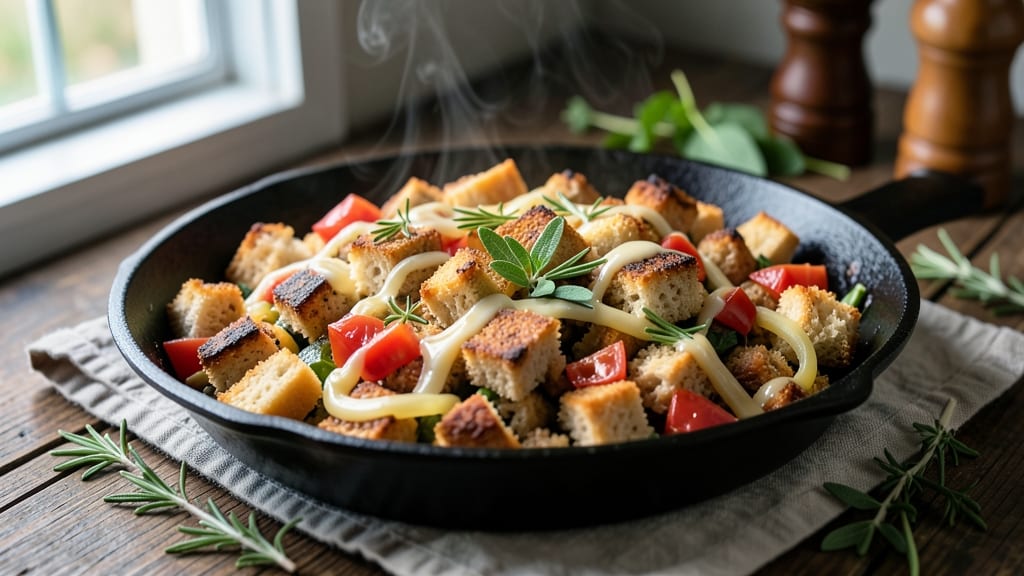
This Amish bread stuffing recipe transforms simple pantry staples into a savory centerpiece that brings comfort and tradition to your holiday table. The secret lies in perfectly cubed bread soaked in aromatic broth, then baked until golden and crispy at the edges—just like your grandmother used to make.
I've perfected this version over years of family gatherings, where it disappears faster than the mashed potatoes.
The beauty of this recipe is its simplicity: no fancy techniques, just quality ingredients working together. We'll use a mix of herbs—sage, thyme, and rosemary—that infuse the stuffing with earthy, warming flavors, while onions and celery form the aromatic base.
The butter adds richness that makes every bite irresistible, and the slow baking ensures the bread stays moist while developing that perfect crunch.
What you'll end up with is a stuffing that's tender yet substantial, with crispy edges that add texture to every bite. The aroma alone will have everyone gathering around the table, and the taste?
Pure comfort food magic. This recipe serves 12 generously, making it perfect for holiday feasts or Sunday dinners when you want to impress.
The best part is how versatile it is—add sausage for meat lovers, or keep it vegetarian with extra mushrooms and walnuts. Either way, this stuffing delivers the heartwarming flavors of Amish cooking that make every meal feel special. Let's get started on creating this family favorite.
Ingredients for amish bread stuffing
Twelve simple ingredients that turn into the heart of your holiday table—crispy, herby, and full of tradition.
| Ingredient | Amount | Notes |
|---|---|---|
| Day-Old Bread Cubes 🍞 | 10 cups | Stale or lightly toasted preferred |
| Unsalted Butter 🧈 | ¾ cup | Cold, cubed for even browning |
| Fresh Sage Leaves 🌿 | ½ cup | Chopped, stems removed |
| Fresh Thyme Leaves 🌿 | ¼ cup | Or 1 tbsp dried thyme |
| Fresh Rosemary 🌿 | ¼ cup | Chopped, finely |
| Yellow Onion 🧅 | 1 whole | Diced small, about 1 cup |
| Celery Stems 🥬 | 4 whole | Diced small, about 1 cup |
| Chicken Broth 💧 | 2 ½ cups | Low-sodium preferred |
| Large Eggs 🥚 | 2 whole | Beaten for binding |
| Salt 🧂 | 1 ½ tsp | Adjust to taste |
| Ground Black Pepper 🌶️ | 1 tsp | Freshly cracked |
| Garlic Cloves 🧄 | 4 cloves | Minced fine |
The bread is everything here. Day-old loaves are ideal—they soak up broth perfectly—but lightly toasted cubes work too. I always grab a French or sourdough loaf from the bakery section at Whole Foods or Trader Joe's for that perfect texture. The herbs? Fresh is non-negotiable—sage, thyme, and rosemary need to be vibrant. If your rosemary looks sad, give it a quick soak in warm water to revive it. For the broth, low-sodium is key unless you want to adjust the salt later. I make a big batch of homemade chicken broth for this—freezes perfectly for next year's stuffing.
No fresh herbs? Dried thyme at half the amount works in a pinch, but fresh is worth hunting down. Short on butter? Olive oil or coconut oil keeps it vegan, though butter gives that classic richness. The eggs are just for binding—if you're making a vegan version, add 1 tbsp flaxseed meal + 3 tbsp water per egg. For extra crunch, I sometimes add 1/2 cup pecans or walnuts to the mix. The garlic can be pre-minced from a jar, but freshly minced makes all the difference—just 30 seconds with a microplane. And if you're feeling fancy, add 1/4 cup dried cranberries for a sweet-tart twist.
This stuffing keeps beautifully—3 days in the fridge, 3 months frozen. I always make a double batch because it disappears fast. For freezing, spread it on a tray first to solidify, then transfer to a bag. Reheat covered at 350°F for 20 minutes—the edges get crispy again, just like fresh. Leftovers? Toss with extra herbs and a splash of broth to revive. And if you're serving it in a cast-iron skillet, it'll get even crispier—worth the extra minute in the oven.
Why You'll Love This Recipe
- No Waste, All Flavor: I swear by using day-old bread—no sad, stale loaves here. The cubes soak up butter and herbs like a sponge, turning what would’ve been trash into the star of your meal.
- Herb-Packed Punch: That trio of sage, thyme, and rosemary? It’s like a cozy hug in your mouth. The rosemary adds a piney brightness, while the sage and thyme mellow out with buttery richness—simple, but ridiculously good.
- Holiday or Weeknight: Stuff this into a turkey for Thanksgiving, or pile it over roasted veggies for a Tuesday dinner. Same recipe, zero guilt—it’s that unfussy.
Step-by-step instructions for Amish bread stuffing
Transform simple ingredients into a fragrant, golden-brown stuffing that's crispy on the outside and tender within.
Sauté the Herb and Vegetable Base
In a large oven-safe skillet, melt the 0.75 cup unsalted butter over medium heat. Add the 1 whole yellow onion and 4 whole celery stems, both diced small, along with the 4 cloves garlic cloves, minced fine. Cook for 5-6 minutes until the vegetables soften and the garlic becomes fragrant.
Next, stir in the 0.5 cup fresh sage leaves, 0.25 cup fresh thyme leaves, and 0.25 cup fresh rosemary, all chopped finely. Cook for another 1-2 minutes until the herbs release their aromatic oils and the mixture smells deeply savory. This step builds the flavor foundation—don't rush it, as the herbs need time to bloom.
Toast the Bread Cubes
Increase the heat to medium-high and add the 10 cups day-old bread cubes to the skillet. Stir gently to coat them evenly in the butter and herbs. Toast for 5-7 minutes, stirring occasionally, until the bread cubes are lightly golden and crisp around the edges. This step is crucial—it creates that satisfying crunch while preventing a soggy stuffing.
If your bread cubes are particularly dry, you might need an extra minute or two. Watch closely as they toast—you want them golden, not browned. Remove the skillet from the heat and let it cool for 2-3 minutes while you prepare the next ingredients.
Combine and Bind the Stuffing
Return the skillet to medium heat and pour in the 2.5 cups chicken broth, scraping up any browned bits from the bottom. Stir well to distribute the broth evenly throughout the bread mixture. Let it simmer for 2-3 minutes until the liquid is mostly absorbed but still slightly moist.
In a separate bowl, beat the 2 whole large eggs until lightly frothy. Sprinkle in the 1.5 tsp salt and 1 tsp ground black pepper, then pour the mixture over the bread in the skillet. Gently fold everything together with a wooden spoon until fully combined. The stuffing should hold its shape when pressed lightly—if it feels too loose, add a splash more broth.
Bake to Golden Perfection
Preheat your oven to 375°F. Transfer the skillet to the oven and bake for 20-25 minutes, until the top is deep golden brown and the edges are crispy. For extra crispiness, broil for the last 2-3 minutes, watching closely to prevent burning.
Once baked, remove from the oven and let it rest for 5 minutes before serving. This resting time allows the juices to redistribute, ensuring every bite is moist and flavorful. Serve warm, straight from the skillet, with gravy for dipping—it's that good.
Pro Tips For Making Amish Bread Stuffing
- Dry the Cubes Right: Skip the microwave—lay your day-old bread cubes on a baking sheet in a single layer and bake at 300°F (150°C) for 15 minutes. This dries them evenly without turning them into breadcrumbs, which is the thing that matters most for that perfect crumbly texture. I learned this the hard way after my stuffing turned into a sad, gluey mess.
- Salt the Butter First: Toss your unsalted butter with 1 teaspoon of salt before mixing it into the bread cubes. This guarantees even seasoning throughout, especially if you’re using fresh herbs that can overpower the dish. Trust me, your stuffing will taste more balanced—no need to adjust later.
- Chop Herbs Coarse: Roughly chop your fresh sage, thyme, and rosemary—about ½-inch pieces—so they infuse flavor without turning the stuffing into a mouthful of greens. My grandmother swore by this, and she was right: the herbs should melt into the dish, not dominate it.
- Bake Low and Slow: Cover your stuffing loosely with foil and bake at 325°F (165°C) for 30 minutes before uncovering. This keeps it moist while letting the edges crisp just enough. Sounds weird, but it works: high heat too soon = dry stuffing; slow start = perfect texture.
Regional styles of this dish
Pennsylvania Dutch Roots
The Amish bread stuffing we know today traces back to the Pennsylvania Dutch tradition, where hearty, resourceful cooking used simple pantry staples to create rich flavors.
The Amish community, known for their self-sufficiency, adapted European techniques using locally available ingredients like day-old bread, herbs from gardens, and homemade broth. This stuffing became a centerpiece during harvest feasts and holiday gatherings, where every bite carried the warmth of community and tradition. 🌾
In Lancaster County, where Amish communities thrive, this dish was often prepared in cast-iron skillets over wood-fired stoves, giving it that signature crispy crust. The use of fresh herbs like sage and thyme reflects the Amish practice of growing their own produce—nothing went to waste in their kitchens.
Even today, families in these regions serve this stuffing as a symbol of simplicity and gratitude, proving that the best meals often come from the most humble ingredients.
Ohio Amish Variations
In Ohio’s Amish country, particularly around Geauga and Holmes counties, the stuffing often includes extra crispy onions sautéed until caramelized—a nod to the region’s love of sweet, slow-cooked vegetables. Here, cornbread sometimes replaces or mixes with white bread for a slightly sweeter, denser texture.
The Ohio version also tends to use more butter (up to 1 cup), reflecting the region’s dairy-rich traditions. This variation is especially popular during Thanksgiving, where it’s served alongside roast turkey and mashed potatoes.
Another Ohio twist is the addition of dried apples or raisins (about ½ cup) for a subtle sweetness that balances the savory herbs. This adaptation likely stems from the Amish practice of preserving fruits during harvest season.
For extra texture, some families fold in toasted pecans or walnuts, which add a satisfying crunch that’s missing from the classic recipe. The result? A stuffing that’s both nostalgic and innovative, just like the Amish communities that created it.
Midwestern Farmhouse Style
Across the Midwest, particularly in Indiana and Illinois, Amish bread stuffing often takes on a rustic, farmhouse aesthetic with a focus on homemade ingredients. Here, chicken broth is frequently homemade, simmered for hours with vegetable scraps, herbs, and even a splash of apple cider for depth.
The stuffing is often baked in enamelware or ceramic dishes (like Le Creuset) instead of skillets, allowing for larger batches perfect for family gatherings.
In this region, sausage or ground pork (about ½ lb) is a common addition, especially for meat lovers. The pork is browned first and mixed into the stuffing for a rich, smoky flavor.
For a vegetarian twist, mushrooms and lentils replace the meat, keeping the dish hearty and satisfying. The Midwest version also tends to use more garlic (up to 6 cloves) and a pinch of nutmeg, giving it a slightly warming, spiced profile that’s perfect for cold winters.
Southern Amish Twists
In Southern states like Tennessee and Kentucky, where Amish communities have grown, the stuffing incorporates Southern staples like cornbread and andouille sausage. Here, smoked paprika (about ½ tsp) and a dash of cayenne add a subtle heat that contrasts with the buttery bread.
The Southern Amish also love to deglaze the skillet with a splash of bourbon or apple cider after browning the sausage, adding a deep, caramelized richness to the stuffing.
Another signature Southern touch is the use of collard greens or kale (about 1 cup, chopped), wilted into the stuffing for an earthy, slightly bitter contrast to the sweet bread. This variation is especially popular during Christmas and Easter, when families gather for multi-course meals.
The Southern Amish version is baked in a cast-iron skillet or a ceramic casserole dish, ensuring the edges get deeply crispy while the center stays tender—just like the classic, but with a bold, regional flair.
Nutrition facts
Frequently asked questions
Can I use fresh bread instead of day-old bread?
Fresh bread works, but it won't absorb the broth as well, making your stuffing soggy. For best results, use day-old or lightly toasted bread cubes. If you must use fresh bread, spread the cubes on a baking sheet and dry them in the oven at 200°F for 10-15 minutes before adding to the skillet.
How do I make this stuffing vegetarian?
Swap the chicken broth for vegetable broth and replace the eggs with 2 tbsp flaxseed meal + 6 tbsp water (let it sit for 5 minutes to thicken). For extra flavor, add ½ lb mushrooms, 1 cup cooked lentils, or ½ cup toasted pecans. The texture stays hearty while keeping it plant-based!
Why did my stuffing turn out dry?
Overbaking is the most common cause. Remove it when the edges are golden but the center still feels slightly moist. If it's too dry, sprinkle with extra broth or gravy before serving. For next time, reduce baking time by 2-3 minutes and tent with foil if needed.
Can I make this ahead of time?
This stuffing reheats beautifully. Assemble it up to 24 hours ahead, cover tightly, and refrigerate. Bake from cold at 375°F for 30-35 minutes (add 5 minutes if frozen). For freezing, bake first, cool completely, then store in an airtight container for up to 3 months.
What's the best way to crisp up leftovers?
Spread leftovers on a baking sheet and broil at 400°F for 3-5 minutes, watching closely. For extra crunch, mix with a little extra butter and herbs, then bake at 350°F for 10 minutes. A quick stovetop method: Heat in a skillet with a splash of broth until golden.