Side Dishes
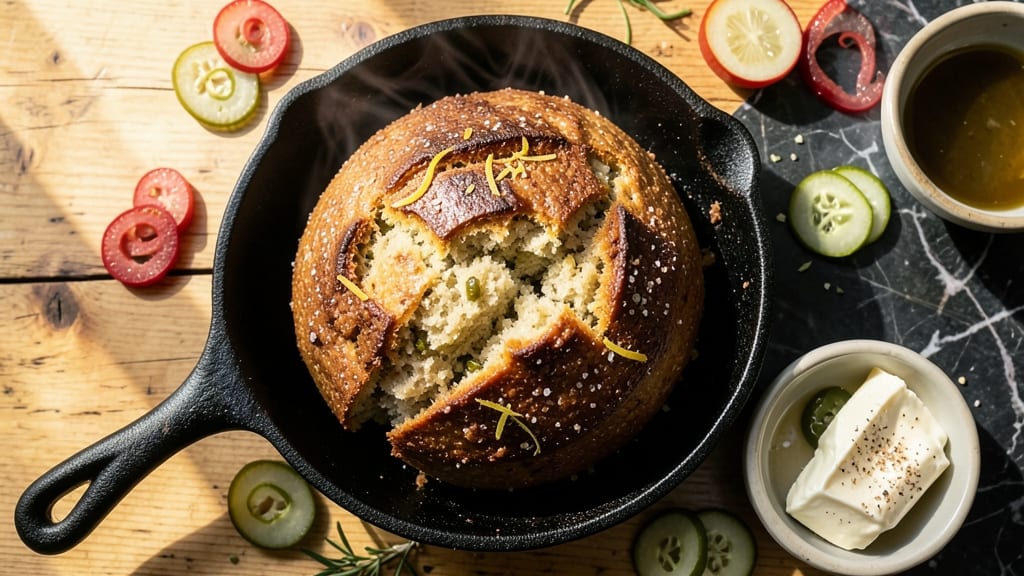
This Amish dill pickle bread recipe delivers the perfect balance of tangy crunch and soft, pillowy crumb—no fancy techniques required.
The secret lies in a simple dough infused with dill pickle juice and topped with crispy pickle slices, creating a harmonious blend of textures and flavors that disappears faster than you can say "second slice."
I developed this recipe during a summer picnic when we ran out of regular bread, and it became an instant crowd-pleaser.
The beauty of this recipe is its versatility and ease—just mix, knead, let the dough rise, and bake. The dill pickle juice adds a subtle tang that brightens the bread, while the pickle toppings provide that satisfying crunch with every bite.
Unlike traditional bread, this version stays moist longer, making it ideal for sandwiches, toast, or simply enjoying with butter.
What sets this bread apart is the textural contrast—soft, airy crumb meets crispy pickle edges, creating a symphony of flavors in every bite. The dough proofing is straightforward, requiring minimal effort but yielding impressive results.
Whether you're hosting a gathering or simply craving something different, this bread delivers restaurant-quality satisfaction with minimal fuss.
Once baked, the golden crust encases a tender interior, while the dill pickle slices on top add both visual appeal and that signature tangy crunch. Perfect for meal prep, gifting, or enjoying fresh from the oven, this recipe proves that homemade bread can be both impressive and effortless.
Let’s get started!
Ingredients for amish dill pickle bread
Eight simple ingredients transform into tangy, crunchy bread with minimal effort.
| Ingredient | Amount | Notes |
|---|---|---|
| All-Purpose Flour 🌾 | 4 cups | Spooned and leveled for accuracy |
| Active Dry Yeast 🍞 | ¼ oz | Or 2 packets (2.25 tsp total) |
| Granulated Sugar 🍚 | ¼ cup | For yeast activation |
| Warm Water 💧 | 1 cup | 110°F (43°C) ideal |
| Unsalted Butter 🧈 | ¼ cup | Softened, full-fat preferred |
| Large Eggs 🥚 | 1 whole | Room temperature |
| Dill Pickle Juice 🥒 | ½ cup | From 1 jar (about 4 oz) |
| Salt 🧂 | 1 ½ tsp | Diamond Crystal preferred |
| Dill Pickle Slices 🥒 | 6 whole | Thin, crisp slices (1/4-inch) |
| Sesame Seeds 🌱 | 1 tbsp | Optional for garnish |
| Coarse Sea Salt 🧂 | 1 tbsp | For sprinkling on top |
| Cornmeal 🌽 | ¼ cup | For dusting baking sheet |
The dill pickle juice is non-negotiable for that signature tang. Use the juice from a quality jar of kosher dills—the brighter the flavor, the better. Trader Joe's or Heinz brands work well, but avoid sweet or vinegar-heavy pickles. The butter should be full-fat and softened—don't melt it, just make sure it's pliable. For the yeast, if it's not fresh, test it in warm water with a pinch of sugar—it should foam within 5 minutes. The flour? King Arthur or Gold Medal are my go-tos for consistent results. And don't skip the cornmeal—it prevents sticking and adds a subtle crunch to the bottom crust.
No dill pickle juice? Substitute with 1/4 cup apple cider vinegar plus 1/4 cup water—it won't taste identical, but it'll add tang. Running low on sesame seeds? Poppy seeds or everything bagel seasoning work beautifully. The bread will still rise without the egg, but it'll be slightly denser—replace with 1 tbsp ground flaxseed plus 3 tbsp water if needed. For a sweeter version, add 1 tbsp honey to the dough. And if you're feeling adventurous, swap half the flour for whole wheat pastry flour for a nuttier flavor. Just be prepared for a denser crumb.
This dough is best made fresh, but you can prep it up to 24 hours ahead—just let it rise in the fridge overnight. The bread keeps well at room temperature for 2-3 days wrapped in a clean kitchen towel, or you can freeze slices for up to 3 months. To reheat, wrap slices in foil and warm in a 350°F oven for 5-7 minutes. The pickles on top crisp up beautifully when baked, but if you want extra crunch, toast them in a dry skillet for 30 seconds before placing on the bread. And trust me—second slices are always better.
Why You'll Love This Recipe
- No-Knead Magic: I swear by this dough—just mix, let it rise, and forget about it. The yeast does all the work while you sip coffee or watch a show. Honestly, I’ve made it while waiting for dinner to cook, and it still turns out golden and tender.
- Tangy Butter Bliss: That butter gets infused with dill pickle juice—sour, herby, and just a little funky. It’s like a warm, buttery hug with a side of briny brightness. My kids fight over the last slice, and I don’t even have to bribe them.
- Breakfast to Picnic: This bread is my go-to for lazy mornings (toasted with jam) or packed in lunchboxes. It’s sturdy enough to handle sandwiches but still soft enough to eat plain. Between us, I’ve even used it as a base for mini open-faced pizzas—yes, even on a Tuesday night.
- Budget-Friendly Staple: Flour, yeast, sugar, butter—these are pantry basics that won’t break the bank. A single batch stretches for days, and the leftovers freeze like a dream. I’ve fed a crowd for under $5, and they never guessed it was this simple.
Step-by-step instructions for Amish dill pickle bread
This bread delivers a perfect balance of tender crumb and tangy crunch—here's how to bake it right.
Activate the Yeast and Mix the Dough
In a large mixing bowl, combine the 1 cup warm water (about 110°F) with the 0.25 cup granulated sugar and 0.25 oz active dry yeast. Let it sit for 5-10 minutes until frothy—this confirms the yeast is active. If it doesn't bubble, your yeast may be old.
In a separate bowl, whisk together the 4 cups all-purpose flour, 1.5 tsp salt, and the 0.5 cup dill pickle juice. Pour the yeast mixture into the dry ingredients and stir until a shaggy dough forms. Add the 0.25 cup softened unsalted butter and 1 whole large egg, mixing until fully incorporated. The dough will be sticky but manageable.
Knead Until Smooth and Elastic
Turn the dough onto a lightly floured surface and knead for 8-10 minutes until smooth and elastic. You'll know it's ready when it springs back slowly when poked. If the dough feels too sticky, add 1 tablespoon of flour at a time until it holds its shape.
Place the dough in a lightly greased bowl, cover with a damp towel, and let it rise in a warm spot for 1-1.5 hours, or until doubled in size. A good test: press a finger into the dough—if it leaves a slow-moving indent, it's ready.
Shape and Second Rise
Punch down the risen dough and divide it into two equal portions. Roll each into a 12-inch log and place them side by side in a 9x5-inch loaf pan lined with parchment paper. Cover again and let rise for 30-45 minutes until puffy.
Preheat your oven to 375°F while the dough rises. Arrange the 6 whole dill pickle slices on top of the dough, slightly overlapping. Sprinkle with 1 tbsp coarse sea salt and 1 tbsp sesame seeds for texture and flavor.
Bake to Golden Perfection
Bake for 25-30 minutes until the bread is deep golden brown and sounds hollow when tapped on the bottom. If the top browns too quickly, tent loosely with foil to prevent over-browning.
Remove from the oven and let cool in the pan for 10 minutes before transferring to a wire rack. The bread will be warm, crusty, and infused with tangy dill pickle flavor—perfect for slicing and serving.
Pro Tips For Making Amish Dill Pickle Bread
- Measure Butter Cold: Take the unsalted butter straight from the fridge—no softening needed. I used to melt it first, thinking it would mix better, but cold butter creates tiny pockets that make the bread fluffier when it bakes. Just cut it into small cubes and let the yeast’s warmth work its magic.
- Bloom Yeast in Sugar Water: Skip the salt in the yeast mixture—use just warm water and sugar to activate it. The sugar feeds the yeast faster, and I’ve never had a batch fail when I do this. Stir it in, cover the bowl, and wait until it’s frothy before adding flour (about 5–10 minutes).
- Knead Until Windowpane: Test dough readiness by stretching a small piece—if it’s thin enough to see light through (like a windowpane), you’re good. I learned this the hard way: under-kneaded dough collapses in the oven, and over-kneaded dough gets tough. Aim for 8–10 minutes by hand or 5–6 on a stand mixer.
- Shape Loaves Tightly: Roll the dough into a tight log, tucking the ends under as you go. Loose ends mean gaps in the crust, and those spots burn before the center cooks. If your hands are too sticky, wet them slightly—it helps seal the dough better.
Dietary considerations for this recipe
Gluten-Free Adaptation
For a gluten-free version, replace the 4 cups all-purpose flour with a 1:1 gluten-free flour blend like King Arthur Measure for Measure or Bob's Red Mill 1-to-1. Add 1 teaspoon xanthan gum to improve elasticity, as gluten-free doughs lack natural structure.
The dill pickle juice and butter remain the same, but expect a slightly denser crumb. 🌾
Low-Carb Option
Swap the flour for 3 cups almond flour and 1 cup coconut flour to cut carbs significantly. Reduce the dill pickle juice to ¼ cup to balance moisture—coconut flour absorbs liquid differently.
Add 1 extra egg for binding, as almond flour lacks gluten’s structural properties. This version works best as a quick bread rather than a risen loaf.
Dairy-Free Modifications
Replace the ¼ cup unsalted butter with ¼ cup dairy-free butter (like Miyoko’s or Earth Balance) or ¼ cup coconut oil, melted and cooled. The dough will still rise well, though the flavor may be slightly less rich.
For extra moisture, add 1 tablespoon olive oil to the dough. The crust will be slightly softer but still crispy when baked.
Allergen-Friendly Notes
Check your dill pickle juice for hidden allergens—some brands contain soy or wheat fillers. For nut-free kitchens, use a certified gluten-free oat flour blend instead of almond flour.
Always verify labels on sesame seeds (common cross-contamination risk) and coarse sea salt (some brands process in shared facilities). A dedicated baking sheet prevents cross-contact with other allergens.
Soy-Free Swaps
If avoiding soy, opt for pickle juice from a vinegar-brined jar (like Bubbies or Claussen) instead of commercial brands that may contain soy lecithin. For the dough, use sunflower seed butter (like SunButter) instead of nut-based flours.
The texture remains similar, but the flavor profile shifts slightly toward earthy notes. Always check labels on dairy-free butter alternatives for soy additives.
Nutrition facts
Frequently asked questions
Can I make this bread without a loaf pan?
Yes! Shape the dough into a round boule or batard instead of logs. Place it on a parchment-lined baking sheet, cover with a towel, and let it rise for 30-45 minutes. Brush with water before baking for a crispier crust. The pickles will still crisp beautifully on top!
How do I store leftover Amish dill pickle bread?
Wrap slices in a clean kitchen towel or store in an airtight container at room temperature for 2-3 days. For longer storage, freeze slices (without toppings) for up to 3 months. To reheat, warm in a 350°F oven for 5-7 minutes until crispy again.
What if my dough doesn't rise properly?
Check your yeast first—it may be expired. Ensure your water is 110°F (not too hot or cold). Place the bowl in a warm spot (like near the oven with the light on) for faster rising. If it still fails, your yeast might be dead—start fresh with a new packet.
Can I add other flavors to this bread?
Try swapping the pickle juice for lemon juice (for citrusy bread) or garlic powder (for savory flavor). For extra flavor, add 1 tsp onion powder or 1 tbsp chopped fresh dill to the dough. The possibilities are endless!
Why does my bread taste bland?
The dill pickle juice is key! Use high-quality vinegar-brined pickles (avoid sweet or spicy varieties). If it still tastes mild, add ½ tsp garlic powder or ½ tsp smoked paprika to the dough. The pickles on top should also be fresh and tangy.