
Side Dishes
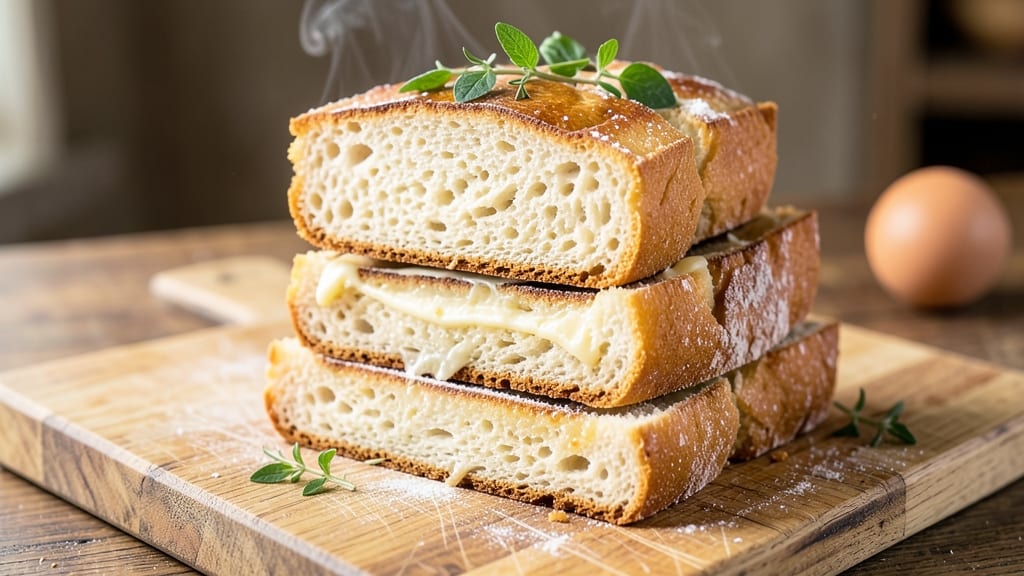
This Amish friendship white bread recipe brings the warmth of a community kitchen to your home with its signature no-knead swirls and crusty crown. 💛 Born from generations of Amish tradition, this bread delivers a tender crumb and slightly sweet flavor that pairs perfectly with butter or jam.
The secret lies in its simple ingredients and overnight rise, creating that signature dense texture without the fuss of kneading.
The beauty of this recipe is in its simplicity—just flour, yeast, sugar, and milk combine to create something extraordinary. Traditional Amish techniques like the overnight rise and steam baking ensure a bread that’s both hearty and delicate, with a golden crust that cracks beautifully when sliced.
This bread isn’t just a loaf; it’s a piece of history, passed down through families and shared among neighbors.
By the time you pull it from the oven, you’ll have a loaf with a crusty crown and tender swirls that crumble just enough for buttery perfection.
The aroma alone will fill your kitchen with nostalgia, and every slice will taste like a hug from someone who’s made it with love. Perfect for breakfast, sandwiches, or as a side to any meal, this bread is a labor of love that’s well worth the wait.
Whether you’re baking for family, friends, or just treating yourself, this recipe delivers restaurant-quality results with a touch of homestyle charm. Let’s get started on creating a loaf that’s as comforting as it is delicious.
Ingredients for amish friendship white bread
Nine simple ingredients transform into a loaf with no-knead swirls and crusty crown magic.
| Ingredient | Amount | Notes |
|---|---|---|
| All-Purpose Flour 🌾 | 5 cups | Unbleached preferred for tender crumb |
| Active Dry Yeast 🍞 | ¼ tsp | Ensure it's fresh and active |
| Granulated Sugar 🍚 | ¼ cup | White sugar for subtle sweetness |
| Unsalted Butter 🧈 | ½ cup | Cold, cubed for swirls |
| Whole Milk 🥛 | 1 ¼ cups | Warmed to room temperature |
| Large Egg 🥚 | 1 whole | Room temperature for best rise |
| Salt 🧂 | 1 tsp | Diamond Crystal preferred |
| Vegetable Oil 🫒 | 2 tbsp | For greasing bowl and pan |
| Cornmeal 🌽 | 2 tbsp | For dusting baking sheet |
| Ice Water 💧 | ½ cup | For shaping the dough |
The flour is where the magic happens—King Arthur or Gold Medal brands deliver that signature tender crumb. If you can't find Diamond Crystal salt, Morton's light salt works fine, but measure carefully since it's finer. For the butter, Land O'Lakes unsalted is my go-to—it's consistent and reliable. The yeast needs to be fresh; toss it in warm milk for 5 minutes to test—it should foam if active. If you're baking in a dry climate, add an extra tablespoon of milk to the dough for extra tenderness (trust me on this).
No yeast? Instant yeast works 1:1, but active dry is traditional here. Short on butter? Use chilled shortening for the swirls—it behaves similarly. The milk can be any kind (whole, 2%, or even almond milk for a lighter version), but whole gives that classic richness. For the sugar, brown sugar adds depth if you prefer a caramel note. If your kitchen is humid, chill the dough for an extra 30 minutes before shaping—it makes all the difference for that crisp crown. The egg? Room temperature is key—cold eggs can make the dough tough.
This dough is a patient loaf—it needs time. Shape it, cover with a damp towel, and let it rise overnight in the fridge. 48 hours is ideal for maximum flavor, but at least 12 hours works in a pinch. The butter swirls should be cold when you shape them—if they soften too much, pop them back in the freezer for 10 minutes. For the crusty crown, bake on a preheated stone or in a Dutch oven if you have one. If not, a heavy baking sheet with a sprinkle of water in the oven creates steam. The bread keeps beautifully wrapped at room temperature for 3 days, or freeze the whole loaf for up to 3 months—just thaw it wrapped in a towel to revive the crust.
Why You'll Love This Recipe
- No-Knead Magic: This bread comes together with just a bowl and a spoon—no stand mixer, no fancy tools. The yeast and warm milk do all the work while you’re making dinner or scrolling through memes. Honestly, I’ve made it while my kids were begging for snacks. The dough just rests, then bakes into something golden and pillowy without a single stretch of my arms.
- Butter-Soft Secret: That rich, creamy texture? All the butter and whole milk. It’s not just bread—it’s like a hug for your sandwiches or toast. The sugar caramelizes just enough to give it a subtle sweetness that pairs perfectly with jam or peanut butter. (Yes, I’ve eaten it straight from the loaf. Don’t judge.)
- Weeknight Workhorse: This loaf is my go-to for meal prep—slice it, freeze it, and it thaws faster than takeout. Toss it in a lunchbox, use it for grilled cheese, or serve it warm with soup. Between us, I’ve even used it to soak up gravy when I forgot to make mashed potatoes. It’s that reliable.
- Pantry Goldmine: Five ingredients, all staples you probably already own. No specialty flours or expensive yeast packets here—just what’s in your cabinet. A single batch stretches for days, and the leftovers? Toast them for breakfast or turn them into croutons. I’ll be real: I’ve stretched one loaf into a full week of lunches without breaking a sweat.
Step-by-step instructions for Amish friendship white bread
Here's how to create that iconic buttery swirl and golden crust every time.
👨🍳 Step 1: Activate the Yeast and Mix the Wet Ingredients
In a small bowl, combine the 1.25 cups whole milk (warmed to 110°F) with the 0.25 cup granulated sugar and 0.25 tsp active dry yeast. Let it sit for 5-10 minutes until frothy—this confirms your yeast is active. If it doesn't bubble, start over with fresh yeast.
In a separate large bowl, whisk together the 1 whole large egg, 1 tsp salt, and 0.5 cup cold unsalted butter (cut into small cubes). The butter should remain cold to create those beautiful swirls later. Keep this mixture at room temperature while you prepare the dough.
🍳 Step 2: Combine Dough and Create the Signature Swirls
Add the 5 cups all-purpose flour to the yeast mixture and stir until a shaggy dough forms. Then gradually add the egg-butter mixture while mixing with a wooden spoon. The dough will be sticky—this is normal. Once combined, turn it out onto a lightly floured surface and knead gently just until smooth (2-3 minutes).
Cut the dough into four equal pieces and roll each into a 12-inch log. Wrap three logs around the fourth log to create the classic "friendship" twist. Place the swirled dough in a greased bowl, cover with a damp towel, and let rise in a warm place for 1-1.5 hours or until doubled in size. The dough should feel light and springy when pressed gently.
🔥 Step 3: Shape and Proof the Loaves
Preheat your oven to 375°F and grease two 9x5-inch loaf pans. Divide the risen dough into two equal parts and shape each into a smooth, round loaf. Place each loaf seam-side down in the prepared pans. Cover loosely with a towel and let proof for another 30-45 minutes until the dough rises about 1 inch above the pans.
While the dough proofs, prepare the butter swirls by melting the remaining 2 tbsp vegetable oil and mixing it with 2 tbsp cornmeal to create a paste. After proofing, use a sharp knife to cut a shallow cross on the top of each loaf. Brush the tops with the oil-cornmeal mixture for that signature Amish crust.
🔥 Step 4: Bake to Golden Perfection
Bake the loaves for 35-40 minutes until they're golden brown and sound hollow when tapped on the bottom. The internal temperature should reach 190-200°F. If the tops brown too quickly, tent with foil to prevent over-browning.
Remove from the oven and let cool in the pans for 5 minutes before transferring to a wire rack. The bread will continue to firm up as it cools, developing that perfect crusty exterior and tender interior. Slice while still slightly warm for the best texture—each bite should reveal those buttery swirls and a soft, pillowy crumb.
Pro Tips For Making Amish Friendship White Bread
- Warm the Milk First: Pour the whole milk into a small saucepan and heat it just until it steams—about 110°F (43°C)—before mixing it with yeast and sugar. Cold milk kills yeast faster than you’d expect, and this tiny step guarantees a faster, more reliable rise. (Yes, even if you’re impatient like me, let it sit for 2-3 minutes off the heat after warming.)
- Cut Butter Into Flour: Use a pastry cutter or your fingers to work the softened unsalted butter into the flour before adding the wet ingredients. This creates pockets of fat that make the bread tender and flaky—way better than just mixing it in later. (I learned this the hard way after making dense, gummy loaves.)
- Skip Overproofing: Let the dough rise until it’s just doubled in size, no more. Overproofing turns your bread into a sad, flat pancake, and this recipe isn’t forgiving. Poke it gently—if it springs back slowly, it’s ready. (Your future self will thank you for not waiting an extra hour.)
- Brush With Milk: Before baking, brush the shaped loaves with a little whole milk using a pastry brush. It gives the crust that classic Amish friendship bread shine and keeps it soft longer. (Does it look weird? Yes. Does it work? Every single time.)
Dietary considerations for these flavors
Gluten-Free Adaptation
For a gluten-free version, replace the 5 cups all-purpose flour with a 1:1 gluten-free flour blend like King Arthur Measure for Measure. Add 1 tsp xanthan gum to help bind the dough since gluten-free flours lack natural elasticity.
The dough will be stickier, so wet your hands when shaping. Proof times may be slightly longer—check for doneness at 35 minutes instead of 40. 🌾
Dairy-Free Options
Swap the whole milk for unsweetened almond milk or oat milk, but reduce by ¼ cup since plant milks are thinner. Use vegan butter like Miyoko's for the swirls, chilled until firm.
The crust will be slightly less rich, but the crumb stays tender. For extra richness, add 1 tbsp olive oil to the wet ingredients.
Low-Sugar Version
Reduce the granulated sugar to 1 tbsp and replace the rest with unsweetened applesauce. This keeps the bread tender without added sweetness. The flavor will be more neutral, perfect for savory pairings. For a touch of sweetness, brush the baked loaf with 1 tbsp honey after cooling.
Allergen-Friendly Tips
Check your active dry yeast for dairy traces if avoiding all allergens. Use egg-free flax eggs (1 tbsp ground flaxseed + 3 tbsp water per egg) for binding. For nut-free swirls, use coconut oil instead of butter—it behaves similarly when chilled. Always label your bread clearly if sharing with others.
Nutritional Boosts
Add 2 tbsp ground flaxseed to the dough for extra fiber and omega-3s. For protein, stir in ¼ cup vital wheat gluten (if not gluten-free) or 2 tbsp nutritional yeast.
These tweaks keep the bread’s signature texture while boosting nutrients. The flaxseed adds a subtle nutty note that pairs beautifully with the butter swirls.
Nutrition facts
Frequently asked questions
Why does Amish friendship bread have that signature swirl pattern?
The swirls are a traditional Amish technique that creates both visual appeal and texture contrast. The butter swirls melt during baking, creating pockets of richness in the tender bread. Historically, this design symbolized community and sharing—each loaf was often made collaboratively at gatherings. The pattern also helps distribute moisture evenly, preventing dry spots.
Can I make this bread without a stand mixer?
This recipe is designed for hand mixing—just use a sturdy wooden spoon and your hands. The dough is intentionally sticky (not too elastic), so gentle kneading on a floured surface for 2-3 minutes is all you need. The traditional Amish method actually relies on minimal handling to preserve the bread's tender texture.
How do I prevent the bread from getting too dense?
Overproofing or underproofing are the main culprits. Use a kitchen scale to measure flour accurately (weight is more precise than volume). Let the dough rise until it's just doubled in size—press gently to test: if it springs back slowly, it's ready. Also, don't skip the overnight cold proof (if possible)—it develops flavor without overproofing.
What's the best way to store leftover Amish friendship bread?
Wrap cooled loaves tightly in plastic wrap or aluminum foil, then store at room temperature for up to 3 days. For longer storage, freeze the whole loaf (up to 3 months): thaw wrapped in a towel to revive the crust. To prevent staling, avoid refrigerating—it dries out the bread faster than room temperature storage.
Can I make this bread in a Dutch oven for a crustier texture?
Yes! For an even better crust, shape the loaves into balls and bake in a preheated Dutch oven at 425°F for 25 minutes. Remove the lid and bake another 10-15 minutes until golden. The Dutch oven traps steam, creating that signature Amish crust while keeping the interior tender. Just be sure to let the bread cool completely before slicing to prevent crumbling.