Side Dishes
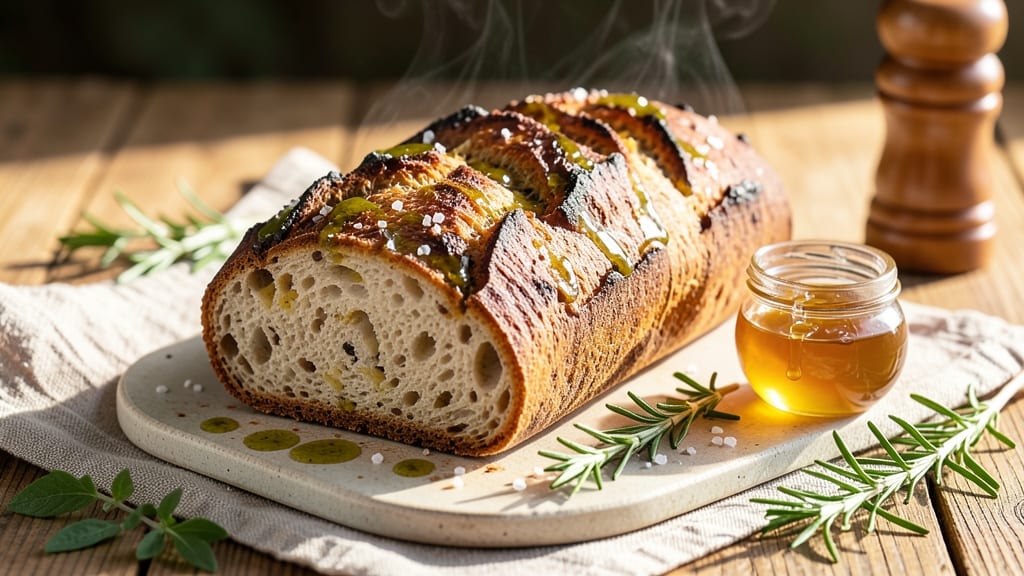
This ancient grains einkorn bread recipe transports you back to early farming civilizations with its rustic, open crumb and nutty depth—perfect for those seeking authentic flavor and texture. 🌾 The slow fermentation process (24-48 hours) develops complex flavors while creating that signature airy interior, though modern adaptations like hydration adjustments make it accessible for home bakers.
What sets einkorn apart from modern wheat is its lower gluten content, yielding a bread that's both tender and satisfying.
Unlike commercial breads, this recipe relies on traditional techniques: a long autolyse phase, minimal kneading, and a controlled bake that results in a crisp crust and tender interior.
The dough's natural stickiness comes from einkorn's higher protein content, which requires patience but rewards with a bread that's easier to digest than modern wheat varieties. For those with gluten sensitivities, substitutions like sorghum or millet can adapt the recipe without sacrificing texture.
By the time you pull this loaf from the oven, you'll have a slow-fermented crust with an open, irregular crumb—ideal for sandwiches, dipping in olive oil, or serving alongside soups. The nutty, slightly sweet flavor profile makes it versatile for both savory and sweet applications.
Storage is simple: keep wrapped at room temperature for 3 days or freeze for up to 3 months to preserve freshness.
This method balances tradition with practicality, ensuring you achieve bakery-quality results without specialized equipment. The key lies in the fermentation—letting the dough rest transforms its structure and flavor into something truly special. Ready to bake bread that connects you to ancient grains while fitting seamlessly into modern kitchens?
Ingredients for ancient grains einkorn bread
Gather these rustic ingredients for bread that tastes like ancient traditions meet modern kitchens.
| Ingredient | Amount | Notes |
|---|---|---|
| Einkorn Flour 🌾 | 3 ½ cups | Stone-ground for optimal texture |
| Active Dry Yeast 🍞 | ¼ oz | Or 2.25g for precise measure |
| Warm Water 💧 | 1 ½ cups | 105°F for optimal yeast activation |
| Extra-Virgin Olive Oil 🫒 | ¼ cup | High-quality for flavor infusion |
| Sea Salt 🧂 | 1 ½ tsp | Diamond Crystal preferred |
| Honey 🍯 | 1 tbsp | Local raw honey preferred |
| Whole Milk 🥛 | ¼ cup | For dough elasticity |
| Unbleached All-Purpose Flour 🌾 | ½ cup | For structural support |
| Cornmeal 🌽 | ¼ cup | For dusting and crust |
| Ice Water ❄️ | ½ cup | For final dough adjustment |
| Semolina Flour 🌾 | ¼ cup | For bread basket lining |
Einkorn flour is the heart of this recipe—Bob's Red Mill or King Arthur are reliable sources for quality stone-ground einkorn. If you can't find it, spelt flour works as a substitute, though the flavor will differ slightly. The yeast should be fresh; if your jar's past its expiration, toss it. Warm water is critical—too hot kills the yeast, too cold slows activation. For the honey, local raw varieties add subtle floral notes that complement einkorn's nutty profile. If you're sensitive to gluten, King Arthur's gluten-free blend can replace up to 20% of the einkorn without compromising texture too drastically.
No einkorn? Spelt or whole wheat flour can stand in, though the crumb will be denser. The olive oil should be extra-virgin—California avocado or Italian brands work best for their fruity depth. Diamond Crystal salt is ideal here; if you've only got table salt, reduce to 1 tsp. The milk adds tenderness; whole milk or buttermilk both work, but avoid skim. For a vegan version, substitute plant-based milk and an extra 1 tsp apple cider vinegar. The cornmeal and semolina can be swapped for regular all-purpose flour in a pinch, though they add that lovely crunch to the crust.
Store your einkorn flour in an airtight container in a cool, dark place for up to 6 months. Once baked, this bread stales faster than modern wheat loaves—wrap it in a clean kitchen towel and store at room temperature for 2-3 days. For longer storage, freeze the loaf for up to 3 months. To revive, wrap in a damp towel and warm in a 200°F oven for 10 minutes. The dough can be prepped a day ahead; just let it ferment in the fridge overnight for deeper flavor development.
Why You'll Love This Recipe
- No-Knead Nightmare Solved: Mixing the dough takes all of two minutes—just flour, yeast, water, and a splash of olive oil. No stand mixer, no elbow grease, just you stirring while the yeast does the work. (Yes, even on a Tuesday night.)
- Nutty, Toasty Magic: That einkorn flour? It’s like wheat’s sophisticated cousin—earthier, slightly sweet, with a crunch that disappears into buttery perfection. One bite and you’ll forget about sad supermarket loaves.
- Weeknight Superhero: Slice it for toast, pack it for lunch, or tear it over soups. It stays fresh for days, so you’re never scrambling for bread. My kids call it “the glue that holds dinner together”—and they’re not wrong.
- Budget-Friendly Staple: Four ingredients, zero waste—this bread costs next to nothing but feels like a splurge. The olive oil adds richness without breaking the bank, and leftovers? They’re basically edible art until they’re gone.
Step-by-step instructions for slow-fermented einkorn bread
This ancient grain loaf delivers a crisp crust and airy interior—here's how to nail the perfect bake.
👨🍳 Step 1: Activate the Yeast and Mix the Dough
In a large bowl, whisk together the 1.5 cups warm water (should feel like bathwater, 105°F), 0.25 oz active dry yeast, and 1 tbsp honey. Let this sit for 10-15 minutes until frothy—you should see bubbles forming on the surface. This activates the yeast and adds subtle sweetness to the dough.
Add the 3.5 cups einkorn flour, 1.5 tsp sea salt, 0.25 cup extra-virgin olive oil, and 0.25 cup whole milk to the yeast mixture. Using a wooden spoon or dough whisk, stir until a shaggy mass forms. The einkorn flour will absorb the liquid gradually—don't worry if it looks dry at first. Let the dough rest for 20 minutes while you prep your workspace.
🥘 Step 2: Develop the Dough Through Autolyse and Bulk Fermentation
After the initial rest, add the 0.5 cup unbleached all-purpose flour to help strengthen the gluten structure. Wet your hands and knead the dough on a lightly floured surface for 8-10 minutes until smooth and elastic. The einkorn flour is lower in gluten than modern wheat, so you'll need to be patient—this dough will feel slightly stickier than traditional bread dough.
Shape the dough into a loose ball, place it back in the bowl, and cover with a damp towel. Let it ferment at room temperature for 4-6 hours, or until it has nearly doubled in size. You'll know it's ready when the dough springs back slowly when poked and leaves a faint indentation. This long fermentation develops deep flavor and creates that signature open crumb structure.
🔥 Step 3: Shape and Final Proof the Dough
Turn the dough out onto a lightly floured surface and gently shape it into a round boule. I like to use the "stretch and fold" method here—wet your hands and stretch the dough upward while folding it back onto itself. Do this 3-4 times to tighten the surface and create tension. This helps prevent an overly open crumb in the final loaf.
Place the shaped boule seam-side up in a well-floured banneton or bowl. Cover with a damp towel and refrigerate for 12-16 hours (overnight works perfectly). The cold slows fermentation and allows flavors to meld. Before baking, dust the dough with 0.25 cup semolina flour to prevent sticking and create that beautiful crust.
🔥 Step 4: Bake with Steam for Maximum Crisp
Preheat your oven to 450°F with a Dutch oven inside for 45 minutes. Remove the Dutch oven and carefully transfer the dough (still in its floured banneton) into the hot pot. Immediately add 1 cup of ice water to the bottom of the Dutch oven—this creates steam that's crucial for that crisp crust and open crumb.
Cover the Dutch oven and bake for 20 minutes. Then remove the lid and bake for another 20-25 minutes until the bread reaches an internal temperature of 205-210°F and the crust is deep golden brown. Tap the bottom—it should sound hollow. Let the bread cool on a wire rack for at least 1 hour before slicing to allow the crumb to set properly.
Pro Tips For Making Ancient Grains Einkorn Bread
- Bloom the Yeast First: Einkorn flour is dense and can smother yeast, so dissolve the yeast in warm water (not hot—think bathwater temp) with a pinch of sugar or honey for 5–10 minutes until frothy. This guarantees fermentation starts strong, especially if your kitchen’s cooler than usual.
- Weigh Your Einkorn: Einkorn flour is deceptively light—scooping it leads to inconsistent hydration and density. Use a kitchen scale for precision; aim for 100% hydration (water to flour ratio) but adjust slightly if the dough feels sticky or dry. (Yes, even if you’re impatient like me.)
- Skip the Over-Kneading: Einkorn dough is fragile—knead just until the gluten starts to form (about 5–7 minutes by hand) or until it passes the "windowpane test" (stretch a piece thin enough to see light). Overworking it makes the bread dense and chewy, not light and airy.
- Steam the First 10 Minutes: Place a metal bowl of boiling water on the oven rack beneath your loaf pan. The steam mimics a professional bake, giving the crust a crisp, golden finish without burning. I learned this the hard way—my first einkorn bread turned out more brick than bread.
Serving suggestions for this ancient grains einkorn bread
Crusty Dipping Bread
This einkorn loaf shines when served as a rustic dipping bread. Warm a few slices in the oven for 5 minutes at 350°F to crisp the crust, then pair with extra-virgin olive oil and a sprinkle of flaky sea salt.
The nutty flavor and crisp texture make it perfect for soaking up olive oil, balsamic vinegar, or even hummus. I love adding a few toasted pine nuts or crumbled feta for extra depth. 🌾
Sandwich Perfection
The open crumb structure holds up beautifully for sandwiches. Try it with prosciutto and melon, smoked salmon and cream cheese, or a classic peanut butter and banana combo.
The einkorn's subtle sweetness balances savory fillings, while the crisp crust adds satisfying texture. For extra flair, brush warm slices with garlic-infused olive oil before assembling. ✨
Soup Companion
Einkorn bread pairs wonderfully with hearty soups. Its sturdy crust can handle thick broths like minestrone or French onion soup without falling apart. For an elevated touch, toast slices until golden and serve alongside tomato basil soup with a sprinkle of Parmesan cheese.
The nutty flavor complements the acidity of tomatoes beautifully.
Sweet Applications
Don't overlook this bread's potential for sweet treats! Use it to make French toast with cinnamon and vanilla, or toast slices and top with almond butter and sliced strawberries.
The natural sweetness of the einkorn enhances fruit-based toppings. For dessert, try a simple brioche-style twist by adding 1 egg yolk and 1 tbsp sugar to the dough before baking.
Breakfast Star
Transform your morning routine by serving einkorn bread as a breakfast staple. Toast slices and top with avocado and chili flakes, or make open-faced sandwiches with ricotta cheese and honey.
The bread's nutty flavor pairs wonderfully with sweet and savory breakfast combinations. For a heartier option, serve with scrambled eggs and smoked salmon for a protein-packed meal.
Gift-Worthy Presentation
Wrap cooled loaves in burlap or kraft paper tied with twine for a rustic gift presentation. Pair with a small jar of homemade jam or olive oil for a thoughtful homemade gift. The bread's beautiful crust and open crumb make it visually stunning, perfect for special occasions or holiday gatherings.
Store wrapped loaves at room temperature for up to 3 days to maintain freshness. 💛
Nutrition facts
Frequently asked questions
Why does einkorn bread have a stickier dough than regular bread?
Einkorn wheat has a lower gluten content than modern wheat varieties, which means its dough behaves differently. The protein structure in einkorn creates less elastic gluten, resulting in a stickier, more cohesive dough that requires less kneading. This stickiness is actually desirable—it helps create that signature open crumb and nutty flavor we love in ancient grain breads!
Can I make this recipe without a Dutch oven?
Yes, but you'll need to create steam another way. Place a baking sheet on the lower oven rack and pour 1 cup boiling water into it before baking. Then bake your shaped loaf on a preheated baking stone or steel for 25-30 minutes at 450°F. The steam will still help develop that crisp crust, though results may be slightly less dramatic than with a Dutch oven.
What's the best way to store baked einkorn bread?
Wrap the cooled loaf tightly in a clean kitchen towel or beeswax wrap, then store at room temperature for up to 3 days. For longer storage, freeze the bread for up to 3 months. To revive, wrap the frozen loaf in a damp towel and warm in a 200°F oven for 10 minutes. The towel traps moisture and helps restore freshness.
How do I know when the dough is properly fermented?
Look for three key signs: the dough should have nearly doubled in size, it should spring back slowly when poked with your finger (not immediately), and it should leave a faint indentation that stays put. For einkorn, the dough will feel slightly jiggly but still cohesive. If it smells slightly sweet and tangy, that's another good indicator of proper fermentation!
Can I substitute einkorn flour with whole wheat?
While you can use whole wheat flour, the results will differ significantly. Whole wheat has more bran and less gluten, which can make the bread denser and less open. For a closer substitute, try spelt flour (which is more closely related to einkorn) or a 50/50 blend of whole wheat and all-purpose flour. The flavor will be different, but you'll still get a hearty loaf.