
Side Dishes
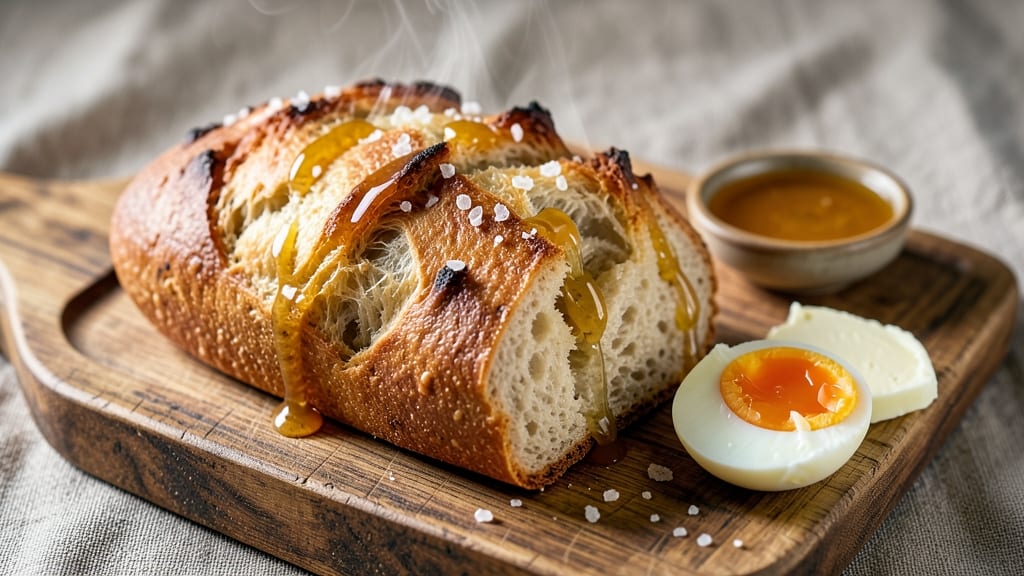
Andy's East Coast Kitchen bread recipe delivers that perfect balance of sweet honey swirls and golden, crusty perfection—just like the ones you'd find at a New England bakery. 🌟 The secret lies in a simple yet foolproof dough that develops rich flavor during a slow rise, while the honey-butter swirl adds that signature East Coast sweetness without overpowering the bread's natural crusty charm.
What makes this recipe stand out is the combination of traditional bread-making techniques with a touch of nostalgia. The dough comes together with basic pantry staples—flour, yeast, and a hint of sugar—but it's the honey butter swirl that transforms it into something truly special.
Baking at the right temperature ensures a crispy, caramelized crust while keeping the interior soft and airy.
By the time you pull this loaf from the oven, you'll have a bread that's perfect for slicing thick for toast, serving with soup, or sharing as a centerpiece for any meal.
The aroma alone will have everyone gathering around the table, and the first bite delivers that perfect harmony of sweet and savory that defines East Coast baking.
This recipe is designed to be approachable yet impressive, making it ideal for both beginners and seasoned bakers. With just a few simple ingredients and a little patience, you'll achieve a loaf that rivals any artisanal bakery creation. Let's get started on creating your own crusty masterpiece.
Ingredients for andy's east coast kitchen bread
Nine simple ingredients transform into golden, honey-swirled East Coast magic—just like Andy's bakery loaves.
| Ingredient | Amount | Notes |
|---|---|---|
| All-Purpose Flour 🌾 | 5 cups | Plus 1 cup for dusting |
| Active Dry Yeast 🍞 | 2 ¼ tsp | Or 1 packet (7g) |
| Granulated Sugar 🍚 | ¼ cup | For dough activation |
| Unsalted Butter 🧈 | ½ cup | Cold, cubed (full-fat preferred) |
| Honey 🍯 | ¼ cup | Wildflower or clover variety |
| Large Eggs 🥚 | 1 whole | Room temperature |
| Warm Water 💧 | 1 ¼ cups | 110°F (43°C) ideal |
| Salt 🧂 | 1 tsp | Diamond Crystal preferred |
| Milk 🥛 | ¼ cup | Warm, any variety |
| Cornmeal 🌽 | ¼ cup | For bread pan coating |
The flour is your foundation—King Arthur or Gold Medal brands give that signature New England texture. Yeast matters too: check expiration dates—old yeast won't wake up. For the honey, local wildflower adds depth, but any liquid honey works. I always grab Trader Joe's honey for this—affordable and consistent. The butter needs to be cold when you cube it, or the swirl will get messy. And that warm water? Test it with your pinky finger—should feel like bathwater, not scalding.
No honey? Maple syrup works in a pinch (reduce other liquids slightly). Short on butter? Coconut oil mimics the richness, though it won't caramelize like butter. The milk can be any kind—whole, 2%, even almond milk—just warm it first. For the egg, room temp ensures even mixing. Pro tip: toast your cornmeal in a dry pan for 2 minutes before coating the pan—prevents sticking like a dream. And if you're feeling fancy, swap the granulated sugar for turbinado—it adds subtle crunch to the crust.
This dough needs time—let it rise until it's doubled, about 1.5-2 hours. Store leftovers wrapped in a clean kitchen towel for 2 days, or freeze slices for 3 months. The honey butter swirl keeps best if you don't overbake—pull it out when the crust is deep golden but the center still has a tiny give. For extra crusty perfection, ice the loaf for 10 minutes after baking. Trust me, it's worth the wait.
Why You'll Love This Recipe
- No-Knead Magic: I swear by this recipe—just mix, cover, and forget. The yeast does all the work while you’re doing dishes or scrolling through your phone. That honey butter swirl? It’s the secret weapon that makes even lazy afternoons feel like a treat.
- Sweet Butter Bliss: The moment that warm, buttery bread hits your plate—chef’s kiss. The honey caramelizes just enough to balance the rich butter, and that crust? Crisp enough to hold a spoonful of jam without crumbling. Honestly, I’ve made bread that’s fancier, but this one’s my daily go-to.
- Weeknight Lifesaver: Slice it fresh for breakfast, toast it for sandwiches, or freeze half for when you’re too tired to bake. Between us, I’ve had it cold with peanut butter at 2 AM after a long shift. It’s the one thing I never skip buying at the store—now I make it myself.
- Pantry Staple Power: You’ve got flour, yeast, sugar, butter, and honey? Done. No specialty ingredients, no last-minute grocery runs. And because it keeps well, you’re not scrambling to use it up before it dries out. My budget—and my stomach—thank me every time.
Step-by-step instructions for Andy's East Coast kitchen bread
Let's make this golden-crusted, honey-butter swirled bread that'll have your kitchen smelling like a New England bakery.
👨🍳 Step 1: Activate the Yeast and Mix the Dough
In a large bowl, combine the 1.25 cups warm water (about 110°F), 0.25 cup granulated sugar, and 2.25 tsp active dry yeast. Let it sit for 5-10 minutes until frothy—this means your yeast is alive and ready to work. I always do a quick finger test: if the water feels like a warm bath (not hot), you're good.
In a separate bowl, whisk together the 5 cups all-purpose flour and 1 tsp salt. Make a well in the center and add the yeast mixture, 1 whole large egg, and 0.25 cup milk. Mix with a wooden spoon until it comes together, then turn it out onto a lightly floured surface. Here's the thing—this dough should be sticky but manageable. If it's too dry, add a splash of warm water; if too wet, sprinkle in a little more flour.
🥘 Step 2: Knead Until Silky Smooth
Knead the dough for 8-10 minutes by hand (or 5-6 minutes with a stand mixer using the dough hook) until it's smooth and elastic. You'll know it's ready when it springs back slowly when poked. I like to do this on a lightly floured surface, adding flour only when needed—over-flouring makes the dough tough.
Place the dough back in the bowl, cover it with a damp towel, and let it rise in a warm spot for 1-1.5 hours or until it doubles in size. The kitchen should smell like fresh bread by now—this is the magical part where the yeast does its work. If your kitchen isn't warm, pop the bowl near your oven with the light on (just don't let it get too hot).
🔥 Step 3: Shape and Add the Honey-Butter Swirl
Punch down the risen dough and turn it out onto a floured surface. Divide it into 4 equal pieces and roll each into a 12-inch rope. Here's where the fun begins: take one rope, fold it in half lengthwise, then twist the two halves together to form a crown shape. Repeat with all 4 pieces.
In a small bowl, mix the 0.5 cup cold unsalted butter (cut into small cubes) with the 0.25 cup honey. Place one of the shaped dough crowns on a parchment-lined baking sheet, then spoon a generous amount of the butter-honey mixture onto the center. Gently press the mixture into the dough, then fold the edges inward to create a swirl. Repeat with the remaining dough and filling.
⏰ Step 4: Proof and Bake to Golden Perfection
Cover the shaped loaves loosely with plastic wrap and let them rise for 30-45 minutes until puffy. Meanwhile, preheat your oven to 375°F and sprinkle 0.25 cup cornmeal into a 9x5-inch loaf pan—this prevents sticking and adds texture. Here's the trick: right before baking, brush the tops of the loaves with a little warm water to help them develop that beautiful crust.
Transfer the loaves to the prepared pan, cover with a towel, and let them rise for another 15-20 minutes until they've expanded slightly. Bake for 30-35 minutes until the tops are deep golden brown and the internal temperature reaches 190°F. You'll know they're done when they sound hollow when tapped on the bottom.
Pro Tips For Making Andy'S East Coast Kitchen Bread
- Bloom Yeast in Warm Honey: DESCRIPTION: Mix the yeast with the honey first—it dissolves faster and activates more reliably than in plain water. I learned this the hard way after tossing out a batch where the yeast just sat there, lifeless.
- Knead Until Windowpane: DESCRIPTION: Test dough readiness by stretching a small piece—if it’s translucent and slightly springy (like a thin windowpane), it’s done. Over-kneading turns this bread chewy, and under-kneading makes it dense. Aim for 8–10 minutes by hand or 5–6 minutes with a mixer.
- Chill Dough Before Shaping: DESCRIPTION: Let the dough rest in the fridge for at least 30 minutes after kneading—it relaxes the gluten, so shaping goes smoother. I was skeptical until I tried it; now I never skip this step.
- Brush Butter Before Baking: DESCRIPTION: Use melted butter (not oil) to brush the loaf before baking—it gives that signature East Coast Kitchen shine and keeps the crust tender. Skip the oil; butter’s flavor makes a real difference here.
Serving suggestions for this recipe
Classic East Coast Servings
This honey-butter bread shines as a thick-cut toast slathered with local maple butter—I love using Vermont maple for that authentic New England touch. For breakfast, pair it with scrambled eggs and crispy bacon. The sweet swirl balances the savory perfectly, just like Andy’s kitchen does. 🌟
Soup and Sandwich Pairings
Serve warm slices alongside New England clam chowder or roasted tomato soup for a cozy meal. For sandwiches, use it as a base for grilled cheese with sharp cheddar and apple slices.
The honey-butter adds a touch of sweetness that makes every bite irresistible. I often make a turkey and cranberry sandwich with this bread during holidays—it’s a crowd-pleaser.
Dessert Twist
Don’t stop at savory! Brush warm slices with vanilla glaze (mix ½ cup powdered sugar + 2 tbsp milk) and top with whipped cream and fresh berries for a dessert version. The honey swirl turns into a caramelized highlight—perfect for brunch or a sweet afternoon snack. 🍯
Bread Pudding Magic
Save stale slices for honey bread pudding—cube the bread, soak in a custard of eggs, milk, cinnamon, and bake until golden. The swirls create pockets of gooey honey goodness. I add a sprinkle of pecans for crunch. This dessert is a guaranteed hit at family gatherings.
Gift-Worthy Presentation
Wrap cooled loaves in brown kraft paper tied with twine and a sprig of rosemary for a rustic gift. The honey-butter aroma makes it irresistible as a hostess gift or for neighbors.
I’ve seen Andy’s loaves presented this way at local markets—it’s pure East Coast charm. Perfect for holidays or just because!
Meal Prep Hacks
Slice and freeze bread in airtight containers for up to 3 months. Toast directly from frozen for quick breakfasts. For sandwiches, assemble with fillings and freeze on a tray before bagging—no soggy bread here!
I prep a batch on Sundays to grab-and-go all week. The honey butter stays fresh, too, if stored in the fridge for up to 2 weeks. ⏰
Nutrition facts
Frequently asked questions
Can I make this bread without a stand mixer?
This recipe is designed for hand-kneading. Just work the dough on a lightly floured surface for 8-10 minutes until it's smooth and elastic. The key is patience—press and fold the dough rather than stretching it too much. Your arms will thank you for the workout, and the bread will turn out just as perfect.
What if my dough doesn't rise properly?
Check three things first: yeast freshness (test with warm water/sugar), water temperature (should be 110°F—like bathwater), and warm environment. Place your bowl near the oven with the light on if your kitchen is cold. If it still doesn't rise, your yeast may be dead—try a new packet. Never skip the proofing step; it's what creates that airy texture.
How do I store leftovers to keep them fresh?
Wrap cooled loaves tightly in a clean kitchen towel or beeswax wrap to prevent drying. Store at room temperature for 2 days, or slice and freeze in airtight containers for up to 3 months. For extra freshness, pop frozen slices directly into the toaster. The honey butter stays fresh in the fridge for 2 weeks if kept in a sealed container.
Can I adjust the honey-butter ratio for less sweetness?
Yes! Reduce the honey to 2 tablespoons and keep the butter at ½ cup for a milder flavor. For extra richness without sweetness, swap the honey for 2 tablespoons melted butter plus 1 teaspoon vanilla extract. The swirl will still be delicious—just more savory. Taste the mixture before adding to the dough to adjust to your preference.
Why did my crust turn out pale instead of golden?
This usually happens from one of three issues: underbaking, low oven heat, or not enough steam. First, check your oven temperature with an oven thermometer—it might be running 25°F cooler than set. For extra crust color, brush the tops with warm water before baking or place a pan of boiling water on the lower rack. Bake 5 minutes longer if needed, but watch closely to avoid overbaking.