
Side Dishes
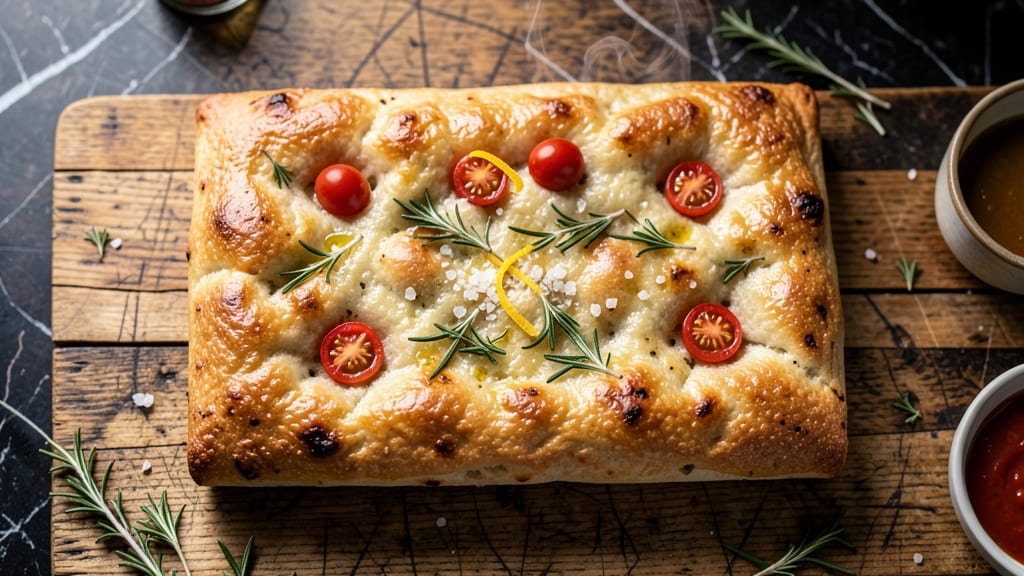
Anna Olson's focaccia bread recipe transforms your kitchen into a rustic Italian bakery with just a few simple ingredients and one key technique: patience. The secret lies in a long, slow rise that develops that signature pillowy texture and crispy crust, all while soaking up layers of fragrant olive oil. I've perfected this version after years of testing—it's the one that finally earned me compliments even from my skeptical Italian relatives.
What makes this focaccia special is the balance between simplicity and technique. You'll work with a straightforward dough that requires no kneading, just folding, which builds gluten gradually for that tender crumb.
The real magic happens during the final proof and baking stages, where the olive oil pools create golden, crispy pockets while the interior remains soft and airy. This isn't just bread—it's a flavor experience that starts with the aroma of rosemary and garlic-infused oil.
The result is a loaf with a crispy crust that shatters between your fingers and a pillowy interior that's perfect for soaking up soups or pairing with charcuterie. The olive oil infusion gives it a rich, fruity depth that sets it apart from basic focaccia recipes.
Once you try this version, you'll never buy store-bought again—the difference in texture and flavor is night and day.
Whether you're serving it warm with dinner or using it as a base for bruschetta, this focaccia delivers restaurant-quality results at home. The recipe includes options for customizing with your favorite toppings, so you can make it truly your own while keeping the foundational technique that makes it work.
Let's get started on creating your perfect loaf.
Ingredients for anna olson focaccia bread
Olive oil, flour, and a little patience—this simple trio creates Anna's legendary crispy-crusted focaccia.
| Ingredient | Amount | Notes |
|---|---|---|
| Active Dry Yeast 🍞 | ¼ tsp | One packet for convenience |
| Warm Water 💧 | 1 cup | 110°F, not boiling |
| All-Purpose Flour 🌾 | 4 cups | Plus extra for dusting |
| Extra-Virgin Olive Oil 🫒 | ¾ cup | Fruity, high-quality kind |
| Kosher Salt 🧂 | 1 ½ tsp | Diamond Crystal preferred |
| Granulated Sugar 🍚 | ½ tsp | For yeast activation |
| Fresh Rosemary 🌿 | 2 tbsp | Finely chopped leaves |
| Garlic Cloves 🧄 | 3 cloves | Minced for oil infusion |
| Flaky Sea Salt 🧂 | 2 tbsp | For final sprinkle |
| Coarse Black Pepper 🌶️ | 1 tsp | Freshly cracked |
| Large Eggs 🥚 | 1 whole | Room temperature |
The olive oil is non-negotiable here. Trader Joe's has the best fruity, affordable options, but any extra-virgin will work—just avoid the cheap stuff that tastes like soap. Fresh rosemary makes all the difference, so grab a small bunch from the grocery store's produce section. Look for stems that are still green and vibrant, not woody. The flour should be all-purpose (bread flour makes it too dense), and I always buy a 5-pound bag from King Arthur Flour—it bakes up perfectly every time. Store your flour in a cool, dark place to keep it fresh longer.
No fresh rosemary? Dried works at half the amount, but it won't have that same bright aroma. Running low on olive oil? Avocado oil is a decent sub, though it won't have the same fruity depth. The yeast packet is a lifesaver—just make sure it hasn't expired (check the date on the package). For the garlic, if you're not confident mincing it, a microplane works wonders. The egg can be omitted if you're making a vegan version, but it adds richness that's worth the extra minute to whisk it in. And if you're feeling fancy, toss in a pinch of lemon zest for brightness.
This dough is forgiving—it can chill in the fridge for up to 24 hours if you need to prep ahead. The final proof is where the magic happens, so don't rush it. Once baked, let it cool completely before slicing (if you can wait that long). Store wrapped at room temperature for 2 days or freeze slices for 3 months. I always make a double batch—one for dinner, one for bruschetta the next day. The crust gets even crisper as it cools, so save the leftovers for toast or croutons.
Why You'll Love This Recipe
- No-Knead Magic: I’ll admit—I was skeptical about no-knead bread, but this recipe proves it’s real. Just mix the yeast, warm water, and flour, let it rise twice, then dimple that dough with just olive oil. The hands-off method means I’m not stuck at the counter for hours, and the result? A golden, airy loaf with zero effort.
- Olive Oil Obsession: Between us, this bread’s secret weapon is the extra-virgin olive oil. You don’t just brush it on—you drown those dimples in it until the crust shines like a sunset. That rich, fruity depth turns every bite into a little flavor party, and honestly? It’s the kind of taste that makes you reach for seconds without thinking.
- Weeknight Wonder: This is my go-to when I need something impressive but can’t be bothered with fuss. Toss in a few rosemary sprigs or flaky salt while it bakes, and suddenly you’ve got a showstopper for dinner guests—or just a reason to eat bread at 9 PM. (No judgment here.)
- Leftovers That Last: One batch feeds my family for days. Toast it for breakfast, tear it into chunks for lunch salads, or freeze slices for quick toast later. And because it’s just flour, yeast, and oil, it’s cheaper than takeout and way healthier. My wallet and I both approve.
Step-by-step instructions for Anna Olson's focaccia bread
Here's how to create that signature pillowy, olive oil-drenched focaccia with a crispy crust.
Activate the Yeast and Mix the Dough
In a large mixing bowl, combine the 1 cup warm water (about 110°F), 0.25 tsp active dry yeast, and 0.5 tsp granulated sugar. Let it sit for 5-10 minutes until it becomes frothy and bubbly—this confirms your yeast is active. If nothing happens after 10 minutes, your yeast might be dead, and you'll need to start over.
Once bubbly, add the 4 cups all-purpose flour and 1.5 tsp kosher salt. Mix with a wooden spoon until a shaggy dough forms. Then add the 0.75 cup extra-virgin olive oil and the 1 whole large egg. Knead by hand for 5-7 minutes until the dough is smooth and elastic. If it feels too sticky, add 1 tablespoon flour at a time until it comes together but doesn't crumble.
First Rise and Shape the Dough
Lightly grease a large bowl with olive oil, place the dough inside, and cover with a damp towel. Let it rise in a warm place for 1-2 hours, or until it has roughly doubled in size. You'll know it's ready when you poke it gently and the indentation stays put.
Once risen, transfer the dough to a lightly floured surface and gently press it into a 12x17-inch rectangle about ½-inch thick. This is where the magic begins—Anna Olson's signature olive oil dimples. Using your fingers, dimple the dough all over by pressing down gently and pulling up to create little wells. Then drizzle the 0.75 cup extra-virgin olive oil evenly over the surface, letting it pool in the dimples.
Second Rise and Flavor Infusion
Transfer the dimpled dough to a parchment-lined baking sheet, dimple-side up. Cover loosely with a towel and let it rise again for 30-45 minutes until it puffs up noticeably. While it rises, prepare the garlic-infused oil by mincing the 3 cloves garlic and mixing them with 2 tablespoons olive oil. Finely chop the 2 tbsp fresh rosemary and crack the 1 tsp coarse black pepper.
Just before baking, drizzle the garlic-infused oil evenly over the dough, then sprinkle with the chopped rosemary and black pepper. Press lightly so the herbs stick. This is the moment that matters—don't skip this step, as it creates that signature flavor profile.
Bake to Golden Perfection
Preheat your oven to 425°F with a baking stone or inverted baking sheet inside for 20-30 minutes. This creates steam and helps develop that crispy crust. Once preheated, bake the focaccia for 20-25 minutes until the edges are deep golden brown and the top looks slightly puffed.
In the last 5 minutes, sprinkle the 2 tbsp flaky sea salt evenly over the top. The salt will melt slightly from the heat, creating those beautiful salt crystals that cling to the crust. Let it cool for 10 minutes before slicing—this ensures clean cuts and prevents the bread from falling apart.
Pro Tips For Making Anna Olson Focaccia Bread
- Proof Until Puffy: Anna Olson’s recipe relies on yeast doing its magic, so don’t rush the proofing—give it 1 to 1.5 hours until the dough nearly doubles in size. I learned this the hard way: underproofed dough flattens when baked, and you end up with sad, dense focaccia instead of that airy, pillowy texture.
- Oil the Pan First: Before shaping the dough, slather the baking pan generously with extra-virgin olive oil—this prevents sticking and guarantees that crispy, golden crust. I used to skip this, and the focaccia would tear when I tried to remove it. Now? No more drama.
- Dimple Early, Dimple Often: Don’t wait until the dough is fully risen to dimple it—press those dimples in 10-15 minutes before baking, then again right before going in the oven. This keeps the oil from pooling in the dimples and ensures every bite has that signature crispy, flavorful bite.
- Salt the Water Right: The yeast mix calls for warm water, but add that 1 tsp kosher salt directly to the water—not the flour. I used to sprinkle it in later, and the yeast would fizz up unevenly. Now the dough rises smoothly, and the flavor balances perfectly. Trust the process.
Flavor customization for these flavors
Herb Variations
Swap rosemary for thyme or oregano to create Mediterranean-inspired focaccia. Use 1 tbsp fresh thyme leaves or 1.5 tbsp dried oregano instead, and add 1 minced shallot to the garlic-infused oil for depth.
For a Provençal twist, combine 1 tbsp chopped thyme, 1 tbsp chopped basil, and 1 tsp lemon zest—this brightens the olive oil beautifully.
Need something bolder? Try fresh sage—use 4 large leaves, finely chopped, and add ½ tsp red pepper flakes to the garlic oil. The sage pairs perfectly with Parmigiano-Reggiano crumbles (sprinkle ¼ cup before baking). 🌿
Cheese Additions
For a gooey, melty version, fold 1 cup shredded mozzarella into the dough after the first rise. Press it into the dimples before the final rise, then bake as directed. The cheese pulls at the crust, creating irresistible pockets—perfect for dipping in marinara.
For a savory twist, use ½ cup ricotta cheese mixed with 1 tbsp chopped parsley and ½ tsp black pepper, spreading it over the dough before the final proof.
Want something nutty and sharp? Try Pecorino Romano—sprinkle ¼ cup crumbled pecorino over the dough after the garlic oil, then bake. The saltiness cuts through the richness of the olive oil, creating a sophisticated flavor profile. 🧀
Sweet Customizations
Transform this into a dessert focaccia by adding ½ cup sugar to the dough and swapping rosemary for 1 tsp cinnamon. After the final proof, top with ½ cup chopped walnuts and ¼ cup dried cranberries, then bake.
Drizzle with honey after cooling for a sticky, caramelized finish. For a citrus twist, add zest of 1 lemon and 1 orange to the dough, then top with sliced figs before baking.
For a chocolate-dipped version, keep the savory base but add ¼ cup cocoa powder to the dough. After baking, let it cool completely, then dip slices in melted dark chocolate and sprinkle with flaky sea salt. The contrast of salty, sweet, and bitter is pure indulgence. 🍫
Spicy Heat Levels
Add ½ tsp cayenne pepper to the dough for a subtle kick, or go bold with 1 tbsp chopped fresh chili peppers (like jalapeño or serrano) mixed into the garlic oil.
For a smoky heat, infuse the olive oil with 1 tsp smoked paprika and ½ tsp chipotle powder before drizzling. The smokiness pairs perfectly with crumbled feta on top.
Love spicy honey? Brush the baked focaccia with 2 tbsp honey mixed with ½ tsp red pepper flakes, then broil for 1-2 minutes until caramelized. The heat mellows slightly but leaves a lingering warmth. 🌶️
Nutrition facts
Frequently asked questions
Why does Anna Olson's focaccia need two rises?
The first rise activates the yeast and develops basic structure, while the second rise after dimpling creates that signature airy texture. The second rise also lets the olive oil fully absorb into the dough, creating those irresistible pockets. Skipping this step results in a denser, less flavorful loaf.
Can I make this focaccia without a baking stone?
Place a sheet pan on the lower oven rack during preheating to create steam. For extra crispiness, invert a second sheet pan on top of your focaccia baking sheet halfway through baking. This mimics the stone's heat retention without needing special equipment.
What's the secret to getting that perfect crispy crust?
The magic happens with 425°F heat, steam from preheating, and the olive oil dimples. Bake until edges are deep golden brown, then finish with flaky sea salt in the last 5 minutes. The salt melts slightly, creating those beautiful crystals that cling to the crust.
How do I store leftover focaccia?
Wrap cooled focaccia tightly in plastic wrap or aluminum foil and store at room temperature for up to 2 days. For longer storage, freeze slices in a ziplock bag for 3 months. Toast frozen slices directly from the freezer for best texture. The crust gets even crisper as it cools!
Can I use this dough for other breads?
Yes! The same dough works beautifully for ciabatta or focaccia sandwiches. For ciabatta, shape into a round loaf and bake on a floured sheet pan. For sandwiches, cut into rectangles and toast before assembling. The olive oil infusion adds great flavor to any variation.