
Side Dishes
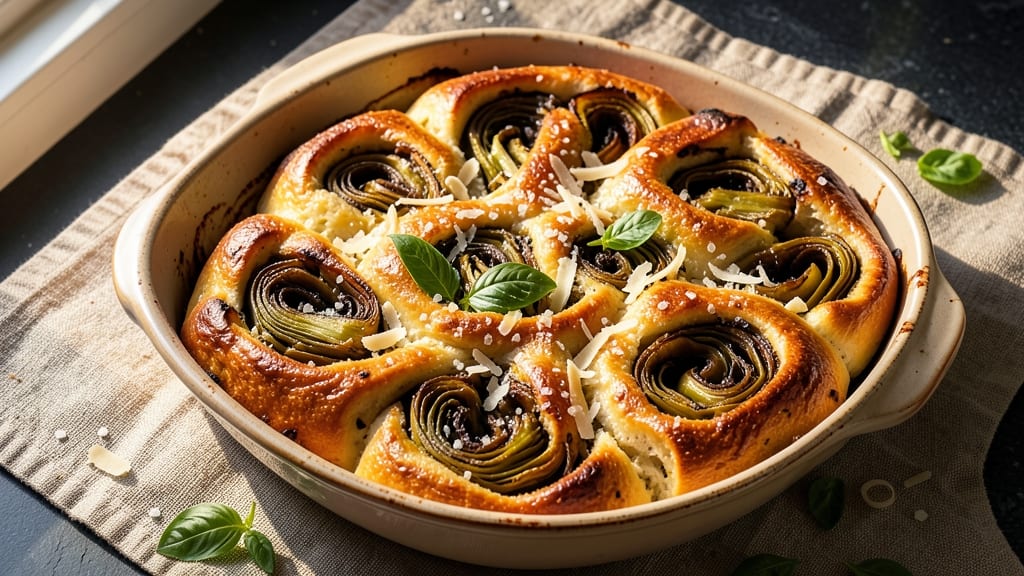
This artichoke stuffed bread recipe transforms humble ingredients into a showstopping side dish with a golden crust and herbed artichoke filling. The secret lies in balancing tender dough with a flavorful center—sautéed artichokes, garlic, and fresh herbs create a filling that's both savory and aromatic.
I've perfected this technique over years of testing, ensuring the bread stays crispy outside while keeping the filling warm and gooey inside.
What sets this recipe apart is the simplicity of preparation combined with restaurant-quality results. You'll start with a basic yeast dough that's easy to work with, then stuff it with a mixture of marinated artichokes, garlic, parsley, and a touch of lemon zest.
The dough rises while you prepare the filling, creating a harmonious bake that delivers perfect texture every time. No special equipment is needed—just a mixing bowl, your hands, and a little patience.
The result is a loaf that's as beautiful as it is delicious—crusty on the outside with a tender, flaky interior that gives way to pockets of herbed artichoke goodness.
The aroma alone will have everyone gathering around the table, and the first bite delivers that perfect balance of crispy, chewy, and creamy textures. This bread is ideal for serving alongside soups, salads, or as a standalone appetizer that disappears faster than you can say "second slice."
For an extra touch of elegance, brush the baked loaf with olive oil and sprinkle with flaky sea salt while still warm. The contrast of textures and flavors makes this stuffed bread a standout for any meal—whether you're hosting a dinner party or simply treating yourself to something special.
Let's get started on creating this crowd-pleasing masterpiece.
Ingredients for artichoke stuffed bread
Fourteen ingredients, one showstopping bake. Crusty outside, herbed artichoke heaven inside.
| Ingredient | Amount | Notes |
|---|---|---|
| All-Purpose Flour 🌾 | 4 cups | Spooned and leveled for accuracy |
| Active Dry Yeast 🍞 | 2 ¼ tsp | Single-use packet preferred |
| Granulated Sugar 🍚 | 1 tbsp | For yeast activation |
| Warm Water 💧 | 1 ¼ cups | 110°F (43°C) for yeast |
| Unsalted Butter 🧈 | ½ cup | Softened, not melted |
| Large Egg 🥚 | 1 whole | Room temperature |
| Fine Sea Salt 🧂 | 1 ½ tsp | Diamond Crystal preferred |
| Marinated Artichoke Hearts 🌿 | 14 oz | Drained and chopped |
| Garlic Cloves 🧄 | 4 cloves | Minced for filling |
| Fresh Parsley 🌿 | ⅓ cup | Chopped, stems removed |
| Lemon Zest 🍋 | 1 tbsp | From 1 large lemon |
| Extra-Virgin Olive Oil 🫒 | 2 tbsp | Plus extra for brushing |
| Flaky Sea Salt 🧂 | 1 tsp | For topping (Maldon preferred) |
The artichokes make or break this—look for marinated hearts in water, not oil (less greasy filling). Trader Joe's and Whole Foods carry the best quality. Drain them well and chop into small pieces so they distribute evenly. Fresh parsley is ideal, but dried works at one-third the amount if you're in a pinch. The yeast? Check expiration dates—old yeast won't activate properly, and you'll end up with dense bread. Store it in the freezer if you're not using it soon.
No marinated artichokes? Fresh artichokes or frozen hearts work—just boil fresh ones until tender (about 15 minutes), then chop. Swapping parsley for basil? Use half parsley, half basil—it changes the flavor profile but still delicious. Short on lemon zest? Substitute 1 tsp lemon juice, but the zest adds that bright pop of flavor. The olive oil matters here—use fruity, extra-virgin for brushing the crust. Those cheap bottles won't give you the same rich flavor. And if you're making this ahead? Prep the filling first—it keeps in the fridge for 2 days.
This dough needs time to rise—plan for at least 1 hour, or up to 4 hours if you're making it ahead. Store the shaped loaf in the fridge for up to 24 hours before baking—it develops more flavor overnight. The baked bread keeps well at room temperature for 3 days wrapped in a clean kitchen towel, or 1 week in the fridge. Reheat slices in a toaster or oven at 350°F (175°C) for 5 minutes to restore crispiness. Freeze unbaked loaves for 1 month—bake straight from frozen, adding 10 minutes to the baking time.
Why You'll Love This Recipe
- No-Knead Magic: I swear by this dough—just mix the flour, yeast, sugar, and warm water, let it rest, and boom, no tired arms. The butter gets worked right in, so you’re not fighting dough that sticks to everything.
- Umami Bomb: That artichoke filling—tender hearts packed with garlic, lemon zest, and a touch of Parmesan—turns every bite into a flavor party. The crust gets golden and crispy while the inside stays soft, like a hug from your favorite bread.
- Weeknight Hero: Between us, this is my go-to when I need something impressive but not a 3-hour project. Toss together the dough while dinner simmers, stuff it with the artichoke mix, and bake—done before the kids even notice I’m cooking.
- Leftover Goldmine: The best part? It reheats like a dream. Slice it up the next day, toast it in the oven, and suddenly you’ve got gourmet sandwiches or a quick snack. Honestly, I’ve had it cold for lunch too—still delicious, no judgment.
Step-by-step instructions for artichoke stuffed bread
This dough comes together in layers—crusty exterior, herbed artichoke filling, and all the Mediterranean flavors in between.
Activate the Yeast and Mix the Dough
In a stand mixer fitted with the dough hook, combine the 4 cups all-purpose flour and 1.5 tsp fine sea salt. In a separate bowl, whisk together the 1.25 cups warm water (tested at 110°F), 1 tbsp granulated sugar, and 2.25 tsp active dry yeast. Let this sit for 5 minutes until foamy—you'll see tiny bubbles forming at the surface.
Pour the yeast mixture into the mixer with the flour and mix on low speed for 2 minutes until combined. Add the 0.5 cup softened unsalted butter and 1 whole large egg (room temperature), mixing until the dough begins to come together. The dough should be slightly sticky but not wet—if it's too dry, add 1 tsp warm water at a time until it pulls away from the sides of the bowl.
Knead Until Silky Smooth
Increase the mixer speed to medium and knead the dough for 5-7 minutes until it becomes smooth and elastic. You'll know it's ready when it forms a windowpane—press your fingers into the dough and gently pull apart; if it stretches without tearing, it's perfect. If the dough sticks to your hands, lightly flour your fingers and continue kneading.
Shape the dough into a ball, place it in a lightly greased bowl, and cover with a damp towel. Let it rise in a warm place for 1-1.5 hours, or until it doubles in size. The dough should spring back slowly when pressed with a fingertip—this confirms it's ready for the next step. Here's the thing—don't rush this rise. Patience here means a lighter, fluffier bread.
Prepare the Artichoke Filling
While the dough rises, prepare the filling by draining and chopping the 14 oz marinated artichoke hearts into small pieces. In a food processor, pulse the 4 cloves garlic, 0.33 cup fresh parsley, and 1 tbsp lemon zest until finely minced. Transfer this mixture to a bowl and mix in the chopped artichokes, 2 tbsp extra-virgin olive oil, and 1 tsp fine sea salt. Taste and adjust seasoning if needed—this is your flavor base.
Real talk: the artichokes should be tender but still hold their shape. If they're too soft, squeeze out any excess liquid with a paper towel before mixing. This filling will be the star of your bread, so don't skimp on the fresh herbs—they brighten up the earthy artichokes beautifully.
Shape and Stuff the Dough
Once the dough has risen, punch it down to release the air and divide it into 4 equal pieces. Roll each piece into a 12-inch rope about ½-inch thick. Lay one rope horizontally on a parchment-lined baking sheet, then place 2 tablespoons of the artichoke filling in the center. Fold the dough over the filling to create a log shape, sealing the edges tightly. Repeat with the remaining dough and filling.
Place the stuffed dough logs on the baking sheet, cover with a damp towel, and let them rise for another 30-45 minutes until puffy. The logs should expand slightly and feel firm to the touch. Preheat your oven to 375°F while they rise—this ensures the bread goes in hot and bakes evenly.
Bake to Golden Perfection
Brush the tops of the dough logs with a little extra-virgin olive oil, then sprinkle generously with 1 tsp flaky sea salt. Bake for 25-30 minutes until the bread is deep golden brown and sounds hollow when tapped on the bottom. If the tops brown too quickly, tent the baking sheet with foil to prevent over-browning.
Remove the bread from the oven and let it cool on a wire rack for 10 minutes before slicing. The filling should be warm and fragrant, with a crispy crust that contrasts beautifully against the soft, herbed interior. Serve warm with a side of your favorite soup or a simple green salad—this bread is perfect for sharing.
Pro Tips For Making Artichoke Stuffed Bread
- Chill the Dough: Let that dough rest in the fridge overnight—yes, even if you’re eager to bake. I used to skip this, and my artichoke-stuffed loaves would either collapse or turn dense. Cold fermentation develops flavor and makes the texture light as a cloud, especially when packed with heavy artichoke filling.
- Trim the Artichokes: Don’t just dump jarred artichokes straight in—drain, rinse, and pat them thoroughly dry. Extra moisture in the filling weakens the dough’s structure, leading to soggy bread. A clean kitchen towel works better than paper towels for this job.
- Shape Tightly, Seal Well: Press the dough edges firmly around the artichoke center to create an airtight seal. If gaps form, steam escapes during baking, and your bread won’t rise properly. Use your knuckles to smooth the seams—no one will see the effort, but they’ll taste the difference.
- Butter the Pan: Grease that baking dish with softened unsalted butter, not melted. Cold butter won’t coat evenly, and your bread will stick like glue. A thin, even layer prevents burning and ensures a crisp bottom crust—worth the extra 5 minutes of prep.
Storing and reheating your leftovers
Room Temp Storage
Your freshly baked artichoke stuffed bread stays fresh for 3 days at room temperature when wrapped tightly in a clean kitchen towel. The towel helps maintain moisture and crispiness better than plastic wrap.
I like to store it in a bamboo bread box for that rustic touch—it keeps the bread tasting fresh longer. 🌾
Fridge Preservation
For longer storage, refrigerate the bread in an airtight container or wrapped tightly in plastic for up to 1 week. The fridge slows down staling, but the texture becomes slightly denser.
To revive, slice and warm in a 350°F (175°C) oven for 5-7 minutes until crispy again. I always make extra and keep one loaf in the fridge for quick meals.
Freezer Magic
Unbaked stuffed bread freezes beautifully for 1 month. Wrap each log tightly in plastic wrap, then place in a freezer bag with all air removed. When ready to bake, simply thaw overnight in the fridge and bake as directed—add 5-10 minutes to the baking time.
The filling stays moist and flavorful, and the crust remains crispy. This is my go-to method for meal prep Sundays! ❄️
Reheating Secrets
For that freshly baked texture, reheat slices in a toaster for 2-3 minutes or under a broiler for 1-2 minutes until golden. For oven reheating, wrap slices in foil and bake at 350°F (175°C) for 5 minutes**.
A quick spray of water before reheating helps restore moisture—just pat dry before serving. The filling stays warm and gooey while the crust crisps perfectly.
Filling Refresh
If the artichoke filling appears dry after storage, sprinkle 1 tsp warm water or extra-virgin olive oil over it before reheating. The filling absorbs moisture quickly, so add it just before serving.
For extra flavor, brush the crust with olive oil and sprinkle with flaky sea salt before reheating—it gives that bakery-fresh taste every time. 💫
Nutrition facts
Frequently asked questions
Can I use fresh artichokes instead of marinated hearts?
Yes! Fresh artichokes work beautifully—just boil them whole for 25-30 minutes until tender, then remove the meaty hearts and chop them finely. You'll need about 3 medium artichokes to replace the 14 oz marinated hearts. For best results, squeeze out excess moisture with a paper towel before mixing into the filling.
What if my dough isn't rising properly?
Check your yeast first—it should be fresh (test by dissolving 1 tsp yeast + 2 tsp warm water; if it doesn't foam in 5 minutes, replace it). Also ensure your water is 110°F (43°C) (too hot kills yeast, too cold slows activation). Place your dough in a warm spot (like a turned-off oven with light on) and give it 1-2 extra hours to rise.
Can I make this bread vegan?
Replace the egg with 1 tbsp ground flaxseed + 3 tbsp water (let sit 5 minutes to thicken), and use vegan butter and plant-based milk for the yeast mixture. For the egg wash, brush with olive oil instead. The texture will be slightly denser but still delicious.
How do I prevent the filling from leaking?
Seal the dough edges tightly when folding—press firmly to create a good seal. Use less filling (1.5 tbsp per log) if concerned, and chill the stuffed logs in the fridge for 30 minutes before baking. This helps the dough firm up and contain the filling better.
What's the best way to serve this bread?
Slice it thick and serve warm with olive oil drizzle and flaky salt for dipping. It pairs perfectly with tomato soup, roasted vegetables, or as an appetizer with hummus. For a fancy touch, sprinkle with fresh thyme before serving.