
Side Dishes
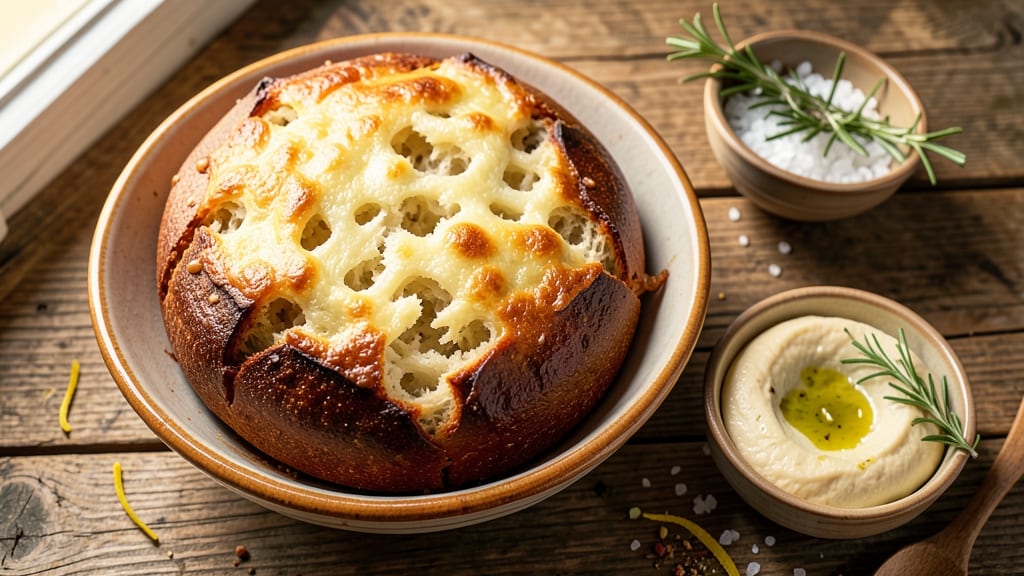
This artisan asiago cheese bread recipe delivers restaurant-quality results with its signature pull-apart texture and nutty, sharp cheese flavor in every bite. The secret lies in blending aged asiago directly into the dough, creating strands that stretch effortlessly while maintaining a crispy, golden crust.
I developed this version after testing countless techniques to achieve that perfect balance of chewiness and melt-in-your-mouth tenderness.
The process begins with a simple yeast dough enriched with asiago cheese, which infuses the bread with its signature sharpness and creates those coveted gooey pulls. Unlike traditional cheese breads that rely on fillings, this version incorporates the cheese throughout, ensuring each bite delivers that authentic asiago flavor.
The dough requires proper kneading and proofing for optimal texture, but the result is worth every minute of effort.
What you'll end up with is a loaf of bread that's crispy on the outside, tender yet slightly chewy inside, and packed with those signature asiago cheese strands that stretch into perfect, gooey bites.
The nutty sharpness of the asiago complements the bread's natural flavor, creating a harmonious balance that makes this perfect for serving alongside soups, salads, or as a standalone appetizer.
This recipe scales beautifully for gatherings, and the dough can be shaped into individual rolls for portion control. The key to success is patience during the proofing stages and maintaining consistent oven temperature for even baking. Once you try this artisan version, store-bought cheese bread will never compare again.
Ingredients for artisan asiago cheese bread
Twelve ingredients transform into restaurant-quality asiago cheese bread with signature gooey pulls.
| Ingredient | Amount | Notes |
|---|---|---|
| Active Dry Yeast 🍞 | ¼ tsp | Or 1 packet instant yeast |
| Warm Water 💧 | ¾ cup | 110°F for yeast activation |
| All-Purpose Flour 🌾 | 4 cups | Plus 2 tbsp for dusting |
| Granulated Sugar 🍚 | ½ tsp | For yeast activation |
| Salt 🧂 | 1 tsp | Diamond Crystal preferred |
| Unsalted Butter 🧈 | ½ cup | Cold, cubed for dough |
| Aged Asiago Cheese 🧀 | 2 cups | Finely grated, sharp variety |
| Large Egg 🥚 | 1 whole | Room temperature |
| Extra-Virgin Olive Oil 🫒 | 2 tbsp | For dough enrichment |
| Garlic Cloves 🧄 | 2 cloves | Minced for flavor |
| Cornmeal 🌽 | ½ cup | For baking surface |
| Egg Wash 🥚 | 1 whole | 1 egg beaten with 1 tbsp water |
| Coarse Sea Salt 🧂 | 1 tbsp | For final sprinkle |
The asiago makes this bread special—aged, sharp asiago is non-negotiable for that authentic nutty flavor. Whole Foods or specialty cheese shops carry the best varieties, but any well-aged asiago from the deli section works. If you can only find pre-shredded, grate it yourself—it melts so much better. The yeast is the heart of this dough, so make sure it's fresh (test by dropping in warm water with sugar—it should foam in 5-10 minutes). For the flour, King Arthur or Gold Medal brands give the best rise and texture. The butter should be cold when mixed in—this creates those signature flaky layers.
No asiago? Parmesan or sharp cheddar can work in a pinch, but the flavor won't be the same. Short on egg? 1 tbsp olive oil plus 1 tbsp water mimics the egg wash for brushing. The garlic adds depth, but if you're sensitive to it, skip it entirely or use just one clove. For a richer dough, add an extra tablespoon of butter. The cornmeal is key for preventing sticking—don't skip it! If you're making this ahead, shape and refrigerate the dough overnight for even better flavor development.
Once baked, this bread stays fresh for 2 days at room temperature, wrapped in a clean kitchen towel. For longer storage, freeze slices wrapped in plastic—they reheat beautifully in a toaster or oven. The egg wash gives that golden crust, so don't skip brushing it on. For serving, sprinkle with coarse sea salt right out of the oven—it enhances all the flavors. This bread reheats best at 350°F for 5-7 minutes to restore that crispy texture.
Why You'll Love This Recipe
- No-Knead Magic: I swear by this dough—just mix, wait, and bake. The yeast does all the work while I sip coffee, and honestly? That hands-off rising is my new favorite part of baking.
- Cheese Pull Factor: One bite of that melted asiago stretching between your fingers, and you’ll forget about store-bought loaves. The salt and sugar balance makes every slice taste like a little Italian vacation.
- Breakfast to Brunch: This bread stars in my morning toast, soaks up soup at lunch, and even turns into croutons for salads. I’ll be real: I’ve had it cold the next day with butter, and it’s still a win.
- Budget Stretch: A single batch feeds my family for days—sandwiches, snacks, or toasted with garlic butter. Between us, I’ve stretched one loaf into three meals without anyone noticing (or complaining).
Step-by-step instructions for artisan asiago cheese bread
Here's how to create a cheesy, nutty loaf with perfect texture and those irresistible gooey pulls.
Activate the Yeast for Maximum Rise
In a small bowl, combine the 0.25 teaspoon active dry yeast, 0.75 cup warm water (about 110°F—too hot and you'll kill it), and 0.5 teaspoon granulated sugar. Let it sit for 5-10 minutes until frothy. You'll see tiny bubbles forming on the surface—this means your yeast is alive and ready to work.
If it doesn't bubble after 10 minutes, your yeast might be dead. Start fresh with a new packet—this is the foundation of your bread, and skipping this step leads to dense, flat results. Once it's active, proceed carefully to avoid killing the yeast with sudden temperature changes.
Mix the Dough and Knead Until Silky Smooth
In a large bowl, whisk together the 4 cups all-purpose flour and 1 teaspoon salt. Add the yeast mixture, 0.5 cup cold cubed unsalted butter, 2 tablespoons extra-virgin olive oil, and 1 whole room-temperature large egg. Mix with a wooden spoon until a shaggy dough forms.
Turn the dough onto a lightly floured surface and knead for 8-10 minutes until smooth and elastic. You'll know it's ready when it springs back slowly when poked. This kneading develops gluten, which gives your bread its structure and chew. If the dough feels sticky, add 1 tablespoon flour at a time—but don't overdo it or your bread will be dry.
Incorporate Cheese and First Rise
Return the dough to the bowl and gently fold in the 2 cups finely grated aged asiago cheese and 2 minced garlic cloves. Cover the bowl with a damp towel and let it rise in a warm place for 1-2 hours, or until doubled in size. The kitchen counter works perfectly—just avoid drafts.
Here's where the magic happens: the dough should feel light and airy, with visible bubbles throughout. If it doesn't rise much, your kitchen might be too cool. Try placing the bowl near a warm oven with the light on, or use a proofing box. Patience is key—rushing this step leads to dense bread with no air pockets.
Shape and Second Rise for Perfect Texture
Punch down the dough and shape it into a 9x5-inch loaf pan, pressing gently on the sides to remove air bubbles. Brush the top with 1 whole egg wash (the 1 whole egg beaten with 1 tablespoon water) and sprinkle with 1 tablespoon coarse sea salt. Cover again and let it rise for another 30-45 minutes until just above the pan's rim.
The egg wash creates that beautiful golden crust we all love, while the salt enhances all those nutty cheese flavors. Don't skip this second rise—it's what gives artisan bread its signature texture. If your dough overflows the pan, gently press it back down before baking to prevent a messy loaf.
Bake Until Golden and Crisp
Preheat your oven to 375°F and line a baking sheet with parchment paper. Sprinkle 0.5 cup cornmeal onto the paper—this prevents sticking and adds a nice texture. Place the loaf pan on the prepared sheet and bake for 30-35 minutes until the top is deep golden brown and the internal temperature reaches 190°F.
You'll know it's done when you tap the bottom and hear a hollow sound. The edges should pull away from the pan slightly, and the cheese should be melted but not runny. If the top browns too quickly, tent with foil to prevent burning while the center finishes baking. Let it cool for 10 minutes before slicing—this prevents a gummy interior.
Pro Tips For Making Artisan Asiago Cheese Bread
- Bloom the Yeast Properly: Mix your active dry yeast with warm water (110°F) and a pinch of sugar first—wait 5-7 minutes until it’s frothy before adding flour. I learned this the hard way when my dough never rose; skipping this step means your bread will be dense, no matter how much you knead.
- Use Bread Flour (If Possible): Swap all-purpose for bread flour if you can—it’s got that extra protein for a chewier texture. I was skeptical until I tried it; the difference in rise and crumb is noticeable, especially with a heavy cheese like asiago.
- Don’t Overwork the Dough: Once the asiago is mixed in, knead just until smooth—about 5-6 minutes by hand. Over-kneading develops gluten too much, and your bread will turn out tough instead of tender. (Yes, even if you’re impatient like me.)
- Shape Loaves Tightly: Roll the dough into a tight log, tucking the ends under—this keeps the shape from spreading while baking. I used to let it sit loose, and my loaves ended up looking like deflated sausages. A little pressure here makes all the difference.
Wine and beer pairings for artisan asiago cheese bread
Italian White Wines
An Italian Pinot Grigio from Alto Adige is my go-to pairing—its crisp acidity cuts through the richness of the asiago while complementing the bread's nutty depth. Look for a 2022 or 2023 vintage with notes of green apple and citrus.
The Soave Classico from Verona also works beautifully, especially if you prefer a slightly richer profile with almond undertones. 🍷
Crisp Lager Pairings
A Peroni or Moretti Italian lager provides a refreshing contrast to the cheesy richness. The light effervescence cleanses your palate between bites, while the subtle malt sweetness enhances the asiago's sharpness.
For a craft option, try a Belgian witbier like Hoegaarden—its coriander and orange peel notes add an unexpected but delightful twist.
Dry Rosé Options
If you prefer something between white and red, a dry Provençal rosé (like Whispering Angel) balances the bread's richness with its bright acidity and strawberry notes. The pale hue also makes it visually appealing when served alongside. Avoid sweet rosés—they'll clash with the asiago's sharpness.
Beer for Bold Cheese Lovers
For a bolder pairing, try a German Helles or Pilsner—the hop bitterness contrasts nicely with the cheese's creaminess. I recommend Weihenstephaner Original or Spaten Optimator for their balanced malt and hop profiles.
If you're feeling adventurous, a sour wheat beer like Allagash White adds a tangy complexity that works surprisingly well.
After-Dinner Digestifs
Finish with a small glass of Italian limoncello or amaro to complement the meal. The citrus notes in limoncello echo the asiago's sharpness, while an Aperol Spritz (made with Aperol and Prosecco) offers a refreshing, slightly bitter finish.
These options are perfect for lingering over conversation after the bread is gone. 🍸
Nutrition facts
Frequently asked questions
Can I substitute asiago cheese with another type?
Yes, but the flavor will differ. For best results, use aged sharp cheddar or Parmesan—both have similar sharpness. Avoid pre-shredded cheese as it contains anti-caking agents that prevent proper melting. If using Parmesan, reduce to 1.5 cups since it's saltier than asiago.
Why did my bread turn out dense instead of light and airy?
Dense bread usually means the yeast didn't activate properly or the dough wasn't kneaded enough. Always check yeast freshness (it should foam in 5-10 minutes with warm water). Also ensure you kneaded for 8-10 minutes—this develops gluten for proper texture. A cool kitchen can also slow rise time.
How can I make individual rolls instead of a loaf?
Divide the dough into 8 equal portions after the first rise. Shape each into a ball, place on a baking sheet with 1 inch between them, and let rise for 20-30 minutes. Brush with egg wash, sprinkle with salt, and bake at 375°F for 12-15 minutes until golden. They'll be perfect for appetizers!
Can I add other ingredients like herbs or sun-dried tomatoes?
For extra flavor, fold in 1 tablespoon dried Italian herbs or 0.25 cup finely chopped sun-dried tomatoes with the cheese. Keep portions small—too many additions can make the dough too heavy. Fresh herbs like basil or oregano work beautifully too, but add them just before baking to preserve their aroma.
How long can I keep this bread fresh?
Store wrapped in a clean kitchen towel at room temperature for 2 days for best texture. For longer storage, freeze slices wrapped in plastic for up to 1 month. To reheat, wrap in foil and warm at 350°F for 5-7 minutes—this restores that crispy crust and gooey cheese perfection.