
Side Dishes
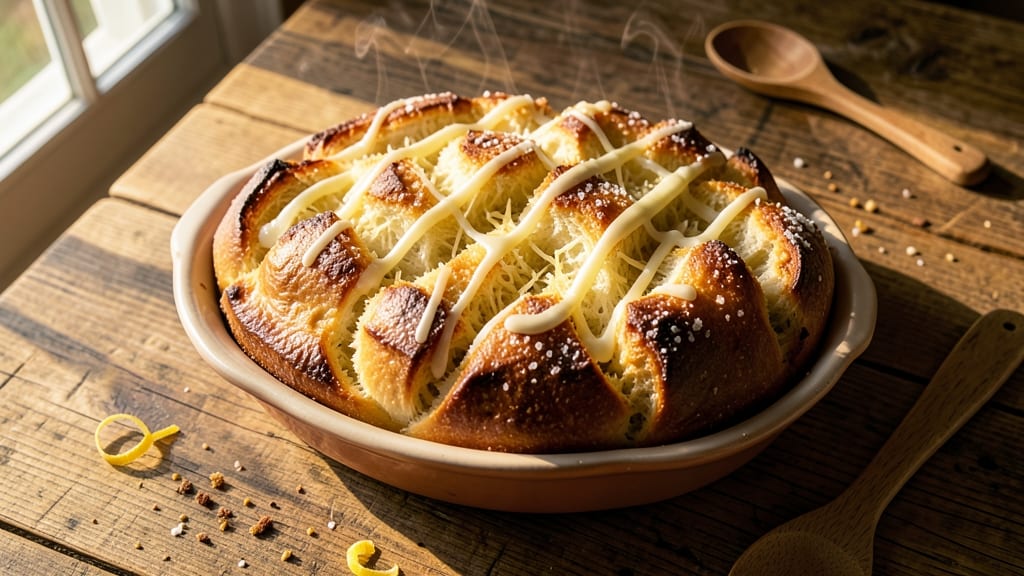
This Asiago cheese bread recipe delivers the same gooey, pull-apart perfection you crave from Panera—right in your own kitchen. The secret lies in a simple dough enriched with sharp Asiago cheese that melts into stretchy, golden strands when baked.
I've perfected this version after years of testing, ensuring every bite has that signature tender-crisp texture with pockets of melted cheese waiting to be pulled apart.
The process is straightforward but requires patience for proper kneading and proofing—critical steps that transform basic ingredients into restaurant-quality bread. You'll work with a soft, slightly sticky dough that develops a golden-brown crust while staying tender inside, all thanks to a precise balance of flour, yeast, and cheese.
The result is a loaf that's perfect for sharing, whether as a warm side dish or for dipping into soups.
What makes this recipe special is how the Asiago cheese melts into creamy strands while the bread bakes, creating that irresistible pull-apart quality. The dough's elasticity comes from proper kneading and proofing, which develop gluten strands that give the bread its signature stretch.
Once baked, the crust will be crisp enough to hold up to dipping, while the interior remains soft and cheesy.
Serve this bread warm with your favorite soup or as a side to any meal—its rich, cheesy flavor pairs perfectly with light dishes. The recipe scales easily, so you can make a single loaf for two or double it for a crowd.
Let's get started on creating your own gooey, pull-apart masterpiece at home.
Ingredients for asiago cheese bread panera
Four cups flour, sharp Asiago, and a touch of patience—this is all you need for Panera-style gooey perfection.
| Ingredient | Amount | Notes |
|---|---|---|
| All-Purpose Flour 🌾 | 4 cups | Spooning and leveling for accuracy |
| Active Dry Yeast 🍞 | ¼ tsp | Or 1 packet instant yeast |
| Granulated Sugar 🍚 | 1 tbsp | Feeds the yeast |
| Warm Water 💧 | ¾ cup | 110°F for optimal yeast activation |
| Unsalted Butter 🧈 | ½ cup | Cold, cubed for easier mixing |
| Asiago Cheese 🧀 | 1 ½ cups | Shredded, sharp variety preferred |
| Large Egg 🥚 | 1 whole | Room temperature |
| Milk 🥛 | ¼ cup | Warmed for easier mixing |
| Salt 🧂 | ½ tsp | Kosher or sea salt |
| Garlic Powder 🧄 | 1 tsp | For subtle depth |
| Dried Parsley 🌿 | 1 tsp | Or 1 tbsp fresh chopped |
| Cornmeal 🌽 | ¼ cup | For dusting the pan |
| Coarse Sugar 🍚 | ¼ cup | For topping before baking |
The Asiago cheese is non-negotiable here. Grab the sharpest variety from the deli counter—pre-shredded gets clumpy and lacks that signature pull. Whole Foods or Trader Joe's carry excellent options, or check the Italian cheese section at your grocery store. For the yeast, Fresh is fine but active dry works too—just make sure it's not expired. The butter should be cold when you mix it in; this keeps the dough from getting too soft. If your kitchen runs warm, chill the dough for 30 minutes before shaping. Trust me, this makes all the difference for that perfect golden crust.
No Asiago? Parmesan in a pinch, but it won't melt as beautifully. Short on butter? Vegetable shortening works (though it won't taste as rich). The garlic powder and parsley are optional but add depth—skip them if you're short on pantry staples. For the sugar, regular granulated works fine for feeding the yeast, but turbinado sugar on top gives that caramelized crust. If you're making this ahead, the dough can proof overnight in the fridge—just let it sit at room temp for 30 minutes before baking. The cornmeal isn't just for dusting; it adds a subtle crunch to the bottom of the loaf.
This bread is best served fresh from the oven, but leftovers reheat beautifully. Wrap tightly in foil and pop in a 350°F oven for 5-10 minutes to restore that gooey texture. The loaf keeps well at room temperature for 2 days in an airtight container, though it's best enjoyed within the first 24 hours. For longer storage, freeze the baked loaf for up to 3 months. I like to slice it and freeze the pieces—just thaw at room temp before serving. The cheese strands get even more dramatic after a night in the fridge, so plan ahead if you're serving a crowd.
Why You'll Love This Recipe
- No-Knead Magic: I swear by this dough—just mix, let it rise, and forget about it. The yeast and warm water do all the work while I sip coffee, and honestly? That hands-off step is my new favorite.
- Melty Perfection: The moment that buttery dough hits the oven, the asiago stretches into golden, gooey ribbons. Between us, the first bite with a little honey or jam? Dangerously addictive.
- Weeknight Hero: Breakfast, snack, or side—this bread handles it all. Toss a slice in a pan for French toast, or serve it warm with soup. (Yes, even on a Tuesday night.)
- Budget Baked Good: Five ingredients, one bowl, zero waste. That block of butter and a bag of flour stretch for days, and the leftovers? Crisp up in the toaster and disappear faster than I can say "second helping."
Step-by-step instructions for Asiago cheese bread
Here's how to create that perfect gooey, pull-apart bread with a crispy crust and melty cheese center.
Activate the Yeast for Perfect Rise
In a small bowl, combine the 0.75 cup warm water (about 110°F) with the 1 tbsp granulated sugar and 0.25 tsp active dry yeast. Let it sit for 5-10 minutes until it becomes foamy. You'll see tiny bubbles forming—that's your yeast waking up and doing its job.
This step is crucial because active yeast creates the air pockets that make your bread light and fluffy. If it doesn't foam, your yeast might be dead—start over with fresh yeast. Once it's foamy, proceed quickly to keep the yeast active.
Mix the Dough Until Smooth
In a large mixing bowl, combine the 4 cups all-purpose flour, 0.5 tsp salt, 1 tsp garlic powder, and 1 tsp dried parsley. Make a well in the center and pour in the yeast mixture, 1 whole large egg, and 0.25 cup milk. Mix until a shaggy dough forms.
Add the 0.5 cup cold cubed unsalted butter and knead the dough on a lightly floured surface for about 8-10 minutes until smooth and elastic. The dough should be slightly tacky but not sticky. If it's too sticky, add a little more flour, but don't overdo it—too much flour makes the bread dense.
Let the Dough Rise Until Doubled
Place the dough in a lightly greased bowl, cover it with a clean kitchen towel, and let it rise in a warm place for 1-1.5 hours or until it has doubled in size. You'll know it's ready when the dough puffs up and leaves an indent when you press it gently with your finger.
This rising time is important for developing flavor and texture. If your kitchen isn't warm enough, place the bowl near a warm oven (turned off) with the light on for gentle warmth. Patience here ensures that perfect pull-apart texture.
Shape and Add Cheese for Gooey Goodness
Punch down the risen dough to release air, then divide it into two equal parts. Roll each part into a log about 12 inches long. On a baking sheet lined with parchment paper, place the two logs side by side and gently press them together to form a loaf shape.
Sprinkle the top with the 1.5 cups shredded asiago cheese, pressing it lightly into the dough so it sticks. Cover the cheese with the 0.25 cup cornmeal, then sprinkle the 0.25 cup coarse sugar evenly over the top. This creates that beautiful crust and adds a touch of sweetness to balance the savory cheese.
Bake Until Golden and Crispy
Preheat your oven to 375°F. Bake the bread for 25-30 minutes until it's golden brown and sounds hollow when you tap the bottom. The cheese should be bubbly and gooey inside—this is where the magic happens.
Let the bread cool for 10 minutes before slicing. The cheese will be dangerously hot, so use a knife to cut through the center and pull apart those cheesy strands. Serve warm with your favorite soup or dip for the ultimate comfort food experience.
Pro Tips For Making Asiago Cheese Bread Panera
- TEST YEAST FIRST: I learned this the hard way—skipping the yeast check means wasting a whole batch. Mix 1 teaspoon yeast with ¼ cup warm water (110°F) and 1 teaspoon sugar, then wait 5-10 minutes. If it doesn’t foam, your yeast is dead, and you’ll need a fresh packet.
- SOFTEN BUTTER PROPERLY: Cold butter cubes won’t melt evenly, leaving you with greasy dough or uneven cheese distribution. Microwave 10 seconds at a time until just pliable (not liquid)—it should dent when pressed but not smear. This keeps the asiago evenly dispersed.
- KNEAD JUST ENOUGH: Overworking the dough makes asiago cheese bread dense. Stop when the dough springs back slowly when poked (about 5-7 minutes by hand). Too much kneading breaks down the gluten, and your bread will feel like a brick.
- BAKE UNTIL GOLDEN: Pull it out when the top is deep golden brown, not just pale yellow. Use a thermometer if you’re unsure—900°F internal temp guarantees a crisp crust. Underbaked bread stays gummy; overbaked bread burns fast. Aim for that caramelized edge.
Common mistakes when making your asiago cheese bread panera
Over-Kneading the Dough
I’ve seen many home bakers overwork the dough, thinking more kneading equals better texture—but this is a common mistake. Kneading for more than 10-12 minutes develops too much gluten, which can make your bread tough instead of tender.
The goal is a smooth, elastic dough that’s slightly tacky but not sticky. If you’re unsure, test it by stretching a small piece: it should resist but not snap back immediately.
Over-kneading is especially problematic with cheese bread because the fat from the butter and cheese interferes with gluten formation. 💡
Skipping Proofing Time
Rushing the proofing stage is a surefire way to end up with dense, flavorless bread. The dough needs 1-1.5 hours to rise at room temperature (or longer in a cold kitchen) to develop that light, airy texture.
I’ve made this mistake too—once I baked it after only 30 minutes, and the result was a brick-like loaf. Place your dough in a warm spot (like near the oven with the light on) to ensure proper rising.
If your kitchen is cold, extend the proofing time by up to 30 minutes.
Using Low-Quality Cheese
The cheese is the star of this recipe, so don’t skimp on quality! Pre-shredded cheese from the grocery store contains anti-caking agents that prevent it from melting smoothly, ruining that signature gooey texture.
Instead, buy a block of sharp Asiago cheese and shred it yourself using the large holes on your box grater. For the best results, I recommend Whole Foods’ 365 brand or Trader Joe’s—both melt beautifully.
If you’re in a pinch, Parmesan can work, but it won’t give the same creamy, stretchy strands. 🧀
Baking at the Wrong Temperature
Your oven’s temperature accuracy can make or break this recipe. If it runs hot, your bread might burn before the cheese melts properly. Preheat your oven to 375°F and use an oven thermometer to confirm accuracy—many home ovens are off by 25°F or more.
Baking at too low a temperature (350°F) can result in a gummy interior, while too high (400°F) can cause the crust to darken before the cheese softens.
For even baking, place a pan of water on the lower rack to create steam, which helps the crust crisp up beautifully. 🌡️
Cutting Too Soon
Patience is key when it comes to slicing this bread! The cheese inside is dangerously hot and will burn your tongue if you cut into it too soon.
Always let the bread cool for at least 10 minutes before slicing—this allows the cheese to set slightly and the crust to firm up. I’ve seen people pull apart the bread immediately, only to end up with a messy, sticky disaster.
Use a sharp knife to cut through the center and pull gently to create those perfect cheesy strands. Trust me, the wait is worth it! ⏰
Ignoring the Cornmeal Topping
Many bakers skip the cornmeal topping, thinking it’s optional—but it’s actually essential for two reasons. First, it adds a subtle crunch to the bottom of the loaf that balances the soft, cheesy interior. Second, it prevents the bread from sticking to the pan, making it easier to remove without tearing.
If you’re worried about the texture, use fine cornmeal or even semolina flour for a slightly nuttier flavor. Don’t forget to sprinkle it evenly over the cheese before baking! 🌽
Nutrition facts
Frequently asked questions
Can I make this bread without a stand mixer?
This recipe works perfectly with just your hands. The dough only needs 8-10 minutes of kneading by hand on a lightly floured surface until smooth and elastic. Focus on pressing and folding the dough rather than punching it—this builds strength without overworking the gluten. The butter and cheese will make it slightly softer to handle, so don't be afraid to get your hands involved!
What if my dough doesn't rise properly?
Cold kitchens or expired yeast are the usual culprits. First, check your yeast by testing it in warm water with sugar—it should foam within 5-10 minutes. If your kitchen is chilly, place the dough bowl near the oven (with light on) for warmth. For extra insurance, extend proofing to 2 hours. If all else fails, try activating the yeast in slightly warmer water (115°F) next time. Patience pays off for that perfect rise!
Can I add other cheeses besides Asiago?
Yes, but Asiago's sharp flavor and meltability are key! For a milder taste, try Parmesan (though it won't stretch as dramatically). For extra richness, mix in 1 cup sharp cheddar with the Asiago. Avoid pre-shredded cheese—it contains anti-caking agents that prevent proper melting. If substituting, use 1.5 cups total of cheese for best results.
How do I reheat leftover cheese bread?
Wrap slices tightly in foil and reheat at 350°F for 5-7 minutes until warm and gooey. For whole loaves, wrap in foil and bake at 325°F for 10 minutes. The microwave works in a pinch (30 seconds), but it can make the crust soggy. Pro tip: Store leftovers in an airtight container—they keep well for 2 days at room temperature.
Why did my bread turn out dense?
Over-kneading, skipped proofing, or cold dough are common causes. The dough should be slightly tacky after kneading (8-10 minutes) and double in size during proofing (1-1.5 hours). If your kitchen is cold, let the dough rise longer. Also, ensure your yeast is fresh and your oven is properly preheated to 375°F. A dense loaf often means the gluten developed too much or the cheese didn't melt properly.