
Side Dishes
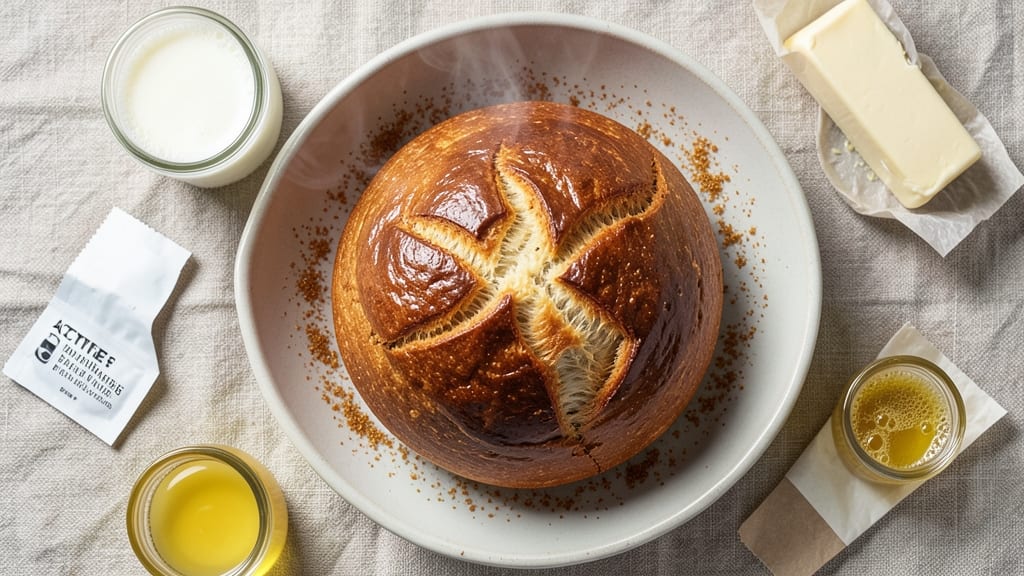
The foundation of this recipe is high-fat dough—loaded with butter, eggs, and milk—that develops flavor during overnight proofing. Unlike traditional brioche, which requires hours of kneading and multiple proofs, this method relies on slow fermentation in the fridge to tenderize the gluten and deepen the flavor.
The result? A light, airy crumb with pockets of melted butter that dissolve at every bite, all achieved with minimal daily effort.
What sets this apart is the butter swirl technique, where you fold ribbons of cold butter into the dough before final proofing. As it bakes, these swirls melt into luxurious pockets, creating that signature brioche decadence.
The crust develops a deep golden hue with a satisfying crunch, while the interior remains soft enough to melt in your mouth. Perfect for breakfast toast, French toast, or simply enjoyed with butter and jam.
With no yeast substitutes and a focus on traditional methods, this recipe delivers restaurant-quality brioche in your own oven. The key steps—mixing, shaping, and baking—are straightforward, but the overnight magic ensures a texture and flavor that’s impossible to replicate in rushed methods.
Ready to elevate your bread game with five minutes of work and a night of patient fermentation?
Ingredients for artisan bread in five minutes a day brioche
High-fat dough and butter swirls—just eight ingredients for bakery-style brioche in minutes daily.
| Ingredient | Amount | Notes |
|---|---|---|
| All-Purpose Flour 🌾 | 4 cups | High-protein preferred for structure |
| Unsalted Butter 🧈 | 1 cup | Cold, cubed for swirls |
| Large Eggs 🥚 | 3 whole | Room temperature for blending |
| Whole Milk 🥛 | ½ cup | Warmed slightly for dough |
| Granulated Sugar 🍚 | ¼ cup | Balances richness |
| Active Dry Yeast 🍞 | ¼ oz | Or 2 1/4 tsp |
| Diamond Crystal Kosher Salt 🧂 | 1 tsp | Fine grain preferred |
| Vanilla Extract 🍶 | 1 tsp | Pure extract for flavor |
| Honey 🍯 | 1 tbsp | For yeast activation |
| Cold Water 💧 | ½ cup | For yeast activation |
| Egg Wash 🥚 | 1 whole | For golden crust |
| Coarse Sea Salt 🧂 | 1 tsp | For final sprinkle |
The butter is non-negotiable here. European-style unsalted (like Plugrá or Land O'Lakes) gives the best flavor, but any good-quality brand works. Buy it in blocks—not tubs—and keep it cold until you're ready to cube it. The eggs should be large, fresh eggs—room temperature makes all the difference. King Arthur or Gold Medal flour are my go-tos for that perfect balance of protein and texture. If you can't find Diamond Crystal salt, Morton kosher is fine, but measure carefully—it's saltier.
No vanilla extract? Vanilla bean paste works too, or even a pinch of ground vanilla bean if you're feeling fancy. Short on honey? Maple syrup at half the amount does the trick. The yeast is the heart of this dough—if it's old, it won't activate properly. Test it first: sprinkle a pinch in warm water with a pinch of sugar—if it bubbles in 5 minutes, it's good to go. For the butter swirls, use cold butter straight from the fridge. Warm butter will melt too soon and make a greasy dough. The milk should be warmed to body temperature—not hot, just cozy.
This dough is a nighttime project—mix it, cover, and let it ferment in the fridge overnight. The butter swirls stay crisp until baking, so don't rush the shaping. Store the dough in an airtight container for up to 3 days in the fridge. If you make extra, freeze it for up to 3 months. The baked loaf keeps well wrapped at room temperature for 2 days, but it's best enjoyed fresh—warm slices with butter and jam are the ultimate test of your brioche.
Why You'll Love This Recipe
- Five-Minute Magic: I swear, the dough comes together faster than my coffee brews—just mix, shape, and let it rise overnight while I sleep. No kneading, no fuss, just butter, eggs, and flour doing all the heavy lifting.
- Buttery Luxe Daily: That rich, custardy crumb? It’s all thanks to the butter and whole milk working together overnight. One slice feels like a treat, but it’s my everyday bread—no guilt, just pure satisfaction.
- Breakfast to Brunch: Toast it for breakfast, use it for French toast on weekends, or tear it for charcuterie boards. The brioche’s softness handles everything, and honestly? It’s the one loaf that makes every meal feel special.
- Zero-Waste Goldmine: A single batch lasts my family five days—perfect for sandwiches, garlic butter dips, or even croutons. And because it’s budget-friendly (just five ingredients!), I’m always baking another loaf before the last one disappears.
Step-by-step instructions for artisan bread in five minutes a day brioche
Here's how to create that perfect brioche loaf with golden swirls and tender crumb.
Activate the Yeast for Maximum Rise
In a small bowl, combine the 0.5 cup cold water, 1 tbsp honey, and 0.25 oz active dry yeast. Let this sit for 5-10 minutes until it becomes frothy and bubbly—this means your yeast is alive and ready to work. The honey here not only feeds the yeast but also adds subtle sweetness that enhances the brioche's flavor profile.
If you don't see bubbles after 10 minutes, your yeast might be inactive. In that case, start fresh with a new packet—this is the foundation of your bread, and skipping this step will result in a dense, flat loaf. The room should be warm (around 75°F) for optimal yeast activity, so if your kitchen is chilly, consider placing the bowl near a warm spot like the oven with the light on.
Mix the Dough with High-Protein Flour for Structure
In the bowl of a stand mixer fitted with the dough hook attachment, combine the 4 cups all-purpose flour and 1 tsp diamond crystal kosher salt. Mix on low speed just to distribute the salt evenly through the flour—this prevents clumping and ensures consistent flavor throughout the dough.
Add the 1 cup unsalted butter, cut into ½-inch cubes, to the flour mixture. Mix on low speed until the butter is fully incorporated and the mixture resembles coarse crumbs. This step is crucial for creating those beautiful butter swirls later. If your butter is too soft, chill the bowl and dough for 10 minutes to prevent overmixing, which can develop gluten and make the brioche tough.
Incorporate Wet Ingredients for a Rich, Pillowy Texture
Add the 3 whole large eggs, 0.5 cup whole milk, 0.25 cup granulated sugar, and 1 tsp vanilla extract to the flour-butter mixture. Mix on medium speed for 3-4 minutes until the dough comes together and pulls away from the sides of the bowl. The dough should be soft, slightly sticky, and elastic—this indicates proper gluten development without overworking the mixture.
Here's the thing—brioche dough is rich and can be tricky. If the dough feels too sticky after mixing, add 1 tablespoon of flour at a time until it's just manageable. Overworking the dough at this stage will make it tough, so resist the urge to mix longer than necessary. The dough should be smooth, glossy, and slightly tacky to the touch, which ensures a tender crumb in the final loaf.
Knead and Shape for Optimal Swirls
Continue kneading the dough on medium speed for 5-7 minutes until it's smooth, elastic, and passes the "windowpane test." To test, stretch a small piece of dough between your fingers—if it thins out without tearing, it's ready. This step develops the gluten structure that gives brioche its signature pillowy texture.
Once kneaded, turn the dough out onto a lightly floured surface and shape it into a 12-inch log. To create the classic butter swirls, roll the dough into a ¼-inch thick rectangle, then layer ¼ of the remaining butter cubes along the long side. Fold the dough over the butter, then repeat this process two more times, adding the remaining butter each time. Seal the edges tightly to trap the butter inside—this ensures those melt-in-your-mouth swirls in every bite.
First Rise and Layering for Height
Place the shaped dough in a lightly greased loaf pan and cover it with a damp kitchen towel. Let it rise in a warm place for 1-2 hours, or until it has nearly doubled in size. The dough should be soft and springy to the touch, with a slight jiggle when shaken gently. This first rise is critical—it allows the yeast to ferment and creates the airy texture that defines brioche.
After the first rise, preheat your oven to 350°F. Brush the risen dough with the 1 whole egg wash and sprinkle generously with 1 tsp coarse sea salt. Bake for 30-35 minutes, until the top is golden brown and the internal temperature reaches 190°F. The bread should sound hollow when tapped on the bottom—this is your cue that it's fully baked and ready to enjoy.
Pro Tips For Making Artisan Bread In Five Minutes A Day Brioche
- CHILL THE DOUGH: I learned this the hard way—skipping the fridge overnight makes the butter too soft during lamination, and your brioche turns out dense instead of fluffy. Even if you’re eager, give it 12–16 hours in the fridge; the butter needs time to firm up properly.
- WEIGH THE BUTTER: Cold butter is stubborn, and eyeballing it leads to uneven layers. Use a kitchen scale for 25% of the flour weight—this ensures consistent richness without overdoing it. (Yes, even if you’re impatient like me.)
- STRETCH DON’T PULL: When folding the dough, resist the urge to yank—it tears the gluten and ruins the layers. Gently stretch the dough toward you, then fold it over like a business letter. This keeps the structure intact for that signature brioche texture.
- USE ROOM-TEMP EGG YOLKS: Cold yolks mix unevenly and can weaken the dough. Let them sit at room temp for 30 minutes before adding them to the milk-butter mix. Trust me, your brioche will rise higher and taste richer—it’s a small swap that makes a real difference.
Wine and beer pairings for this artisan bread in five minutes a day brioche
Buttery Brioche & White Wine
Pair your rich brioche with a dry white wine that cuts through the butterfat beautifully. I love Chardonnay from Burgundy—its crisp acidity and mineral notes complement the bread's sweetness without overpowering it.
Look for a well-balanced unoaked Chardonnay (like Louis Latour or Domaine Drouhin) to avoid heaviness. The slight citrus hints in the wine enhance the brioche's vanilla and caramelized crust. 🍷
Crisp Lager for Contrast
A German Pilsner or Belgian Witbier provides the perfect light contrast to brioche's richness. The crisp, clean finish of a Weihenstephaner Hefeweissbier or Hoegaarden cleanses your palate between bites.
For a local option, try a crisp American lager like Leinenkugel's Summer Shandy—the slight effervescence and citrus notes balance the bread's buttery depth. 🍺
Fruity Red for Bold Pairings
If you prefer red, go for a light-bodied Pinot Noir with bright fruit flavors. A Willamette Valley Oregon Pinot (like Domaine Serene) offers red berry notes that harmonize with brioche's caramelized crust.
Avoid heavy Cabernets—their tannins clash with the bread's delicate texture. For a sweeter touch, try a Lambrusco (a slightly fizzy Italian red) that adds a playful contrast. 🍇
Coffee or Tea Pairings
Skip the alcohol? A strong black coffee (like Espresso or French Press) enhances brioche's buttery richness. The bitterness in dark roasts balances the sweetness, while a lightly sweetened Earl Grey complements the vanilla notes.
For a dessert-style pairing, try chilled chamomile tea—its floral notes mirror the brioche's subtle sweetness. ☕
Seasonal Adaptations
In summer, opt for a Sauvignon Blanc (like Cloudy Bay)—its zesty acidity refreshes after a buttery bite. In winter, a warm Spiced Chai or mulled wine (like Mulled Riesling) adds cozy warmth.
For holiday meals, a Port wine (like Taylor's Late Bottled Vintage) pairs beautifully with brioche-based desserts. 🍂
Nutrition facts
Frequently asked questions
Why does this brioche recipe work with just five minutes of daily effort?
The magic is in cold fermentation. You mix everything the night before and let the fridge do the work overnight. This slow rise develops flavor and texture without requiring active kneading or long proofing times. By morning, you simply shape and bake—no waiting around!
Can I make this brioche without a stand mixer?
Use a large mixing bowl and mix by hand with a sturdy wooden spoon or dough whisk. Knead the dough on a floured surface for 10-12 minutes until smooth and elastic. Just be prepared for more elbow grease—this dough is rich and sticky, so patience is key.
What’s the best way to store leftover brioche?
Wrap the loaf tightly in plastic wrap or place it in an airtight container. It stays fresh at room temperature for 2 days. For longer storage, freeze slices wrapped individually—they’ll stay good for 3 months. Reheat frozen slices in a 350°F oven for 5-7 minutes to restore freshness.
Why does my brioche have a thick crust instead of a soft one?
This usually happens from overbaking or insufficient steam. Try these fixes: brush the dough with egg wash before baking, place a metal tray with boiling water in the oven for steam, and bake until the internal temp hits 190°F (not by color alone). A too-thick crust means it needs more moisture during baking.
Can I substitute butter with oil in this recipe?
Not recommended! Butter is essential for brioche’s signature flavor and texture. If you’re avoiding dairy, use European-style cultured butter (like Plugrá) for the best results. Oil lacks the fat content needed for that melt-in-your-mouth crumb. The butter swirls also create those luxurious pockets—no substitute delivers the same richness.