
Side Dishes
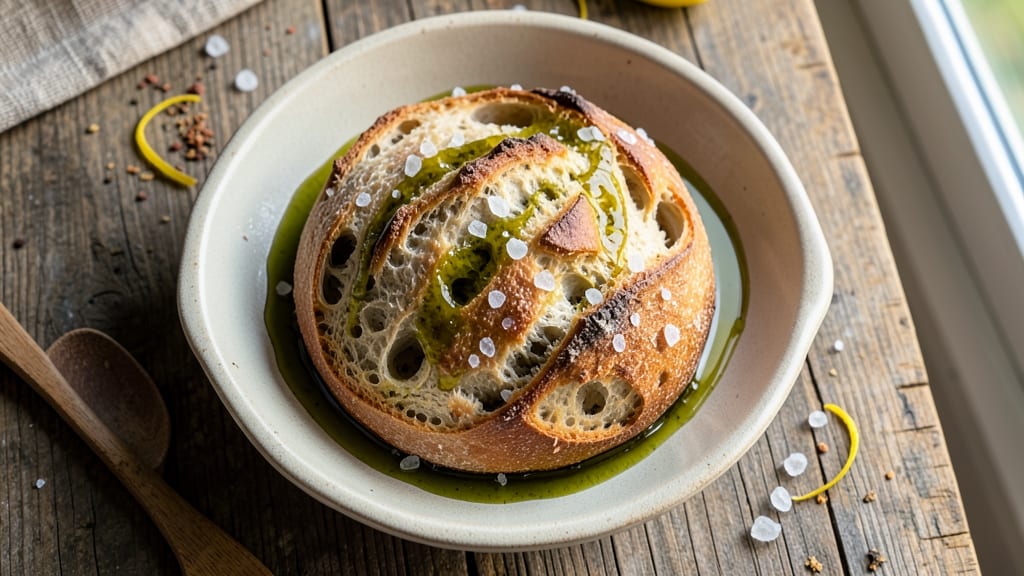
This artisan olive oil bread recipe delivers the perfect balance of crisp golden crust and tender, nutty crumb—all achieved with just five simple ingredients and 12 hours of hands-off time.
The secret lies in high-quality extra-virgin olive oil, which infuses every bite with rich Mediterranean flavor while creating that signature crackly crust. I’ve perfected this method after years of baking, and it’s surprisingly foolproof for home ovens with no special equipment required.
The process begins with a straightforward dough made from flour, water, yeast, and olive oil, followed by a two-stage proofing that develops deep flavor and texture. Kneading develops gluten for structure, while the slow fermentation allows the olive oil to fully integrate, creating that signature tender crumb.
The shaping technique ensures an even rise, and baking at high heat creates that coveted crisp exterior while keeping the interior soft.
What you’ll end up with is rustic, golden bread with a nutty depth from the olive oil and a satisfying crunch that gives way to pillowy softness inside. The aroma alone will fill your kitchen with warmth, and each slice will be packed with authentic Mediterranean character.
This recipe works equally well as a side dish, for sandwiches, or simply enjoyed with olive oil and salt.
For added texture, try mixing in herbs like rosemary or seeds like sesame before baking. The dough can be made ahead and refrigerated overnight, making this the perfect make-ahead project for busy days. Let’s get started on creating your own artisan loaf.
Ingredients for artisan olive oil bread
Five simple ingredients transform into rustic artisan bread with a crisp crust and nutty crumb.
| Ingredient | Amount | Notes |
|---|---|---|
| All-Purpose Flour 🌾 | 4 cups | High-protein preferred for structure |
| Extra-Virgin Olive Oil 🫒 | ¾ cup | High-quality, fruity variety |
| Active Dry Yeast 🍞 | ¼ oz | Or 2.25 tsp, ensure fresh |
| Granulated Sugar 🍚 | 1 tbsp | Feeds yeast for activation |
| Warm Water 💧 | 1 ¼ cups | 110°F for optimal yeast activation |
| Diamond Crystal Kosher Salt 🧂 | 1 ½ tsp | Adjust to taste for crust |
| Cornmeal 🌽 | ¼ cup | For dusting parchment paper |
| Sesame Seeds (optional) 🌻 | 1 tbsp | For added texture and flavor |
The olive oil is non-negotiable here—high-quality extra-virgin makes all the difference. Trader Joe's or Whole Foods carry excellent options, but any fruity, peppery variety will work. Look for bottles labeled 'cold-pressed' and 'first cold-pression' for the best flavor. The flour should be high-protein (11-12% protein) for optimal gluten development, like King Arthur or Bread Flour. Yeast is the workhorse—always check the expiration date, and if it's over 3 months old, test it in warm water with sugar to ensure it's still active.
No extra-virgin olive oil? Light olive oil works in a pinch, but the flavor won't be as rich. Running out of sesame seeds? Poppy seeds or rosemary sprigs add a lovely contrast. The sugar can be swapped for honey (reduce to 1 tsp) if you prefer, though it may slightly darken the crust. For a gluten-free version, use a 1:1 gluten-free flour blend, but expect a denser texture. The water temperature is critical—too hot kills the yeast, too cold slows activation. Aim for 110°F (like warm bathwater).
The dough can be made up to 24 hours ahead and refrigerated, making this perfect for lazy weekends. Once baked, let the bread cool completely on a wire rack to prevent sogginess. Store wrapped in a clean kitchen towel at room temperature for 3-4 days, or freeze sliced for up to 3 months. For reheating, wrap slices in foil and warm in a 350°F oven for 5 minutes to restore crispness.
Why You'll Love This Recipe
- I’ll be real: I bake a batch on Sunday and it’s still perfect by Thursday. The olive oil keeps it moist without getting soggy, and it reheats in seconds under the broiler. No sad, dried-out bread here—just reliable, delicious leftovers that actually get eaten.
- Five-Ingredient Magic: I swear by this list—flour, olive oil, yeast, sugar, and water. That’s it. No fancy mix-ins or last-minute grocery runs. The yeast does all the work while I sip my coffee, and by the time it’s done, I’ve got golden crust and no stress.
- Rich Without Effort: Honestly, the olive oil makes this taste like a bakery loaf without the pretension. That first pull-apart bite? The crust cracks just enough to let the soft, buttery interior shine. It’s the kind of flavor that makes you pause mid-slice—no overcomplicating needed.
- Weeknight Workhorse: Between us, this bread is my secret weapon for lazy dinners. Tear it over pasta, rub it on toast, or just eat it straight from the pan. It’s the kind of thing that turns a simple meal into something that feels special—even when you’re in sweatpants.
Step-by-step instructions for artisan olive oil bread
Here's how to craft bread with an irresistible golden crust and fragrant olive oil richness—no shortcuts, just technique.
Activate the Yeast for Maximum Rise
In a small bowl, combine the 1.25 cups warm water (between 110°F and 115°F—too hot kills yeast, too cool slows it) with the 1 tbsp granulated sugar and 0.25 oz active dry yeast. Stir gently and let sit for 5-10 minutes until frothy. You'll see bubbles form and the mixture smell yeasty—this confirms the yeast is alive and ready to work.
If no bubbles appear after 10 minutes, your yeast may be stale. Discard the mixture and start fresh with a new packet. The yeast is the engine of this bread; getting it right ensures a light, airy crumb. Keep the bowl covered with a damp towel while you prepare the rest of the dough.
Mix the Dough for Optimal Texture
In a large bowl, whisk together the 4 cups all-purpose flour and 1.5 tsp diamond crystal kosher salt. Create a well in the center and pour in the yeast mixture along with the 0.75 cup extra-virgin olive oil. Using a wooden spoon or your hands, mix until a shaggy dough forms.
This is where the magic begins. The olive oil coats the flour, creating a tender crumb while adding that signature nutty depth. Knead the dough on a lightly floured surface for 8-10 minutes until smooth and elastic. You'll know it's ready when it springs back slowly when poked—this indicates proper gluten development, which gives the bread its structure.
Let the Dough Rise for Maximum Flavor
Place the dough in a lightly oiled bowl, cover with a damp towel, and let rise in a warm place for 1-2 hours, or until doubled in size. The kitchen should feel slightly warm—this encourages the yeast to work efficiently. For best results, I place the bowl on top of my oven with the light on (this creates a warm, moist environment).
Patience is key here. The dough should puff noticeably and feel light when pressed gently. If it rises too quickly (within 30 minutes), your kitchen is too warm, and the bread may taste overly yeasty. If it takes longer than 2 hours, the yeast may be sluggish—adjust your environment accordingly.
Shape and Proof for a Professional Finish
Turn the dough onto a lightly floured surface and gently shape it into a 12-inch round loaf (or a batard shape if preferred). The goal is to create surface tension—press down firmly on the dough to expel air, then roll it tightly into a log. This step ensures an even rise and a clean, professional finish.
Place the shaped dough on a parchment-lined baking sheet dusted with 0.25 cup cornmeal (this prevents sticking and adds a subtle crunch). Cover loosely with plastic wrap and let proof for another 1-2 hours, until the dough has risen 50-75% and looks slightly domed. The surface should feel firm to the touch—this indicates it's ready for the oven.
Bake for a Golden, Crispy Crust
Preheat your oven to 375°F with a baking stone or inverted baking sheet inside—this mimics a professional bread oven and ensures even heat distribution. Once preheated, bake the loaf for 30-35 minutes, until the crust is deep golden brown and sounds hollow when tapped on the bottom.
For extra shine and crunch, brush the loaf with a little more extra-virgin olive oil while it's still warm. Sprinkle with 1 tbsp sesame seeds (if using) for added texture and flavor. Let the bread cool on a wire rack for at least 30 minutes before slicing—this allows the crumb to set and prevents a gummy texture.
Pro Tips For Making Artisan Olive Oil Bread
- WEIGH YOUR FLOUR: I learned this the hard way—measuring flour by scooping from the bag packs in way too much air, and my dough always ended up sticky and unmanageable. Use a kitchen scale for this recipe; aim for 500 grams of all-purpose flour. The dough should pull away from the bowl but still feel slightly tacky—like wet sand.
- LET THE YEAST BLOOM: Skip the rush and give your yeast a proper wake-up call. Mix the warm water (around 110°F—too hot and you’ll kill it), sugar, and yeast first, then wait 5–10 minutes until you see frothy bubbles before adding the flour. This ensures your yeast is active and ready to work, not just going through the motions.
- DON’T OVERWORK THE DOUGH: I used to punch and fold that dough like I was kneading pizza crust, and it’d turn tough and dense. For this recipe, handle it gently—just enough to combine. After the first rise, do a few light stretches and folds (about 4–5 sets), then let it rest. The gluten develops enough on its own; you’re not making baguettes here.
- USE COLD OLIVE OIL: Sounds counterintuitive, but chilling the extra-virgin olive oil (about 2 tablespoons) before mixing it into the dough makes a real difference. It slows gluten development slightly, giving you more control during shaping, and the final loaf stays moist longer. Plus, the oil won’t make the dough greasy—just rich and tender. (Yes, even if you’re impatient like me.)
Wine and beer pairings for artisan olive oil bread
Italian White Wine
An Italian Vermentino from Sardinia is my top recommendation—its crisp acidity and citrus notes cut through the bread's rich olive oil flavor beautifully. I love pairing it with this bread because the wine's mineral finish complements the nutty depth from the olive oil.
For a budget-friendly option, Pinot Grigio from Alto Adige works perfectly. 🍷
Crisp Lager Pairing
A Peroni or Moretti Italian lager provides a refreshing contrast to the bread's richness. The light, effervescent quality cleanses your palate between bites, while the subtle malt sweetness enhances the olive oil's fruity notes.
For craft beer lovers, a Belgian witbier like Hoegaarden adds a peppery, citrusy twist that pairs wonderfully.
Dry Rosé Alternative
For a summer-friendly option, a dry Provençal rosé with its strawberry and floral notes creates an elegant pairing. Look for one with good acidity—Whispering Angel is my go-to. The rosé's brightness balances the bread's earthy olive oil flavor while keeping the meal feeling light and refreshing.
Red Wine for Bold Lovers
If you prefer red wine, a Chianti Classico with its bright acidity and cherry notes stands up to the bread's robust flavor. The wine's tannins complement the crust's crisp texture, while the fruitiness harmonizes with the olive oil's nutty profile. Avoid heavy, oaky reds that would overpower the delicate bread.
Non-Alcoholic Options
For a non-alcoholic pairing, try a sparkling blood orange soda like San Pellegrino Aranciata Rossa. The citrusy effervescence mimics wine's acidity while adding a refreshing twist. Alternatively, a chilled hibiscus iced tea with its tart, floral notes provides an elegant alternative that enhances the bread's Mediterranean character.
Nutrition facts
Frequently asked questions
Can I substitute butter for olive oil in this recipe?
The olive oil is essential for that signature nutty depth and tender crumb. While you could use 1/4 cup melted butter plus 1/2 cup olive oil (to maintain moisture), the flavor won't be the same. For authentic results, stick with extra-virgin olive oil—its fruity notes elevate the bread's Mediterranean character.
Why does my dough rise too quickly or not at all?
Too-quick rise (30 minutes) means your kitchen is too warm—move the dough to a cooler spot (like the fridge) to slow fermentation. No rise after 2 hours? Check yeast freshness (test in warm water with sugar) and ensure water is 110°F (not boiling). Cold environments? Try placing the bowl on your oven with the light on for gentle warmth.
How do I get a crispier crust without a baking stone?
Place a preheated inverted baking sheet on the oven rack to mimic a stone's effect. For extra crunch, bake the loaf directly on parchment (no cornmeal) and brush with olive oil after 15 minutes in the oven. A steam spray in the first 5 minutes also helps create that crackly crust.
Can I make this bread without kneading?
Yes! Use a stand mixer with a dough hook for 5-6 minutes on medium speed, or try the "no-knead" method: mix ingredients, let rest 1 hour, then fold the dough 3 times over 2 hours. The gluten won't develop as fully, but you'll still get a soft, flavorful loaf—just slightly denser.
What’s the best way to store leftovers?
Wrap cooled slices in a clean kitchen towel (traps moisture better than plastic) and store at room temp for 3-4 days. For longer storage, freeze slices in a bag—reheat wrapped in foil at 350°F for 5 minutes to restore crispness. Never refrigerate bread—it dries out faster!