
Side Dishes
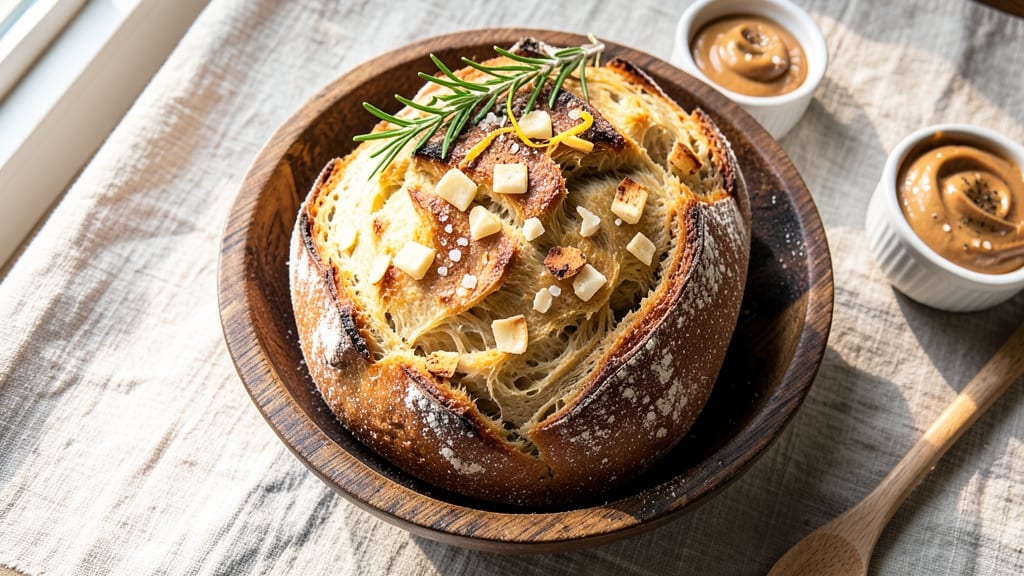
This artisan potato bread recipe transforms humble potatoes into a loaf with a crusty exterior and moist, potato-infused crumb that rivals any bakery creation. The secret lies in blending mashed potatoes into the dough, which adds natural moisture and a subtle sweetness that keeps this bread tender for days.
I've perfected this technique over years of baking, ensuring every slice delivers that satisfying combination of crispy crust and soft interior.
The process begins with a high-hydration dough that incorporates both flour and mashed potatoes, creating a lighter texture than traditional bread. A slow fermentation (24 hours in the fridge) develops deep flavor, while scoring the loaf before baking ensures an even rise and that coveted artisan look.
This recipe balances tradition with practicality—no fancy equipment needed, just patience and precision.
What you'll achieve is a loaf with a golden, crackly crust and a crumb so tender it practically melts in your mouth. The potato flavor infuses every bite, making this bread perfect for sandwiches, toast, or serving alongside soups and stews.
The aroma alone will have everyone asking for seconds, and the texture holds up beautifully for days.
For added depth, consider variations like garlic-herb or cheddar-potato—both elevate the flavor while keeping the signature texture intact. Let's get started on creating this showstopping loaf that's equal parts rustic and refined.
Ingredients for artisan potato bread
Transform humble potatoes into golden crust and tender crumb with these carefully chosen ingredients.
| Ingredient | Amount | Notes |
|---|---|---|
| Russet Potatoes 🥔 | 2 lbs | Peeled and boiled into mash |
| All-Purpose Flour 🌾 | 3 cups | Bread flour preferred for chewiness |
| Instant Yeast 🍞 | ½ tsp | Active dry works at 1:1 ratio |
| Granulated Sugar 🍚 | ½ cup | Feeds yeast and balances flavor |
| Unsalted Butter 🧈 | ½ cup | Cold and cubed for texture |
| Large Eggs 🥚 | 2 whole | Room temperature for even mixing |
| Whole Milk 🥛 | 1 cup | Warmed for optimal hydration |
| Diamond Crystal Kosher Salt 🧂 | 1 ½ tsp | Adjust to taste after baking |
| Extra-Virgin Olive Oil 🫒 | 2 tbsp | For dough and crust scoring |
| Cornmeal 🌽 | ½ cup | For dusting baking surface |
| Water 💧 | ½ cup | Adjust for dough consistency |
The potatoes are the heart of this bread—Russet potatoes yield the fluffiest mash due to their high starch content. King Soopers or Costco consistently carry the best quality at reasonable prices, but any russet will work. Boil them until fork-tender, then mash until completely smooth with no lumps. The flour selection matters too: King Arthur bread flour delivers the ideal chewiness, though all-purpose works in a pinch. For the yeast, FreshPaks from grocery stores are more potent than jarred, so use half the amount if you prefer them. Keep everything refrigerated until ready to mix—cold ingredients prevent premature yeast activation.
No bread flour? Add 1 tbsp vital wheat gluten per cup of all-purpose flour to mimic its structure. Substituting butter? Coconut oil or vegetable shortening work at a 1:1 ratio, though texture will differ slightly. For a dairy-free version, use unsweetened almond milk and vegan butter, but expect a slightly denser crumb. The eggs can be replaced with 2 tbsp ground flaxseed mixed with 6 tbsp water for a vegan adaptation. If your dough feels too sticky, add 1 tbsp more flour at a time—this bread thrives on high hydration but has limits. For scoring, use a sharp lame or razor blade at a 45-degree angle to create an even, crisp crust.
This dough develops optimal flavor through 24 hours of cold fermentation, so plan ahead. Shape the loaf into a banneton or bowl lined with a floured towel, then cover with plastic wrap. Store in the fridge until ready to bake. The finished loaf keeps well at room temperature for 3 days wrapped in a clean kitchen towel, or 1 week in the fridge. For longer storage, slice and freeze portions between parchment paper—they toast beautifully straight from frozen. The crust remains crisp for 2 hours after baking, so enjoy it fresh or reheat slices in a 350°F oven for 5 minutes to restore that golden crunch.
Why You'll Love This Recipe
- No-Fuss Dough: I swear, this bread takes less effort than waiting for takeout. Just boil and mash the Russets, mix in the flour and yeast, and let the oven do the rest—no kneading, no fuss.
- Buttery Crust Magic: That crispy golden crust? Pure reward. The butter and sugar caramelize just enough to give every bite a toasty edge, while the inside stays soft—like a hug from a bakery.
- Weeknight Hero: Between us, this is my go-to when I’m too tired to plan. Toss it together for dinner, and the leftovers? Perfect cold sandwiches the next day (yes, even on a Tuesday).
- Pantry Stretch: Russets and flour are cheap, and one loaf feeds a crowd. I’ve fed six people for under $5, and the kids still ask for seconds—proof it’s a winner without breaking the bank.
Step-by-step instructions for artisan potato bread
Transform humble russets into a loaf with a crackling crust and moist, potato-infused crumb.
Prepare the Potato Mash
Peel the 2 lbs russet potatoes and cut them into even chunks. Place them in a pot of cold, salted water and bring to a boil over medium-high heat. Reduce to a simmer and cook for 15-20 minutes until fork-tender. Drain thoroughly and return to the pot.
Using a potato masher or ricer, break down the potatoes into a smooth, lump-free mash. Let it cool to room temperature before using—this prevents killing the yeast when mixed later. The mash should be completely dry; any excess moisture will make the dough gummy.
Mix the Dough
In a large mixing bowl, combine the 3 cups all-purpose flour, 0.5 tsp instant yeast, 0.5 cup granulated sugar, and 1.5 tsp diamond crystal kosher salt. Whisk to distribute the dry ingredients evenly.
In a separate bowl, warm the 1 cup whole milk until it reaches 110°F—just warm enough to dissolve the sugar but not hot enough to scald. Add the 2 whole large eggs, 0.5 cup unsalted butter (cubed and cold), and the cooled potato mash. Mix until the butter is incorporated and the mixture is smooth.
Knead and Rest the Dough
Pour the wet ingredients into the dry ingredients and mix with a wooden spoon until a shaggy dough forms. Gradually add the 0.5 cup water as needed to reach a soft, slightly tacky consistency. Knead by hand for 8-10 minutes until the dough is smooth and elastic, pulling away from the sides of the bowl.
Lightly oil a large bowl, place the dough inside, and cover with a damp towel. Let it rise in a warm place for 1-2 hours until it has nearly doubled in size. This resting period allows the gluten to relax and the flavors to meld—don't skip it, even if the dough seems ready sooner.
Shape and Proof
Turn the dough onto a surface dusted with 0.5 cup cornmeal and gently shape it into a round loaf. Place it seam-side up in a greased 9x5-inch loaf pan or a round baking dish. Cover again and let it proof for another 30-45 minutes until it rises 1-2 inches above the pan.
Preheat your oven to 375°F while the dough proofs. Brush the top of the loaf with 1 tbsp extra-virgin olive oil and sprinkle lightly with coarse salt. This creates a golden, crispy crust while keeping the interior tender.
Bake to Golden Perfection
Bake for 45-50 minutes until the bread is deep golden brown and sounds hollow when tapped on the bottom. If the top browns too quickly, tent loosely with foil to prevent over-browning while ensuring the interior reaches 205°F at the center.
Remove from the oven and let the bread cool in the pan for 10 minutes before transferring to a wire rack. Slice when completely cool—this ensures clean cuts through the moist crumb. The crust should be crisp with a slight crackle, while the interior remains soft and infused with potato sweetness.
Pro Tips For Making Artisan Potato Bread
- BOIL POTATOES UNTIL SOFT: I learned this the hard way—undercooked potatoes turn your dough gummy, no matter how much you knead. Aim for potatoes that collapse when pierced with a fork, then mash them while still hot. The residual steam helps break down the starch properly, giving you that tender, fluffy crumb.
- USE COLD BUTTER: I was skeptical until I tried it: mixing cold, cubed butter into the dough creates pockets of fat that melt during baking, resulting in a lighter, more open crumb. Skip the softened butter—this isn’t a cookie dough. Cut it into small pieces and work fast to avoid warming the dough.
- DON’T OVER-KNEAD THE DOUGH: This isn’t a baguette—potato dough is delicate. After the first 5 minutes of mixing, stop when it just holds together. Overworking it activates too much gluten, making the bread dense instead of airy. A few gentle folds after the first rise is enough.
- LET THE DOUGH RISE TWICE: Yes, even if you’re impatient like me. The first rise (1–2 hours) develops flavor, but the second (after shaping) ensures a proper oven spring. Skip the second rise, and your bread will be flat and heavy. Give it 30–45 minutes—you’ll taste the difference.
Troubleshooting this dish
Dough Too Sticky
If your dough feels too sticky during mixing, resist the urge to add extra flour all at once. Instead, add 1 tablespoon at a time while kneading—this prevents a tough crumb.
I find using a stand mixer with a dough hook (on low speed) helps incorporate just enough flour for a workable consistency. For hand-kneaders, wet your hands slightly to prevent sticking while shaping.
The dough should be soft but not gluey; if it clings to your fingers, it needs a touch more flour. 💫
Uneven Rise
An uneven rise often happens when the dough isn't properly kneaded or proofed in a warm enough environment. Ensure your dough reaches 75-80°F during proofing—I use a proofing box set to 80°F for consistent results.
If your kitchen is cold, place the dough bowl near the oven (with oven off) or use a rice cooker on "keep warm" mode. Also, make sure your yeast is fresh; expired yeast won't activate properly, leading to weak structure. 🌡️
Dense Crumb
A dense crumb usually means the dough was overworked or didn't rest long enough. Knead only until the dough is smooth and elastic (8-10 minutes by hand), then let it rest for the full 1-2 hours before shaping.
For extra tenderness, I sometimes add 1 tablespoon honey to the dough—it enhances moisture retention. If your crumb is still dense after baking, check your oven temperature; 375°F is critical for even baking. A baking stone or steel helps create steam for a lighter texture. 🥖
Pale Crust
A pale crust often indicates insufficient steam during baking or an oven that's too cool. For a crispy crust, place a baking sheet with boiling water in the oven while preheating, then remove it just before baking.
Brush the loaf with extra-virgin olive oil and sprinkle with coarse salt right before baking to enhance browning. If your oven runs hot, bake at 350°F instead of 375°F to prevent over-browning while ensuring the crust develops properly. 🔥
Flat Loaf
A flat loaf typically means the dough didn't proof long enough or the oven wasn't hot enough. Double-check your yeast is active (drop it in warm water with sugar—it should foam within 5-10 minutes).
For shaping, use a banneton or bowl lined with a floured towel to support the dough's rise. If your kitchen is drafty, proof the dough in a closed oven with the light on (it generates heat). Also, ensure your oven thermometer reads accurately—many ovens run 25°F cooler than set. 📏
Gummy Interior
A gummy interior usually stems from excess moisture in the potato mash or dough. Drain the boiled potatoes thoroughly and mash them completely smooth—no lumps should remain. If your dough feels too wet, add 1 tablespoon flour at a time while kneading.
For extra insurance, I sometimes bake the loaf at 350°F for 50 minutes instead of 375°F to allow moisture to evaporate slowly. Avoid overcrowding the oven, as this can trap steam and prevent proper drying. 💧
Nutrition facts
Frequently asked questions about artisan potato bread
Can I use sweet potatoes instead of russets?
Sweet potatoes will work, but the flavor and texture will differ significantly. Sweet potatoes are naturally sweeter and moister, which can make the bread denser unless you reduce the potato amount by 25% and add 1 extra tablespoon of flour to balance hydration. For best results, stick with russets—their neutral flavor and starchy texture create the signature tender crumb.
How do I store potato bread to keep it fresh?
Wrap the cooled loaf tightly in a clean kitchen towel or beeswax wrap, then store at room temperature for up to 3 days. For longer storage, slice the bread and freeze portions between parchment paper—they toast beautifully straight from frozen. To revive stale slices, warm them in a 350°F oven for 5 minutes or use the broiler for 30 seconds to restore crispiness.
Why does my potato bread taste bland?
Potato bread relies on the natural sweetness of the potatoes, but you can enhance flavor in several ways. Add 1 tablespoon of garlic powder or 1 tsp dried rosemary to the dough, or sprinkle coarse sea salt on the crust before baking. For extra richness, replace 2 tablespoons of milk with heavy cream—this adds subtle depth without overpowering the potato taste.
Can I make this bread without a stand mixer?
This recipe is designed for hand-kneading. Use a wooden spoon to mix the dough initially, then turn it onto a lightly floured surface and knead for 8-10 minutes by pressing, folding, and turning the dough. Wet your hands slightly to prevent sticking—this helps develop gluten just as effectively as a mixer. The dough should be smooth and elastic before shaping.
What's the best way to reheat potato bread?
For crispy crust and warm interior, place slices on a baking sheet and heat in a 350°F oven for 5-7 minutes. For quick reheating, use a toaster or toaster oven set to medium heat for 2-3 minutes. Avoid microwaving—it makes the crust soggy and dulls the potato flavor. For extra crispiness, broil for 30-60 seconds after reheating.