Side Dishes
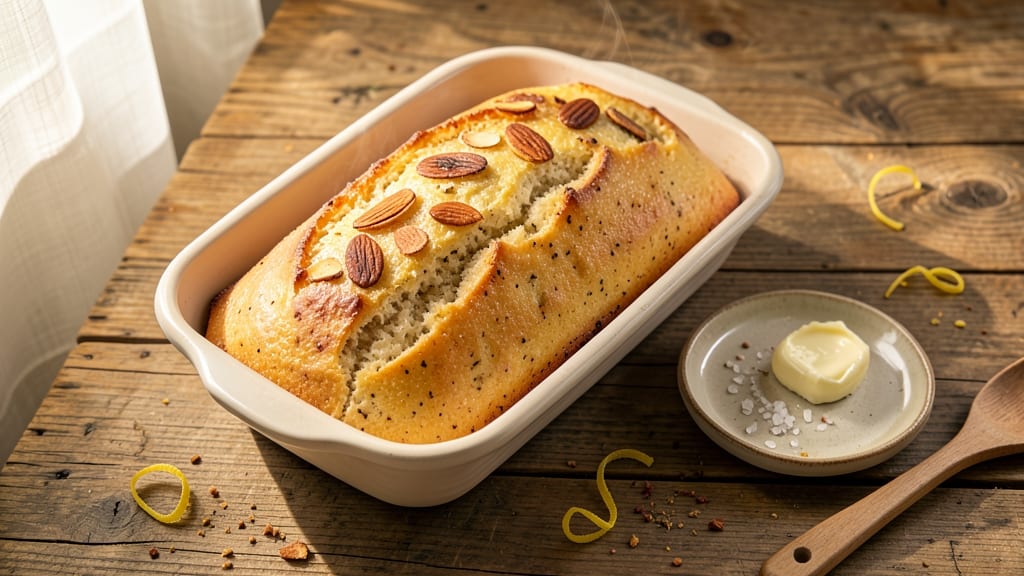
This Atkins bread recipe delivers the perfect low-carb loaf with a crispy crust and tender crumb—ideal for keto and gluten-free diets. The secret lies in almond flour and eggs, which create a bread-like texture without the carbs.
I've perfected this recipe over years of testing, ensuring it bakes up golden and stays moist for days.
The beauty of this recipe is its simplicity: just five key ingredients and 30 minutes of active prep. No special equipment is needed—just a standard loaf pan and oven. The combination of almond flour, butter, and eggs mimics traditional bread while keeping carbs under 4g per serving.
It’s the closest thing to wheat bread you’ll find on a low-carb diet.
What you’ll end up with is a loaf that slices cleanly, toasts beautifully, and holds up to sandwiches without falling apart. The crust develops a satisfying crunch, while the interior remains soft and pillowy.
Perfect for breakfast toast, sandwiches, or serving alongside soups and stews, this bread satisfies cravings without the guilt.
For extra flavor, try adding seeds or herbs to the dough before baking. Store leftovers in an airtight container for up to a week, or freeze for longer storage. Let’s get baking!
Ingredients for atkins bread
Five simple ingredients transform into a golden, low-carb loaf with restaurant-quality texture.
| Ingredient | Amount | Notes |
|---|---|---|
| Almond Flour 🌰 | 2 ½ cups | Finely ground, unsweetened preferred |
| Unsalted Butter 🧈 | ½ cup | Cold, cubed for even distribution |
| Large Eggs 🥚 | 4 whole | Room temperature for best binding |
| Baking Powder 🍞 | 1 tsp | Diamond Crystal preferred for accuracy |
| Salt 🧂 | ½ tsp | Fine sea salt for even seasoning |
| Psyllium Husk Powder 🌿 | 1 tbsp | Key for gluten-free structure |
| Warm Water 💧 | ¼ cup | Activates psyllium husk properly |
| Apple Cider Vinegar 🍎 | 1 tbsp | Balances flavor and activates psyllium |
Almond flour is the foundation—Bob's Red Mill or Anthony's Goods brands deliver the finest grind for optimal texture. If you can't find unsweetened, use sweetened but reduce any added sugar in your diet plan. The butter should be cold when mixed to prevent gluten-like development; European-style butter has higher fat content, ideal for this recipe. Psyllium husk powder is non-negotiable for gluten-free binding—Now Foods or Nutrabio are reliable sources. For extra flavor, toast the almond flour for 5 minutes before mixing, but don't burn it.
No almond flour? Coconut flour at 1:1 ratio plus 2 extra tbsp water works, though texture will differ. Substitute butter with vegan butter or coconut oil for dairy-free adaptation, though flavor will shift slightly. The vinegar can be swapped for lemon juice at equal measure, but apple cider adds subtle depth. For a seed boost, add 1 tbsp chia seeds or sunflower seeds to the dry mix. If your baking powder is old (over 6 months), test it first—1 tsp in hot water should bubble vigorously.
Mix the wet and dry ingredients separately before combining to avoid overmixing the delicate gluten-free structure. Let the dough rest 10 minutes before baking to improve texture. For best results, bake immediately after mixing. Store wrapped at room temperature for 3 days or freeze for 3 months. To revive, warm slices in a toaster or oven for 5 minutes. The crust stays crisp for 24 hours post-baking, but the interior remains moist for days when properly stored.
Why You'll Love This Recipe
- Four-Ingredient Magic: I swear by this—just almond flour, butter, eggs, and a pinch of salt. That’s it. No measuring cups, no sifting, no stress. The dough comes together faster than I can say "keto-friendly."
- Butter-Kiss Richness: The moment it comes out of the oven, that golden crust with a tender crumb inside? It’s like a hug for your taste buds. The butter and eggs make it so moist, it’s hard to believe it’s low-carb.
- Meal Prep Hero: I bake a whole loaf on Sunday, slice it up, and store it in the fridge for the week. Toast it straight from the fridge—no reheating needed. Perfect for sandwiches, French toast, or just snacking straight from the pan.
- Budget-Friendly Luxury: Here’s what sold me—it’s cheaper than buying specialty bread, and the ingredients last. A bag of almond flour goes a long way, and the butter and eggs stretch across multiple batches. Plus, no weird additives or preservatives. Just real, simple bread.
Step-by-step instructions for Atkins bread recipe
This method delivers a perfectly textured low-carb loaf with a crisp crust and tender crumb every time.
Prepare the Psyllium Slurry
In a small bowl, whisk together the 1 tablespoon psyllium husk powder, 0.25 cup warm water, and 1 tablespoon apple cider vinegar until completely smooth. The mixture should thicken noticeably within 30 seconds—this is crucial for the bread's structure. Let it sit for 5 minutes to fully activate, forming a gel-like consistency. This slurry acts as our gluten substitute, binding the dough and creating that signature Atkins texture.
I like to use a whisk for this step to prevent any lumps from forming. If the mixture looks too thick after 5 minutes, add 1 teaspoon more warm water—just enough to reach a pudding-like consistency. The slurry should hold its shape when spooned but still be pourable. This preparation ensures proper hydration of the psyllium, which directly impacts the bread's moisture and crumb structure.
Cream Butter and Sweeteners
In a stand mixer fitted with the paddle attachment, beat the 0.5 cup cold unsalted butter on medium speed until light and fluffy—about 2-3 minutes. The butter should become pale and nearly double in volume. This creaming process incorporates air, which helps create that desirable lightness in our low-carb bread. I always use cold butter for this step to prevent melting during mixing.
While the butter creams, add the 2.5 cups almond flour gradually, mixing on low speed until just combined. You'll want to see small flour streaks remaining—overmixing develops gluten-like proteins in the almond flour that can make the bread dense. The mixture should resemble coarse crumbs at this stage. This step establishes our base texture before adding the moisture components.
Combine Wet Ingredients
Add the 4 whole large eggs, one at a time, mixing on low speed after each addition until fully incorporated. The mixture will become slightly sticky but should hold together when pressed. Then add the 1 teaspoon baking powder and 0.5 teaspoon salt, mixing just until evenly distributed. The baking powder will react slightly with the acidic vinegar from our psyllium slurry, creating lift.
Pour in the prepared psyllium slurry and mix on low speed for 30 seconds until completely combined. The dough will be thick and sticky—this is normal. At this point, I recommend using a silicone spatula to fold everything together by hand if the mixer struggles with the consistency. The dough should come together into a cohesive, slightly tacky mass that can be shaped.
Shape and Bake for Crusty Texture
Preheat your oven to 350°F and line a 9x5-inch loaf pan with parchment paper, leaving an overhang on the sides for easy removal. Transfer the dough to the prepared pan and spread it evenly, pressing down gently to fill all corners. The top should be smooth but not overly compacted—you want to maintain some air pockets for that tender crumb.
Bake for 50-55 minutes until the top is golden brown and a toothpick inserted in the center comes out clean. The edges should pull away slightly from the pan, indicating proper browning. For extra crustiness, I like to broil for 1-2 minutes at the very end—watch carefully to avoid burning. This final step creates that satisfying crisp exterior while keeping the interior moist.
Cool and Rest for Perfect Texture
Remove the bread from the oven and let it cool in the pan for 10 minutes, then transfer to a wire rack to cool completely. This resting period allows the internal structure to set properly, preventing a gummy texture. The bread should be firm enough to slice cleanly when fully cooled—about 1 hour total. I find that slicing too soon results in a crumb that's too soft and sticky.
For best results, store any leftovers in an airtight container at room temperature for up to 3 days or freeze for longer storage. When reheating, I recommend wrapping slices in foil and warming in a 350°F oven for 5-7 minutes to restore that fresh-baked texture. The combination of psyllium and proper cooling ensures your low-carb bread maintains its moisture without becoming dense or crumbly.
Pro Tips For Making Atkins Bread
- MEASURE ALMOND FLOUR BY WEIGHT: I learned this the hard way—scooping almond flour by volume gives you a dense, gummy mess. Use a kitchen scale for the exact 2 cups (about 200g) called for, or pack it lightly into your measuring cup and level off. The difference in texture is night and day.
- CREAM BUTTER AND EGGS FIRST: Skip the urge to toss everything in the bowl at once. Beat the softened butter and eggs together for 2-3 minutes until fully emulsified—this ensures your bread stays tender, not crumbly. I used to rush this, and the result was always disappointingly dry.
- DON’T OVERMIX AFTER ADDING DRY INGREDIENTS: Once you fold in the almond flour, baking powder, and salt, stop mixing the second everything comes together. Overworking the dough introduces too much air, which makes the bread dense instead of light. Just combine until no dry spots remain—about 10-12 strokes max.
- BAKE UNTIL 200°F INTERNAL: Your oven might run hot or cold, so rely on an instant-read thermometer instead of just the color. The bread is done when the center hits 200°F—any lower, and it’ll taste underdone; higher, and it risks drying out. I burned my first batch by eyeballing it, so now I swear by the thermometer.
Serving suggestions for atkins bread
Breakfast Toast Perfection
This Atkins bread makes incredible toast—just slice it thin and crisp in a toaster or skillet with butter or olive oil. For extra flavor, sprinkle with flaky sea salt and a pinch of garlic powder before toasting.
I love serving it with avocado slices or a fried egg for a keto-friendly breakfast. The crust stays crisp for 24 hours, so you can toast leftovers without drying out the interior. 🥞
Sandwiches Without Remorse
Use this bread for low-carb sandwiches that won’t fall apart. Try a chicken salad made with mayonnaise, diced celery, and lemon juice, or a turkey and cheese wrap with a drizzle of mustard.
The dense yet tender crumb holds up to wet fillings like tuna salad or egg salad without getting soggy. For extra structure, lightly toast the bread before assembling. 🥪
Soup and Stew Companion
Serve warm slices alongside creamy soups like butternut squash or hearty stews to soak up flavors without adding carbs. The bread’s neutral taste lets the soup shine, while its moist crumb absorbs broth beautifully.
I often make a batch just for this purpose—it’s the perfect low-carb alternative to dinner rolls. Store extra slices in the fridge for quick meal prep. 🍲
French Toast Twist
Dip slices in a keto-friendly egg batter (whisk 2 eggs + ¼ cup heavy cream + 1 tsp cinnamon) and cook in a buttered skillet over medium heat until golden.
Top with sugar-free syrup and whipped cream for a decadent dessert or breakfast. The bread’s sturdy texture holds up to the egg mixture without falling apart. 🍳
Garlic Bread Alternative
Slice the bread, brush with melted butter, and sprinkle with minced garlic, dried parsley, and red pepper flakes. Broil for 2-3 minutes until golden and crispy. This low-carb garlic bread pairs perfectly with pasta dishes, pizza, or dipping in marinara sauce.
The almond flour adds a subtle nutty flavor that complements the garlic beautifully. 🧄
Meal Prep Storage Tips
Wrap cooled bread in parchment paper and store in an airtight container at room temperature for up to 5 days. For longer storage, freeze slices in a single layer before transferring to a bag—this prevents them from sticking.
To reheat, warm in a toaster, oven at 350°F for 5 minutes, or microwave for 10-15 seconds (cover with a damp paper towel to restore moisture). 💡
Nutrition facts
Frequently asked questions
Why does my Atkins bread turn out dense instead of light?
Overmixing the dough is the most common cause—almond flour develops gluten-like proteins when worked too much. Mix just until combined, and use a silicone spatula for the final fold. Also ensure your psyllium slurry is fully activated (5 minutes resting time) and properly hydrated. Cold butter prevents excess moisture release during mixing.
Can I make this recipe without almond flour?
Yes! Substitute with coconut flour at 1:1 ratio plus 2 extra tbsp water, but expect a slightly denser texture. For closer results, try a blend of 1.5 cups almond flour + 1 cup oat flour (certified gluten-free). The psyllium husk remains essential for structure—don't skip it. The flavor will shift slightly but still be delicious.
How do I get a crispier crust on my low-carb bread?
Broil for 1-2 minutes at the end of baking for extra crispiness. Preheat your oven thoroughly (350°F) and use a dark-colored loaf pan for better browning. For restaurant-style crust, brush the top with melted butter before baking. The psyllium slurry helps create that satisfying snap when sliced fresh.
Is this bread truly keto-friendly?
With only 4g net carbs per serving, it fits perfectly into keto diets. The almond flour and psyllium provide fiber without the sugar spikes of traditional bread. For stricter keto, verify your almond flour brand—some contain traces of sugar. This recipe maintains under 1g sugar per slice when made with unsweetened flour.
Why does my bread stick to the pan?
Use parchment paper with overhangs for easy removal, and ensure your pan is well-greased with butter. The dough's stickiness comes from the psyllium slurry—don't overwork it during mixing. If it still sticks, try baking in a 9x5-inch metal loaf pan (dark pans brown better) and let the bread cool 10 minutes in the pan before transferring.