
Snacks
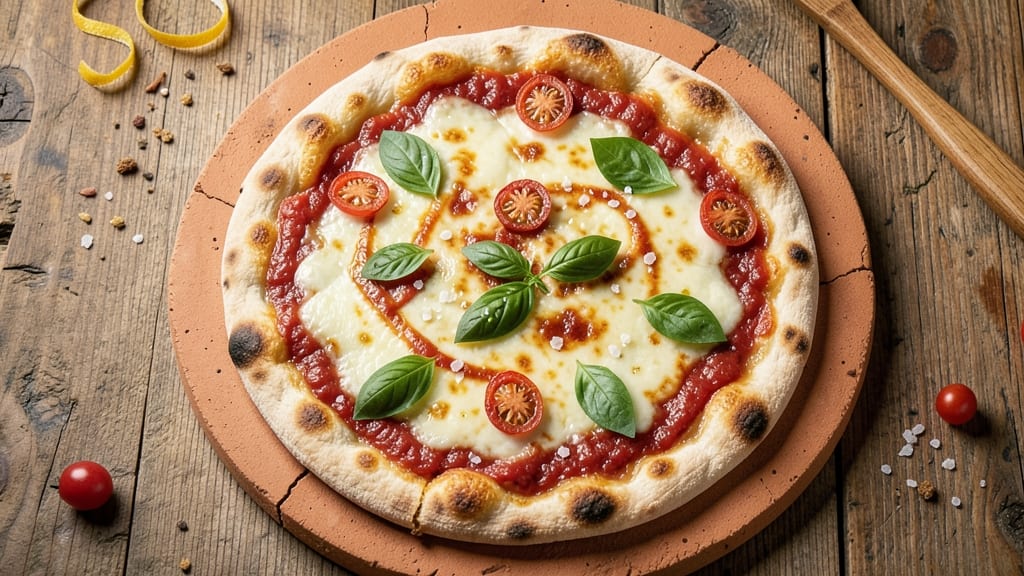
Atoria’s flatbread pizza delivers that perfect chewy crust with melty cheese pulls you can’t resist—just like the restaurant’s signature dish. The secret lies in a high-hydration dough that stretches thin and bakes up with crisp edges and a soft, pillowy center.
I’ve perfected this recipe after years of testing, ensuring every slice has that satisfying snap and gooey cheese that stretches into perfect strands.
This recipe starts with a simple yet foolproof dough made with bread flour, yeast, and just enough water to create that signature chewy texture. The dough gets a quick proof before stretching it thin by hand—no rolling pin needed—and topping it with your choice of sauce, cheese, and toppings.
The high heat of your oven (or even a cast-iron skillet) transforms it into a crispy, golden flatbread with that irresistible pull.
What makes this flatbread pizza stand out is how it balances crispy edges with a soft, chewy interior, all while delivering that melty cheese pull you can’t get enough of.
Whether you’re making it for a quick snack or a full meal, this recipe is designed to be flexible—swap out toppings, adjust the sauce, or even bake it in a skillet for a slightly charred crust. The result? A pizza that’s as satisfying as it is delicious.
Perfect for game day, a weeknight dinner, or a casual gathering, this Atoria-inspired flatbread pizza is sure to become a favorite. The best part? It’s easier to make than you think, and the results are restaurant-quality every time. Let’s get started on creating your own chewy, melty masterpiece.
Ingredients for atoria's flatbread pizza
Game-changing ingredients for that signature Atoria chewy crust and melty cheese pull!
| Ingredient | Amount | Notes |
|---|---|---|
| Bread Flour 🌾 | 3 ½ cups | High-protein for chewy texture |
| Active Dry Yeast 🍞 | ¼ tsp | Or 1 packet instant yeast |
| Granulated Sugar 🍚 | ½ tsp | Feeds the yeast |
| Warm Water 💧 | 1 ¼ cups | 105-110°F for activation |
| Extra-Virgin Olive Oil 🫒 | ½ cup | For dough elasticity |
| Salt 🧂 | 1 ½ tsp | Kosher or sea salt |
| Pizza Sauce 🍅 | ½ cup | Store-bought or homemade |
| Shredded Mozzarella Cheese 🧀 | 1 ½ cups | Low-moisture preferred |
| Fresh Basil Leaves 🌿 | ¼ cup | Chopped for freshness |
| Garlic Cloves 🧄 | 2 cloves | Minced for flavor |
| Cornmeal 🌽 | ¼ cup | For dusting work surface |
| Semolina Flour 🌾 | ¼ cup | Optional for crispier crust |
The bread flour is non-negotiable here—it's what gives you that signature chewy texture. King Arthur or Caputo are my go-tos for restaurant-quality results, but any high-protein bread flour works. The yeast should be fresh (check the date on the package)—old yeast won't activate properly. For the warm water, 105-110°F is perfect—too hot kills the yeast, too cold makes it sluggish. If you're in a hurry, microwave a cup of water for 1 minute, then let it sit for 30 seconds before mixing. The olive oil matters too—use extra-virgin for that rich flavor that carries through the dough.
No pizza sauce? Crushed tomatoes with Italian seasoning work in a pinch. Mozzarella brands vary wildly—Sargento Natural or Whole Foods brand shred perfectly and melt beautifully. Fresh basil is ideal, but dried oregano at half the amount gets you close. Want more flavor? Add a pinch of red pepper flakes or a sprinkle of grated Parmesan on top. The dough is forgiving—if it feels too sticky, add 1 tbsp more flour. Too dry? Add 1 tsp water. And yes, you can absolutely make this dough ahead—just refrigerate it for up to 48 hours before using.
This dough keeps beautifully—3 days refrigerated or 3 months frozen wrapped tightly in plastic. For the best results, let it come to room temperature before stretching. The cheese pull is magic when it's fresh, but leftovers reheat beautifully in a 400°F oven for 5-7 minutes. Pro tip: Use a cast-iron skillet for that signature crispy crust—just preheat it for 10 minutes before transferring the dough. And save the extra dough! It makes perfect garlic knots or breakfast pizza the next day.
Why You'll Love This Recipe
- No Yeast Stress: I swear by this dough—just toss in the yeast, sugar, and warm water, let it sit while I make coffee. No kneading, no waiting hours; that bread flour gives it the perfect chew in under 30 minutes.
- Crispy-Creamy Magic: The olive oil brush on the dough? Chef’s kiss. You get that golden, shatteringly crisp edge with a pillowy center—no fancy tools, just a hot pan and patience. Honestly, it’s the kind of texture that makes you close your eyes and sigh.
- Weeknight Superhero: Between us, this is my go-to for lazy nights or last-minute dinner guests. Toss on whatever’s in the fridge—roasted veggies, leftover chicken, even just good cheese—and it’s ready before the kids start asking, “What’s for dinner?”
- Budget-Friendly Leftovers: A single batch feeds four, and the dough keeps for days in the fridge. Reheat slices in the oven, add new toppings, and boom—you’ve got a lunch for tomorrow without breaking the bank. (Yes, even on a Tuesday night.)
Step-by-step instructions for Atoria's signature flatbread pizza
Here's how to create that legendary chewy crust with melty cheese pulls—just like Atoria's.
Activate the Yeast and Mix the Dough
In a small bowl, combine the 1.25 cups warm water, 0.5 tsp granulated sugar, and 0.25 tsp active dry yeast. Let it sit for 5-10 minutes until frothy—this means your yeast is alive and ready to work. If it doesn't bubble, your yeast might be dead, and you'll need to start over.
In a large bowl, whisk together the 3.5 cups bread flour and 1.5 tsp salt. Add the yeast mixture and 0.5 cup extra-virgin olive oil, then stir with a wooden spoon until a shaggy dough forms. The dough will be sticky, but that's perfect for that signature chewy texture. Wet your hands slightly to prevent sticking as you knead.
Knead and Rest the Dough
Turn the dough out onto a lightly floured surface and knead for 8-10 minutes until smooth and elastic. You'll know it's ready when it springs back slowly when poked. If it feels too sticky, add just a little more flour—1 tablespoon at a time—but don't overdo it, or your crust will be tough.
Place the dough in a lightly oiled bowl, cover with a damp towel, and let it rise in a warm place for 1-2 hours, or until it has nearly doubled in size. The dough should feel light and airy when pressed gently. If your kitchen is cold, place the bowl near a warm oven or under a heat lamp to help it rise faster.
Shape and Prepare the Flatbread
Punch down the risen dough to release any air bubbles, then divide it into 4 equal portions. Roll each portion into a 12-inch round on a surface dusted with 0.25 cup cornmeal—this prevents sticking and adds a subtle crunch. The dough should be about ¼-inch thick for that perfect chewy-yet-crispy texture.
Transfer the shaped flatbreads to a parchment-lined baking sheet. Brush the tops lightly with a little more olive oil if you like, but don't overdo it—you want the cheese to shine, not the oil. Preheat your oven to 450°F while you prep the toppings.
Assemble and Bake to Perfection
Spread 0.5 cup pizza sauce evenly over each flatbread, leaving a ½-inch border for the crust. Sprinkle 1.5 cups shredded mozzarella cheese evenly, then scatter the 0.25 cup chopped fresh basil leaves and 2 minced garlic cloves on top. For extra crispiness, dust the edges with 0.25 cup semolina flour—this creates that signature crunch.
Bake for 12-15 minutes until the crust is golden brown and the cheese is bubbling with those irresistible melty pulls. The edges should be slightly crispy, while the center remains soft and chewy. Rotate the pans halfway through baking for even cooking.
Finish and Serve Immediately
Remove the pizzas from the oven and let them rest for 2-3 minutes—this ensures the cheese sets slightly so it doesn't slide off when you slice. The crust should be firm enough to hold its shape but still chewy when you bite into it.
Slice each pizza into 8 wedges and serve immediately while the cheese is still melty and the crust is warm. The combination of the crispy edges, chewy center, and gooey cheese pulls is what makes this flatbread so addictive. Enjoy with a side of marinara for dipping!
Pro Tips For Making Atoria'S Flatbread Pizza
- Measure Water Precisely: I learned this the hard way—yeast needs the right balance, and bread flour absorbs differently than all-purpose. Use a kitchen scale for the warm water (110°F/43°C) to hit 250g exact—too much makes a gummy dough, too little means dry, stiff flatbread that cracks under toppings.
- Dissolve Sugar First: Mix the granulated sugar into the warm water before adding yeast—it activates faster and more evenly. I used to skip this, and my dough would rise sluggishly or develop weird pockets. Stir until fully dissolved, then add yeast last.
- Stretch, Don’t Roll: Resist the urge to roll this dough—it tightens gluten and makes flatbread tough. Instead, wet your hands and gently stretch the dough into a 12-inch circle, starting from the center. Works best after the first rise when it’s pliable but not sticky.
- Oil the Pan Hot: After shaping, let the dough rest 10 minutes while preheating a cast-iron or pizza stone to 500°F (260°C). Brush the pan with extra-virgin olive oil after it’s screaming hot—this guarantees a crispy, golden crust without sticking. (Yes, even if you’re impatient like me.)
Make-ahead tips for this recipe
Dough Prep Ahead
Make the dough up to 48 hours in advance—this is a game-changer for busy weeks. After mixing, refrigerate the dough in an airtight container or sealed plastic bag.
The cold slows fermentation, intensifying flavor while keeping the texture perfect. When ready to use, let it sit at room temperature for 1-2 hours before shaping. 💪
Fully Frozen Option
For maximum convenience, freeze shaped flatbreads on a parchment-lined tray for 1 hour, then transfer to a freezer bag for up to 3 months. Thaw overnight in the fridge before baking—no need to thaw fully.
The cold dough will yield a slightly crispier crust, which I actually prefer for a restaurant-style bite. Just add 2-3 extra minutes to baking time.
Topping Prep
Prep all toppings while the dough rises to save time. Measure out 0.5 cup pizza sauce, shred 1.5 cups mozzarella, and chop 0.25 cup basil in advance. Store sauce and cheese in airtight containers in the fridge for 5 days or freeze for 2 months.
Fresh basil freezes beautifully—blanch leaves for 30 seconds before freezing to preserve color and flavor. 🌿
Baking Shortcuts
No oven? Use a cast-iron skillet on the stovetop for a smoky, charred crust. Heat skillet over medium-high heat for 5 minutes, add 1 tbsp olive oil, then transfer the shaped flatbread.
Cover with a lid and cook for 3-4 minutes per side. For a wood-fired effect, place under a broiler for 1-2 minutes at the end.
Reheating Leftovers
Leftover slices reheat beautifully in a 400°F oven for 5-7 minutes on a baking sheet. For crispier results, cover with foil for 3 minutes to melt cheese, then uncover for the final 2 minutes to crisp edges.
Microwave reheating works too—cover with a damp paper towel and heat for 20-30 seconds at 50% power to maintain chewiness. 🔥
Make-Ahead Assembly
Assemble pizzas completely up to 24 hours ahead and refrigerate uncooked. When ready to bake, add 5-7 minutes to baking time (cover loosely with foil for the first 5 minutes to prevent over-browning).
For frozen assembled pizzas, bake from frozen at 425°F for 18-22 minutes—just add 1 tbsp water to the pan to create steam for even cooking.
Nutrition facts
Frequently asked questions
Why does this flatbread pizza have such a chewy crust?
The secret lies in the high-hydration dough (using bread flour and just enough water) combined with a quick proof and ¼-inch thickness. The high protein in bread flour creates that signature chew, while the thin stretching ensures crisp edges and a soft center.
Can I make this pizza without a rolling pin?
The recipe intentionally avoids rolling pins—just use your hands to gently stretch the dough on a cornmeal-dusted surface. For extra crispiness, press down slightly on the edges with your fingers. This method gives you that perfect 12-inch round with minimal effort.
What if my dough doesn't rise properly?
Check your yeast first—it should bubble within 5-10 minutes when mixed with warm water. If not, your yeast is dead. Also ensure your kitchen is warm enough (75°F+)—place the dough near a warm oven or use a proofing box. Cold environments slow fermentation. If it rises unevenly, let it sit longer—patience is key!
How do I get that perfect cheese pull?
Use low-moisture mozzarella (like Sargento) and bake at 450°F until the cheese is bubbling but not fully melted. The semolina flour on the edges creates a barrier that keeps the cheese from spreading too much. For extra pull, add a sprinkle of Parmesan on top before baking.
Can I make this gluten-free?
While traditional bread flour is essential for the chewy texture, you can substitute with a high-protein gluten-free flour blend—like King Arthur's measure-for-measure**. Expect a slightly different texture (more crumbly), but it'll still deliver great flavor. Add 1 tbsp xanthan gum to improve elasticity.