
Desserts
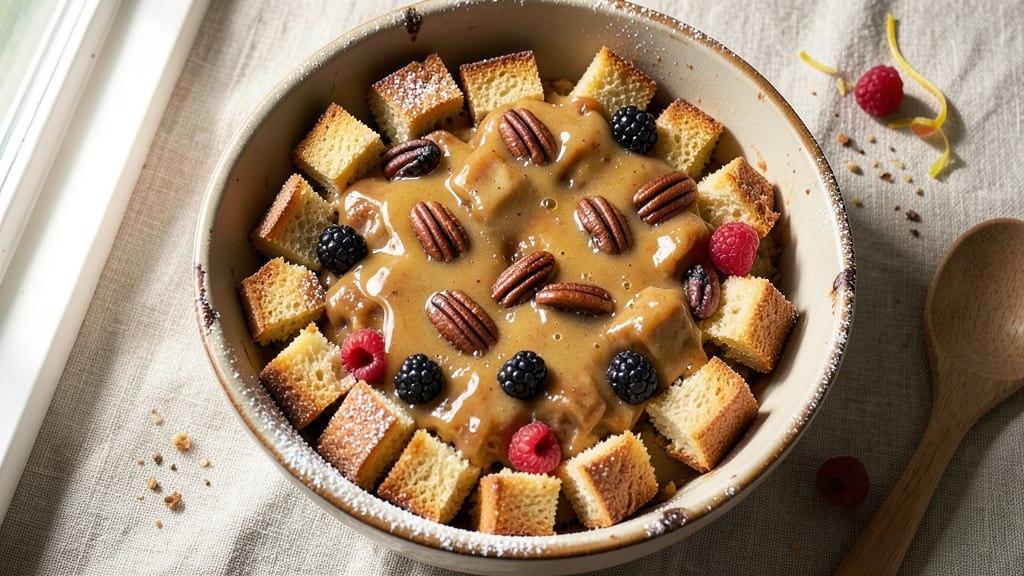
This authentic bread pudding recipe delivers the comforting, custardy texture and toasted bread crunch that makes it a dessert classic. The secret lies in using stale bread soaked in a vanilla-infused custard mixture—no shortcuts, just tradition.
I’ve perfected this version over years of baking, ensuring every bite has the right balance of softness and crunch.
The recipe starts with cubed bread (day-old works best) layered with a rich custard made from eggs, milk, and vanilla extract. A sprinkle of cinnamon and raisins adds warmth and texture, while a final broiling step creates that coveted golden crust.
The result? A dessert that feels like a hug—warm, inviting, and impossible to resist.
What sets this apart is the toasted bread crunch on top, achieved by broiling the pudding until the edges are golden and crisp. The custard inside remains silky and tender, with just the right amount of vanilla sweetness.
It’s the kind of dessert that tastes even better the next day, making it perfect for meal prep or holiday gatherings.
Whether you’re serving it as a standalone treat or alongside vanilla ice cream, this bread pudding delivers restaurant-quality results with minimal effort. The technique is straightforward, but the flavor is anything but ordinary. Let’s get baking!
Ingredients for authentic bread pudding
Sixteen ingredients transform humble bread into restaurant-quality dessert magic.
| Ingredient | Amount | Notes |
|---|---|---|
| Day-Old Bread 🍞 | 8 cups | Cubed, crusts removed, sturdy white or sourdough |
| Large Eggs 🥚 | 6 whole | Room temperature for best blending |
| Whole Milk 🥛 | 3 cups | Full-fat for creamiest texture |
| Pure Vanilla Extract 🌿 | 2 tbsp | Bourbon or Madagascar preferred |
| Granulated Sugar 🍚 | 1 ½ cups | White or light brown sugar |
| Unsalted Butter 🧈 | ½ cup | Cold, cubed for even melting |
| Ground Cinnamon 🌶️ | 2 tsp | Freshly ground for best flavor |
| Raisins 🍇 | 1 cup | Plump, seedless preferred |
| Sea Salt 🧂 | ½ tsp | Fine grain for even distribution |
| Heavy Cream 🥛 | ½ cup | Whipped for topping |
| Powdered Sugar 🍚 | ¼ cup | For dusting finished pudding |
The bread is non-negotiable—day-old loaves work best, but never fresh. Sourdough or crusty white bread holds up better than soft varieties. I always grab a fresh baguette from the bakery section the day before, cube it, and store in a paper bag to dry out. For the eggs, room temperature makes all the difference—they blend smoother and create a lighter custard. Milk? Whole milk is a must—it delivers that creamy, velvety texture you can't get with skim. If you're feeling fancy, organic whole milk from the store's dairy case adds even more richness.
No vanilla extract? Vanilla bean paste or even vanilla sugar works in a pinch, though the flavor won't be as pure. Sugar substitutes? Maple syrup or agave at a 1:1 ratio keeps things vegan-friendly, though the texture will be slightly denser. Raisins too expensive? Chopped dried apricots or dates add sweetness and chew. The cinnamon should be freshly ground—pre-ground loses potency fast. For the butter, if you're short on time, microwave it 40 seconds to just melt instead of cutting into cubes. And that heavy cream topping? Whipped to soft peaks gives you that cloud-like finish.
This pudding reheats beautifully—microwave 2-3 minutes covered or warm in a 350°F oven for 15 minutes. Keeps 4-5 days in the fridge, though it tastes best the next day as the flavors meld. For make-ahead prep, assemble the pudding in a baking dish, cover, and refrigerate up to 24 hours before baking. The topping can be added fresh after baking if you're serving it immediately. Portion into individual ramekins for elegant servings—great for holiday gatherings or meal prep lunches.
Why You'll Love This Recipe
- No Stale Ingredients Needed: I swear by using day-old bread—no sad, dry loaf here. The crust softens just right in the custard, soaking up that rich milk and vanilla like it’s the last dessert on earth.
- Golden Caramel Crunch: That crispy top? Pure magic. The sugar melts into a glossy, buttery crust while the inside stays pillowy—like a hug from a bakery, but made with eggs and patience (okay, maybe 10 minutes in the oven).
- Breakfast or Dessert: Honestly, I eat this cold for breakfast with a drizzle of maple syrup. Or warm with a scoop of vanilla ice cream. It’s the ultimate chameleon—no rules, just satisfaction.
- Pantry Goldmine: Between us, this recipe costs pennies. Eggs, milk, bread? Stuff you already have. And leftovers? They taste even better reheated—proof that good things get richer with time.
Step-by-step instructions for authentic vanilla bread pudding
Transform simple ingredients into restaurant-quality bread pudding with this classic technique.
Prepare the Bread Base
Cube the 8 cups day-old bread into 1-inch pieces, removing crusts for even cooking. I use a serrated knife for clean cuts—this prevents the bread from turning to mush. Place the cubes in a large bowl and toss them with 2 tbsp pure vanilla extract until evenly coated. This infuses the bread with deep vanilla flavor before baking.
Next, fold in 1 cup raisins and 2 tsp ground cinnamon, distributing them evenly. The raisins should be plump and seedless for the best texture. If your raisins are dry, soak them in warm water for 10 minutes before adding to the bread. This ensures they stay juicy throughout the baking process.
Mix the Custard Ingredients
In a separate large bowl, whisk together 6 whole large eggs, 3 cups whole milk, 1.5 cups granulated sugar, and 0.5 tsp sea salt until smooth. I use a whisk for this step to ensure no lumps form in the custard. The mixture should be pale yellow and slightly thickened—this indicates proper emulsification.
Melt the 0.5 cup unsalted butter in a small saucepan over low heat until fully liquid but not browned. Let it cool slightly before adding it to the egg mixture. Slowly pour the melted butter into the custard while whisking constantly. This creates a silky texture that prevents the pudding from becoming grainy.
Combine and Bake the Pudding
Gently fold the vanilla-coated bread cubes into the custard mixture until fully incorporated. The bread should absorb the custard but remain distinct—you want pockets of custard throughout for that classic bread pudding texture. Transfer the mixture to a 9x13-inch baking dish, spreading it evenly.
Bake at 350°F for 45-50 minutes, until the top is golden brown and the center is just set (a knife inserted should come out clean but slightly moist). The pudding should feel firm to the touch but still have a slight wobble—this indicates perfect doneness. If the edges brown too quickly, tent the dish with foil after 30 minutes to prevent over-browning.
Finish and Serve
Remove the pudding from the oven and let it rest for 10 minutes. While it cools slightly, whip the 0.5 cup heavy cream until soft peaks form. Spread the whipped cream evenly over the top of the warm pudding, then dust lightly with 0.25 cup powdered sugar using a fine-mesh sieve. This creates a delicate, snowy finish that contrasts beautifully with the toasted bread.
Serve immediately while still warm, cutting into squares for easy sharing. The exterior should be crisp and golden, while the interior remains custardy and rich. For an extra touch, garnish with a sprinkle of cinnamon or a few extra raisins on top—this elevates the presentation without overpowering the flavors.
Pro Tips For Making Authentic Bread Pudding
- Soak the Bread Right: Tear the day-old bread into 1-inch chunks—no need for perfection—and spread them in a single layer in a buttered dish. Pour the warm milk-sugar-vanilla mix over them, then let it sit for at least 30 minutes (yes, even if you’re impatient like me). This ensures the bread absorbs the custard evenly instead of floating like sad, soggy islands.
- Whisk Eggs Like a Pro: Beat the eggs and sugar until the mixture is pale yellow and thick—about 3 minutes with a whisk. Stop when it’s just ribboning; over-beating turns it into scrambled egg batter. I learned this the hard way after a batch turned out dense and rubbery.
- Bake Until Golden: Start at 350°F (175°C) for 30 minutes, then crank the oven to 375°F (190°C) for the last 15–20 minutes. This two-stage bake gives you a crisp top without burning the bottom. Skip the broiler—it’ll dry out the custard faster than you can say "overcooked."
- Add Butter Last: Swirl cold butter cubes into the custard mixture after it’s been baking for 20 minutes. The heat melts them into pockets of richness without making the pudding greasy. I was skeptical until I tried it—now it’s non-negotiable for me.
Pro cooking tips for great authentic bread pudding
Custard Perfection
Whisk your eggs and milk until the mixture is pale yellow and slightly thickened—this is the secret to a silky custard. I swear by room-temperature eggs because they blend smoother and create a lighter texture.
If your custard looks too thin, let it sit for 5 minutes before baking to thicken slightly. 🥚
For extra richness, replace ½ cup milk with ½ cup heavy cream—the fat content prevents curdling and adds a luxurious mouthfeel. If you notice any lumps, strain the mixture through a fine-mesh sieve before folding in the bread. This ensures a flawless, velvety finish every time.
Bread Texture Mastery
Use day-old bread—fresh bread absorbs too much custard and turns mushy. I recommend sourdough or crusty white bread because they hold their shape better than soft varieties like brioche. For even cooking, cube the bread into 1-inch pieces using a serrated knife—this prevents tearing and creates uniform bites.
Toss the bread cubes with vanilla extract before mixing with the custard. This step infuses the bread with deep vanilla flavor while keeping it slightly dry, which prevents a soggy pudding. If your bread feels too dry, lightly spray it with water before adding the custard mixture.
Broiling for Crisp
Broil your bread pudding for the last 2-3 minutes of baking to achieve that golden, toasted crust—this is what sets authentic bread pudding apart. Watch it closely to avoid burning!
I like to place the dish on the middle rack and keep the oven door slightly ajar for better heat circulation.
For extra crunch, sprinkle powdered sugar on top before broiling. The sugar caramelizes slightly, creating a sweet, crisp topping that contrasts beautifully with the custardy interior. If your oven runs hot, reduce the broil time to 1-2 minutes to prevent over-browning.
Make-Ahead Magic
Assemble your bread pudding up to 24 hours ahead and refrigerate it uncovered. This allows the bread to absorb more custard, creating an even richer flavor. When ready to bake, let it sit at room temperature for 30 minutes before baking—this prevents cracking and ensures even cooking.
Reheat leftovers in a 350°F oven for 15-20 minutes or microwave in 1-minute intervals until warmed through. The texture holds up beautifully, making this dessert perfect for meal prep or holiday gatherings. Store baked pudding in an airtight container for up to 5 days in the fridge.
Nutrition facts
Frequently asked questions
Why does my bread pudding turn out soggy?
Soggy bread pudding usually means the bread absorbed too much custard before baking. Use day-old bread (not fresh) and cube it into 1-inch pieces—this prevents over-absorption. Also, toss the bread with vanilla extract first to infuse flavor while keeping it slightly dry. If your bread feels too dry, lightly mist it with water before adding custard.
Can I make this recipe without eggs?
Yes! For a vegan version, replace eggs with a flax egg mix (1 tbsp ground flaxseed + 3 tbsp water per egg) or silken tofu blended with vanilla and sugar. The texture will be denser, but still delicious. Use ½ cup coconut milk instead of heavy cream for the topping to keep it dairy-free.
How do I prevent the pudding from cracking?
Cracking happens when the custard sets too quickly. Let your assembled pudding sit at room temperature for 30 minutes before baking to equalize temperatures. Also, avoid overmixing the custard—gentle folding keeps air bubbles intact. If cracks appear, broil for 1-2 minutes at the end to create a crispy top that hides imperfections.
What's the best way to reheat bread pudding?
Oven reheating preserves texture best: cover with foil and warm at 350°F for 15-20 minutes. For quick fixes, microwave in 1-minute intervals on low power, stirring between each. The pudding reheats best when slightly underdone—this prevents drying out. Add a splash of milk or cream when reheating for extra moisture.
Can I use any type of bread for this recipe?
Not all breads work equally well. Sourdough or crusty white bread hold up best due to their sturdy texture. Avoid soft breads like brioche or challah—they absorb too much custard and become mushy. For variety, try Italian bread or brioche (cubed small) but expect a slightly denser result. French bread works beautifully for the classic texture.