
Side Dishes
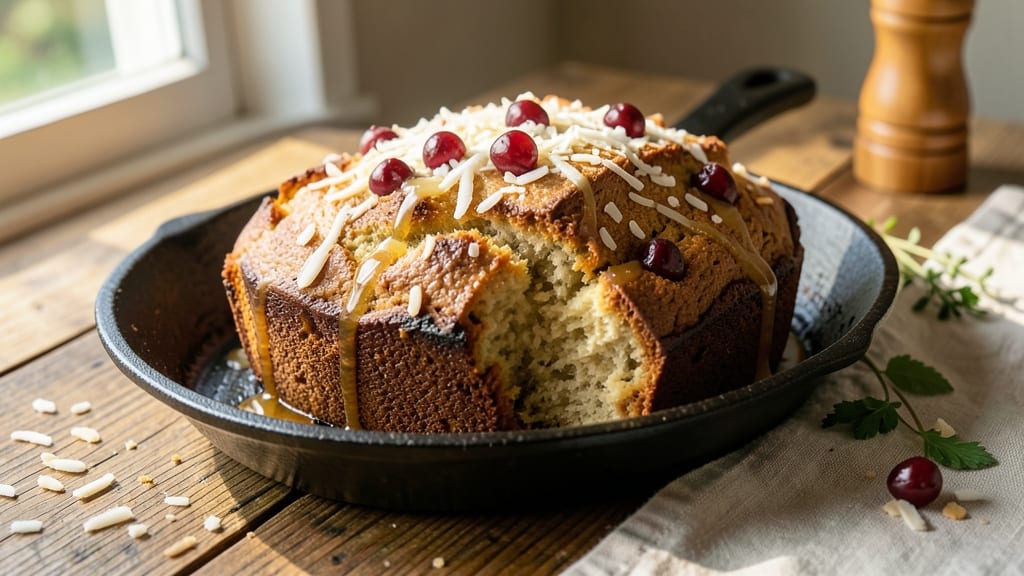
This authentic Jamaican coco bread recipe brings the warm, spiced flavors of Jamaica straight to your kitchen—think tender crumb, rich coconut swirls, and a golden crust that cracks perfectly when sliced. 🌟 The secret lies in the blend of nutmeg, cinnamon, and brown sugar, which creates that signature Jamaican sweetness, while freshly grated coconut adds texture and depth.
Unlike store-bought versions, this recipe delivers the real deal: a loaf that’s moist, fragrant, and perfect for serving with tea or alongside savory dishes.
What sets this coco bread apart is the technique: a simple dough enriched with coconut and spices, then swirled with a coconut filling before baking. No fancy equipment is needed—just a mixing bowl, a rolling pin, and a little patience.
The dough rises naturally, developing that signature Jamaican flavor, while the coconut filling melts into gooey pockets of sweetness. Baking at 350°F for 35–40 minutes ensures a crusty crown and tender interior, just like the bread you’d find in Jamaican homes.
The result is a loaf that’s rich, aromatic, and irresistibly moist, with every bite offering a balance of sweetness and spice. The coconut swirls add a delightful texture contrast, while the nutmeg and cinnamon infuse the bread with warmth.
This isn’t just a side dish—it’s a centerpiece, perfect for brunch, afternoon tea, or as a sweet accompaniment to hearty meals. Once you try it, you’ll never go back to the store-bought version.
For extra authenticity, serve it warm with a cup of Jamaican tea or a drizzle of honey. The bread keeps well for 3–4 days in an airtight container, making it ideal for meal prep. Let’s get baking—your kitchen will smell like Jamaica in minutes.
Ingredients for authentic jamaican coco bread
Eight simple ingredients transform into Jamaica's iconic spiced coconut loaf—rich, fragrant, and perfect for tea.
| Ingredient | Amount | Notes |
|---|---|---|
| All-Purpose Flour 🌾 | 4 cups | Sifted for light texture |
| Granulated Sugar 🍚 | ½ cup | White or light brown |
| Unsalted Butter 🧈 | ½ cup | Room temperature, cubed |
| Shredded Coconut 🥥 | 1 ½ cups | Freshly grated, unsweetened |
| Large Eggs 🥚 | 2 whole | Room temperature |
| Milk 🥛 | 1 cup | Whole milk preferred |
| Ground Nutmeg 🌿 | 1 tsp | Freshly grated if possible |
| Ground Cinnamon 🌶️ | 1 tsp | Pure Ceylon preferred |
| Baking Powder 🧂 | 1 tsp | Aluminum-free preferred |
| Salt 🧂 | ½ tsp | Fine sea salt |
| Brown Sugar 🍚 | ¼ cup | Packed, light brown |
| Vanilla Extract 🍯 | 1 tsp | Pure Madagascar preferred |
| Sweetened Condensed Milk 🥛 | ½ cup | For filling, not substituted |
The coconut is non-negotiable—freshly grated makes all the difference. Skip the pre-shredded kind (it's too dry). Trader Joe's or Costco sell unsweetened coconut flakes in bulk, which work perfectly. For the nutmeg, whole nutmeg grated fresh is ideal, but ground works in a pinch. The Ceylon cinnamon adds that authentic Jamaican warmth—regular grocery store brands work fine, but if you're feeling fancy, Penzeys carries it. Butter should be room temperature, or microwave it for 20 seconds to soften those stubborn cubes.
No sweetened condensed milk? Mix equal parts powdered milk and sugar, then add water to make 0.5 cup. Want less sweetness? Reduce the brown sugar to 0.125 cup and add 0.125 cup honey instead. For the flour, King Arthur or Gold Medal brands work best—they're consistent. If you're gluten-free, swap for a 1:1 gluten-free flour blend, but expect a denser texture. The vanilla extract should be pure—imitation extracts (like the cheap grocery store ones) won't give that same depth of flavor. Pro tip: Toast your shredded coconut in a dry pan for 2 minutes before mixing—it deepens the flavor.
This loaf keeps best in an airtight container at room temperature for 3-4 days, but trust me, it won't last that long. Wrap it in plastic wrap and pop it in the fridge for up to 1 week if you're prepping ahead. For freezing, slice the loaf first, then wrap each slice individually—3 months in the freezer, and they reheat beautifully. The best part? It reheats perfectly in the microwave for 10-15 seconds. Serve warm with a pat of butter or a drizzle of honey for that true Jamaican experience.
Why You'll Love This Recipe
- No Mixer Needed: I swear by this—just a big bowl, a fork, and my hands. The dough comes together in minutes, no stand mixer or fancy tools required. Honestly, the shredded coconut and butter make it so forgiving that even if you overmix (which I’ve done), it still turns out tender.
- Sweet-Creamy Magic: That perfect balance of buttery richness and toasted coconut? It’s like a hug in bread form. The sugar caramelizes just enough to give it a subtle crunch, while the eggs keep it moist—no dry, sad loaf here.
- Breakfast to Dessert: Serve it warm with tea for breakfast, toast it with jam for a snack, or even crumble it over ice cream. Between us, my kids fight over the leftovers, and I’ve used slices to top oatmeal or blend into smoothies (yes, really).
- Pantry Staple Power: You’re already using ingredients you’ve got—flour, sugar, butter. The shredded coconut is the star, but a small bag lasts forever. Bake a batch, freeze half, and you’ve got a ready-made treat for weeks. (I keep a loaf in my freezer for lazy mornings.)
Step-by-step instructions for Jamaican coco bread
This is how Jamaican families make their signature bread—warm, spiced, and packed with coconut swirls.
👨🍳 Step 1: Mix the Dry Ingredients
In a large bowl, sift together the 4 cups all-purpose flour, 1 tsp baking powder, 0.5 tsp salt, 1 tsp ground cinnamon, and 1 tsp ground nutmeg. I like to use a fine-mesh sieve for the flour to avoid lumps later. Whisk everything gently until just combined—you don't want to develop too much gluten, or the bread will be tough.
Here's the thing—Jamaican coco bread relies on those warm spices for its signature flavor. The nutmeg and cinnamon should be freshly ground if possible, as pre-ground spices lose potency quickly. Set this mixture aside while you prepare the wet ingredients.
🍳 Step 2: Cream Butter and Sugars
In a separate large bowl, beat the 0.5 cup unsalted butter (at room temperature) with the 0.5 cup granulated sugar and 0.25 cup brown sugar using an electric mixer on medium speed for 3-4 minutes. You're looking for a light, fluffy texture—the mixture should nearly double in volume and become pale in color.
This creaming process is crucial because it incorporates air into the batter, which helps create that light, airy texture Jamaican coco bread is known for. If your butter is too cold, it won't cream properly—press it gently to test. If it leaves an indent but springs back, it's ready.
👨🍳 Step 3: Combine Wet Ingredients
Add the 2 whole eggs (room temperature), 1 tsp vanilla extract, and 0.5 cup sweetened condensed milk to the creamed butter mixture. Mix on low speed until just combined—about 30 seconds. Then gradually add the 1 cup milk, mixing until smooth.
This is where the magic of the coconut filling starts. The sweetened condensed milk adds richness and helps bind the coconut swirls later. Don't worry if the mixture looks slightly curdled after adding the eggs—it will smooth out when you incorporate the dry ingredients.
🥘 Step 4: Create the Coconut Filling
In a small bowl, combine 1 cup of the shredded coconut with 1 tablespoon of the vanilla extract. Set aside. To the main batter, add about 2/3 of the dry ingredient mixture and mix on low speed until just combined. This creates the base for our bread.
For the coconut swirls, take 1/3 of the remaining batter and mix it with the remaining 0.5 cup shredded coconut and 1 tablespoon vanilla extract until you have a thick, spreadable consistency. This is what will create those beautiful swirls in the final bread.
🔥 Step 5: Assemble and Bake
Preheat your oven to 350°F and grease a 9-inch round cake pan or 8x8-inch square pan generously with butter. Pour half of the main batter into the prepared pan, spreading it evenly. Then take the coconut mixture and dollop it over the batter, creating a spiral pattern starting from the center.
Carefully pour the remaining plain batter over the coconut mixture, using a knife to gently swirl the two together. The goal is to create those signature Jamaican coco bread swirls without overmixing. Bake for 40-45 minutes until a toothpick inserted in the center comes out clean and the top is golden brown.
⏰ Step 6: Cool and Serve
Remove the bread from the oven and let it cool in the pan for 10 minutes. Then transfer it to a wire rack to cool completely. The bread will be warmest and most flavorful when served slightly warm, but it's delicious at room temperature too.
Here's a pro tip: Jamaican coco bread is best enjoyed on the day it's made. The coconut stays fresh and the spices retain their warmth. Slice it thickly and serve with butter or jam for that authentic Jamaican breakfast experience.
Pro Tips For Making Authentic Jamaican Coco Bread
- TOAST THE COCONUT FIRST: Skip the raw coconut—toss the shredded kind in a dry pan over medium heat for 3-4 minutes until it smells nutty and lightly golden. This banishes that "wet cardboard" taste and makes the bread actually taste like coconut, not sad flakes. (Yes, even if you’re in a hurry—just don’t walk away.)
- WHISK EGGS UNTIL THICK: Beat those eggs with the sugar until the mixture turns pale, thick, and ribbon-like—about 3 minutes with a hand mixer. This isn’t just for fluff; it ensures the bread rises properly and doesn’t turn out dense. I learned this the hard way when my first batch collapsed like a sad soufflé.
- DON’T OVERMIX THE DOUGH: Once you fold in the butter and coconut, stop mixing after 10-12 strokes. Overworking the dough develops gluten, which turns your tender coco bread into a chewy brick. Just combine until the coconut is evenly distributed—no need to go full bread-maker on it.
- USE COLD BUTTER FOR LAYERS: Cut that unsalted butter into the dry ingredients in small cubes, then rub it in with your fingers until it resembles coarse crumbs. Cold butter creates pockets of steam during baking, giving you that signature flaky, melt-in-your-mouth texture. (And no, microwaving it to soften won’t cut it—be patient.)
Common mistakes when making great authentic jamaican coco bread
Overmixing the Dough
Jamaican coco bread relies on a tender crumb, so overmixing the dough develops too much gluten, resulting in a dense, chewy texture instead of the light, fluffy loaf you want.
Once you've combined all ingredients, mix just until everything is incorporated—about 10-15 strokes with a spatula or 30 seconds with an electric mixer. I've ruined batches by overmixing, and trust me, the difference is night and day. 🥥
Skipping the Room-Temp Butter
Cold butter creates lumps and prevents proper creaming, which is essential for that light texture. Always let your 0.5 cup unsalted butter sit at room temperature for 30-60 minutes before mixing.
If it's still too firm, microwave it in 10-second bursts until just soft—never melted. I learned this the hard way when my first batch turned out greasy and uneven.
Uneven Coconut Distribution
The signature swirls come from evenly distributing the coconut mixture. Don't just dump it in the center—create a spiral pattern starting from the middle of the pan. Use a knife to gently swirl the batter and coconut together in a circular motion.
If you're inconsistent, you'll end up with clumps of coconut in some areas and none in others. Think of it like painting a spiral—patience is key!
Incorrect Pan Size
Using the wrong pan size affects both baking time and texture. A 9-inch round cake pan or 8x8-inch square pan works perfectly, but anything smaller will bake too quickly and dry out, while larger pans may not cook through evenly.
Grease your pan thoroughly with butter and line the bottom with parchment paper if needed—this prevents sticking and ensures easy release. I always double-check my pan size before baking.
Overbaking or Underbaking
Jamaican coco bread should have a golden brown crust but still be slightly moist in the center. Bake for 40-45 minutes until a toothpick inserted in the center comes out clean with a few moist crumbs.
Overbaking dries out the coconut and makes the bread tough, while underbaking leaves it gummy. The internal temperature should reach 200-205°F—use an oven thermometer if your oven runs hot or cold. 🌡️
Using Pre-Shredded Coconut
Pre-shredded coconut is often treated with anti-caking agents and lacks the freshness of freshly grated coconut. For authentic flavor, use unsweetened coconut flakes that you toast lightly in a dry pan for 2 minutes before mixing.
The texture and aroma make all the difference. I keep a bag of Trader Joe's unsweetened coconut flakes on hand specifically for this recipe—it's worth the small investment.
Nutrition facts
Frequently asked questions
Why does Jamaican coco bread have a spiced flavor?
The signature warm spices—nutmeg and cinnamon—are essential for authentic Jamaican flavor. These spices create that comforting, aromatic profile that balances the sweetness of the coconut and sugar. Freshly ground nutmeg adds earthy depth, while cinnamon brings warmth that pairs perfectly with the tropical coconut.
Can I make this bread without sweetened condensed milk?
Yes! Mix 0.25 cup powdered milk + 0.25 cup sugar, then add 0.25 cup water to make 0.5 cup substitute. For less sweetness, reduce brown sugar to 0.125 cup and add 0.125 cup honey instead. The condensed milk adds richness that helps bind the coconut swirls—just be prepared for slightly less moisture.
How do I get the perfect coconut swirls?
Create a spiral pattern starting from the pan's center—dollop the coconut mixture in a circular motion, then gently swirl with a knife before adding the remaining batter. Use a 9-inch round pan for cleaner swirls. Avoid overmixing after swirling, or the coconut will break apart. Think "paint a spiral" rather than "stir vigorously."
Can I use this bread for sandwiches?
While it's traditionally served with tea or as a side, the bread's tender texture works well for light sandwiches. Toast slices lightly to prevent sogginess, and pair with fillings like smoked salmon or avocado. For extra flavor, brush with melted butter before toasting. The coconut adds a delightful contrast to savory ingredients.
Why does my coco bread turn out dense?
Overmixing develops too much gluten, or cold butter prevents proper creaming. Mix just until combined (10-15 strokes by hand), and ensure your 0.5 cup butter is room temperature. Also check your baking powder—old or expired leavening causes dense results. A toothpick test (clean with moist crumbs) confirms doneness.