Desserts
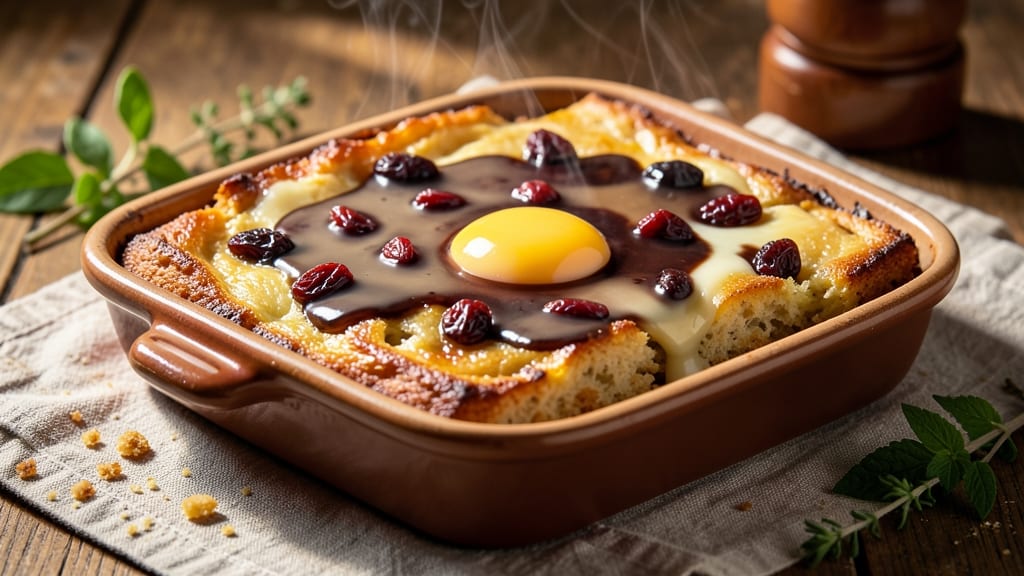
This authentic Puerto Rican bread pudding recipe brings the warm, spiced flavors of the island straight to your kitchen—crispy golden crust, rum-infused swirls, and tender layers of traditional Puerto Rican bread. 🌟 The secret lies in using evaporated milk, cinnamon, and raisins, just like my abuela taught me, for that perfect balance of sweetness and warmth that makes this dessert unforgettable.
What sets this recipe apart is the rum-soaked bread, which adds depth and richness without overpowering the natural flavors. The bread pudding bakes until the edges are crispy and caramelized, while the center remains soft and custardy—just like the ones I grew up enjoying after family gatherings.
It’s a dessert that feels both nostalgic and special, yet simple enough to make for any occasion.
The result is a golden, aromatic pudding with layers of spiced rum and cinnamon, topped with a dusting of powdered sugar or caramelized bananas for extra indulgence. Each bite delivers the comforting flavors of Puerto Rico, making it a showstopper for holidays, dinner parties, or even a cozy weeknight treat.
Ready to bring a taste of the island home?
Serve warm with a scoop of vanilla ice cream or a drizzle of caramel sauce for the ultimate dessert experience. The recipe is foolproof and packed with tradition—perfect for those who appreciate the art of baking with heart and authenticity.
Ingredients for authentic puerto rican bread pudding
Eight ingredients transform into the most comforting Puerto Rican bread pudding you'll ever taste.
| Ingredient | Amount | Notes |
|---|---|---|
| Traditional Puerto Rican Bread 🍞 | 1 ½ lb | Day-old, crust removed |
| Large Eggs 🥚 | 6 whole | Room temperature preferred |
| Evaporated Milk 🥛 | 2 cups | Full-fat for creaminess |
| Granulated Sugar 🍚 | 1 ½ cups | Light brown preferred |
| Raisins 🍇 | 1 cup | Plump, not dried out |
| Dark Rum 🍹 | ½ cup | 180-proof preferred |
| Ground Cinnamon 🍃 | 1 ½ tbsp | Freshly ground ideal |
| Vanilla Extract 🌿 | 1 tbsp | Pure Madagascar preferred |
| Salt 🧂 | ½ tsp | Fine sea salt |
| Unsalted Butter 🧈 | ½ cup | Cold, cubed |
| Powdered Sugar 🍚 | ¼ cup | For topping |
| Ripe Bananas 🍌 | 2 whole | Sliced for caramelization |
The bread is everything here—Puerto Rican pan dulce or marraqueta from a Latin bakery gives that authentic texture. Costco or local panaderías are your best bets for quality. If you can't find traditional bread, challah or brioche work in a pinch, but nothing beats the real deal. The raisins should be plump, not shriveled—soak them in warm water for 10 minutes if they're dry. And that rum? Bacardi 151 or Don Q Cristal adds the perfect depth without overpowering.
No dark rum? Spiced rum or even bourbon will do—just cut the amount to 1/4 cup. Fresh cinnamon is non-negotiable here (ground loses potency fast), but if you're in a bind, cinnamon sticks lightly toasted and ground works too. The bananas should be very ripe—those black spots mean extra sweetness. For a vegan version, swap eggs for flax eggs (6 tbsp ground flax + 1.5 cups water) and use coconut milk instead of evaporated milk. The butter matters too—European-style gives better flavor than regular American butter.
This keeps beautifully for 4 days in the fridge, but honestly tastes better the second day when all the flavors meld. For make-ahead magic, assemble the pudding the night before and bake in the morning. The caramelized bananas on top? Sauté in butter until golden—takes about 5 minutes and makes it look like you slaved for hours. Portion into individual ramekins before baking for restaurant-quality presentation. Freezes for 2 months if you want to prep ahead for holidays.
Why You'll Love This Recipe
- No-Fuss Assembly: I swear, this comes together faster than a pan dulce from the bakery. Tear that crusty Puerto Rican bread into chunks—no measuring, no stress—and toss it in a bowl with the raisins. The eggs and milk mix in like a dream, and by the time the oven beeps, you’ve barely moved.
- Caramelized Magic: That crispy, golden crust? Chef’s kiss. The sugar and evaporated milk create this buttery, almost custardy center that’s pure comfort, while the raisins add just enough chewy contrast. Honestly, the first bite makes you forget about your Tuesday.
- Weeknight to Holiday: Serve it warm for breakfast with a sprinkle of cinnamon, or let it chill overnight for a no-brainer dessert when your tías show up. My kids ask for it after school—yes, even on a Tuesday night—and it’s just as welcome at a family gathering.
- Budget Breakfast Win: Uses stale bread? Check. Eggs and milk stretch into something luxurious? Double check. The raisins add sweetness without breaking the bank, and leftovers reheat like a dream. Between us, this is my go-to when I need to feed a crowd without the grocery bill screaming.
Step-by-step instructions for authentic Puerto Rican bread pudding
Here's how to transform simple ingredients into a rich, rum-spiced dessert with a golden crust.
👨🍳 Step 1: Prepare the Bread and Banana Mixture
Tear the 1.5 lb Traditional Puerto Rican Bread into 1-inch cubes—don't worry if they're uneven, that's what makes it authentic. Arrange them in a single layer on a large baking sheet and place in a 350°F oven for 10 minutes to dry slightly. This step prevents a soggy pudding.
While the bread dries, slice the 2 whole Ripe Bananas into ¼-inch thick rounds. Toss them with ½ cup Dark Rum and let sit for 10 minutes—this infuses them with flavor and keeps them from sinking to the bottom. In a large bowl, combine the dried bread cubes, banana-rum mixture, 1 cup Raisins, and 1.5 tbsp Ground Cinnamon. Stir gently to distribute everything evenly.
🍳 Step 2: Whisk the Creamy Egg Mixture
In a separate bowl, whisk together the 6 whole Large Eggs, 2 cups Evaporated Milk, 1.5 cups Granulated Sugar, 1 tbsp Vanilla Extract, and ½ tsp Salt until smooth and fully combined. The mixture should be pale yellow and slightly thickened. I like to whisk for about 3 minutes—this ensures all the sugar dissolves completely and the eggs are fully emulsified.
Here's the thing—don't overmix or you'll develop gluten, which makes the pudding tough. You're aiming for a smooth, velvety batter that just coats the back of a spoon. Pour this mixture over the bread mixture in the bowl and let it soak for 15 minutes. The bread should absorb most of the liquid, but don't worry if some remains—it'll cook out in the oven.
🥘 Step 3: Assemble and Bake the Pudding
Preheat your oven to 350°F and grease a 9x13-inch baking dish generously with butter. Transfer the bread mixture to the prepared dish and spread it out evenly. The pudding should fill the dish about ¾ full—this gives it room to rise as it bakes.
Dot the top with ½ cup Unsalted Butter cubes and sprinkle evenly with ½ cup Granulated Sugar for that classic caramelized crust. Bake for 45-50 minutes until the top is golden brown and the center jiggles slightly when shaken. If the edges brown too quickly, tent with foil. The pudding is done when it pulls away from the edges of the pan.
⏰ Step 4: Rest and Serve with Confidence
Remove the pudding from the oven and let it rest for 10 minutes before serving. This resting period allows the juices to redistribute—if you cut it too soon, all the goodness will run out onto your plate. While it rests, sprinkle the top with ¼ cup Powdered Sugar for a sweet, snowy finish.
Slice into 8 equal portions and serve warm. Each bite should deliver tender bread soaked in creamy custard, sweet bananas, plump raisins, and that signature rum-spice aroma. For extra decadence, drizzle with warmed rum sauce made from the reserved banana soaking liquid reduced with a touch of sugar.
Pro Tips For Making Authentic Puerto Rican Bread Pudding
- SOAK THE BREAD FIRST: I learned this the hard way—dry bread turns into a sad, gummy mess. Tear the Puerto Rican bread into chunks and toss it with the evaporated milk at least 10 minutes ahead. Let it sit until it’s soft but not drowning—just enough to soak up the liquid without turning into mush. (Yes, even if you’re impatient like me.)
- USE ROOM-TEMP EGGS: Cold eggs? No thanks. Whisk them with the sugar until the mixture is smooth and just starting to thicken—this takes about 3 minutes. Room-temperature eggs blend better and create a lighter texture. I skip this step sometimes, and the pudding ends up denser. Not a dealbreaker, but you’ll notice the difference.
- SKIP THE OVERMIXING: Once you fold in the raisins, stop stirring. Too much mixing deflates the bread and makes the pudding heavy. Just give it a few gentle turns until everything’s combined—about 10 seconds max. I used to overwork it, thinking more mixing meant better distribution, but the result was a sad, compact block instead of that fluffy, custardy texture.
- BAKE UNTIL GOLDEN, NOT JUST SET: The pudding’s done when the top is deep golden brown, not when it looks done. If you pull it out too soon, it’ll stay pale and gummy. I used to rely on the internal temp (around 200°F), but the real test is that crust—it should crack slightly and pull away from the edges. Let it sit 5 minutes before serving, or it’ll collapse like a tired soufflé.
Common mistakes when making perfect results
Over-Soaking the Bread
One of the biggest mistakes is letting the bread soak too long in the egg mixture. The bread should absorb most of the liquid within 15 minutes—any longer and you'll end up with a watery pudding.
I've learned this the hard way: once, I left mine soaking for 30 minutes and the texture was dreadfully mushy. The bread should feel moist but still hold its shape when pressed gently. If it feels soggy, it's time to move to the oven immediately. 🌟
Skipping the Rum Infusion
Some recipes call for just a splash of rum, but the real magic happens when you soak the bananas in it first. That ½ cup of dark rum (like Bacardi 151) infuses the bananas with deep flavor and prevents them from sinking to the bottom.
If you skip this step, your pudding will taste flat and lack the warm, spiced aroma that makes it authentic. Trust me, the effort is worth it for that rich, boozy depth.
Using the Wrong Bread
Not all bread is created equal—this isn't the time for stale white sandwich bread. The key is Puerto Rican pan dulce or marraqueta, which has the perfect texture: slightly sweet, tender, and sturdy enough to hold up to baking.
If you can't find it, challah or brioche are decent substitutes, but they won't give you that authentic island flavor. I once used a baguette, and the result was dry and crumbly. Do yourself a favor and track down the real deal at a Latin bakery or Costco.
Overmixing the Eggs
When you whisk the eggs, sugar, and milk together, stop as soon as everything is combined. Overmixing introduces gluten, which makes the pudding tough instead of creamy. Aim for a smooth, pale yellow batter that just coats the back of a spoon.
I've seen recipes where people whip the eggs for 5 minutes or more, and the result is a dense, rubbery texture. Keep it gentle—this is a delicate dessert that relies on tenderness, not structure. 💛
Ignoring the Resting Time
Cutting into the pudding as soon as it comes out of the oven is a rookie mistake. The 10-minute rest lets the juices redistribute, so every bite is rich and flavorful, not soupy. I've rushed this step before, and the pudding would ooze custard everywhere.
Patience here is key—it's worth the wait for that perfect slice. While it rests, dust with powdered sugar for that classic finish.
Underbaking or Overbaking
The pudding should have a golden brown crust that's crispy on top but still slightly jiggly in the center. If you pull it out too soon, it'll be undercooked and gummy; if you leave it too long, the edges will burn while the inside stays raw.
I've had both disasters! The edges should pull away from the pan, and a toothpick inserted in the center should come out with a few moist crumbs, not wet batter. Keep an eye on it after 45 minutes—ovens vary, so adjust as needed.
Nutrition facts
Frequently asked questions
What makes this Puerto Rican bread pudding different from other recipes?
This recipe uses traditional Puerto Rican bread (like pan dulce or marraqueta) and evaporated milk for a richer, creamier texture. The key difference is soaking the bananas in dark rum first, which adds depth and prevents them from sinking. Plus, the crust gets extra crispy from the butter-sugar topping—just like the version my abuela made!
Can I make this without rum? What can I substitute?
Yes! If you prefer no alcohol, use ½ cup apple cider or orange juice instead of rum. For a spiced alternative, try ½ cup warm coffee or chai tea—it adds warmth without the boozy kick. Just reduce the liquid slightly if using coffee, since it's more concentrated. The flavor will still be delicious!
How do I know when the bread pudding is fully baked?
The pudding is done when the top is golden brown and the edges pull away from the pan. Insert a toothpick in the center—it should come out with a few moist crumbs, not wet batter. If the edges brown too quickly, tent with foil. Most ovens need 45-50 minutes, but check at 40 minutes if yours runs hot.
Can I make this ahead of time? How does it reheat?
Assemble the pudding the night before and refrigerate. Bake straight from the fridge (add 5-10 extra minutes to baking time). For reheating, warm slices in a 350°F oven for 5-7 minutes or microwave for 20-30 seconds (cover with a damp paper towel to keep it moist). It actually tastes better the second day as flavors meld!
What's the best way to serve this dessert?
Serve warm with a dusting of powdered sugar or a drizzle of warmed rum sauce (reduce the banana-soaking liquid with 1 tbsp sugar). For extra flair, add a scoop of vanilla ice cream** or caramelized bananas on top. It's perfect for holidays, family gatherings, or a cozy dessert after a big meal!