
Side Dishes
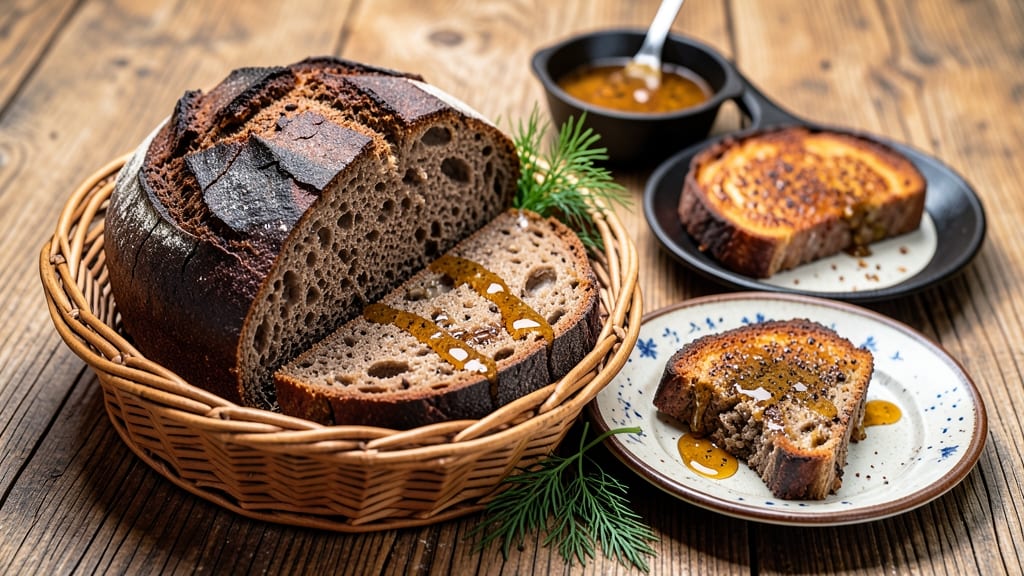
This authentic Russian black bread recipe brings the soul of Siberian bakeries to your kitchen with its dense, slightly sour crumb and deep malty flavor. 🌟 The key lies in slow fermentation—letting the natural sourdough develop over 12 hours for that signature tang and chewy texture.
Unlike commercial loaves, this version skips sugar and relies on rye flour for its earthy richness, just like the traditional Borodinsky bread that fueled Russian laborers for generations.
What sets this recipe apart is the traditional shaping technique: rolling the dough into a thick, cylindrical loaf before scoring with a sharp razor in a crosshatch pattern. This not only creates a rustic appearance but also ensures even baking.
The result is a loaf with a crisp, dark crust that gives way to a moist, elastic interior—perfect for sandwiches or served with butter and smoked fish. Every step respects the bread's heritage while being accessible for home bakers.
For an authentic experience, use a Dutch oven to mimic wood-fired oven conditions, which creates that signature crust. The dough's slow fermentation (overnight in the fridge) deepens the flavor, while the lack of yeast means no artificial rise—just pure, developed taste.
This bread improves with age, developing even more complexity as it sits, making it ideal for meal prep or gifting.
Whether you're serving it with borscht, cheese, or simply enjoying it with tea, this black bread delivers the hearty, satisfying quality that made it a staple in Russian households.
The recipe includes vegan adaptations for butter and milk, ensuring everyone can enjoy this cultural classic. Let's get started on your first loaf.
Ingredients for authentic russian black bread
Authentic Russian black bread starts with these essential ingredients for deep malty flavor and rustic texture.
| Ingredient | Amount | Notes |
|---|---|---|
| Rye Flour 🌾 | 3 ½ cups | Dark rye for authentic flavor |
| All-Purpose Flour 🌾 | 1 ½ cups | For structure and texture |
| Active Dry Yeast 🍞 | ¼ oz | Or 1 packet (2.25 tsp) |
| Sourdough Starter 🍞 | 1 cup | Unfed, 100% hydration |
| Warm Water 💧 | 1 ¾ cups | 105°F for yeast activation |
| Honey or Maple Syrup 🍯 | 1 tbsp | For yeast feeding only |
| Salt 🧂 | 1 ½ tsp | Diamond Crystal preferred |
| Malt Powder 🌾 | 1 tbsp | For deep malty flavor |
| Vegan Butter 🧈 | ¼ cup | Miyoko's brand recommended |
| Flaxseed Meal 🌱 | 1 tbsp | For egg replacement |
| Plant-Based Milk 🥛 | ¼ cup | Almond or oat preferred |
| Sesame Seeds 🌻 | 1 tbsp | For traditional topping |
| Poppy Seeds 🌻 | 1 tbsp | Optional traditional topping |
The rye flour is non-negotiable for that signature earthy flavor. King Arthur Dark Rye or Bob's Red Mill are excellent choices—look for 100% rye flour if available. The sourdough starter must be active but unfed; if you're new to sourdough, maintain a starter for at least 7 days before attempting this recipe. For malt powder, Bragg Liquid Malt works well, though you'll need to reduce it to powder form. The vegan butter should be cold-pressed for the best texture, and Miyoko's or Earth Balance are reliable brands. If you can't find vegan butter, coconut oil works in a pinch but lacks the same richness.
No vegan butter? Olive oil or melted coconut oil can replace it, though the texture will be slightly different. Running low on flaxseed meal? Chia seeds ground into a powder work at the same ratio. The plant-based milk can be swapped for water or almond milk if needed, though oat milk adds a subtle sweetness that complements the rye. For the yeast, if you're in a high-altitude area, consider adding an extra 0.25 tsp. The sesame and poppy seeds are traditional toppings—skip them if you prefer a simpler look, but they add that authentic Russian touch. Always check your rye flour for weevils or moisture before using, especially if buying in bulk.
The sourdough starter should be stored in an airtight container in the fridge between uses. Rye flour keeps best in a cool, dark place for up to 6 months, while malt powder stays potent for 3 months once opened. The dough can be shaped and refrigerated overnight for improved flavor, then baked the next day. Once cooled, wrap the bread in a clean kitchen towel and store at room temperature for up to 3 days. For longer storage, slice and freeze the bread—it reheats beautifully in a toaster or oven. The crust will crisp up again once warmed through.
Why You'll Love This Recipe
- Here’s what sold me: a single batch costs pennies and lasts forever. The rye flour adds depth without breaking the bank, and the sourdough starter means no expensive yeast packets. Plus, it reheats like a dream—just toss a slice in the toaster or oven, and it’s fresh again. My wallet and my taste buds thank me.
- No-Knead Nightmare Solved: I’ll admit, the first time I tried this, I panicked when the dough looked like a lumpy mess—but that’s exactly how it’s supposed to go. The sourdough starter does all the heavy lifting while you sleep, so by morning, you’ve got a golden-crusted loaf with zero effort. Just mix, let it rise, and bake. That’s it.
- Tangy Crust, Chewy Soul: Between us, the rye flour gives this bread a deep, almost smoky flavor that’s ridiculously satisfying. The crust cracks open like a good book, revealing a soft, airy interior with just enough chew to keep you coming back. It’s the kind of bread that makes you pause mid-bite and think, “Damn, I should’ve made more.”
- Weeknight Hero: Honestly, this bread is my go-to for everything. Toast it for breakfast, tear it for sandwiches, or serve it warm with butter—it’s the ultimate sidekick. I keep a loaf in the freezer at all times because it’s that reliable. Whether it’s a quick lunch or a fancy dinner, this bread never lets me down.
Step-by-step instructions for authentic Russian black bread
Master the traditional techniques that create this bread's signature dark crust and malty depth.
👨🍳 Step 1: Prepare the Flaxseed "Egg" Substitute
In a small bowl, combine the 1 tablespoon flaxseed meal with the ¼ cup plant-based milk. Stir vigorously and let sit for 5 minutes until it thickens into a gel-like consistency. This plant-based binder mimics the structure eggs provide in traditional recipes.
Here's the thing—this step is non-negotiable for authentic texture. The flax mixture should resemble raw egg whites in viscosity. If it's too runny after 5 minutes, add another teaspoon of flaxseed meal. This ensures your dough will hold its shape during shaping and baking.
👨🍳 Step 2: Mix the Dough with Precision
In a large mixing bowl, whisk together the 3.5 cups rye flour, 1.5 cups all-purpose flour, 1.5 teaspoons salt, and 1 tablespoon malt powder. The malt powder is crucial—it delivers that distinctive Russian black bread flavor profile. Create a well in the center and add the flaxseed mixture, 1 cup sourdough starter, and 1 tablespoon honey or maple syrup.
Gradually add the 1.75 cups warm water (about 105°F) while stirring with a wooden spoon. The dough should be shaggy but cohesive. Don't be tempted to add more water—this dense dough needs to develop its own structure through kneading. Cover the bowl with a damp towel and let rest for 30 minutes.
🥘 Step 3: Develop the Dough Through Autolyse
After the initial rest, add the ¼ cup vegan butter to the dough and work it in with your hands until fully incorporated. The butter should be soft but not melted—this creates tender layers that traditional Russian black bread is known for.
Transfer the dough to a lightly floured surface and knead vigorously for 10-12 minutes until smooth and elastic. You'll notice it's stickier than wheat dough—this is normal. The gluten development is what gives Russian black bread its satisfying chew. Shape into a round loaf and place in a lightly oiled bowl.
🔥 Step 4: Proof and Shape for Crust Development
Cover the bowl and let the dough rise at room temperature for 2-3 hours until it has nearly doubled in size. The dough should feel light and springy when pressed gently. This long fermentation develops the complex flavors that define authentic Russian black bread.
Preheat your oven to 425°F with a Dutch oven inside for 30 minutes. While the oven heats, shape the dough into a round loaf with a slightly tapered top. This shape helps create the characteristic crust. Brush the surface with water and sprinkle evenly with the 1 tablespoon sesame seeds and 1 tablespoon poppy seeds.
🔥 Step 5: Bake for Maximum Crust Development
Carefully transfer the shaped loaf to the preheated Dutch oven. Bake covered for 25 minutes to develop steam and even rising. Then remove the lid and bake uncovered for an additional 15-20 minutes until the crust is deep brown and almost black in spots.
This is where the magic happens—the high heat creates that signature Russian black crust while keeping the interior moist. The internal temperature should reach 190-200°F. Let the bread cool on a wire rack for at least 1 hour before slicing—this allows the crumb to set properly and prevents a gummy texture.
Pro Tips For Making Authentic Russian Black Bread
- Hydrate the Rye First: Mix your rye flour with warm water before adding the rest—it soaks up liquid like a sponge and prevents a dense, gummy loaf. I learned this the hard way when my first batch turned out like a brick; now I let it sit for 10 minutes before combining.
- Use a Thermometer for Yeast: Your warm water should hit 95–105°F (35–40°C)—any hotter and you’ll kill the yeast, any cooler and it’ll take forever to activate. I used to eyeball it and waste time waiting (or worse, overproofing). A cheap thermometer fixes this instantly.
- Skip the Over-Kneading: Russian black bread dough is sticky and dense—don’t fight it. Knead just until the flour comes together (about 5–7 minutes by hand), then let the sourdough do the work. Overworking it turns the texture gluey, and nobody wants that.
- Steam the Oven First: Place a metal bowl of boiling water on the lower rack while preheating—this creates steam that gives your bread that signature crisp crust without burning. I used to skip this and end up with a sad, pale top. Works every time, even if your oven’s finicky.
Regional styles of authentic russian black bread
Siberian Borodinsky Style
This version originates from Siberia's harsh winters, where hearty breads sustained laborers. The key difference is using 100% rye flour with 1 tablespoon caraway seeds added to the dough—this creates a distinct anise-like flavor.
Shape the loaf into a thick cylinder about 3 inches tall and score with a sharp knife in a crosshatch pattern before baking. The crust should be jet-black and crackly, while the interior remains dense and moist.
Serve warm with sour cream and smoked salmon for an authentic Siberian meal. 🌟
Ukrainian Zaboronsky Tradition
Named after the Cossack Zaporozhian Army, this style features a slightly sweeter profile from adding 2 tablespoons molasses to the dough. The shaping differs too—roll the dough into a thin, flat round (about ½ inch thick) before baking.
Brush the surface with melted vegan butter after the initial 20-minute bake to create a glossy, crackly crust. The result is a crispy, almost cracker-like texture perfect for dipping in borscht or rye bread soup.
Moscow City Bakeries
Moscow's version prioritizes crust texture over flavor intensity. Use ½ cup all-purpose flour instead of rye for a lighter crumb, and add 1 teaspoon baking soda to the dough for extra lift.
Shape into a small, round loaf (about 2 inches tall) and bake in a cast-iron skillet for a thin, crisp crust. The interior should be slightly crumbly—ideal for open-faced sandwiches with caviar or pickled vegetables.
This style was popular in Moscow's GUM department store bakeries during the Soviet era. 🏙️
Leningrad (St. Petersburg) Variation
This coastal city's version incorporates seaweed flakes for a subtle oceanic note. Add 1 tablespoon dried seaweed powder to the dough along with the malt powder. Shape into a long oval loaf (about 12 inches long) and score with parallel lines before baking.
The crust should be dark but not black, with a chewy, slightly chewy interior. Serve with herring or pickled mushrooms—this was a staple in Leningrad's working-class districts during the 19th century.
Modern Vegan Adaptations
For today's home bakers, replace the vegan butter with coconut oil (though texture differs slightly) and use aquafaba (chickpea brine) instead of flaxseed for the egg substitute. The aquafaba adds extra chewiness to the crumb. For a nutty flavor, add 1 tablespoon ground walnuts to the dough.
This adaptation keeps the authentic texture while making it fully plant-based—perfect for modern dietary needs. The fermentation process remains unchanged, ensuring the signature tang stays intact. 🌱
Nutrition facts
Frequently asked questions
Why does authentic Russian black bread have such a long fermentation time?
The 12-hour fermentation (including overnight in the fridge) develops the bread's signature tangy, complex flavor and chewy texture. This slow process allows the natural acids in rye flour and sourdough to break down starches, creating that distinctive mild sourness and deep malty notes. Traditional Russian bakeries used this method to preserve bread longer in cold climates.
Can I make this bread without a Dutch oven?
Yes! Use a heavy oven-safe pot with a lid or even a baking sheet lined with parchment paper. For best results, place a metal bowl filled with hot water on the lower rack to create steam during the first 25 minutes of baking. This mimics the Dutch oven's steam retention and helps develop that signature dark crust. Just expect the crust to be slightly less crackly.
What's the best way to store Russian black bread?
Wrap the cooled loaf tightly in a clean kitchen towel or beeswax wrap, then place in a paper bag at room temperature. This keeps it fresh for 3-4 days. For longer storage, slice and freeze—it reheats beautifully in a toaster or oven. The bread actually improves with age, developing more flavor as it stales slightly (just like traditional sourdough).
Why did my bread turn out too dense or gummy?
This usually happens from either over-kneading (which develops too much gluten) or under-baking. Russian black bread should be baked until the internal temperature reaches 190-200°F. Also check your rye flour—too much moisture can make the dough sticky. For a lighter texture, reduce the rye flour by ½ cup and increase all-purpose flour slightly. The dough should be sticky but not wet.
How can I make this bread vegan?
This recipe already includes vegan adaptations! Replace the vegan butter with coconut oil (though texture will differ slightly) and use aquafaba (chickpea brine) instead of flaxseed for the egg substitute. For extra richness, add 1 tablespoon ground walnuts to the dough. The fermentation process remains the same, preserving that authentic tangy flavor while making it fully plant-based.