
Side Dishes
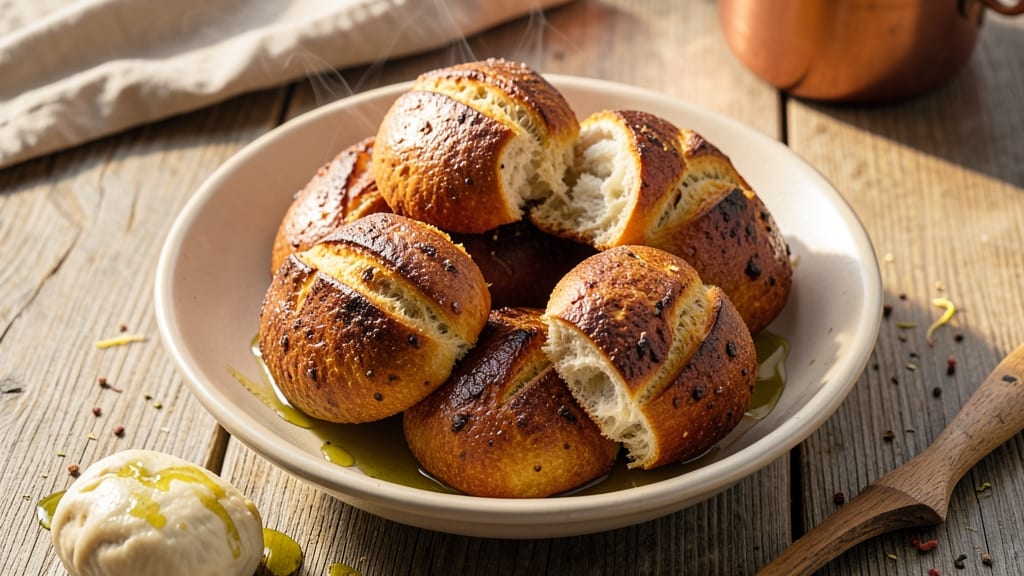
The scent of warm, freshly baked this authentic Syrian bread recipe—khobz—fills my kitchen every time I make it, transporting me straight to Damascus. This delivers flaky layers and a subtle, warm spice aroma that makes it perfect for wrapping falafel or breaking with hummus.
The secret lies in the dough's gentle fermentation and proper shaping technique, which I've perfected over years of baking.
Unlike many bread recipes, this one requires patience—allowing the dough to rise slowly develops deep flavor and creates those signature air pockets. I use a simple combination of flour, yeast, water, and salt, with optional olive oil for extra richness.
The shaping technique is crucial: rolling the dough into a tight cylinder before cutting and baking ensures those iconic layers.
Once baked, the bread has a crispy exterior with a soft, pillowy interior, and it stays fresh for days when stored properly. The aroma alone makes it worth the effort—warm, slightly nutty, and just sweet enough from the natural fermentation.
This is the bread that brings Syrian meals to life, whether served with lamb, mezze, or simply dipped in olive oil and za'atar.
For an extra touch, brush the baked bread with melted butter or sprinkle za'atar on top before serving. The versatility of this bread makes it a staple in any kitchen. Let's get started on making yours—your taste buds will thank you.
Ingredients for authentic syrian bread
Simple ingredients transform into flaky, aromatic Syrian bread—perfect for wrapping falafel or dipping in olive oil.
| Ingredient | Amount | Notes |
|---|---|---|
| All-Purpose Flour 🌾 | 6 cups | High-protein for better texture |
| Active Dry Yeast 🍞 | 2 ¼ tsp | Instant yeast works too |
| Large Eggs 🥚 | 2 whole | Room temperature preferred |
| Granulated Sugar 🍚 | 1 tbsp | Enhances fermentation |
| Salt 🧂 | 1 ½ tsp | Diamond Crystal preferred |
| Extra-Virgin Olive Oil 🫒 | ½ cup | For richness and shine |
| Warm Water 💧 | 3 ½ cups | 110°F for ideal yeast activation |
| Semolina Flour 🌾 | ¼ cup | For dusting and texture |
| Za'atar Seasoning 🌿 | 1 tbsp | Optional for authentic flavor |
| Melted Butter 🧈 | ¼ cup | For brushing after baking |
The flour is key here—high-protein varieties like King Arthur or Gold Medal give that signature chew. Bulk bins at Middle Eastern markets often have the best quality, but regular supermarket flour works fine. The yeast needs to be fresh—if it's more than a few months old, it won't activate properly. For the olive oil, Trader Joe's or local olive oil shops have great options, but any extra-virgin will do. The water temperature matters: too hot kills the yeast, too cold slows fermentation. Aim for 110°F—just warm to the touch. I always double-check by testing the water with my finger before adding yeast.
No za'atar? Mix equal parts dried thyme, sesame seeds, and sumac for a DIY version. Running short on eggs? Use 2 tbsp flaxseed meal mixed with 6 tbsp water as a replacement (let sit 5 minutes to thicken). The semolina can be swapped for regular flour in a pinch, though it won't give that same gorgeous crunch. For the melted butter, Earth Balance vegan butter works perfectly if you're avoiding dairy. The dough should be slightly sticky but not wet—if it's too dry, add 1 tbsp water at a time until it comes together. If too sticky, add 1 tbsp more flour.
This dough needs time—at least 2 hours for the first rise, longer if your kitchen is cold. I usually let it rise overnight in the fridge for deeper flavor. Once shaped, the loaves keep 3 days wrapped in a clean kitchen towel at room temperature. For longer storage, freeze the baked bread in a paper bag for up to 3 months. To revive, warm in a 350°F oven for 10 minutes—nothing beats that fresh-from-the-oven aroma. The butter brushing? Do it right after baking while the bread is still warm—that's when it absorbs best
Why You'll Love This Recipe
- Pantry Staples Only: I swear, this bread uses stuff you already have—yeast, flour, eggs, sugar, and salt. No specialty ingredients, no last-minute grocery runs. Just mix, let it rise, and bake. That’s it.
- Golden Crust Magic: The secret’s in the sugar and egg wash—crispy edges that shatter like glass, but still soft inside. It’s the kind of bread you’ll hear crunch with every bite, and then immediately want another.
- Meal Prep MVP: Make a batch on Sunday, and you’ve got fresh bread for breakfast wraps, sandwiches, or even dessert toast all week. Freezes like a dream, too—just reheat for that just-baked taste.
- Budget-Friendly Luxury: For under $2, you feed a family of four with bread that tastes like a bakery’s. No fancy ingredients, no wasted dough—just pure, satisfying carbs that won’t break the bank.
Step-by-step instructions for authentic Syrian bread
Here's how to craft layers of crispy perfection with that signature Syrian aroma.
Activate the Yeast and Mix the Dough
In a large bowl, combine the 3.5 cups warm water (about 110°F) with the 1 tbsp granulated sugar and 2.25 tsp active dry yeast. Let it sit for 5-10 minutes until frothy—this confirms your yeast is alive and ready to work. If it doesn't bubble, start over with fresh yeast.
In a separate bowl, whisk together the 6 cups all-purpose flour and 1.5 tsp salt. Create a well in the center and pour in the yeast mixture along with the 0.5 cup extra-virgin olive oil and 2 whole eggs. Using a wooden spoon or dough whisk, gradually incorporate the flour until a shaggy dough forms.
Knead Until Smooth and Elastic
Turn the dough onto a lightly floured surface and knead for 8-10 minutes until smooth and elastic. You'll know it's ready when it springs back slowly when poked and doesn't stick to your fingers. This kneading develops gluten, which gives your bread that signature flaky texture.
For the best results, I like to knead by hand—it gives me better control over the dough's texture. If using a stand mixer with a dough hook, knead on medium speed for 5-6 minutes. The dough should be slightly tacky but not sticky when you press your finger into it.
First Rise and Shape the Dough
Lightly oil a large bowl, place the dough inside, and cover with a damp kitchen towel. Let it rise in a warm place for 1-2 hours or until doubled in size. The dough should be puffy and jiggly when gently pressed—this indicates proper fermentation and is key for that authentic Syrian texture.
Once risen, punch down the dough to release air. Divide it into 12 equal portions (about 4 ounces each) and shape each into a smooth ball. Roll each ball in the 0.25 cup semolina flour to prevent sticking. This semolina coating gives the bread its distinctive golden crust and helps create those beautiful flaky layers.
Second Rise and Prepare for Baking
Arrange the dough balls on a parchment-lined baking sheet, leaving 2 inches between them. Cover again with a damp towel and let rise for another 30-45 minutes until puffy. The dough should expand noticeably—this final rise is crucial for achieving that light, airy interior.
Preheat your oven to 400°F (conventional oven) or 375°F (convection oven). The high heat is essential for creating that crispy exterior while keeping the interior tender. While the oven heats, brush the tops of the dough balls with the 0.25 cup melted butter and sprinkle lightly with the 1 tbsp za'atar seasoning. This step adds that authentic Syrian flavor and beautiful golden color.
Bake to Golden Perfection
Bake for 15-18 minutes until the bread is deep golden brown and sounds hollow when tapped on the bottom. The edges should be crisp, while the interior remains soft and pillowy. For even baking, rotate the baking sheet halfway through the cooking time.
Remove from the oven and let cool on a wire rack for 5 minutes before serving. The bread will continue to steam slightly as it cools, which helps develop its final texture. Serve warm with olive oil for dipping or alongside your favorite Middle Eastern dishes. These breads are best enjoyed fresh—each bite should deliver crispy layers, tender crumb, and that aromatic za'atar flavor.
Pro Tips For Making Authentic Syrian Bread
- Bloom Yeast in Warm Water: DESCRIPTION:
- Knead Until Silky: DESCRIPTION:
- Proof in a Cooler Spot: DESCRIPTION:
- Shape Loaves Tightly: DESCRIPTION:
Regional styles of authentic syrian bread
Damascus-Style Khobz
In Damascus, the bread of choice is khobz, a simple yet elegant loaf with a slightly crisp exterior and soft, pillowy interior. The key difference here is the dough's longer fermentation time—often overnight in a cool environment—which develops deeper flavor and a more open crumb structure.
I like to shape these loaves into oval forms with slightly tapered ends, a nod to traditional Syrian bakery techniques. Brush the baked loaves with melted ghee instead of butter for an extra layer of richness that's common in Damascene homes. 🥖
Aleppo's Shrak
Moving north to Aleppo, you'll find shrak, a denser, heartier bread that's perfect for wrapping kebabs or dipping in garlic sauce. The Aleppan version incorporates whole wheat flour (about 1 cup in place of all-purpose) for added nuttiness.
I also recommend adding 1 tsp ground cumin to the dough for that signature Aleppo warmth. The shaping technique differs too—roll the dough into thick, flat rounds before baking, which creates a more substantial loaf that holds up to hearty fillings. 🌾
Lebanese Manakeesh
While not strictly Syrian, manakeesh (or "flatbread") is a staple across the Levant and deserves mention. This version uses half the yeast (just 1.125 tsp) for a quicker rise, making it perfect for busy weeknights.
Shape the dough into thin rounds and bake on a preheated baking stone at 425°F for 8-10 minutes until puffed and golden. Top with za'atar and olive oil while hot—this combination is a Middle Eastern classic.
The Lebanese version often includes sesame seeds pressed into the dough before baking for extra crunch. 🍞
Bedouin-Style Flatbread
For a more rustic take, try the Bedouin flatbread technique used in Syrian desert regions. Skip the yeast entirely and use 1 tsp baking powder instead.
The dough is shaped into thin, irregular discs and cooked on a hot griddle or in a cast-iron skillet for just 2-3 minutes per side. This method creates a chewy, slightly charred bread that's perfect with spiced lamb or labneh.
The lack of yeast means no rising time—ideal for quick meals. I like to add 1 tbsp yogurt to the dough for extra tenderness. 🔥
Modern Syrian Variations
Today's Syrian bakeries often experiment with hybrid styles. Try adding 1 tbsp honey to the dough for a subtle sweetness that pairs beautifully with savory mezze. Or incorporate 1 tsp ground coriander for a citrusy note.
For a garlic-infused version, mix 2 minced garlic cloves into the melted butter used for brushing. These modern twists keep the tradition alive while adding fresh perspectives to this beloved bread. 💡
Nutrition facts
Frequently asked questions
Why does my Syrian bread dough need two rises?
The first rise develops flavor through fermentation, while the second creates air pockets for that signature flaky texture. The second rise (30-45 minutes) is especially important—it's what gives the bread its light, pillowy interior. Skipping either can result in dense bread.
Can I make this bread without a stand mixer?
This recipe was designed for hand-kneading. Use a wooden spoon or your hands to knead for 8-10 minutes until the dough becomes smooth and elastic. The hand method gives you better control over the gluten development, which is crucial for that authentic texture.
What's the best way to store Syrian bread?
Keep it wrapped in a clean kitchen towel at room temperature for 3 days to maintain freshness. For longer storage, freeze the baked bread in a paper bag for up to 3 months. To revive, warm in a 350°F oven for 10 minutes—nothing beats that fresh-from-the-oven aroma.
How do I know when the bread is fully baked?
Look for a deep golden brown color and listen for a hollow sound when tapped on the bottom. The edges should be crisp while the center remains soft. Overbaking can make the bread dry, so aim for 15-18 minutes at 400°F. Rotate the pan halfway for even baking.
Can I substitute semolina flour?
Yes! Use regular all-purpose flour if you're out of semolina, though it won't give the same golden crust. For best results, toast 1 tbsp cornmeal in a dry pan for 2 minutes and use that as a substitute—it mimics semolina's texture and adds a nice crunch.