
Side Dishes
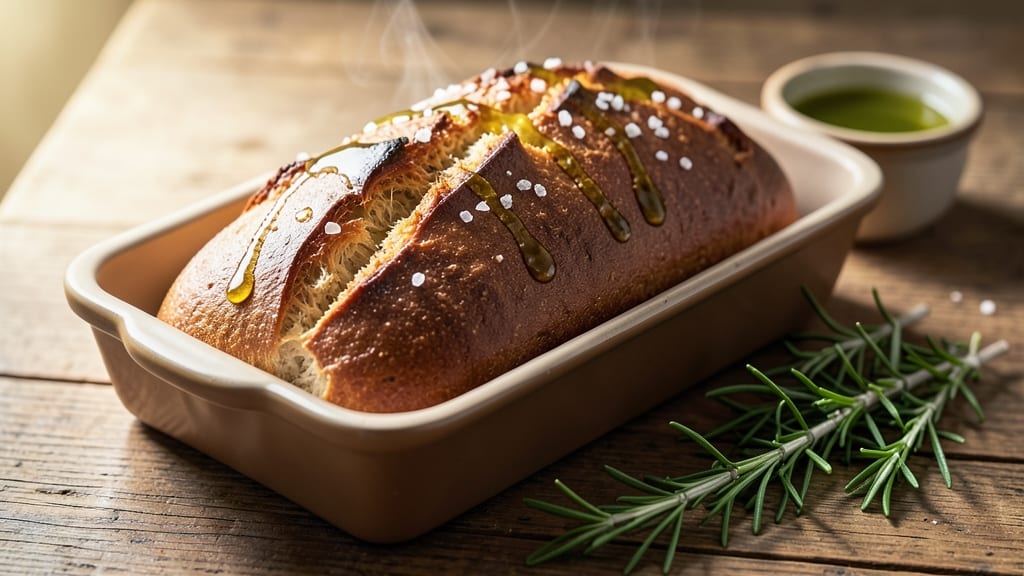
This 500g bread maker recipe delivers a hands-off loaf with a crispy crust and airy interior—no kneading, no fuss, just perfect bread every time. 🌟 The secret lies in precise ingredient ratios and the right machine settings, which transform basic flour into golden, pillowy perfection in under 3 hours.
Whether you're a beginner or seasoned baker, this foolproof method ensures consistent results without the guesswork.
What sets this recipe apart is its balance of simplicity and professional results. You'll use just five core ingredients—flour, water, yeast, salt, and a touch of sugar—plus optional add-ins like seeds or whole wheat.
The bread maker handles all the hard work: kneading, rising, and baking in one seamless cycle. No need for a stand mixer or oven space—just set it, and let the machine do the rest.
The result is a crusty exterior with a tender, open crumb that's ideal for sandwiches, toast, or serving with soups. The dough's texture develops naturally during the machine's kneading phase, creating that signature artisan feel without requiring expert technique.
Even the cooling process is simplified—just remove from the pan and let it rest for 10 minutes before slicing.
For added versatility, try swapping out 20% of the flour for whole wheat or adding seeds for extra texture. Troubleshooting tips cover common issues like dense bread or underbaked loaves, ensuring you'll get it right the first time. Let's get started on your perfect loaf!
Ingredients for 500g bread maker
Five core ingredients plus optional seeds transform your bread maker into artisan-quality loaf magic.
| Ingredient | Amount | Notes |
|---|---|---|
| All-Purpose Flour 🌾 | 3 ½ cups | Spooning into measuring cup |
| Active Dry Yeast 🍞 | ¼ oz | Or 2.25 tsp (1 packet) |
| Granulated Sugar 🍯 | ½ tbsp | Or honey/maple syrup |
| Salt 🧂 | 1 tsp | Diamond Crystal preferred |
| Warm Water 💧 | 1 ¼ cups | 110°F (43°C) ideal |
| Olive Oil 🫒 | 1 tbsp | Extra-virgin preferred |
| Sesame Seeds 🌱 | 2 tbsp | Optional for topping |
| Poppy Seeds 🌱 | 1 tbsp | Optional for topping |
The flour is where it all begins—King Arthur or Gold Medal are my go-tos for consistent results. Bulk bins at Whole Foods often have better quality than pre-packaged, but any all-purpose works. Yeast is the secret to that perfect rise, so check the expiration date—freshness matters. Warm water temperature is critical: too hot kills yeast, too cold slows fermentation. I keep a thermometer handy to hit that 110°F sweet spot every time. For the sugar, white granulated is standard, but honey or maple syrup adds subtle depth if you're feeling adventurous.
No sesame seeds? Sunflower or pumpkin seeds work beautifully for texture. Running low on yeast? Instant yeast works 1:1, but active dry requires proofing first. The olive oil can be swapped for vegetable or canola oil, though extra-virgin adds that subtle richness. Salt choice matters too—Diamond Crystal is less dense than Morton's, so measure carefully. For whole wheat swaps, use substitution ratios from your bread maker manual—too much can make the dough gummy. And if you're short on time, pre-mixed bread flour from the baking aisle simplifies things.
Store flour in an airtight container for up to 6 months to maintain freshness. Yeast keeps in the fridge for 3-4 months and freezes for 6 months—test a pinch in warm water to confirm it's active before using. The dough can be shaped and refrigerated overnight for a more intense flavor, then continue with the bread maker's baking cycle. For best texture, slice after 1 hour of cooling. Leftovers? Toast slices for crispy croutons or freeze for up to 3 months—perfect for sandwiches later.
Why You'll Love This Recipe
- No-Knead Magic: I swear by this—just toss the flour, yeast, sugar, and salt into the bread maker, add warm water, and let it do the work. No rolling, no punching, no mess. Honestly, my hands stay clean while it crafts something that smells like a bakery.
- Sweet-Savory Balance: That pinch of sugar isn’t just for show—it caramelizes just enough to give the crust a subtle sweetness while the salt keeps everything grounded. The yeast wakes up the flour into something light and airy, like a hug for your taste buds.
- Weeknight Wonder: Toss one loaf in the freezer for a lazy morning—just thaw and toast. Or slice it for sandwiches all week. Between us, I’ve fed a crowd with two batches and still had leftovers for days. It’s my go-to when I don’t want to think too hard.
- Pocket-Friendly Staple: Five ingredients, one machine, zero guilt. A 500g batch costs me pennies and stretches farther than store-bought. I’ll be real: my grocery budget thanks me every time I skip the bakery run. Plus, it’s the kind of bread that makes even plain butter taste like a victory.
Step-by-step instructions for perfect bread maker loaf
Follow this precise method to achieve a crusty exterior and airy interior every time.
👨🍳 Step 1: Prepare the Yeast and Warm Water
In a small bowl, combine the 1.25 cups warm water (about 110°F) with the 0.5 tbsp granulated sugar and 0.25 oz active dry yeast. Stir gently with a spoon and let it sit for 5-10 minutes until foamy. You'll see small bubbles forming—this confirms the yeast is active and ready to work.
If the mixture doesn't foam after 10 minutes, your yeast may be dead. In that case, start fresh with new yeast. The warm water should feel comfortable to touch but not hot—yeast dies in water hotter than 120°F. This step is critical for developing the bread's structure and flavor.
👨🍳 Step 2: Mix the Dough Ingredients
In the bread maker pan, combine the 3.5 cups all-purpose flour (spooned into the measuring cup for accuracy), 1 tsp salt, and the yeast mixture. Add the 1 tbsp olive oil and mix briefly with a wooden spoon until everything comes together into a shaggy dough.
Don't overmix here—just combine until the flour is mostly incorporated. The bread maker will do the heavy lifting of kneading later. If the dough feels too dry, add 1 teaspoon warm water at a time until it holds together when pressed. The dough should be soft but not sticky enough to cling to your fingers.
🔪 Step 3: Set Up the Bread Maker
Place the dough in the bread maker pan and select the "Basic White Bread" setting. For a 500g loaf, use the medium or large setting if your machine offers size options. Set the timer for 3 hours—this includes both kneading and baking time.
I like to use the "delay start" feature to begin the process while I prepare dinner. The bread maker will automatically knead the dough for 10-15 minutes during the first part of the cycle, developing gluten for that perfect pillowy crumb. Listen for the kneading cycle—you'll hear the machine working through the dough.
🔥 Step 4: Add Toppings and Bake
When the kneading cycle completes, sprinkle the 2 tbsp sesame seeds and 1 tbsp poppy seeds evenly over the dough. Gently press them into the surface so they adhere well. The seeds will add texture contrast and a nutty flavor that complements the bread's crust.
Start the baking cycle. The bread maker will automatically adjust the temperature to 350-375°F for baking. You'll hear the machine switch from kneading to baking mode—this happens automatically. The bread will bake for about 45-60 minutes, with the crust developing a deep golden brown color.
⏰ Step 5: Cool and Enjoy
When the cycle completes, remove the bread from the pan immediately and place it on a wire rack to cool for 15-20 minutes. This cooling period is essential—it allows the steam inside the bread to escape, preventing a gummy texture. The bread will sound hollow when tapped on the bottom.
Slice the loaf while still slightly warm for the best texture. The exterior should be crisp with a satisfying crunch, while the interior reveals an open crumb structure with even air pockets. Store any leftovers wrapped in a bread bag at room temperature for up to 3 days, or freeze slices for longer storage.
Pro Tips For Making 500g Bread Maker
- WEIGH YOUR FLOUR: Ditch the scoop-and-sweep—this recipe demands precision. A 500g loaf relies on exact ratios, and even 10g extra flour throws off the yeast-to-water balance. Use a digital scale, tap the bowl gently to settle flour, then level with a knife. (Yes, it’s slower, but your crust won’t be dense and sad.)
- PROOF THE YEAST FIRST: Skip the "just toss it in" approach—test your yeast’s liveliness before committing. Mix 1 tsp sugar, 1 tsp yeast, and ¼ cup warm water (105–110°F). Wait 10 minutes: bubbles mean business; silence means your yeast is dead or your water’s too hot. No bubbles? Start over—no amount of kneading fixes this.
- SALT THE WATER, NOT THE DOUGH: Dissolve the salt in the warm water before adding it to the flour. I learned this after three batches where the salt clumped and under-seasoned half the dough. A fully dissolved salt spread evenly = consistent flavor. (Bonus: Your yeast won’t get shocked by dry salt crystals.)
- USE A LIGHT HAND WITH KNEADING: Overworking the dough in a bread maker is a fast track to gummy bread. Once the machine starts, let it do the heavy lifting—just 3–5 minutes of manual stretching and folding before adding to the pan is enough. The machine’s kneading cycle will handle the rest without overdeveloping the gluten. (Trust me, your arms will thank you.)
Flavor customization for these flavors
Sweet Variations
Add ½ cup raisins or chopped dried cranberries during the mixing step for a sweet loaf that's perfect with cheese or jam. For extra richness, replace 1 tbsp olive oil with 1 tbsp honey—this creates a subtle caramelized flavor.
I love this version for breakfast toast with butter and cinnamon. 🍯
Herb & Garlic Twist
Mix in 1 tbsp dried rosemary or 2 tbsp minced fresh garlic with the flour for a savory loaf that pairs beautifully with soups or roasted meats. For a Mediterranean touch, add 1 tsp dried oregano and ½ tsp red pepper flakes.
These herbs infuse the dough during kneading, creating layers of flavor. 🌿
Whole Wheat Boost
Replace 1 cup all-purpose flour with 1 cup whole wheat flour for added fiber and nuttiness. To maintain a light texture, reduce the water by 2 tbsp—whole wheat absorbs moisture differently.
This version has a denser crumb but still delivers that satisfying crust. I often toast slices for open-faced sandwiches. 🌾
Seeded Crunch
Double the seed topping to 4 tbsp total seeds (mix sesame, poppy, and sunflower) for maximum texture. For a savory-sweet combo, add 1 tbsp flaxseeds and 1 tbsp pumpkin seeds. Press seeds firmly into the dough before baking—they'll create delightful crunch with every bite. 🌱
Cheesy Pull-Apart
Stir in ½ cup shredded cheddar cheese with the flour for a pull-apart loaf that's perfect for sharing. For extra decadence, add ¼ cup grated Parmesan. The cheese melts during baking, creating pockets of gooey goodness. This version is ideal for appetizers or hearty sandwiches. 🧀
Spiced Warmth
Add ½ tsp ground cinnamon and ¼ tsp nutmeg to the dough for a lightly spiced loaf that works well with butter or jam. For warmth, include ¼ tsp cardamom—this creates a subtle, aromatic profile. The spices blend seamlessly into the dough during kneading. 🌶️
Nutrition facts
Frequently asked questions
Can I make this 500g recipe in a smaller bread maker pan?
The recipe is designed for a standard medium-sized pan that yields about 500g. If your machine has a smaller pan, reduce the flour to 3 cups and water to 1 cup while keeping other ingredients proportional. The dough may rise differently, so monitor the cycle closely. For best results, check your bread maker's manual for size-specific adjustments.
Why did my bread turn out dense instead of light and airy?
Dense bread often results from overmixing, expired yeast, or incorrect water temperature. Use 110°F water, let the yeast activate fully, and avoid handling the dough once in the machine. If your bread maker has a "light" or "crusty" setting, try switching to the opposite—sometimes the cycle needs adjustment for your specific machine.
How do I adjust this recipe for a whole wheat loaf?
Replace 1 cup all-purpose flour with 1 cup whole wheat flour and reduce water by 2 tbsp—whole wheat absorbs moisture differently. For better rise, add ½ tsp extra sugar to feed the yeast. The texture will be slightly denser but still delicious when toasted. Let the dough knead longer if your machine allows.
Can I use this dough to make dinner rolls instead?
Yes! Divide the dough into 8 equal portions and shape into balls. Place them in a greased pan, let rise for 1 hour (covered), then bake at 375°F for 12-15 minutes until golden. For extra flavor, brush with melted butter after baking. The bread maker's kneading ensures perfect roll texture without manual effort.
What if my bread maker doesn't have a "Basic White Bread" setting?
Use the "White Bread" or "Standard" setting for 3 hours total time. If your machine has separate knead/bake cycles, knead for 10 minutes first, then let rise for 1 hour before baking on "Medium" heat. Most machines auto-adjust—just monitor the dough's progress through the glass window.