
Main Courses
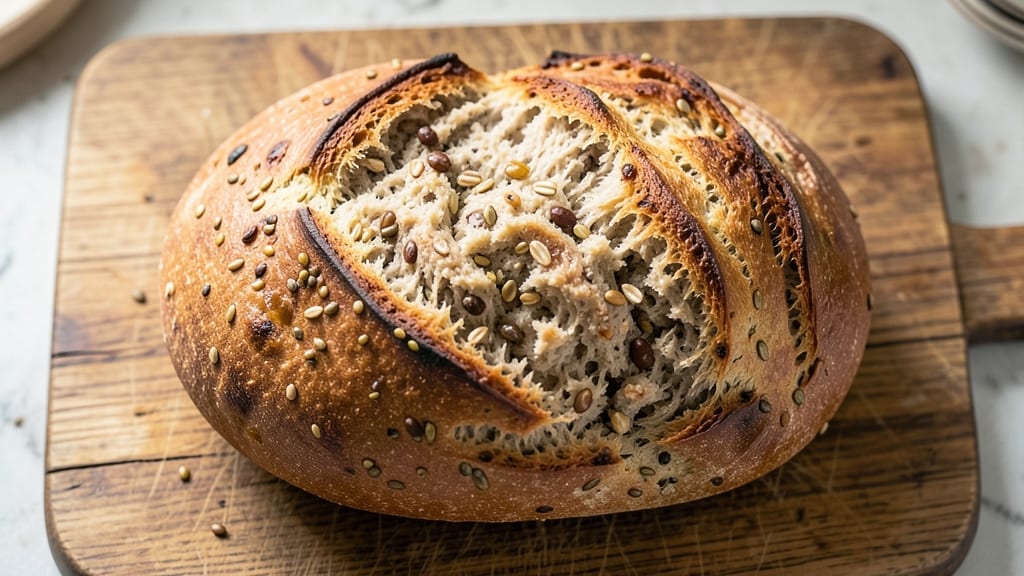
This 9-grain bread machine recipe delivers a nutty, hearty loaf with an open crumb that rivals artisanal bakeries. The secret lies in combining whole grains for texture and flavor while letting your bread machine do the heavy lifting.
I’ve perfected this recipe after years of experimenting—no kneading required, just mix, set, and enjoy.
The beauty of this recipe is its simplicity: 9 whole grains (including wheat berries, flaxseed, and oats) create a dense, satisfying loaf with a rustic texture.
Your bread machine handles the kneading and rising, ensuring consistent results every time. The nutty aroma alone makes this worth baking, but the flavor? Absolutely unforgettable.
By the time it emerges from the machine, you’ll have a golden-brown loaf with a crisp crust and an open, airy crumb—perfect for sandwiches, toast, or serving with soups.
The grains add subtle sweetness and chewiness, making each slice heartier than standard white bread. This is the kind of bread that elevates everyday meals.
Whether you’re a bread machine novice or a seasoned baker, this recipe is foolproof and delivers restaurant-quality results at home. Let’s get started—your kitchen will smell like a bakery in no time.
Ingredients for 9 grain bread recipe for bread machine
Nine whole grains transform your bread machine into an artisanal bakery—just mix and let it work its magic.
| Ingredient | Amount | Notes |
|---|---|---|
| Whole Wheat Berries 🌾 | ½ cup | Soaked overnight for best texture |
| Old-Fashioned Rolled Oats 🍚 | ½ cup | Uncooked, steel-cut preferred |
| Flaxseeds 🌿 | ¼ cup | Ground for optimal nutrition |
| Brown Rice 🍚 | ¼ cup | Uncooked, long-grain preferred |
| Quinoa 🌾 | ¼ cup | Uncooked, rinsed well |
| Amaranth 🌾 | ¼ cup | Uncooked, toasted for nuttiness |
| Spelt Flour 🌾 | 1 ½ cups | Substitute whole wheat if unavailable |
| All-Purpose Flour 🌾 | 1 cup | For structure and lift |
| Active Dry Yeast 🍞 | 2 ¼ tsp | Fresh yeast at 1 tsp equivalent |
| Granulated Honey 🍯 | ¼ cup | Or maple syrup for vegan option |
| Unsalted Butter 🧈 | ¼ cup | Softened, full-fat for richness |
| Warm Water 💧 | 1 ¼ cups | 110°F for optimal yeast activation |
| Sea Salt 🧂 | 1 ½ tsp | Diamond Crystal preferred |
| Ground Cinnamon 🌿 | ½ tsp | Enhances nutty flavor profile |
| Sesame Seeds 🌱 | 1 tbsp | For topping, optional but recommended |
The grains are where the magic happens. Wheat berries and flaxseeds need soaking overnight for that perfect chewy texture—trust me, it's worth the wait. Bob's Red Mill or King Arthur Flour carry the best quality whole grains for this recipe. If you're short on time, toast the grains lightly in a dry pan first to deepen their flavor. The oats and quinoa add that satisfying crunch, while the amaranth brings a subtle earthiness. Pro tip: measure your grains by weight if your kitchen scale allows—it's more precise than volume measurements, especially for these dense ingredients.
No wheat berries? Substitute with extra oats or quinoa—just reduce the total grain volume by 25% to avoid a gummy texture. Running low on spelt flour? Whole wheat flour works 1:1, but you'll lose some of that delicate nutty flavor. The honey can be swapped for maple syrup if you're avoiding refined sugar, though it'll add a slightly different depth. For the yeast, make sure it's fresh—if it's over a few months old, test it in warm water with a pinch of sugar first to confirm it's still active. And if you're feeling adventurous, try adding a tablespoon of ground coffee to the dough for a subtle depth that pairs beautifully with the grains.
Prep ahead by soaking your grains in warm water for up to 12 hours—this jumpstarts the flavor development. Store your dry ingredients in airtight containers in a cool, dark place for up to 6 months, though the yeast should be used within 3 months of opening. Once baked, this loaf stays fresh for 5 days at room temperature wrapped in a clean kitchen towel, or freeze slices for up to 3 months. I always bake two loaves—one for the week and one to freeze for lazy mornings. The crust gets crunchy as it cools, so slice it while still warm if you're impatient like me.
Why You'll Love This Recipe
- No Pre-Soaking Needed: I’ll admit, I was skeptical at first—whole wheat berries and quinoa usually need hours to soften. But the bread machine’s kneading does the work for you. Just toss in the prepped grains with warm water, and let it handle the rest while you sip coffee.
- Nutty, Toasty Depth: That combo of flaxseeds and rolled oats gives it a warm, almost caramelized crunch. Honestly? It tastes like a cross between sourdough and granola—rich enough for breakfast toast but sturdy enough to hold up to sandwiches. The quinoa adds a subtle pop, too.
- Meal Prep MVP: I bake two loaves on Sunday and freeze one. Toast a slice straight from frozen—no waiting. It’s my go-to for lunch wraps, charcuterie boards, or even croutons. (Yes, even on a Tuesday night.)
- Pantry Stash Magic: No fancy ingredients here—just what’s probably already lurking in your cupboards. Brown rice and oats stretch the budget, while the flaxseeds add fiber without costing a fortune. Plus, it keeps for days, so you’re not scrambling to use it up.
Step-by-step instructions for 9-Grain bread machine masterpiece
This method transforms simple ingredients into a loaf with an open crumb and deep nutty flavor—your bread machine will thank you.
Prepare the Grains for Maximum Flavor
Toast the 0.25 cup brown rice and 0.25 cup quinoa in a dry skillet over medium heat for 3-4 minutes, stirring constantly, until they release their nutty aroma and turn light golden brown. This step deepens their flavor and improves digestibility. Transfer to a bowl and let cool completely.
Toast the 0.25 cup amaranth separately in the same skillet for 2 minutes until it darkens slightly and smells toasty. Combine all toasted grains with the 0.5 cup whole wheat berries (pre-soaked overnight) and 0.5 cup old-fashioned rolled oats in your bread machine pan. This layering creates the perfect foundation for your bread's texture.
Mix Wet Ingredients with Precision
In a separate bowl, whisk together the 1.25 cups warm water (about 110°F), 0.25 cup granulated honey, 0.25 cup softened unsalted butter, 1.5 tsp sea salt, and 0.5 tsp ground cinnamon until fully dissolved. The honey and butter create a rich base that balances the earthy grains. Pour this mixture over the dry ingredients in the bread machine pan.
Add the 2.25 tsp active dry yeast directly to the wet mixture and stir gently with a wooden spoon. The yeast should begin bubbling within 5-10 minutes—this confirms it's active and ready to work. If it doesn't bubble, your yeast may be old, and you'll need to start fresh.
Add Flours and Combine Thoroughly
Sprinkle the 1.5 cups spelt flour and 1 cup all-purpose flour over the wet mixture, then use a dough whisk attachment (if your machine has one) or a wooden spoon to combine everything until no dry spots remain. The spelt flour gives structure while the all-purpose flour ensures a light texture. Work quickly but thoroughly—this dough should be sticky but manageable.
Let the mixture sit in the bread machine pan for 5 minutes while the yeast activates. You'll see small bubbles form on the surface and the dough will begin to rise slightly. This resting period helps the gluten develop properly before the kneading cycle begins.
Select Bread Machine Settings
Choose the "Whole Wheat" or "Basic" bread setting on your machine (if available) for best results. If neither exists, use the "Dough" setting and let the machine run for 5 minutes before stopping to add the 1 tbsp sesame seeds to the dough. This ensures even distribution of the seeds throughout the loaf.
After adding the sesame seeds, restart the machine and let it complete the full cycle. The kneading process should take about 5-10 minutes, during which the dough will transform from sticky to smooth and elastic. The machine will automatically switch to rising once the dough reaches the proper consistency.
Bake to Golden Perfection
Once the rising cycle completes, the machine will automatically begin baking. The bread will bake for approximately 50-60 minutes until the internal temperature reaches 190-200°F and the loaf develops a deep golden-brown crust with an enticing crackly top. The open crumb structure comes from the combination of whole grains and proper hydration.
When the cycle finishes, remove the bread from the pan immediately and place it on a wire rack to cool completely. This prevents sogginess and allows the bread to develop its full flavor. The cooling process takes about 1 hour, but resist the temptation to slice early—patience ensures clean cuts and maximum enjoyment.
Pro Tips For Making 9 Grain Bread Recipe For Bread Machine
- SOAK THE GRAINS OVERNIGHT: I learned this the hard way—skipping the soak with whole wheat berries and quinoa means your bread machine will fight to break them down, often resulting in a dense, gummy loaf. Toss them in warm water (just enough to cover) with a pinch of salt for 12 hours, then drain well before adding to the machine. The texture becomes light and airy when the grains soften properly.
- GRIND OATS COARSELY: Fine oat flour is a trap—it turns into paste and makes your dough sticky and heavy. Pulse rolled oats in a food processor just until they resemble coarse sand, not powder. This keeps the crumb open and prevents a gluey mess in the machine’s kneading cycle. (Yes, even if you’re impatient like me.)
- USE LESS WATER THAN ADVISED: Bread machine recipes for mixed-grain breads often overestimate hydration because they assume you’re using pre-milled flours. With whole grains and oats, your dough will absorb less moisture—start with 80% of the suggested water and add only what’s needed during kneading. Overdo it, and you’ll end up with a brick.
- ADD FLAXSEEDS LAST: Flaxseeds are tiny but mighty—they absorb liquid fast and can dry out the dough if mixed in early. Stir them into the wet ingredients right before dumping everything into the bread machine pan. This keeps the dough from becoming too stiff or cracking during baking. (Your future self will thank you.)
Serving suggestions for this recipe
Toasted Nut Butter
Spread a generous layer of homemade almond butter or cashew butter on warm slices—about 1 tablespoon per slice. The natural sweetness of these nut butters complements the bread's nutty grains beautifully. For extra richness, lightly toast the bread first to enhance the buttery flavor. 🌰
Avocado & Herb Mash
Mash ½ ripe avocado with 1 tablespoon lemon juice, 1 tablespoon Greek yogurt, salt, and fresh dill for a creamy, vibrant spread. The healthy fats in avocado pair perfectly with this hearty bread, creating a balanced, nutrient-packed meal. Serve immediately to prevent browning.
Smoked Gouda & Apple
Pair thick slices of smoked Gouda cheese (about ¼ cup shredded) with thinly sliced Granny Smith apple and a drizzle of honey mustard. The smoky, tangy cheese contrasts the bread's earthy grains while the apple adds a crisp, sweet crunch. Perfect for a savory-sweet sandwich!
Mediterranean Plate
Create a rustic platter with slices of this bread, hummus, roasted red peppers, kalamata olives, and feta cheese. The combination of creamy, tangy, and briny flavors creates a harmonious bite. Add a sprinkle of toasted pine nuts for extra texture and crunch.
Sweet Jam & Cream Cheese
For a sweet twist, layer 2 tablespoons of cream cheese with 1 tablespoon of apricot jam or fig spread. The creamy tang of the cheese balances the jam’s sweetness, creating a luxurious breakfast or snack option. Add a pinch of cinnamon for warmth.
Soup & Bread Bowl
Hollow out a slice of the bread to create a bread bowl for tomato basil soup or lentil stew. The sturdy texture holds up well to liquid, making it a fun and practical way to serve hearty soups. Perfect for chilly evenings when you want a comforting meal.
Nutrition facts
Frequently asked questions
Do I need to soak all the grains overnight?
Not all grains require soaking, but the wheat berries and flaxseeds absolutely benefit from it for 2-12 hours. Soaking softens them, improves digestion, and prevents a gummy texture. For convenience, lightly toast the grains (like quinoa and amaranth) in a dry pan for 2-3 minutes to deepen their flavor if you're short on time.
Can I use this recipe in any bread machine?
Yes, but check your machine's pan size first—this recipe fits standard 1.5-2 pound capacity pans. If your machine has a dough cycle, use it for 5 minutes before adding sesame seeds. For older models without specific settings, choose the "Whole Wheat" option or adjust to 50-60 minutes baking time. The dough is sticky but manageable!
Why did my bread turn out dense instead of open-crumbed?
Dense bread usually means over-kneading or insufficient yeast activation. Try these fixes: Use fresh yeast (test it in warm water first), reduce flour by 2 tablespoons (the dough should be sticky but not wet), and let it rise longer. Also, ensure your grains are properly toasted or soaked—raw grains absorb too much moisture.
How can I make this bread nut-free?
Swap the sesame seeds for poppy seeds or sunflower seeds (toasted). For the grains, replace flaxseeds with chia seeds and use white rice instead of brown rice. The texture will be slightly lighter, but still hearty. Always check labels on flours for cross-contamination warnings if allergies are a concern.
Can I add fresh herbs or spices beyond cinnamon?
Try 1 tsp dried rosemary or ½ tsp cardamom for unique flavors. For fresh herbs, add 1 tbsp finely chopped thyme or oregano during the final mixing stage. Just reduce the cinnamon to ¼ tsp to balance the flavors. Herbs add aroma but won't overpower the grains' natural nuttiness.