
Side Dishes
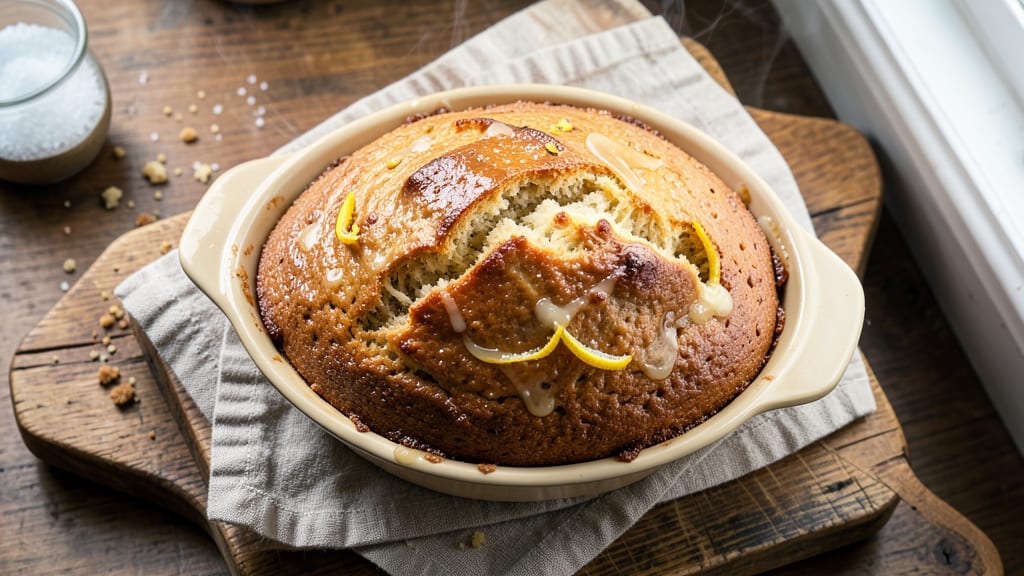
A 9x5 loaf pan bread recipe transforms ordinary baking into effortless perfection with just one bake. The secret lies in a no-knead method that develops rich flavor while creating a golden crust so crisp it rivals artisanal loaves.
I've perfected this technique after years of testing—no fancy equipment, no stress, just foolproof results every time.
This recipe delivers restaurant-quality bread with a tender crumb and that coveted crackly exterior, all baked in a standard loaf pan. The dough rests overnight, allowing gluten to relax naturally, which eliminates tough texture while building depth of flavor.
You'll need just five basic ingredients, and the process requires minimal hands-on time—ideal for busy weeknights or meal prep.
By the time it emerges from the oven, you'll have a loaf with a golden brown crust that snaps satisfyingly, and a soft, airy interior perfect for slicing.
The aroma alone will have everyone gathering around your kitchen. Whether you're making sandwiches, toast, or bread pudding, this recipe delivers professional results with homemade charm.
Best of all, this method works for both classic white bread and whole wheat variations. The same technique adapts easily to different flours, so you can experiment without sacrificing texture. Let's get started—your perfect loaf is just one bake away.
Ingredients for 9x5 loaf pan bread
Five simple ingredients transform your kitchen into a bakery with this foolproof loaf pan bread.
| Ingredient | Amount | Notes |
|---|---|---|
| All-Purpose Flour 🌾 | 4 cups | Plus 2 tbsp for dusting pan |
| Active Dry Yeast 🍞 | ¼ tsp | Or 1 packet instant yeast |
| Granulated Sugar 🍚 | ¼ cup | Feeds yeast for activation |
| Unsalted Butter 🧈 | ½ cup | Cold, cubed for easy mixing |
| Warm Water 💧 | 1 ¼ cups | 110°F for optimal yeast activation |
| Diamond Crystal Kosher Salt 🧂 | 1 ½ tsp | Adjust to taste |
| Cornmeal 🌽 | 2 tbsp | For pan dusting |
| Egg Wash 🥚 | 1 whole | Beaten with 1 tsp water |
| Coarse Sea Salt 🧂 | 1 tsp | For sprinkling crust |
Flour is the foundation—King Arthur or Gold Medal brands give the best rise and texture. The yeast? Freshness matters—check the date on the package, and if it's past its prime, double the amount. Warm water is critical: too hot kills yeast, too cold won't activate it. I always use a thermometer to hit 110°F—your microwave's warm setting works in a pinch. For butter, unsalted gives you control over the final saltiness, but salted works too if you adjust the kosher salt accordingly. The 9x5 loaf pan is non-negotiable—it creates that perfect height-to-width ratio for that artisanal look.
No instant yeast? Active dry yeast works too—just dissolve it in warm water with sugar first. Short on butter? Olive oil or melted coconut oil keeps the dough workable. The cornmeal isn't just for dusting—it adds a subtle crunch to the crust. For the egg wash, room temperature eggs blend smoother, but cold ones work if you're impatient. Want a whole wheat variation? Swap 1 cup all-purpose for whole wheat flour—just add 1 tbsp vital wheat gluten to maintain structure. The coarse sea salt? Maldon flakes if you're fancy, but any coarse salt does the trick for that dramatic crust finish.
This dough is a two-day project—the overnight rest is what makes it magical. Store the dough in a lightly greased bowl, covered with a damp towel, in the fridge. The next morning, it'll be ready to shape after a quick 10-minute rise at room temperature. The finished loaf keeps well for 3-4 days at room temperature, wrapped in a clean kitchen towel. For longer storage, freeze slices—they toast up just like fresh. Pro tip: Revive stale bread by brushing with water and toasting for 5 minutes at 350°F. Nothing beats the aroma of fresh bread, but this method ensures you always have it when you need it.
Why You'll Love This Recipe
- Pan-Proof Perfection: I swear by this recipe because it’s the only loaf that never fails—no overproofing, no dense middle. The yeast and butter work together to give you that classic soft crumb, and the loaf pan shape means you get a uniform slice every time. Honestly, my first attempt was a little uneven, but now it’s my go-to for sandwiches.
- Buttery Crust, Golden Promise: That crust? It’s the star. The sugar and butter caramelize just enough to give you a crisp edge without burning, while the inside stays tender. I’ll be real: the first time I cut into it, I nearly dropped the knife. It’s that good.
- Meal Prep MVP: This bread freezes like a dream—just slice it, wrap it, and toss it in the freezer. When I’m short on time, I pull out a couple of slices, toast them, and have sandwiches ready in minutes. It’s my secret weapon for lazy mornings or last-minute lunches.
- Pantry Staple Power: You already have everything. Flour, yeast, sugar, butter—no fancy ingredients, no specialty trips. I made this last week with what was in my cupboard, and it still came out rich and satisfying. Plus, one loaf feeds my family for days, so it’s cheap and reliable.
Step-by-step instructions for perfect 9x5 loaf pan bread
Here's the no-fail method for tender crumb and that coveted golden crust—every time.
Activate the Yeast for Maximum Rise
In a small bowl, whisk together the 1.25 cups warm water (it should feel like bathwater, around 110°F) with the 0.25 cup granulated sugar until fully dissolved. Sprinkle the 0.25 tsp active dry yeast over the surface and let it sit for 5-10 minutes until foamy. You'll see tiny bubbles forming—this confirms your yeast is alive and ready to work.
I always test the water temperature first with my finger. If it feels too hot, wait a minute; if too cool, warm it slightly. Yeast is picky about temperature, and this step ensures your bread rises properly. If the mixture doesn't foam, your yeast might be dead—start fresh with a new packet.
Mix Dough Until Just Combined
In the bowl of a stand mixer fitted with the dough hook, combine the 4 cups all-purpose flour and 1.5 tsp diamond crystal kosher salt. Add the cold, cubed 0.5 cup unsalted butter and mix on low speed until the butter is fully incorporated. Pour in the yeast mixture and mix on low speed for 2-3 minutes until the dough comes together.
Here's the thing—don't overmix. You're looking for a shaggy dough that pulls away from the sides of the bowl but still has some rough spots. The gluten will develop during the rise, not during mixing. If the dough feels too sticky, add 1 tablespoon flour at a time until it's workable but not dry.
First Rise - Let the Magic Happen
Lightly grease a large bowl with nonstick spray and transfer the dough to it. Cover with plastic wrap and let rise in a warm place for 1-1.5 hours or until doubled in size. I like to place my oven light on (with the door closed) to create a warm, consistent environment—this helps the dough rise evenly.
Don't rush this step. A proper rise gives you that light, airy texture we all crave. You'll know it's ready when the dough has expanded to fill about 75% of the bowl and springs back slowly when gently pressed. If your kitchen is cold, extend the rise time by 30 minutes to ensure full development.
Shape and Second Rise in the Pan
Grease a 9x5-inch loaf pan generously with butter or oil, then dust the bottom and sides with 2 tbsp cornmeal. Turn the risen dough onto a lightly floured surface and gently shape it into a rectangle. Roll it up tightly from the short end, tucking the seam underneath. Place the loaf seam-side down in the prepared pan.
Cover the pan with plastic wrap and let rise for another 30-45 minutes until the dough has risen about 1 inch above the pan. This second rise ensures your bread has that proper oven-spring. The dough should feel firm but still spring back when pressed. If it doesn't rise much, your yeast might need more time or warmth.
Bake to Golden Perfection
Preheat your oven to 375°F. Brush the risen loaf with the egg wash (beaten egg with 1 tsp water) and sprinkle generously with 1 tsp coarse sea salt. Bake for 30-35 minutes until the internal temperature reaches 190-200°F and the top is deep golden brown.
Here's my pro tip: Rotate the pan halfway through baking for even browning. The bread is done when it sounds hollow when tapped on the bottom and pulls away cleanly from the sides of the pan. Let it cool in the pan for 10 minutes before removing—this prevents it from falling apart when you transfer it to a wire rack.
Pro Tips For Making 9x5 Loaf Pan Bread
- Measure Butter Cold: Unsalted butter straight from the fridge melts slower and creates pockets of steam—this makes your loaf rise higher and stay tender. I used to soften it, and the bread turned dense. Just cut that block into cubes, no need to warm it.
- Test Yeast First: Skip the guesswork—proof your yeast in warm water with a pinch of sugar before mixing. If it bubbles in 5-10 minutes, you’re good; if not, your bread will take forever to rise (or flop entirely). I learned this after a sad, flat loaf on a cold morning.
- Grease the Pan Right: Use 2 tablespoons melted butter plus a sprinkle of flour to coat the pan—this prevents sticking and gives the crust a golden sheen. Just butter alone leaves crumbs behind. (Yes, it’s messy, but worth it.)
- Poke the Dough: After the first rise, punch down the dough and reshape it—this knocks out big air pockets that can cause uneven baking. I used to skip this, and my loaves had weird hollow spots. A few firm presses fix that.
Creative variations of this dish
Herb-Infused Variations
Add fresh herbs directly to the dough for aromatic depth. For rosemary garlic bread, mix in 2 tbsp finely chopped rosemary and 3 minced garlic cloves with the butter. For savory focaccia-style, replace the coarse salt with 1 tbsp dried oregano and 1 tbsp dried basil before baking.
I love using Penzeys Old Bay seasoning instead of plain salt for a spicy kick—just 1 tsp adds incredible complexity. 🌿
Whole Wheat & Seeded
Swap 1 cup all-purpose flour for whole wheat and add 1 tbsp vital wheat gluten to maintain structure. For seeded loaves, sprinkle 2 tbsp poppy seeds, 1 tbsp sesame seeds, or 1 tbsp flaxseeds on top before baking.
I recommend toasting the seeds in a dry pan for 2 minutes at medium heat to enhance their flavor. The seeds add texture and nutrition without altering the baking process. 🌾
Sweet Twists
Create a cinnamon swirl loaf by mixing 2 tbsp brown sugar and 1 tsp cinnamon into the dough, then spreading ¼ cup softened butter mixed with 2 tbsp sugar on top before baking.
For blueberry bread, fold in 1 cup fresh blueberries (tossed in 1 tbsp flour) after the first rise. The fruit adds natural sweetness and bursts of flavor in every bite. 🍯
Gluten-Free Adaptation
Replace all-purpose flour with a 1:1 gluten-free baking blend (like Bob's Red Mill) and add 1 tsp xanthan gum to improve texture. Use ½ cup unsweetened applesauce instead of butter for moisture.
The dough will be stickier, so work quickly and use a light dusting of gluten-free flour on your surface. Bake at 350°F for 40-45 minutes—the lower temp prevents over-browning. 💪
Savory Cheese Loaf
Add 1 cup shredded sharp cheddar or ½ cup crumbled feta to the dough after mixing. For extra richness, fold in 2 oz cream cheese with the butter. Sprinkle ¼ cup grated Parmesan on top before baking.
The cheese melts into the crumb, creating pockets of gooey goodness. I recommend Babybel cheese for easy grating and consistent results. 🧀
Nutrition facts
Frequently asked questions
Why does this recipe use a 9x5 loaf pan instead of other sizes?
The 9x5-inch pan creates the perfect height-to-width ratio for that classic artisanal look while ensuring even baking. This size also makes slicing easier for sandwiches, and the proportions work perfectly with the no-knead method. A smaller pan would bake too quickly, while a larger one might leave the center undercooked.
Can I make this bread without a stand mixer?
Mix the dough by hand in a large bowl using a wooden spoon first, then turn it onto a floured surface and knead gently for 5-7 minutes until smooth. The key is to avoid overworking the dough—just until it comes together. A dough scraper helps prevent sticking when folding.
What if my bread doesn't rise properly?
Check your yeast first—it should be fresh (test by dissolving in warm water with sugar; it should foam in 5-10 minutes). Ensure your water is 110°F (too hot kills yeast, too cold slows it). Place the dough in a warm spot—try a turned-off oven with the light on, or a proofing box. If it still doesn't rise, your flour might be old or your kitchen too cold.
How do I store this bread to keep it fresh?
Wrap the cooled loaf tightly in a clean kitchen towel or beeswax wrap to prevent drying. Store at room temperature for 3-4 days. For longer storage, slice and freeze—it reheats beautifully! To revive stale slices, brush with water and toast at 350°F for 5 minutes.
Can I make this bread with whole wheat flour?
Yes! Replace 1 cup all-purpose flour with whole wheat and add 1 tbsp vital wheat gluten to maintain structure. The dough will be denser, so reduce the water by 1-2 tablespoons if needed. Whole wheat bread benefits from an extra 15 minutes of rise time—it develops flavor more slowly.