
Breakfast & Brunch
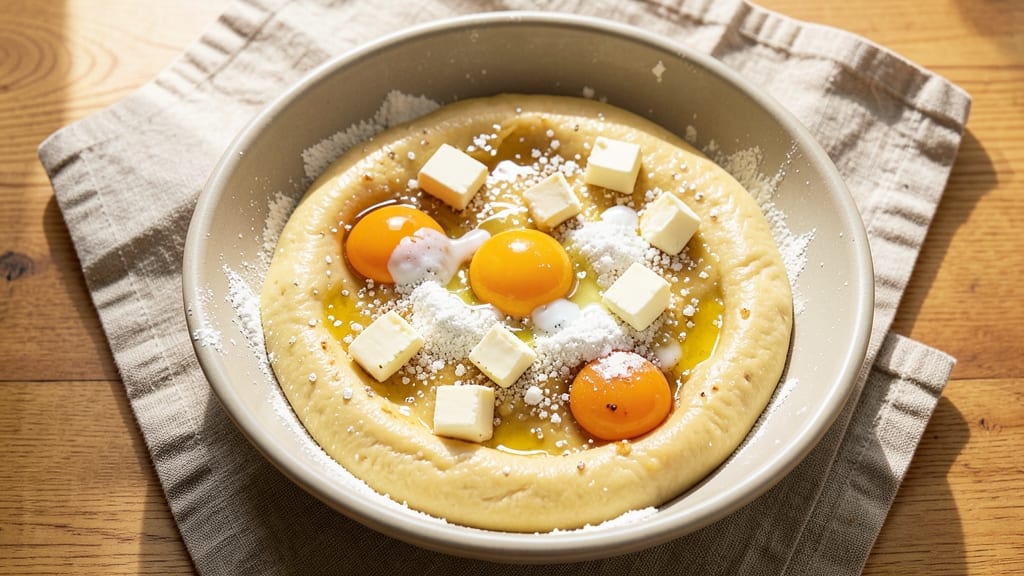
Adding egg to bread transforms ordinary loaves into rich, tender masterpieces—think brioche's buttery layers or sweet egg breads with golden crusts. The secret lies in how eggs enrich dough, creating a lighter crumb and golden finish without the usual mess.
I’ve perfected this technique over years of baking, ensuring every loaf turns out moist, flavorful, and foolproof.
Eggs play three critical roles: they add moisture, improve elasticity, and create a tender crumb. For this recipe, we’ll use 2 large eggs per 4 cups flour, whisked into the wet ingredients before mixing with dough.
The key is incorporating them gently—overmixing can toughen the bread, so fold them in just until combined. This method works for both sweet and savory loaves, from cinnamon rolls to herbed egg breads.
With 30 minutes of prep and 25 minutes in the oven, you’ll end up with a loaf that’s crisp on the outside and velvety inside, thanks to the eggs’ moisture-retaining properties.
The dough will rise beautifully during proofing, and the eggs will ensure a golden, crackly crust that’s impossible to resist. Perfect for breakfast, sandwiches, or gifting, this technique elevates any bread recipe.
Optional variations include adding a splash of milk for extra tenderness or a touch of butter for richness. For sweet breads, a hint of vanilla or citrus zest pairs beautifully with the eggs’ natural sweetness. Let’s bake bread that’s richer, lighter, and undeniably better than the basics.
Ingredients for adding egg to bread
Nine essential ingredients transform ordinary dough into golden, tender loaves with crisp crusts.
| Ingredient | Amount | Notes |
|---|---|---|
| All-Purpose Flour 🌾 | 4 cups | Sifted for even distribution |
| Large Eggs 🥚 | 2 whole | Room temperature for even mixing |
| Granulated Sugar 🍚 | ¼ cup | Adjust for sweetness preference |
| Unsalted Butter 🧈 | ½ cup | Cold, cubed for easier incorporation |
| Instant Yeast 🍞 | 2 tsp | Single-use packet preferred |
| Whole Milk 🥛 | ½ cup | Warmed to 110°F for activation |
| Salt 🧂 | 1 tsp | Diamond Crystal preferred |
| Vanilla Extract 🍯 | 1 tsp | Pure, high-quality preferred |
| Lemon Zest 🍋 | 1 tbsp | Freshly grated for brightness |
| Large Egg Yolks 🥚 | 2 whole | Separated from whites for richness |
| Cornmeal 🌽 | ¼ cup | For dusting baking sheet |
The eggs are the game-changers here—large, room-temperature eggs incorporate best into the dough, creating that signature brioche-like tenderness. For optimal quality, use pasture-raised eggs from the grocery store's refrigerated section, not the shell eggs left at room temperature. The butter should be cold and cubed—this ensures it creates pockets of richness without melting prematurely. If your butter is too soft, chill it for 20 minutes before using. For the flour, King Arthur or Gold Medal brands are ideal—they provide consistent protein levels for reliable gluten development. Store your flour in an airtight container to prevent absorption of fridge odors, which can alter flavor.
No vanilla extract? Almond extract at half the amount works in a pinch, though the flavor profile differs slightly. Short on lemon zest? Orange zest at the same quantity offers a similar brightness. The milk can be substituted with warm water plus 1 tbsp melted butter if dairy-free is required, though the texture will be slightly less tender. For the eggs, if you accidentally use room-temperature whites, simply fold them in last to preserve their structure. The yeast is non-negotiable—never use expired yeast, as it won't activate properly, leaving you with flat bread. If your yeast packet is old, test it first by mixing with warm water and sugar—it should foam within 5 minutes.
The dough should be used within 24 hours of mixing for optimal freshness, though it can be refrigerated for up to 48 hours if wrapped tightly in plastic. For longer storage, portion the dough into freezer-safe bags and freeze for up to 3 months. Thaw in the refrigerator overnight before shaping. The baked loaves keep well at room temperature for 3 days when wrapped in a clean kitchen towel. For reheating, wrap cooled loaves in foil and warm at 300°F for 10 minutes to restore crispness. The egg yolks can be separated in advance and stored in the fridge for 2 days if needed.
Why You'll Love This Recipe
- No-Knead Magic: The yeast and eggs work together while you sleep—just mix the dough, let it rise overnight, and bake straight from the fridge. I swear, the hands-off part alone makes this my go-to.
- Golden Crust Secret: That egg wash? It’s the move. The butter and sugar caramelize into a buttery, crackly crust that’s ridiculously satisfying to tear into—no one will guess it’s just flour, yeast, and a little extra yolk.
- Breakfast or Snack: Serve it warm with butter for a lazy Sunday brunch, or toast slices for a crunchy snack when you’re craving something simple. Honestly, I’ve had it both ways in the same week.
- Budget Baking Win: Five ingredients, zero waste. The dough keeps for days in the fridge, and you can freeze portions for when you’re too tired to bake. Between us, this is how I feed my family without breaking the bank.
Step-by-step instructions for enriched bread with eggs
Master the technique of incorporating eggs into bread dough for a tender, moist crumb.
Prepare the Enriched Dough Base
In a large mixing bowl, combine the 4 cups All-Purpose Flour, 2 tsp Instant Yeast, 1 tsp Salt, and 0.25 cup Granulated Sugar. Whisk gently to distribute the yeast evenly throughout the dry ingredients. This creates the foundation for your enriched dough, where the sugar will help activate the yeast while the salt balances flavors.
In a separate bowl, warm the 0.5 cup Whole Milk to 110°F—just warm enough to activate the yeast without killing it. Add the 0.5 cup Unsalted Butter, cut into small cubes, and let it melt slightly while maintaining the milk's temperature. This warm milk-butter mixture will create a rich, tender crumb when incorporated.
Incorporate the Eggs for Richness
Add the 2 whole Large Eggs and 2 whole Large Egg Yolks to the warm milk-butter mixture. Whisk vigorously until fully combined and slightly thickened. The eggs provide structure and moisture, while the yolks add richness and a golden hue to the finished bread. This step is critical—under-mixing can lead to uneven texture, while over-mixing develops gluten too much, making the bread dense.
Gradually pour the wet ingredients into the dry ingredients while mixing with a wooden spoon or dough whisk. Mix just until the dough comes together—you should see a shaggy mass with no dry flour remaining. Avoid overmixing at this stage; you'll knead later to develop gluten properly. The dough should be soft and slightly sticky, indicating the right hydration level for an enriched bread.
Develop the Dough with Minimal Handling
Turn the dough onto a lightly floured surface and knead gently for 5-7 minutes by hand, or use a stand mixer with a dough hook on low speed for 3-4 minutes. The goal is to develop enough gluten for structure without overworking the dough, which can make it tough. You'll know it's ready when the dough is smooth, elastic, and springs back slowly when pressed.
During kneading, incorporate the 1 tsp Vanilla Extract and 1 tbsp Lemon Zest by working them into the dough. These ingredients add depth of flavor without altering the dough's texture. The lemon zest brightens the bread, while the vanilla enhances the overall aroma. Wrap the dough in plastic wrap and let it rise in a warm place for 1-1.5 hours, or until it has doubled in size. This proofing step allows the yeast to ferment fully, creating that light, airy texture.
Shape and Bake for Perfect Texture
Punch down the risen dough to release air, then shape it into a loaf or your preferred form. For an even crust, place the shaped dough on a baking sheet dusted with 0.25 cup Cornmeal—this prevents sticking and adds a subtle crunch. Let the dough rest for 10 minutes before baking to relax the gluten and ensure even rise.
Preheat your oven to 375°F. Bake the bread for 25-30 minutes, until the internal temperature reaches 190-200°F and the crust is golden brown. The enriched dough will yield a tender crumb with a slightly crisp exterior. For extra shine, brush the top with melted butter immediately after baking. Let the bread cool on a wire rack for 15 minutes before slicing—this prevents a gummy texture and allows the crumb to set properly.
Pro Tips For Making Adding Egg To Bread
- WHISK EGGS COLD: Crack eggs straight into the bowl with the butter and sugar—no pre-beating. The cold yolks slow down gluten development, which keeps the bread’s crumb tender. I learned this the hard way after overmixing and ending up with a dense, chewy loaf that tasted more like a brick than brioche.
- MEASURE FLOUR BY WEIGHT: Spoon flour into the bowl and level it with a knife—don’t scoop directly from the bag. A cup of flour can vary by 20-30g depending on how you pack it, and this recipe relies on precision. My first few attempts were either gummy or dry because I ignored this, and trust me, you’ll notice the difference.
- PROOF AT ROOM TEMP: Let the dough rise in a warm but not hot spot—think 75-80°F (24-27°C). Too cold and it’ll take forever; too hot and the yeast will overproof before the oven even heats up. I used to rush this in winter and end up with flat, sad loaves that tasted like they’d been kneaded with regret.
- BUTTER IN SMALL PATS: Cut the butter into tiny cubes (pea-sized) and fold them into the dough at the very end of mixing. Larger pieces melt unevenly, leaving greasy pockets instead of that rich, even distribution. Sounds tedious, but it’s the thing that matters most for that melt-in-your-mouth texture.
Common mistakes when making your adding egg to bread
Overmixing the Dough
Eggs make dough sticky and delicate, so resist the urge to mix beyond combining. Overworking the dough after adding eggs develops too much gluten, resulting in a dense, chewy loaf instead of the tender crumb you want.
I’ve ruined many batches by overmixing—just fold the eggs in until no dry flour remains, then stop. Use a dough scraper to gently gather the dough rather than punching or kneading excessively at this stage. 💫
Skipping Room Temp Eggs
Cold eggs create pockets of liquid in your dough that won’t distribute evenly, leading to uneven texture and poor rise. Always use room-temperature eggs (about 68°F) for perfect incorporation. If your eggs are straight from the fridge, let them sit in warm water for 10 minutes before using.
I learned this the hard way when my first batch turned out gummy—now I always check egg temperature first!
Adding Egg Whites Too Early
Whites should be saved for last—their high protein content can toughen the dough if mixed in too soon. Reserve them until after the initial kneading and proofing, then fold them in just before shaping.
This keeps the crumb tender while adding structure to the final loaf. I add mine when I brush the top with egg wash before baking for extra shine and crispness. 🥚
Ignoring Proofing Time
Egg-enriched dough rises slower than basic bread dough, so rushing the 1-1.5 hour proofing leads to dense results. The eggs add moisture that slows yeast activity, so patience is key.
Place your dough in a warm spot (I use a turned-off oven with a bowl of hot water) to ensure proper fermentation. Underproofed dough collapses during baking, while overproofed dough loses its structure—aim for that perfect "doubled in size" look.
Using Old or Expired Yeast
Eggs already make your dough more forgiving, but expired yeast will still sabotage your bake. Always check the date on your yeast packet—if it’s older than 3 months, test it first by mixing with warm water and sugar.
It should foam within 5 minutes to confirm it’s active. I keep a fresh packet on hand specifically for enriched doughs, where yeast activity matters most for that perfect rise. 🍞
Overloading with Add-Ins
Eggs already add richness, so don’t overcomplicate with excessive mix-ins. Too many nuts, chocolate chips, or dried fruit can weigh down the tender crumb. Stick to 1-2 add-ins max (like ½ cup raisins or ¼ cup chopped walnuts) to maintain the bread’s light texture.
I’ve found that vanilla bean paste or orange zest work beautifully without overpowering the dough’s natural richness.
Nutrition facts
Frequently asked questions
Why does adding egg make bread richer?
Eggs add fat and moisture that create a tender crumb and golden crust. The yolks contain emulsifiers that help trap air during mixing, while the whites provide structure. This combination gives bread a brioche-like texture without needing extra butter. The eggs also help retain moisture longer after baking.
Can I substitute eggs in this recipe?
For a 1:1 substitute, use ¼ cup unsweetened applesauce + 1 tbsp baking powder per egg. For vegan versions, try ¼ cup flaxseed meal + 3 tbsp water (mixed and rested for 5 minutes). Remember these alternatives may slightly alter texture—expect a denser crumb without the eggs' moisture retention.
How many eggs should I add for different bread types?
For 1 loaf (4 cups flour), use 2 eggs (as in this recipe). For brioche, increase to 3 eggs per 4 cups flour for maximum richness. For quick breads, 1 egg per 2 cups flour works well. Always adjust butter accordingly—eggs replace about ¼ cup butter per egg in enriched dough.
Will egg bread rise faster than regular bread?
Actually, it rises slower because eggs add moisture that inhibits yeast activity slightly. Give it the full 1-1.5 hours proofing time in a warm place. The extra moisture also means you'll need to bake at 375°F to get that perfect golden crust without steaming.
Can I make this bread without butter?
Yes! Replace the ½ cup butter with ½ cup olive oil or melted coconut oil. For extra richness, add 2 tbsp sour cream to the wet ingredients. The texture will be slightly denser but still tender. This works especially well for savory egg breads where you want to reduce fat content.