
Side Dishes
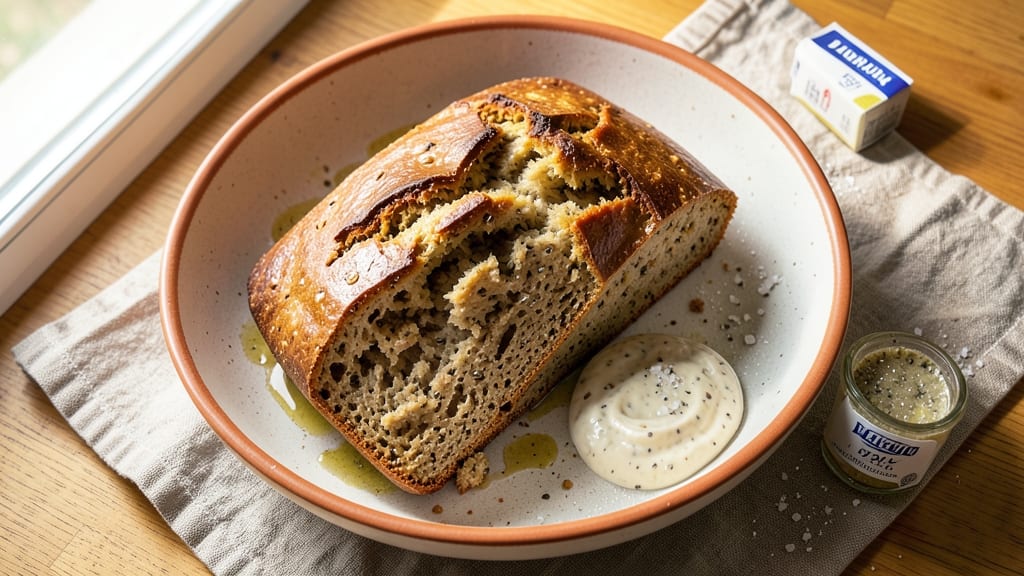
Transforming your bread recipe by adding flaxseed unlocks a powerhouse of nutrition—plant-based omega-3s, fiber, and a perfect egg substitute all in one. This nutrient-boosted loaf delivers the same satisfying texture and flavor you love, just with a healthier twist.
The secret lies in properly preparing the flaxseed "egg" to bind the dough without altering the final result.
The beauty of adding flaxseed lies in its versatility—it works in vegan bread, whole wheat loaves, and even sourdough without compromising rise or crumb. When ground and mixed with water, flaxseed creates a gel-like binder that mimics eggs while contributing heart-healthy fats.
The key is letting it sit for 5 minutes before using, ensuring maximum binding power and even distribution throughout the dough.
What you'll end up with is a loaf that's just as hearty and delicious as traditional bread, but packed with 200% more omega-3s and 4 grams of fiber per slice.
The subtle nutty flavor from the flaxseed enhances rather than overpowers the bread's taste, making it perfect for sandwiches, toast, or serving alongside soups. The best part? No special equipment is needed—just a few simple adjustments to your existing recipe.
Whether you're baking for dietary preferences or simply want to boost nutrition, this flaxseed-enriched bread delivers restaurant-quality results with a health-conscious twist. Ready to bake? Let's get started with the full recipe and pro tips for perfect texture every time.
Ingredients for adding flaxseed to bread
Fourteen powerhouse ingredients transform your basic loaf into a nutrient-dense masterpiece.
| Ingredient | Amount | Notes |
|---|---|---|
| Whole Wheat Flour 🌾 | 4 cups | For hearty texture and nutrition |
| Ground Flaxseed 🌰 | ½ cup | Freshly ground for maximum omega-3s |
| Water 💧 | 0.38 cup | For flaxseed egg binder |
| Active Dry Yeast 🍞 | 2 ¼ tsp | Ensures proper rise |
| Granulated Sugar 🍚 | 1 tbsp | Feeds yeast for fermentation |
| Salt 🧂 | 1 ½ tsp | Diamond Crystal preferred |
| Extra-Virgin Olive Oil 🫒 | ¼ cup | For tender crumb and richness |
| Warm Water 💧 | 1 ¼ cups | 110°F for yeast activation |
| Vital Wheat Gluten 🌾 | ¼ cup | Improves chewiness and structure |
| Dried Milk Powder 🥛 | ¼ cup | Vegan alternative for richness |
| Flaxseed Oil 🫒 | 1 tbsp | Enhances omega-3 content |
| Sesame Seeds 🌱 | 2 tbsp | For crunchy texture and flavor |
The ground flaxseed is non-negotiable here—Bob's Red Mill or Trader Joe's brands are my go-tos for consistent texture and flavor. Look for organic, cold-pressed flaxseed to preserve those omega-3s. The flaxseed oil adds an extra nutritional punch without altering the bread's flavor profile. For the yeast, Saf-Instant is my secret weapon—it activates without the need for proofing time. Vital wheat gluten is crucial for that satisfying chew; King Arthur makes a reliable brand. Pro tip: Toast your sesame seeds in a dry pan for 30 seconds before using—enhances flavor without burning.
No ground flaxseed? Chia seeds work at a 1:1 ratio—just let them sit longer (10 minutes) to thicken. Running low on flaxseed oil? Extra-virgin olive oil at half the amount keeps the flavor profile intact. Substituting whole wheat flour? Use a 50/50 blend with all-purpose to maintain structure. The dried milk powder can be swapped for nutritional yeast if you prefer a nuttier taste. For a lighter crumb, reduce the vital wheat gluten by 1/4 cup—just don't skip it entirely. The sesame seeds are optional but add that restaurant-quality crunch we all love.
Store your flaxseed in the freezer to prevent rancidity—it keeps for up to 6 months this way. The flaxseed mixture (ground flax + water) can be prepped 2 days ahead and stored in the fridge. For best results, bake your loaf immediately after mixing—fresh yeast yields the best rise. Leftovers keep for 5 days in an airtight container or 3 months frozen. Toasting your bread? Wrap in foil first to prevent burning while keeping the crumb moist.
Why You'll Love This Recipe
- No-Mix Fuss: I swear, this dough comes together faster than my coffee in the morning—just toss the whole wheat flour, ground flaxseed, and water, then let the yeast do its magic. No kneading, no waiting around, just hands-off rising while you handle whatever else life throws at you.
- Nutty Earthy Crunch: That ground flaxseed? It’s the secret weapon—adds a subtle, toasty depth that whole wheat alone can’t match. Honestly, the first time I bit into a slice, I thought, "Why haven’t I done this sooner?" The sugar just balances it enough to make it feel indulgent, not health-lecture-y.
- Weeknight Hero: Between us, this bread is my go-to for busy nights—toss a few slices in the toaster for breakfast, pack some for lunches, or serve it warm with soup. It’s the kind of bread that doesn’t beg to be eaten immediately but still disappears by the end of the day.
- Budget-Friendly Staple: Whole wheat flour and flaxseed are cheap, and this recipe stretches further than most store-bought loaves. I’ll be real: I’ve made three batches in a row before realizing I’d run out of space in the fridge. Leftovers? Toast them, freeze them, or turn them into croutons—no waste, all win.
Step-by-step instructions for nutrient-boosted flaxseed bread
This isn't your average bread recipe—we're building a loaf packed with omega-3s and plant-based richness.
Create the Flaxseed "Egg" Binder
In a small bowl, whisk together the 0.5 cup ground flaxseed and 0.375 cup water. Let this mixture sit for 10 minutes—you'll see it thicken into a gel-like consistency, mimicking the binding properties of eggs. This is your plant-based binder, replacing traditional eggs while adding fiber and omega-3s. The texture should resemble raw egg whites but with a slightly grainier texture.
Here's the thing—freshly ground flaxseed makes all the difference. If you're using pre-ground flaxseed, give it a quick pulse in your food processor to restore some of that fresh texture. The longer you wait to mix it, the more effective the binder becomes, so don't rush this step.
Activate the Yeast Mixture
In a separate large bowl, combine the 1.25 cups warm water (about 110°F), 2.25 tsp active dry yeast, and 1 tbsp granulated sugar. Let this sit for 5-10 minutes until it becomes frothy and bubbly—this tells you your yeast is alive and active. The mixture should nearly double in volume and develop a light, airy texture.
This is where precision matters most. If your water's too hot, you'll kill the yeast; too cold and it won't activate properly. Test the temperature with your finger—it should feel warm but not hot. If it's not bubbling after 10 minutes, your yeast might be old, and you'll need to start over.
Mix the Wet and Dry Ingredients
To the yeast mixture, add the 0.25 cup extra-virgin olive oil, 1 tbsp flaxseed oil, and the flaxseed gel you prepared earlier. In a separate bowl, whisk together the 4 cups whole wheat flour, 0.25 cup vital wheat gluten, 0.25 cup dried milk powder, and 1.5 tsp salt. Gradually incorporate the dry ingredients into the wet mixture, stirring with a wooden spoon until just combined.
Don't overmix here—you're looking for a shaggy dough with some flour streaks remaining. The vital wheat gluten will give your bread that satisfying chew, while the dried milk powder adds richness without dairy. The dough should be softer than traditional whole wheat dough due to the flaxseed binder and olive oil.
Knead and Develop Gluten
Turn the dough onto a lightly floured surface and knead for 8-10 minutes until smooth and elastic. You'll notice the dough is stickier than regular bread dough due to the flaxseed and whole wheat flour. Work in short bursts to prevent overheating the gluten. The dough should pass the "windowpane test"—when you stretch a small piece thin enough to see light through it without tearing.
This kneading step is crucial for developing the gluten structure that will give your bread its chew. If the dough feels too sticky to handle, wet your hands slightly rather than adding more flour, which would make the bread denser. The flaxseed oil and vital wheat gluten will help create a more open crumb structure than traditional whole wheat bread.
First Rise and Shape
Place the dough in a lightly oiled bowl, cover with a damp towel, and let rise in a warm place for 1-2 hours or until doubled in size. The dough should feel light and springy when pressed gently. Here's where the flaxseed binder really shines—it helps the dough retain moisture during this rise, preventing that dry, crumbly texture common in whole wheat breads.
After rising, punch down the dough to release air bubbles, then shape it into a loaf. For extra flavor, sprinkle 2 tbsp sesame seeds on top before placing it in a greased 9x5-inch loaf pan. The sesame seeds will add a delightful crunch and nutty flavor that pairs perfectly with the bread's hearty texture.
Proof and Bake to Golden Perfection
Cover the loaf pan and let the dough proof for another 30-45 minutes until it rises about an inch above the pan. Preheat your oven to 375°F while the bread proofs. Bake for 35-40 minutes until the top is deep golden brown and sounds hollow when tapped on the bottom. The internal temperature should reach 190-200°F—this ensures complete doneness without drying out.
Real talk: your oven might run hot, so start checking at the 30-minute mark. If the top browns too quickly, tent the loaf with foil. The flaxseed and olive oil will create a slightly denser crumb than white bread, but the sesame seeds and proper baking will give you that satisfying crust. Let the bread cool for 15 minutes before slicing—this prevents a gummy texture from the flaxseed binder.
Pro Tips For Making Adding Flaxseed To Bread
- Mix Flaxseed with Water First: I learned this the hard way—dumping ground flaxseed directly into the dough creates clumps that won’t dissolve, no matter how much you knead. Instead, whisk it into warm water first (about ¼ cup water per 2 tablespoons flaxseed) and let it sit for 5 minutes to form a gel-like consistency before adding it to the yeast mixture.
- Use Warm Water for Yeast: Whole wheat flour absorbs moisture like a sponge, so lukewarm water (around 105°F) is your best friend here. Cold water kills yeast faster than you can say "dense bread," and hot water cooks it before it even gets a chance to activate. Test the water by dipping your pinky—it should feel like a warm bath, not a sauna.
- Knead Until Smooth, Not Tough: Whole wheat dough fights back. Resist the urge to overwork it, but don’t skip kneading either—aim for 8–10 minutes by hand until the dough pulls away cleanly from the bowl. Over-kneading turns flaxseed bread into a chewy brick, while under-kneading leaves it gummy. The flaxseed needs time to distribute evenly, so be patient.
- Let the Dough Rise Twice: Flaxseed slows fermentation, so don’t rush the first rise—give it 1.5 to 2 hours until it’s puffy but not doubled. After shaping, do a second rise (30–45 minutes) to ensure the yeast has a fighting chance. Trust me, skipping this step means a bread that’s more cake than loaf. (Yes, even if you’re impatient like me.)
Creative variations of these flavors
Vegan Sourdough Twist
Transform your flaxseed bread into a tangy sourdough by replacing 1 cup of the whole wheat flour with 1 cup active sourdough starter. The starter replaces the yeast entirely, giving you that signature sourdough flavor while the flaxseed binder maintains structure.
For best results, use a starter with 100% hydration and let it ferment for 8-12 hours before mixing—this develops deeper flavor. Brush the baked loaf with flaxseed oil mixed with a pinch of salt for extra richness and a subtle nutty aroma. 🌾
Whole Wheat Upgrade
Boost fiber and nutrition by increasing the whole wheat flour to 5 cups total, but reduce the vital wheat gluten to ¼ cup to maintain texture. Add 1 tbsp ground psyllium husk to the dry ingredients for improved rise and moisture retention.
The flaxseed binder works perfectly with this higher whole grain content, preventing that dense, crumbly texture. For extra heartiness, sprinkle 1 tbsp crushed walnuts on top before baking. 🌰
Herb-Infused Variation
Elevate your flaxseed bread with fresh herbs by adding 2 tbsp finely chopped rosemary or thyme to the dough during the final mixing stage. The herbs pair beautifully with the nutty flaxseed flavor, creating a Mediterranean-inspired loaf.
For a stronger flavor, infuse 1 tbsp olive oil with the herbs before adding it to the wet ingredients. Finish with a sprinkle of flaky sea salt on top for a restaurant-quality touch. ✨
Sweet Cinnamon Swirl
Create a breakfast-friendly version by adding 1 tbsp cinnamon and 2 tbsp brown sugar to the dry ingredients.
Before the final proof, roll out the dough slightly and spread ¼ cup cream cheese mixed with 1 tbsp honey (use vegan cream cheese for plant-based version), then roll it up and place seam-side down in the loaf pan.
The flaxseed binder keeps the swirl intact during baking, resulting in a moist, flavorful loaf perfect for toast or French toast. 🍯
Seed & Nut Topping
Take your bread to the next level with a crunchy seed topping. Mix 2 tbsp flaxseed, 2 tbsp sunflower seeds, 1 tbsp pumpkin seeds, and 1 tsp maple syrup, then press this mixture onto the shaped loaf before the final proof.
The seeds toast beautifully in the oven, creating a flavorful crust that complements the bread's nutty interior. For extra protein, add 1 tbsp hemp seeds to the mix. 🌱
Gluten-Free Adaptation
Make this bread gluten-free by replacing the whole wheat flour with 4 cups gluten-free 1:1 baking flour blend and omitting the vital wheat gluten. Increase the flaxseed binder to 0.6 cup ground flaxseed and 0.4 cup water to compensate for the lack of gluten structure.
Add 1 tbsp xanthan gum to the dry ingredients to improve elasticity. The flaxseed oil remains essential for moisture, and the sesame seeds add texture without gluten. 💪
Nutrition facts
Frequently asked questions
Why does my flaxseed bread turn out gummy?
Gummy texture usually means the flaxseed binder didn't set properly or the bread cooled too quickly. Always let the flaxseed mixture sit for 10 minutes before using, and cool your baked loaf on a wire rack for 15 minutes before slicing. The flaxseed gel needs time to firm up during baking—don't skip the resting period!
Can I use whole flaxseeds instead of ground?
Not recommended—they won't create the same binding effect and may create a gritty texture. If you only have whole seeds, grind them fresh in a coffee grinder or food processor right before mixing. The key is achieving that gel-like consistency that replaces eggs. Pre-ground flaxseed works best for consistent results.
How much flaxseed can I add without altering texture?
Start with 0.5 cup ground flaxseed for a standard loaf, but you can safely increase to 0.75 cup if you want more omega-3s. Beyond that, the bread may become denser. The flaxseed oil in the recipe helps maintain moisture, but too much can make the crumb slightly heavier. For extra nutrition, try adding 1 tbsp flaxseed oil to the wet ingredients.
Will flaxseed bread keep longer than regular bread?
Actually, it may go stale slightly faster due to the higher fat content from flaxseed oil. Store in an airtight container at room temperature for 4-5 days or freeze for 3 months. For extra shelf life, slice and toast the bread before storing—this helps preserve freshness. The flaxseed binder also makes the bread more prone to drying out if left exposed.
Can I substitute chia seeds for flaxseed?
Yes! Use a 1:1 ratio (chia seeds to flaxseed) but increase the water slightly to 0.4 cup per 0.5 cup seeds. Let the chia mixture sit for 10-15 minutes—it thickens faster than flaxseed. Chia seeds have a slightly different flavor profile but work perfectly as a binder. For best results, combine them with 1 tbsp ground flaxseed to maintain the nutty taste.