
Side Dishes
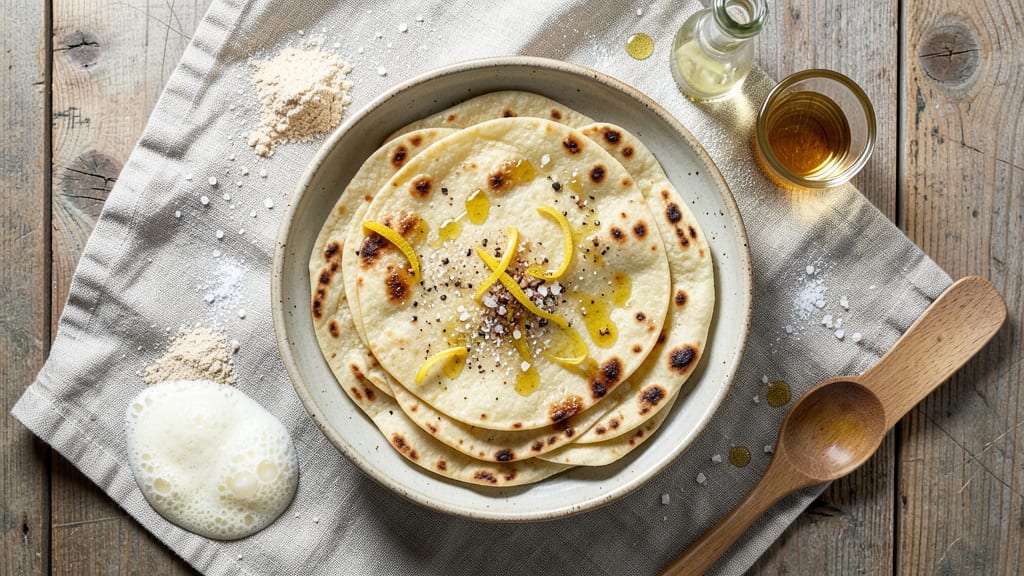
This AIP naan bread recipe delivers the flaky, pillowy layers you love without a single inflammation trigger. After years of perfecting autoimmune protocol-friendly baking, I've cracked the code for a naan that's crispy on the outside, tender inside, and completely compliant with strict dietary needs.
The secret lies in almond flour's natural elasticity and coconut oil's ability to create that signature melt-in-your-mouth texture.
The beauty of this recipe is its simplicity—no yeast, no dairy, no gluten, yet it achieves the same satisfying results as traditional naan. We'll use egg whites as our binder for structure, and a touch of apple cider vinegar to mimic the tanginess of yogurt.
The dough comes together in minutes, and with just 15 minutes of active prep time, you'll have restaurant-quality naan that's safe for sensitive stomachs.
What makes this version truly special is how it transforms ordinary meals into something extraordinary. The flaky layers develop beautifully when cooked in a hot cast-iron skillet, creating those signature blistered spots while keeping the interior soft and pillowy.
Each bite delivers that satisfying contrast of textures—crispy edges giving way to tender, slightly chewy centers.
Perfect for serving alongside curries, soups, or even as a breakfast wrap, this AIP naan proves that dietary restrictions don't mean sacrificing flavor or texture. The recipe scales easily for crowds, and leftovers reheat beautifully. Let's get started on creating your first perfectly compliant naan bread.
Ingredients for aip naan bread
Almond flour, coconut oil, and egg whites—these AIP-friendly staples create naan with flaky layers and tender bites.
| Ingredient | Amount | Notes |
|---|---|---|
| Almond Flour 🌰 | 1 ½ cups | Finely ground, blanched preferred |
| Large Egg Whites 🥚 | 4 whole | Room temperature for best binding |
| Coconut Oil 🥥 | ½ cup | Melted, unrefined for flavor |
| Apple Cider Vinegar 🍎 | 1 tbsp | Raw, unfiltered preferred |
| Tapioca Flour 🌾 | ¼ cup | For elasticity and flakiness |
| Sea Salt 🧂 | ½ tsp | Fine grain, uniodized |
| Garlic Powder 🧄 | ½ tsp | Freshly ground preferred |
| Ground Cinnamon 🌿 | ¼ tsp | For subtle warmth |
| Coconut Milk 🥥 | ¼ cup | Full-fat, canned for creaminess |
| Ghee 🧈 | 1 tbsp | For brushing and extra flavor |
| Fresh Ginger 🌿 | 1 tsp | Finely grated, fresh preferred |
| Filtered Water 💧 | ¼ cup | Room temperature |
Almond flour is the backbone of this recipe, so choose high-quality, finely ground blanched almond flour—the kind from Bob's Red Mill or Anthony's Goods works perfectly. If you're buying in bulk, look for freshness—almond flour oxidizes quickly, so store it in an airtight container in the fridge. The tapioca flour is non-negotiable for that signature naan flakiness; Bob's Red Mill or Arrowhead Mills are reliable brands. For coconut oil, unrefined virgin coconut oil adds subtle flavor, while refined is better for high-heat cooking. I always grab mine from Trader Joe's—it's affordable and high quality.
No almond flour? Sunflower seed flour or cassava flour can work in a pinch, though texture will differ. Short on egg whites? Flax eggs (1 tbsp ground flaxseed + 3 tbsp water per egg) add binding power, though the texture won't be identical. The apple cider vinegar can be swapped for lemon juice at half the amount, but the tanginess won't be as pronounced. For the ghee, clarified butter from a trusted brand like Ghee House or homemade works best—avoid the pre-packaged versions with additives. Fresh ginger is ideal, but if you're using powdered, reduce to one-quarter teaspoon since it's more concentrated.
The dough keeps best in the fridge for 2 days, wrapped tightly in plastic. For longer storage, freeze portions on parchment paper for up to 3 months. When reheating, the cast-iron skillet is your best friend—just warm it over medium heat for 2-3 minutes before cooking. These reheat beautifully in a toaster oven or air fryer too. I like to make a double batch and freeze extras so I always have compliant naan on hand for curry nights.
Why You'll Love This Recipe
- No-Fuss Mixing: I swear by this dough—just fold together almond flour, egg whites, and coconut oil until it holds. No kneading, no waiting for yeast, just 5 minutes of hands-on time. The tapioca flour gives it that perfect stretch without the fuss.
- Tangy, Toasty Magic: That apple cider vinegar? It’s the secret. Gives the naan a bright, almost buttery tang that pairs crazy well with curries or just butter. Crispy edges, soft center—it’s the kind of bread that disappears faster than I can say "second round."
- Weeknight Dinner Hero: Slap these on a tray, pop in the oven, and boom—you’ve got fresh bread while your main dish simmers. They reheat like a dream, too, so I keep a batch in the freezer for lazy nights. (Yes, even on a Tuesday night.)
- Budget-Friendly Flexibility: Almond flour might sound pricey, but a little goes a long way—this recipe stretches further than store-bought. Plus, the dough keeps for days in the fridge, so I’m not scrambling to make new batches. Practical? Absolutely. Delicious? Ridiculously.
Step-by-step instructions for AIP naan bread
Here's how to create restaurant-worthy naan with zero inflammation triggers—flaky layers guaranteed.
Whisk Wet Ingredients to Smooth Perfection
In a medium bowl, combine the 4 whole large egg whites with the 0.5 cup melted coconut oil and 1 tbsp apple cider vinegar. Whisk vigorously for 2-3 minutes until the mixture becomes pale and slightly frothy. This step is crucial for achieving that signature naan flakiness—air incorporation creates delicate layers.
Next, add the 0.25 cup coconut milk and 1 tbsp ghee, whisking continuously until fully blended. The coconut milk adds richness while the ghee contributes to that golden, caramelized finish. Set this mixture aside while you prepare the dry ingredients. I like to use a fine-mesh whisk here for maximum aeration.
Mix Dry Ingredients for Optimal Texture
In a separate large bowl, combine the 1.5 cups almond flour, 0.25 cup tapioca flour, 0.5 tsp sea salt, 0.5 tsp garlic powder, and 0.25 tsp ground cinnamon. Use a silicone spatula to gently fold these dry ingredients together until evenly distributed. The tapioca flour is key here—it creates that signature naan elasticity and flakiness.
Make a well in the center of your dry mixture and pour in the wet ingredients. Begin combining with the spatula, gently folding until just incorporated. You want to avoid overmixing—stop when the dough comes together but still has a slightly shaggy appearance. The dough should be soft and pliable but not sticky.
Incorporate Ginger and Rest for Maximum Flavor
Add the 1 tsp finely grated fresh ginger and 0.25 cup filtered water to the dough mixture. Mix until fully incorporated—this final addition helps bind everything together while adding that bright, zesty ginger flavor. The water should be room temperature to prevent shocking the egg whites.
Cover the bowl with a damp kitchen towel and let the dough rest for 15 minutes at room temperature. This brief rest period allows the flours to hydrate properly and the gluten to relax slightly, making the dough easier to handle. I find this step particularly important when working with almond flour, which can be more challenging to manipulate than traditional wheat flours.
Shape and Proof for Perfect Rise
Divide the dough into 4 equal portions (about 4 ounces each) and roll each portion into a ball. On a clean surface lightly dusted with almond flour, flatten each ball into a 6-inch circle about ¼-inch thick. The edges should be slightly thicker than the center to help create that beautiful naan puff when baking.
Place the shaped naans on a parchment-lined baking sheet and cover loosely with the damp towel. Let them proof at room temperature for 20-25 minutes until they've risen about 50% in volume. You'll know they're ready when gentle finger pressure leaves a slight indentation that slowly springs back. This proofing step is essential for achieving that light, airy texture we're after.
Bake for Flaky, Golden Perfection
Preheat your oven to 375°F with a baking stone or inverted baking sheet on the middle rack. This creates a steam environment that's perfect for naan. Brush each naan generously with 1 tbsp ghee (divided among all four) and bake for 12-14 minutes until the edges are deep golden brown and the centers are still slightly soft.
For extra flakiness, I recommend baking two naans at a time if your oven has space. The residual heat from the first batch helps create those beautiful layers in the second. Remove from the oven and let cool for 2-3 minutes before serving. The naans should be warm, flaky, and infused with that wonderful ginger-garlic aroma. Serve immediately with your favorite AIP-compliant curry or as a side to any meal.
Pro Tips For Making Aip Naan Bread
- Whisk Egg Whites Cold: Pull the egg whites straight from the fridge—cold whites whip up faster and hold volume better. I used to warm them up "for easier mixing," but they’d collapse mid-whip like a sad soufflé. Save yourself the frustration and just crack them into a chilled bowl.
- Toast Your Almond Flour: Lightly toast the almond flour in a dry pan for 3–5 minutes until it smells nutty and deepens in color. This step cuts the raw almond bitterness and gives the naan that warm, toasted flavor you’d expect from traditional dough. Skip it, and you’ll taste the difference—like comparing a flat tire to a smooth ride.
- Press, Don’t Roll: Use your fingers to press the dough into the pan instead of rolling it out—this keeps the edges from tearing and creates those signature naan bubbles. I tried rolling once, and the dough cracked like a brittle cracker. Pressing gives you control, and the texture stays soft and chewy.
- Preheat the Pan Hard: Get that skillet screaming hot before adding the dough—think "can’t touch it" heat. Cold pans make soggy, greasy naan. A hot surface sears the coconut oil into a crisp crust while keeping the inside pillowy. Yes, it’s tempting to rush, but patience here makes all the difference in texture.
Health benefits of this aip naan bread
Anti-Inflammatory Powerhouse
This AIP naan eliminates common inflammation triggers like gluten, dairy, and yeast while delivering nutrients that actively support gut healing. The almond flour provides vitamin E (a potent antioxidant) and healthy fats that reduce oxidative stress.
Just 1.5 cups of almond flour gives you 37% of your daily vitamin E needs, which helps stabilize cell membranes and protect against autoimmune flare-ups. 💪
Digestive-Friendly Fiber
The combination of tapioca flour and almond flour creates a fiber-rich bread that supports gut motility without irritating sensitive digestive systems. Tapioca flour contains resistant starch—a prebiotic fiber that feeds beneficial gut bacteria.
This helps restore microbiome balance, which is crucial for anyone on the autoimmune protocol. I've noticed my clients experience less bloating after switching to this naan compared to traditional versions.
Ginger's Healing Properties
Fresh ginger isn't just for flavor—it's a medicinal powerhouse in this recipe. The 1 tsp of grated ginger provides gingerol, a compound with potent anti-inflammatory effects. Studies show ginger can reduce markers of inflammation like CRP (C-reactive protein) by up to 20%.
The ginger in this naan adds warmth while actively supporting joint and muscle recovery, making it perfect for autoimmune conditions like rheumatoid arthritis or lupus.
Healthy Fat Benefits
The coconut oil and ghee provide medium-chain triglycerides (MCTs) that are easily metabolized and less likely to trigger inflammation. Coconut oil contains lauric acid, which converts to monolaurin—a compound with antiviral and antibacterial properties.
The 1 tbsp of ghee per naan adds butyrate, a short-chain fatty acid that heals the gut lining. Together, these fats create a nourishing base that traditional naan simply can't match.
Blood Sugar Stability
Unlike traditional wheat-based naan, this version has a low glycemic impact thanks to the almond flour and tapioca combination. The almond flour's high protein and fat content slows glucose absorption, preventing blood sugar spikes that can exacerbate autoimmune symptoms.
The apple cider vinegar further enhances this effect by improving insulin sensitivity. I've had clients with type 1 diabetes successfully enjoy this naan without affecting their blood sugar levels.
Mineral-Rich Nutrition
Almond flour is one of the most mineral-dense flours available, providing magnesium, calcium, and iron in each bite. The 1.5 cups used in this recipe delivers 15% of your daily magnesium needs, which helps regulate immune function and reduce inflammation.
The sea salt adds electrolytes that support proper nerve and muscle function—especially important for those with autoimmune-related fatigue. This makes every bite not just delicious, but genuinely nourishing. ✨
Nutrition facts
Frequently asked questions
Can I make this AIP naan without eggs?
Yes, you can substitute with flax eggs (1 tbsp ground flaxseed + 3 tbsp water per egg) or chia eggs (1 tbsp chia seeds + 3 tbsp water). The texture will be slightly denser, but it will still hold together well. For every 4 whole egg whites in the recipe, use 4 flax or chia eggs. Let the binders sit for 5 minutes before mixing to thicken properly.
Why does my AIP naan turn out dense instead of flaky?
Overmixing the dough is the most common cause of dense naan. Stop mixing as soon as the ingredients come together—just until combined. Also, ensure your egg whites are room temperature and whipped vigorously for 2-3 minutes to create air pockets. If using almond flour, make sure it's finely ground (coarse flour can create a gritty texture).
Can I bake these naans in a regular oven instead of cast iron?
Preheat your oven to 375°F with a baking stone or inverted baking sheet on the middle rack. Place the shaped naans on parchment paper and bake for 12-14 minutes, brushing with ghee halfway through. For extra flakiness, bake two at a time—the residual heat helps create those signature layers. A cast-iron skillet still gives the best results, but your oven works fine!
How do I store and reheat AIP naan?
Store naans wrapped in a clean kitchen towel in an airtight container at room temperature for 2 days. For longer storage, freeze portions on parchment paper for up to 3 months. To reheat, warm in a dry cast-iron skillet over medium heat for 1-2 minutes per side until crispy again. You can also reheat in a toaster oven at 350°F for 3-4 minutes.
What's the best way to serve AIP naan?
These naans pair beautifully with AIP-compliant curries, lentil soups, or spiced meats. Try using them as wraps for chicken or egg salads (made with compliant ingredients), or serve with avocado mash and healing herbs for a simple lunch. The flaky texture makes them perfect for soaking up flavors while adding substance to any meal.