Side Dishes
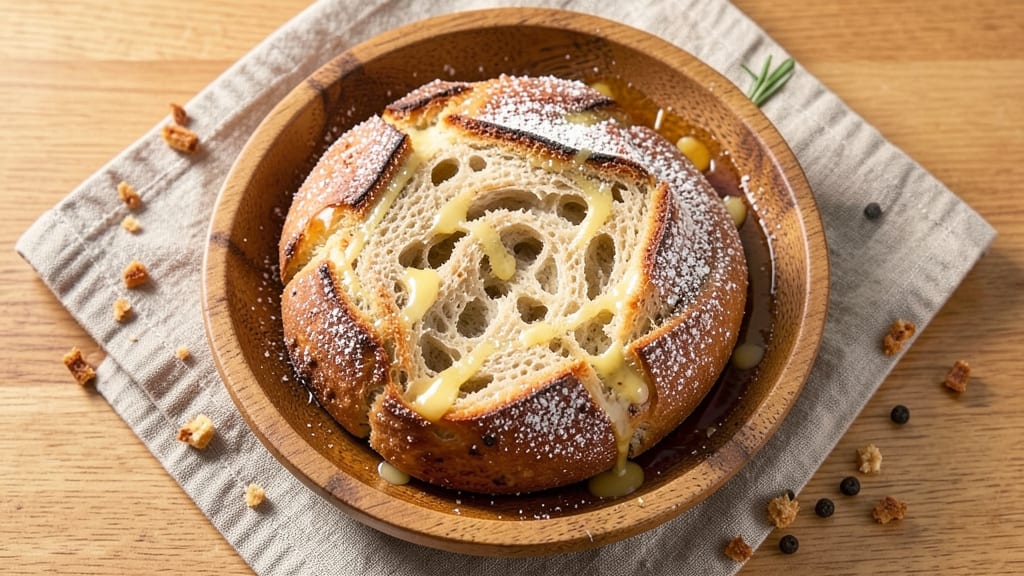
This ale bread recipe transforms simple ingredients into a loaf with deep fermented flavor and a nutty, caramelized crust—perfect for sandwiches or serving alongside stews. The key lies in using ale for hydration, which adds subtle malt sweetness and enhances the dough's elasticity.
Unlike traditional bread, this version develops complexity through slow fermentation, creating a texture that's both tender and satisfying.
The process begins with activating yeast in warm ale, then mixing the dough to a slightly sticky consistency. After a 2-hour bulk fermentation and shaping, the dough rests overnight in the fridge, allowing flavors to meld and gluten to relax.
Baking at high heat creates that signature crisp crust, while steam inside keeps the crumb soft and open.
What makes this bread special is its versatility—slice it for toast, pull it apart for sandwiches, or serve it warm with garlic butter. The ale's malty notes pair beautifully with hearty dishes, while the caramelized crust adds a touch of sweetness.
This recipe delivers restaurant-quality results with minimal effort, making it ideal for both beginners and experienced bakers.
For extra flavor, brush the baked loaf with melted butter and sprinkle with coarse salt before serving. The crust will be golden and crisp, while the interior remains tender and fragrant. Perfect for feeding a crowd or enjoying a homemade loaf with every meal.
Ingredients for ale bread
Twelve ingredients crafting a loaf with fermented depth and caramelized crust perfection.
| Ingredient | Amount | Notes |
|---|---|---|
| Active Dry Yeast 🍞 | ¼ oz | Or 2 1/4 tsp (1 package) |
| Dark Ale Beer 🍺 | 1 ½ cups | Stout or porter preferred (60-70 IBU) |
| All-Purpose Flour 🌾 | 5 cups | Unbleached, high protein (12-13%) |
| Whole Wheat Flour 🌾 | 1 cup | For nutty depth and texture |
| Granulated Sugar 🍬 | ½ cup | Brown sugar for caramel notes |
| Unsalted Butter 🧈 | ½ cup | Cold, cubed (80°F for mixing) |
| Diamond Crystal Kosher Salt 🧂 | 1 ½ tsp | Adjust to taste (not included) |
| Honey 🍯 | ¼ cup | Wildflower preferred for complexity |
| Cornmeal 🌽 | ¼ cup | For dusting baking surface |
| Ice Water 💧 | ½ cup | Chilled for dough consistency |
| Coarse Sea Salt 🧂 | ¼ cup | For final crust sprinkle |
| Garlic Powder 🧄 | 1 tsp | Optional for savory variation |
The ale is non-negotiable here—Guinness or a robust stout from the craft beer section delivers the best malt complexity. Local microbreweries often have excellent options at lower prices than national brands. If using a lighter ale, increase to 2 cups for sufficient hydration. The yeast needs to activate in warm ale (95-105°F), so let it sit 5-10 minutes before mixing. For flour, King Arthur or Caputo Tipo 00 elevate texture, though reliable supermarket brands work fine. The whole wheat adds character but can make the dough slightly denser—reduce by 0.25 cups if preferred.
No dark ale? Substitute with 1 cup strong black tea plus 0.5 cup water for malt notes, though the flavor won't be identical. Honey can be swapped for maple syrup or agave at equal amounts, but honey's floral complexity enhances the crust. Butter substitutes include coconut oil or vegan butter, though texture may differ slightly. For gluten-free adaptation, replace all flours with a 1:1 GF blend plus 0.5 tsp xanthan gum. The garlic powder is optional but pairs beautifully with the ale's malty profile—omit if avoiding savory notes. Always measure flour by weight (1 cup = ~120g) for consistent results.
Store the ale at room temperature until use to maintain freshness. Once mixed, the dough can rest in the fridge for up to 48 hours for deeper flavor development. Shape the loaf on parchment paper dusted with cornmeal to prevent sticking. For best results, bake immediately after shaping, but the dough holds well for 2 hours at room temperature. The baked loaf keeps at room temperature for 3 days wrapped in a cotton towel, or 1 week frozen. Reheat slices in a 350°F oven for 5 minutes to restore freshness.
Why You'll Love This Recipe
- No-Fuss Dough: I swear by this recipe because it’s actually simple—no kneading, no waiting hours. Just toss the flour, yeast, and warm beer together, let it rise while you watch one episode of your show, and boom. Ready in under an hour, no fancy skills required.
- Beer’s Rich Magic: That dark ale isn’t just for drinking—it’s the secret weapon. The maltiness cuts through the whole wheat’s earthiness, giving you a crust with depth and a crumb that’s just chewy enough to make you slow down and savor it. Honestly, I’ve tried store-bought ale bread, and this? It’s leagues ahead.
- Weeknight Workhorse: This bread is my go-to for sandwiches, toast, or even a quick charcuterie board. The whole wheat keeps it hearty, so it won’t turn to mush when you slather it with butter or jam. (Yes, even on a Tuesday night.)
- Budget-Friendly Stretch: A single batch feeds my family for days—leftovers toast beautifully, and the crust stays fresh for ages. Plus, using pantry staples (flour, sugar) and a six-pack of beer means no last-minute grocery runs. Win-win.
Step-by-step instructions for ale bread with fermented depth
This method delivers a rustic loaf with crispy crust and tender crumb—every step matters for perfect fermentation and texture.
Activate the Yeast with Dark Ale
In a large mixing bowl, combine the 1.5 cups dark ale beer with the 0.25 oz active dry yeast and 0.5 cup granulated sugar. Let this mixture sit at room temperature for 10-15 minutes until it develops a frothy foam on the surface. This indicates the yeast is active and ready to work. The beer's natural sugars and alcohol content create a subtle depth of flavor while supporting fermentation.
If you notice no activity after 15 minutes, gently warm the mixture to 100°F for 2-3 minutes—just enough to stimulate the yeast without killing it. The beer's maltiness will contribute to the bread's caramelized notes, but don't let it warm beyond 105°F or you risk inhibiting fermentation.
Mix the Dough with Butter and Flour
Add the 5 cups all-purpose flour, 1 cup whole wheat flour, 1.5 tsp diamond crystal kosher salt, 0.25 cup honey, and 0.5 cup unsalted butter (cold, cubed) to the yeast mixture. Using a wooden spoon or dough whisk, stir until the ingredients come together into a shaggy mass. The butter should begin to incorporate but remain in small clumps—this prevents overdevelopment of gluten at this stage.
Gradually add the 0.5 cup ice water while mixing until the dough pulls away from the sides of the bowl and forms a cohesive ball. If the dough feels too sticky, add 1 tablespoon all-purpose flour at a time until it reaches a smooth, slightly tacky consistency. The ice water helps control gluten development while keeping the dough cool for optimal fermentation.
Knead and Rest for Fermentation
Turn the dough onto a lightly floured surface and knead for 8-10 minutes by hand, or use a stand mixer with a dough hook on medium speed for 5-6 minutes. The dough should be smooth and elastic but still slightly sticky. Avoid over-kneading, which can develop too much gluten and make the bread dense. The whole wheat flour adds nutty depth but requires less kneading than all-purpose flour alone.
Place the dough in a lightly greased bowl, cover with a damp towel, and let it rise in a warm place (78-80°F) for 1.5-2 hours, or until it has doubled in size. The beer's fermentation will accelerate slightly due to the residual yeast activity, so monitor closely. Poke the dough with a finger—if it springs back slowly, it's ready. If using 1 tsp garlic powder for a savory variation, sprinkle it over the dough during this resting period.
Shape and Proof the Dough
Turn the dough onto a surface dusted with 0.25 cup cornmeal and gently shape it into a round loaf. The cornmeal prevents sticking and adds a subtle crunch to the crust. Place the loaf seam-side up in a greased 9x5-inch loaf pan or a round baking dish. Cover again and let it proof for 30-45 minutes until it rises 1-2 inches above the pan.
For a rustic look, you can also shape the dough into a free-form boule or batard. Brush the top with a beaten egg wash (optional) and sprinkle with 0.25 cup coarse sea salt for a dramatic crust. The coarse salt will create pockets of concentrated flavor as the bread bakes, enhancing the caramelized crust.
Bake to Crispy Perfection
Preheat your oven to 375°F and bake the loaf for 45-50 minutes, or until the internal temperature reaches 190-200°F and the crust is deep golden brown. The beer's alcohol content will evaporate during baking, leaving behind a rich, malty aroma. For extra crispiness, place the loaf on a baking sheet for the last 10 minutes of baking.
Let the bread cool on a wire rack for at least 1 hour before slicing—this ensures the crumb sets properly and prevents a gummy texture. The crust should be firm and crackly, while the interior remains tender with a slight chew. Slice into thick pieces to reveal the open crumb and enjoy with butter or your favorite spread. The beer's depth of flavor shines through in every bite, balanced by the nutty whole wheat and caramelized crust.
Pro Tips For Making Ale Bread
- Warm the Beer First: Cold beer kills yeast faster than you can say "sad dough." Pour your dark ale into a microwave-safe mug and heat it to about 90°F (32°C)—just warm enough to touch your wrist without burning. This jumpstarts fermentation, especially when mixing with yeast and sugar.
- Use a Scale for Flours: Measuring cups lie. Whole wheat flour packs differently than all-purpose, and your ale bread will either turn out dense or dry if you eyeball it. Weigh both flours separately—aim for 300g whole wheat and 400g all-purpose—and sift them together to avoid lumps. Precision here means a lighter, airier crumb.
- Don’t Rush the Autolyse: Mix the flours and beer first, then let the dough rest for 20 minutes before adding yeast and sugar. This step hydrates the gluten properly, and I learned this the hard way—skipping it means a tough, chewy loaf that fights you when slicing. Just leave it covered on the counter while you prep the rest.
- Add a Pinch of Salt Late: Salt slows yeast activity, so hold off until the dough’s been kneeted for 5 minutes. Sprinkle it in during the final fold, then let the dough rise until it’s doubled. This keeps the yeast lively longer and balances the beer’s bitterness without overpowering the flavor. Trust me, your bread will taste more complex.
Common mistakes when making perfect results
Overproofed Dough
One of the most common mistakes is letting the dough rise too long, which causes it to collapse during baking. The ale's fermentation accelerates slightly due to its natural sugars, so monitor closely. If your dough doubles in size within 1 hour instead of 1.5-2 hours, it's overproofing.
Look for a dome that deflates when poked—this is your cue to shape and bake immediately. I've ruined several loaves by ignoring this sign, so set a timer and check every 30 minutes during bulk fermentation. 🌡️
Skipping the Cold Rest
Many bakers skip the overnight cold proof in the fridge, but this step is crucial for developing flavor and texture. The cold slows fermentation, allowing gluten to relax and flavors to meld.
If you bake immediately after shaping, the loaf may rise too quickly in the oven, resulting in a dense crumb. I recommend resting the dough for at least 12 hours—this gives the ale's maltiness time to shine.
If short on time, proof for 2 hours at room temperature before baking, but expect slightly less depth of flavor.
Incorrect Ale Temperature
Using ale that's too cold or too warm can kill your yeast or slow fermentation dramatically. The ideal temperature for activating yeast in ale is between 95-105°F. If your kitchen is chilly, warm the ale slightly (no higher than 105°F5-10 minutes.
I once used straight-from-fridge ale and ended up with a flat, dense loaf. Always check the temperature with a candy thermometer—it's worth the $10 investment for perfect results every time. 🌡️
Overmixing the Dough
Once you add the ice water, resist the urge to mix vigorously. Overmixing develops too much gluten, which can make your bread tough rather than tender. Mix just until the dough comes together, then knead gently by hand or use a stand mixer on low speed.
The dough should be slightly sticky but not wet. I've seen home bakers turn their kitchens into saunas trying to get the dough "perfect," only to end up with a chewy brick. Trust your senses—if it pulls away from the bowl, it's ready. ⏳
Ignoring the Crust Development
Many bakers pull ale bread from the oven too soon, resulting in a pale crust that lacks the signature caramelized flavor. The beer's sugars need time to brown and develop depth. Bake until the internal temperature reaches 190-200°F and the crust is deep golden brown.
For extra crispiness, transfer the loaf to a baking sheet for the final 10 minutes of baking. I've learned the hard way that patience pays off—rushing leads to a bland, underdeveloped crust that doesn't do the ale's flavor justice.
Using the Wrong Flour Ratio
The whole wheat flour in this recipe adds nutty depth but requires careful handling. Using too much can make the dough dense and dry. Stick to the 1:5 ratio (whole wheat to all-purpose) and measure flour by weight for consistency.
I've had failures when substituting all-purpose flour for the whole wheat, resulting in a bland loaf. The whole wheat absorbs more liquid, so if your dough feels too dry, add 1 tablespoon ice water at a time until it reaches the right consistency.
The goal is a slightly tacky but manageable dough that holds its shape when shaped. 🌾
Nutrition facts
Frequently asked questions
Can I substitute beer for ale in this recipe?
Yes, but choose wisely! Any beer with 60-70 IBU (like stout, porter, or dark lager) works best for flavor depth. Lighter beers (pale ale, lager) lack malt sweetness and may require adding 1 tablespoon honey or molasses to compensate. Avoid hoppy IPAs—they can overpower the bread's flavor. For a neutral option, use 1 cup strong black tea + 0.5 cup water as a substitute.
Why does my ale bread turn out dense?
Density usually comes from over-kneading, underproofing, or using too much whole wheat flour. The ale's fermentation speeds up slightly, so monitor the dough closely—it should rise in 1.5-2 hours. If your kitchen is cold (70°F or lower), extend proofing time to 2.5 hours. Also, avoid adding extra flour during mixing unless absolutely necessary, as this can toughen the crumb.
How long can I keep ale bread fresh?
Wrap the cooled loaf in a cotton towel (not plastic) and store at room temperature for 3-4 days. For longer storage, freeze slices wrapped in parchment paper for up to 3 months. To revive frozen bread, reheat slices in a 350°F oven for 5-7 minutes until crisp. The ale's flavor actually improves slightly over 24 hours as the malt notes develop!
Can I make this gluten-free?
Yes, but expect a slightly denser texture. Replace all flours with a 1:1 gluten-free blend (like Bob's Red Mill) and add 0.5 tsp xanthan gum to mimic gluten's structure. Reduce the ale by 0.25 cup since GF flours absorb less liquid. For best results, use a bread-specific GF flour designed for yeasted recipes. The crust will be less crisp, but the malty flavor remains delicious.
What's the best way to serve ale bread?
Toast thick slices until golden for a crispy texture, or serve warm with garlic butter or herb-infused olive oil. The nutty crust pairs perfectly with hearty soups, stews, or charcuterie boards. For a sweet twist, brush with honey and cinnamon before serving. The beer's caramelized notes also make it ideal for ale bread pudding—just cube and bake with custard!