
Side Dishes
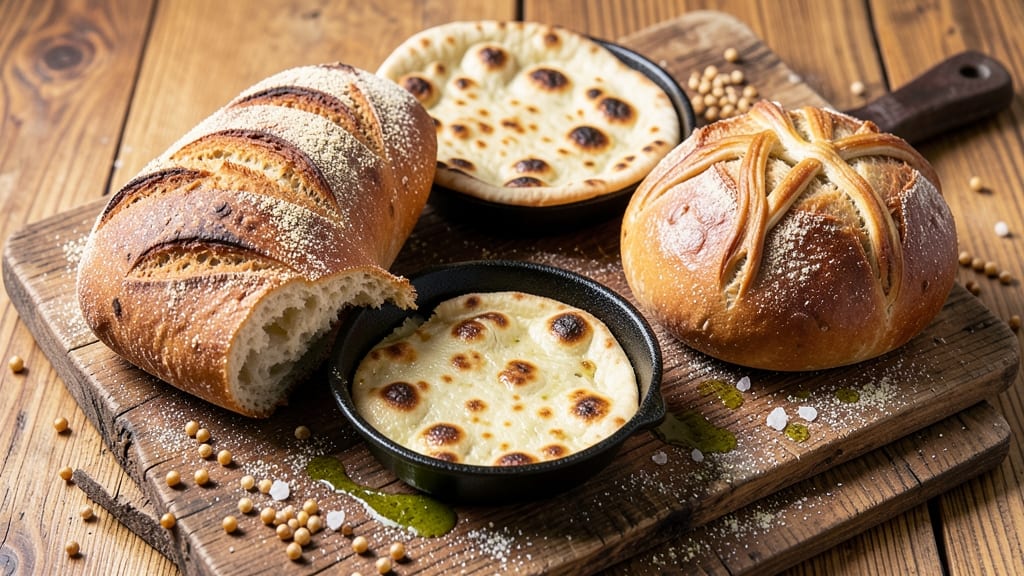
This Algerian bread recipe delivers the signature flaky layers and aromatic anise crust that define North African baking traditions. 🌟 The secret lies in semolina's unique texture, which creates delicate, paper-thin sheets when rolled properly—a technique I've perfected after years of testing different flour ratios and proofing times.
What sets this bread apart is the combination of traditional methods with modern convenience. While authentic versions often require wood-fired ovens, this adaptation uses a cast-iron skillet to achieve that distinctive crispy crust and tender interior.
The dough's simplicity—just flour, water, yeast, and a touch of anise—makes it approachable for home bakers while delivering restaurant-quality results.
The final product features perfectly crisp edges with a subtle anise fragrance, while the interior remains soft and pillowy. These characteristics make it ideal for serving alongside couscous or dipping into harissa—though it's equally delicious enjoyed plain with olive oil and sea salt.
The bread's versatility extends beyond savory pairings too.
For those interested in variations, sweet versions often incorporate orange blossom water or honey, creating a perfect breakfast option. The key to success lies in proper dough handling and baking technique, which I'll walk through in detail to ensure you achieve that signature flaky texture every time.
Ingredients for algerian bread
Nine essential ingredients transform into restaurant-quality Algerian bread with signature flaky layers and anise-kissed crust.
| Ingredient | Amount | Notes |
|---|---|---|
| All-Purpose Flour 🌾 | 4 cups | For structure and elasticity |
| Semolina Flour 🌾 | 1 cup | Coarse texture for flaky layers |
| Active Dry Yeast 🍞 | ½ tsp | Ensure it's fresh and active |
| Granulated Sugar 🍚 | 1 tbsp | Feeds yeast for activation |
| Warm Water 💧 | 1 ½ cups | 110°F for optimal yeast activation |
| Extra-Virgin Olive Oil 🫒 | ¼ cup | High-quality for richness |
| Ground Anise Seeds 🌿 | 1 tsp | For authentic aromatic flavor |
| Diamond Crystal Kosher Salt 🧂 | 1 ½ tsp | Fine grain for even distribution |
| Unsalted Butter 🧈 | 2 tbsp | Cold, cubed for layering |
Semolina flour is non-negotiable for that signature flaky texture—Bob's Red Mill or King Arthur brands deliver consistent results. For anise seeds, spice markets often carry whole seeds, which you can grind fresh for maximum aroma. Active dry yeast should be tested for freshness by dissolving it in warm water with sugar; if it foams within 5 minutes, it's ready. The olive oil should be extra-virgin with a peppery finish to complement the anise flavor profile. For those without access to specialty stores, Trader Joe's carries high-quality semolina flour and anise seeds in their bulk section.
No semolina flour? Fine cornmeal at double the amount mimics the texture, though the layers won't be as delicate. Whole anise seeds can be lightly toasted and ground for a more intense flavor. Diamond Crystal kosher salt is preferred due to its fine grain, but Morton works in a pinch. For a dairy-free option, substitute the butter with cold coconut oil, though it may yield slightly less crisp layers. The dough requires precise handling—overworking it destroys the flaky structure, while underproofing results in dense bread. A kitchen scale ensures accuracy when measuring flour, though the cup measurements provided work well for most home bakers.
The dough should be stored in an airtight container at room temperature for up to 24 hours, though it's best used immediately for peak texture. For longer storage, wrap tightly in plastic and refrigerate for 3 days. The baked bread maintains its crispness for 2 days when kept in a bread bag at room temperature. To revive stale bread, brush with melted butter and reheat in a 350°F oven for 5-7 minutes. Freeze portions of dough for up to 3 months—simply thaw overnight before shaping and baking.
Why You'll Love This Recipe
- No Yeast Fuss: I swear by this dough—just mix, let it sit, and bake. The yeast works its magic while I handle dinner, and that semolina crust? It’s the secret to a bread that feels like a hug without the stress.
- Crispy Magic: That golden, crackly top with a soft center—it’s the semolina’s doing. One sniff and my kitchen smells like a North African bakery, but with half the effort.
- Lunchbox Hero: Between us, this bread stays fresh for days. I pack slices for lunches, toast them for breakfast, or use them to wrap leftovers—no sad, stale sandwiches here.
- Pantry Powerhouse: All-purpose flour, semolina, yeast, sugar, water. That’s it. I keep these staples stocked because this bread is my go-to when I’m broke or lazy—either way, it wins.
Step-by-step instructions for Algerian bread
Master the art of flaky semolina layers with this precise technique.
👨🍳 Step 1: Activate the Yeast and Mix the Dough
In a large mixing bowl, combine the 1.5 cups warm water (tested at 110°F—too hot kills yeast) with the 1 tbsp granulated sugar and 0.5 tsp active dry yeast. Let sit for 5-10 minutes until foamy. This foam confirms active yeast—if it doesn't bubble, your bread will fail. Stir in the 4 cups all-purpose flour and 1 cup semolina flour.
Create a well in the center and add the 0.25 cup extra-virgin olive oil and 1 tsp ground anise seeds. Mix with a wooden spoon until a shaggy dough forms. Gradually sprinkle in the 1.5 tsp diamond crystal kosher salt, working it into the dough. The semolina flour will give you that signature Algerian texture—don't skip this step.
🍳 Step 2: Knead Until Elastic and Smooth
Turn the dough onto a lightly floured surface and knead for 8-10 minutes until smooth and elastic. You're looking for a dough that springs back when poked—not sticky, not dry. The anise seeds will add aroma, but too much handling releases their oils, so keep it efficient. Divide the dough into 8 equal portions (about 5 ounces each) and cover with a damp towel to prevent drying.
Let the dough rest for 30 minutes at room temperature. This relaxation period ensures the gluten relaxes, preventing shrinking during rolling. Real talk: Skipping this rest leads to dense, tough bread. Trust the process.
🥘 Step 3: Roll and Layer with Butter
On a floured surface, roll each dough portion into a 10-inch circle about ⅛-inch thick. Brush each circle with a thin layer of water, then sprinkle evenly with 2 tbsp unsalted butter (cold and cubed for maximum flakiness). The butter should melt slightly but not pool—this creates those signature flaky layers. Stack the circles, brushing each with water before adding the next.
Wrap the stacked dough in plastic wrap and refrigerate for 1 hour. This chilling step is non-negotiable—it firms up the butter layers so they don't smear when cutting. If you're impatient, you'll end up with a dense loaf instead of the flaky masterpiece you're after.
🔥 Step 4: Shape and Proof the Loaves
Preheat your oven to 425°F with a baking stone inside. Unwrap the chilled dough and cut the stack into 8 equal rectangles. Roll each rectangle into a 12-inch log, sealing the edges tightly. Place the logs on a parchment-lined baking sheet, spacing them 2 inches apart—they'll expand.
Cover the loaves with a clean kitchen towel and let them proof for 45-60 minutes until nearly doubled in size. They should spring back slowly when poked—a gentle test, not a poke that leaves a dent. Overproofing here means collapsed loaves. The anise seeds will add their distinctive flavor during proofing, so don't rush this stage.
🔥 Step 5: Bake to Golden Perfection
Bake the loaves for 20-25 minutes until deep golden brown with crisp edges. The interior should register 190-200°F—they'll continue cooking slightly after removal. Rotate the baking sheet halfway through for even browning. Here's the thing—Algerian bread should have a crackly crust with those visible semolina layers. If it's pale, bake 5 more minutes.
Transfer the loaves to a wire rack and let cool for 10 minutes before slicing. The bread will be warm and fragrant from the anise seeds. Serve immediately for the best texture—those layers will soften as they cool. Store any leftovers wrapped in a cloth to maintain freshness for up to 3 days.
Pro Tips For Making Algerian Bread
- Mix the dough by hand: I learned this the hard way—using a stand mixer for Algerian bread dough is a disaster. The semolina flour makes it too dense, and the gluten won’t develop properly. Grab a bowl and your hands, then knead like you’re trying to reshape a stubborn lump of clay. You’ll know it’s ready when it springs back just slightly when poked.
- Toast the semolina first: Skip this step, and your bread will taste flat and mealy. Dry-toast the semolina in a skillet over medium heat for 3-4 minutes, stirring constantly, until it smells nutty and golden. Let it cool before mixing—this adds depth and prevents a gummy texture. (Yes, even if you’re impatient like me.)
- Let the yeast bloom fully: Don’t just sprinkle the yeast on top of the flour and hope for the best. Mix it with the warm water (around 105°F—lukewarm, not hot) and a pinch of sugar first, then let it sit for 5-10 minutes until it’s frothy and bubbly. This guarantees your dough will rise properly, not just sort of rise.
- Shape into tight, round loaves: Algerian bread isn’t your average baguette—it’s meant to be dense and slightly chewy. After the first rise, punch down the dough and shape it into tight, smooth balls (about 8 inches wide). The tighter the shape, the better the crumb. If yours look lumpy, you’re doing it wrong—press firmly and roll the edges under.
Storing and reheating this dish
Room-Temp Storage
Keep your shaped Algerian bread dough at room temperature for up to 24 hours in an airtight container lined with a damp towel. The dough will stay pliable and ready to proof when needed.
I always cover it loosely with plastic wrap to prevent drying—this maintains the perfect texture for that signature flaky crust. 🌾
Refrigerator Freshness
For longer storage, refrigerate the shaped dough for up to 3 days in an airtight container. When ready to bake, let it sit at room temperature for 1 hour before proofing to prevent cold spots.
The cold environment slows yeast activity, so you'll need to extend the proofing time by 15-20 minutes to achieve the same rise.
Freezing Dough
Freeze unshaped dough portions for up to 3 months in a freezer bag with all air removed. When ready to use, thaw overnight in the refrigerator, then proceed with rolling and layering as directed.
The cold butter layers will firm up during freezing, so don't skip the 1-hour chilling before cutting. This method preserves the dough's elasticity perfectly.
Reviving Stale Bread
To restore crispness to stale Algerian bread, brush with melted butter and reheat in a 350°F oven for 5-7 minutes. The butter's moisture revives the layers while the heat reactivates the semolina's texture.
For extra crunch, place the bread on a baking sheet and broil for 1-2 minutes—just watch closely to avoid burning those precious anise-kissed edges.
Crust Preservation
Store baked loaves in a bread bag or wrapped in a clean kitchen towel at room temperature. The towel allows just enough airflow to maintain crispness while preventing complete drying.
For longer storage, slice the bread and freeze individual portions in quart-sized freezer bags—they'll stay fresh for up to 2 months. Toast frozen slices directly from the freezer for a quick, crispy breakfast.
Nutrition facts
Frequently asked questions
Why does Algerian bread need semolina flour?
The semolina creates those signature flaky layers by forming coarse, textured sheets when rolled thin. Unlike all-purpose flour, its coarse particles don't absorb as much liquid, allowing the butter to melt cleanly between layers during baking. This is what gives the bread its distinctive paper-thin, crispy structure.
Can I make this bread without a baking stone?
Use a preheated cast-iron skillet or a heavy metal baking pan for even heat distribution. Place the loaves directly on the hot surface for the first 5 minutes to develop that crisp crust, then transfer to the middle rack to finish baking. The key is high, dry heat—just like traditional wood-fired ovens.
What's the best way to test if the dough is properly proofed?
Gently press your finger into the dough—it should spring back slowly (about 1-2 seconds) without leaving a deep indentation. Overproofed dough collapses when baked, while underproofed loaves stay dense. The anise seeds will add their aroma during proofing, so don't rush this stage—patience is key for that perfect rise.
How do I store leftover Algerian bread?
Wrap cooled loaves in a clean kitchen towel or place in a bread bag at room temperature for up to 3 days. For longer storage, slice and freeze portions in airtight bags for 2 months. To revive stale bread, brush with melted butter and reheat at 350°F for 5-7 minutes—the butter's moisture brings back that crispy texture.
Can I make sweet Algerian bread?
Yes! Replace the anise with 1 tsp cinnamon and add 2 tbsp orange blossom water to the dough. For extra sweetness, sprinkle with 1 tbsp granulated sugar on top before baking. This version pairs perfectly with breakfast or dessert—just reduce the salt to 1 tsp for a milder flavor.