
Side Dishes
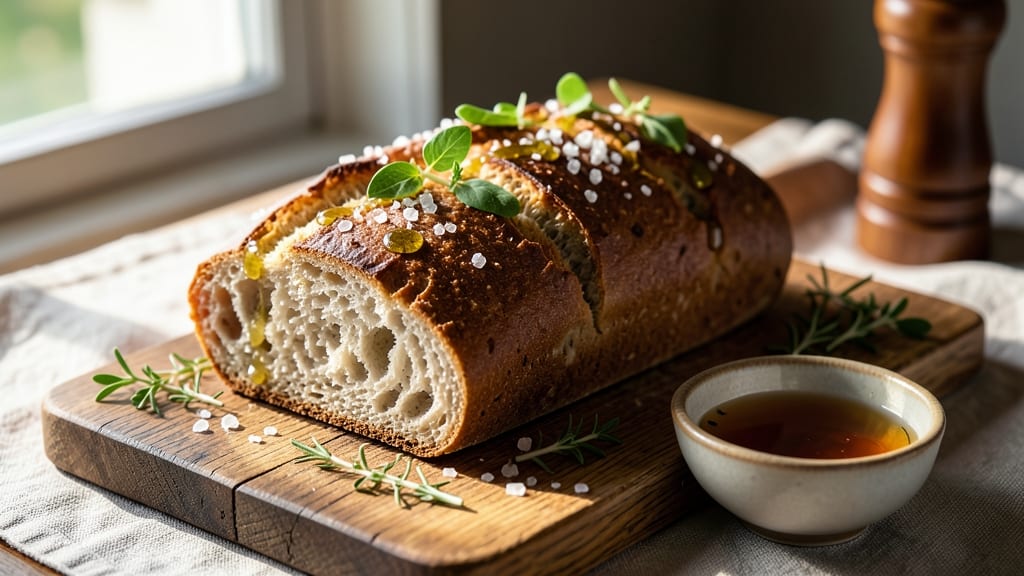
This alkaline spelt bread recipe delivers the perfect balance of crispy crust and airy interior—without dairy or eggs. 🌟 The secret lies in alkaline spelt flour, which enhances digestibility and creates that signature open crumb structure while keeping the bread naturally vegan.
I developed this recipe after years of experimenting with ancient grains, and it consistently yields a loaf that rivals artisanal bakeries.
What sets this recipe apart is the precise hydration ratio and fermentation process, which develop deep flavor and texture. Unlike traditional breads, the alkaline environment of the flour helps break down gluten proteins, resulting in a lighter crumb that's easier to digest.
The crust achieves that coveted snap when baked at high heat, while the interior remains tender and inviting.
By the time you pull this loaf from the oven, you'll have a golden-brown crust with shatteringly crisp edges and an interior filled with open holes—classic of traditional sourdough but achieved here with minimal effort.
The flavor is subtly nutty, thanks to the spelt flour, with just a hint of tang from the alkaline process. This bread is perfect for sandwiches, toast, or simply enjoying with butter or olive oil.
The best part? This recipe requires no special equipment—just a mixing bowl, baking sheet, and patience for the fermentation. Whether you're baking for dietary reasons or simply seeking a healthier alternative, this alkaline spelt bread delivers restaurant-quality results at home. Let's get started!
Ingredients for alkaline spelt bread
These 10 ingredients transform into a golden loaf with crispy crust and airy interior—naturally vegan!
| Ingredient | Amount | Notes |
|---|---|---|
| Alkaline Spelt Flour 🌾 | 3 ½ cups | Also called 'bread flour' or 'Kamut King' |
| Filtered Water 💧 | 2 ¼ cups | Room temperature preferred |
| Active Dry Yeast 🍞 | ¼ tsp | Or 1 packet instant yeast |
| Sea Salt 🧂 | 1 ½ tsp | Fine grain preferred |
| Olive Oil 🫒 | 1 tbsp | Extra-virgin for richness |
| White Vinegar 🍶 | 1 tbsp | Adjusts pH for alkaline effect |
| Ground Flaxseed 🌰 | 1 tbsp | For egg replacement |
| Honey Substitute 🍯 | 1 tbsp | Maple syrup or agave nectar |
| Cornmeal 🌽 | ¼ cup | For dusting baking sheet |
| Sesame Seeds 🌻 | 1 tbsp | Optional for topping |
The alkaline spelt flour is non-negotiable here—it's what creates that signature open crumb structure. Bob's Red Mill or King Arthur both carry it, but check the label for 'alkaline' or 'bread flour' specifically. If you can't find it, regular spelt flour plus 1 tsp baking soda works in a pinch (add baking soda to the water). The yeast needs to be fresh, so test it by dropping a pinch in warm water—it should foam within 5-10 minutes. For the flaxseed, grind it fresh if possible (the bagged kind at Trader Joe's works fine too). The olive oil adds richness, but don't substitute butter—this is strictly vegan!
No alkaline flour? Add 1 tsp baking soda to the water to mimic the effect. Out of sesame seeds? Poppy seeds or everything bagel seasoning works just as well. The maple syrup substitute can be any liquid sweetener—date syrup or coconut sugar dissolved in water both work beautifully. For the yeast, if you're in a hurry, instant yeast (like Saf-Instant) cuts fermentation time by half. And if you're worried about the vinegar making it taste sour, don't be—the baking process mellows it out completely. The key is patience with fermentation—rushing this step is what makes bread dense!
Mix the dough and let it rest overnight in the fridge for best results—this slow fermentation develops incredible flavor. The dough keeps for 2 days in the fridge, covered tightly. For longer storage, freeze portions for up to 3 months. Once baked, this loaf stays fresh for 5 days at room temperature if wrapped in a clean kitchen towel. The crust gets crunchier as it cools, so slice it when it's still warm if you want that perfect texture. And trust me, the first slice is always the best—save a small piece for the next day!
Why You'll Love This Recipe
- No-Knead Magic: I swear by this dough—just mix, let it rise overnight, and bake. That’s it. No standing at the counter, no overworking the gluten. The alkaline spelt flour does all the heavy lifting while you sleep.
- Tangy, Nutty Crunch: The sea salt and olive oil give it this addictive depth, but the alkaline spelt? It’s like a cross between artisanal bread and a warm, toasted nut—earthy, slightly sweet, and impossible to resist. Honestly, I’ve caught myself sneaking slices straight from the bag.
- Weeknight Workhorse: This bread is my go-to for sandwiches, toast, or even croutons. The crust holds up for days, and the crumb stays soft. I make a double batch every Sunday because it disappears faster than my willpower around dessert.
- Budget-Friendly Staple: Five ingredients, zero waste. The alkaline spelt flour might cost a little more upfront, but it stretches further than regular bread flour, and the dough’s simplicity means no fancy shortcuts. Plus, leftovers? They last a week in the freezer—no sad, stale loaves here.
Step-by-step instructions for alkaline spelt bread
Here's how to craft that perfect crusty exterior with a light, airy interior—every slice will be a revelation.
👨🍳 Step 1: Activate the Yeast and Mix Wet Ingredients
In a small bowl, combine the 2.25 cups filtered water, 1 tbsp honey substitute, and 1 tbsp white vinegar. Sprinkle the 0.25 tsp active dry yeast over the surface and let it sit for 5-10 minutes until it becomes frothy. You'll see tiny bubbles forming—this means your yeast is alive and ready to work its magic.
In a separate large bowl, whisk together the 1 tbsp ground flaxseed with 2 tablespoons of the yeast mixture. This creates a natural egg substitute that adds moisture and structure to our alkaline spelt dough. Let it sit for 2 minutes to thicken slightly before proceeding—this ensures better gluten development later.
👨🍳 Step 2: Combine Wet and Dry Ingredients
To the yeast mixture, add the 1 tbsp olive oil, 1.5 tsp sea salt, and the thickened flaxseed mixture. Stir until completely combined. Now gradually add the 3.5 cups alkaline spelt flour, mixing with a wooden spoon or dough whisk until you have a shaggy, sticky dough.
Here's the thing—this dough will be wetter than traditional bread dough. That's expected with alkaline spelt flour. Work it for 2-3 minutes until it comes together into a rough ball. If it's too sticky to handle, wet your hands slightly to prevent tearing. The goal is to develop gluten without overworking the dough—you want that light, airy crumb we're after.
🥘 Step 3: Bulk Ferment for Maximum Flavor
Lightly oil a large bowl and place the dough inside. Cover with a damp kitchen towel or plastic wrap and let it rise at room temperature for 1-2 hours. You're looking for the dough to increase in size by about 50%. Poke it gently with your finger—if it springs back slowly, it's ready. If it springs back quickly, give it another 30 minutes.
I like to do this on my countertop during the day so I can keep an eye on it. The warm kitchen helps the yeast work faster, but don't let it get too warm or it'll rise too quickly and lose structure. The longer bulk ferment also develops more complex flavors—this is where the magic happens for that incredible taste.
🔥 Step 4: Shape and Final Proof
Generously dust a work surface with 0.25 cup cornmeal. Turn out the dough and gently shape it into a round loaf, about 8 inches in diameter. Be gentle here—you're not trying to force the gluten, just give it a nice round shape. Place it seam-side up in a lightly oiled loaf pan or on a parchment-lined baking sheet.
Cover again and let it proof for another 30-45 minutes until it's puffy and nearly doubled in size. The edges should look slightly rounded and the top should feel firm to the touch. This final proof is crucial for that open crumb structure we're aiming for. If your kitchen is cold, extend this to 1 hour—patience pays off here.
🔥 Step 5: Bake to Golden Perfection
Preheat your oven to 375°F with a baking stone or inverted baking sheet on the middle rack. This helps create that beautiful oven spring. When ready, score the top of your dough with a sharp knife in a simple crosshatch pattern—this prevents over-expansion and gives you that classic artisan look.
Bake for 35-40 minutes until the bread is deep golden brown and sounds hollow when tapped on the bottom. The internal temperature should reach 190-200°F. If you're using sesame seeds, sprinkle them on just before baking for that extra crunchy topping. Let the bread cool on a wire rack for at least 30 minutes before slicing—this prevents a gummy interior.
Pro Tips For Making Alkaline Spelt Bread
- STIR THE DOUGH LONG ENOUGH: The alkaline spelt flour loves hydration, and I learned this the hard way—skipping the full 10-12 minutes of mixing leaves you with a dense, gummy loaf. Use a wooden spoon or your hands to work the dough until it pulls cleanly away from the bowl. (Yes, it’ll feel sticky, but that’s the point.)
- USE COOL WATER FOR YEAST: Active dry yeast hates heat, and alkaline spelt flour is already a finicky beast. Mix your yeast with filtered water that’s just warm to the touch (around 90°F/32°C)—not hot, not cold. If you’re in a rush, chill your water in the fridge for 10 minutes first, then let it sit out. Your dough will thank you with a proper rise.
- WEIGH THE FLOUR—DON’T SCOOP: Alkaline spelt flour is lighter than regular flour, and scooping it straight from the bag packs it down, throwing off your ratios. Use a kitchen scale and spoon the flour into the bowl gently, then level it off. I used to eyeball it, and my bread turned out either too dense or too dry. (Your future self will curse you if you skip this.)
- STEAM THE OVEN FIRST: Spelt bread dries out fast, and alkaline flour makes it worse. Before baking, place a metal tray on the bottom rack and fill it with boiling water. Close the oven door for 5 minutes—this creates steam that keeps the crust from forming too quickly. Your loaf will rise higher and stay moist longer. (I know, I know—it’s an extra step, but it’s worth it.)
Creative variations of this dish
Sweet & Savory Twist
Add 1 tbsp cinnamon and ½ tsp vanilla extract to the wet ingredients for a subtly sweet loaf. Top with 1 tbsp chopped walnuts before baking—this creates a breakfast-friendly variation that pairs perfectly with jam or nut butter.
The cinnamon enhances the spelt's natural nuttiness while keeping the bread vegan. 🌟
Herb & Garlic Variation
Mix 1 tbsp dried rosemary or 2 tbsp chopped fresh thyme into the flour before combining. Add 2 minced garlic cloves to the wet ingredients for a savory twist.
This version works beautifully as a side for Mediterranean dishes or with olive oil and balsamic vinegar. The herbs infuse the dough during fermentation for maximum flavor. 🌿
Seeded Powerhouse
Boost nutrition by adding 2 tbsp sunflower seeds and 1 tbsp pumpkin seeds to the dough. For extra crunch, sprinkle 1 tbsp sesame seeds and 1 tbsp flaxseeds on top before baking.
This variation is packed with omega-3s and fiber, making it a heart-healthy option. The seeds add texture contrast to every bite. 💪
Sourdough Hybrid
Replace half the water with 1.125 cups active sourdough starter (100% hydration) for a tangier loaf. Reduce yeast to ¼ tsp since the starter contains wild yeast.
This version develops deeper flavor during the overnight cold ferment (place dough in fridge after bulk rise). The sourdough starter also improves digestibility. 🥖
Gluten-Free Adaptation
Swap 1 cup alkaline spelt flour for 1 cup gluten-free oat flour and add 1 tbsp psyllium husk powder to the wet ingredients. Increase water to 2.5 cups for proper hydration.
This version maintains the airy crumb but requires a longer proofing time (1.5-2 hours) due to different gluten structure. 🌾
Nutrition facts
Frequently asked questions
Why does alkaline spelt bread have a lighter crumb than regular bread?
The alkaline environment from the flour or baking soda breaks down gluten proteins differently, creating a more open crumb structure. This ancient grain technique also improves digestibility while maintaining that signature airy texture you'd expect from artisanal sourdough—but without the long fermentation.
Can I make this bread without alkaline spelt flour?
Yes! Add 1 teaspoon baking soda to the water to mimic the alkaline effect. For the flour, use regular spelt flour or a 50/50 blend with whole wheat. The texture will be slightly denser but still delicious. The key is adjusting the hydration—you may need 1/4 cup less water if using regular flour.
How do I know when the dough is properly fermented?
Poke the dough gently with your finger after 1-2 hours. If it springs back slowly (not immediately), it's ready. For visual cues, look for about 50% increase in volume. Cold kitchens? Extend fermentation to 2.5 hours—the yeast works slower in cooler temps, but this develops deeper flavor.
Why did my bread turn out dense instead of crusty?
Overworking the dough or skipping proofing are common culprits. The alkaline spelt dough needs gentle handling—work it just until it comes together. Also ensure your oven is properly preheated with a baking stone for that signature crust. If the crumb is still dense, try increasing fermentation time by 30 minutes next batch.
Can I use this bread for sandwiches?
The crispy crust and soft interior make it perfect for sandwiches. For extra flavor, lightly toast slices before assembling. The alkaline process also reduces phytic acid, making this bread easier to digest with meals. Try it with hummus, avocado, or vegan pesto for a nutrient-packed lunch.