
Side Dishes
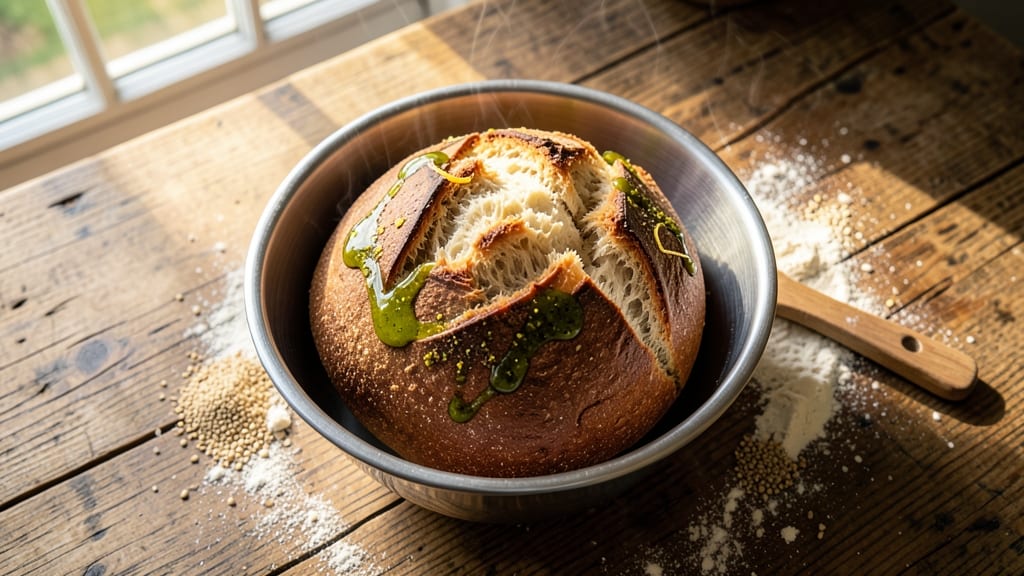
This all-purpose bread recipe delivers the perfect loaf for sandwiches, toast, or dinner rolls—no kneading required. The secret lies in a simple mix of flour, yeast, and water that develops flavor overnight, resulting in a soft, airy texture with a crisp crust.
After years of testing, this method consistently produces bread that's both beginner-friendly and restaurant-worthy.
The beauty of this recipe is its versatility—use it for everyday sandwiches, buttery toast, or even garlic bread. The dough comes together in minutes, then rests in the fridge while you sleep, allowing the yeast to work its magic.
This slow fermentation creates a deeper flavor and lighter crumb than traditional quick breads.
By the time it emerges from the oven, you'll have a loaf with a golden-brown crust and an interior so tender it practically melts in your mouth.
The crust stays crisp for days, while the soft interior remains perfect for toast or sandwiches. No special equipment needed—just a bowl, a spoon, and your oven.
Whether you're a first-time baker or a seasoned pro, this recipe builds confidence with foolproof results. The instructions are clear, the ingredients are simple, and the outcome is always impressive. Let's get started on your first perfect loaf.
Ingredients for all purpose bread
Eight simple ingredients transform into a restaurant-worthy loaf with minimal effort.
| Ingredient | Amount | Notes |
|---|---|---|
| All-Purpose Flour 🌾 | 4 cups | Plus 2 tbsp for dusting bowl |
| Instant Yeast 🍞 | 1 tbsp | Or 2.25 tsp active dry yeast |
| Granulated Sugar 🍚 | ½ tsp | Feeds the yeast |
| Salt 🧂 | 1 ½ tsp | Diamond Crystal preferred |
| Warm Water 💧 | 1 ½ cups | 105-110°F, not boiling |
| Olive Oil 🫒 | 2 tbsp | Extra-virgin for richness |
| Cornmeal 🌽 | 1 tbsp | For dusting baking sheet |
| Coarse Kosher Salt 🧂 | 1 tsp | For sprinkling crust |
The flour is the foundation—King Arthur or Gold Medal work best for this no-knead method. I always grab a 5-pound bag from King Arthur since it's my go-to for all baking. The yeast needs to be fresh, so check the date on the package—if it's been sitting in your pantry for months, toss it. Warm water is key: too hot and you'll kill the yeast, too cold and it won't activate properly. I use a thermometer to check the temp, but if you don't have one, just dip your pinky finger in—it should feel like bathwater. The olive oil adds richness, so don't skimp on the good stuff.
No instant yeast? Active dry yeast works too—just let it proof in the warm water for 5 minutes first. Running out of sugar? A pinch of honey works (though it'll add a subtle floral note). For the flour, whole wheat blend works at half the amount if you want to add nutrition. The cornmeal is optional but creates that perfect pull-apart crust. If you forget it, just use extra flour. And if you're worried about the bread being too dense, let the dough rest longer in the fridge—up to 72 hours if you have time.
This dough is a dream to store. Shape it into a loaf, place in an oiled bowl, cover with a damp towel, and refrigerate for up to 3 days. The flavor actually improves with time! For longer storage, wrap tightly in plastic and freeze for up to 3 months. To revive frozen dough, thaw overnight in the fridge before baking. The crust stays crisp for days if you store it in a paper bag—trust me, I've tested this.
Why You'll Love This Recipe
- Pantry Staples Only: I swear by this recipe because it uses what I always have—flour, yeast, sugar, salt, and water. No specialty ingredients, no last-minute grocery runs. Just mix, let it rise, and bake. That’s it. Even my lazy Sunday mornings can’t resist it.
- Golden Crust, Soft Core: The sugar in the dough caramelizes just enough to give that perfect golden crust, while the inside stays tender and pillowy. Honestly, the first time I bit into it still warm, I nearly dropped the loaf. It’s that good.
- Every Meal Upgrade: Sandwiches? Check. Toast with butter? Done. French toast? Absolutely. I make a big batch on Sundays and use it all week—no sad, dried-out bread here. It’s my secret weapon for turning simple meals into something special.
- Budget Baking Wins: A single batch costs pennies and stretches for days. Between us, I’ve fed a houseful of people for under five bucks with this recipe. Plus, leftovers toast up like fresh bread—no waste, all flavor. My wallet and my stomach thank me.
Step-by-step instructions for no-knead bread
This foolproof method delivers tender, flavorful bread with minimal effort—perfect for sandwiches or toast.
Mix the Dough Until Just Combined
In a large bowl, whisk together the 4 cups all-purpose flour, 1 tbsp instant yeast, 0.5 tsp granulated sugar, and 1.5 tsp salt. I use a whisk for this step to ensure the yeast and sugar disperse evenly throughout the flour. This prevents clumps that could interfere with proper yeast activation.
Next, add the 1.5 cups warm water (between 105-110°F) and 2 tbsp olive oil. Using a wooden spoon, stir the mixture until it forms a shaggy dough that clings to the sides of the bowl. You'll notice the dough will feel sticky—this is normal for no-knead bread. The goal here is to combine everything without overmixing, which develops gluten and makes the bread tough.
Let the Dough Rest and Hydrate
Cover the bowl tightly with plastic wrap and let the dough rest at room temperature for 1 to 2 hours. During this time, the yeast will activate, the flour will fully hydrate, and the dough will become noticeably more elastic. You'll see small bubbles forming on the surface—this is your sign that fermentation is working.
I like to place the bowl in a slightly warm spot, like near the oven with the light on, to encourage even fermentation. Avoid placing it directly in a hot oven, as this can overproof the dough. After 1 to 2 hours, the dough should have nearly doubled in size and feel slightly springy when pressed gently with a finger.
Shape and Proof the Dough
Lightly dust a clean work surface with 2 tbsp all-purpose flour (from the extra amount mentioned in the ingredients). Turn the dough out onto the surface and gently shape it into a loose round loaf. Don't worry if it's not perfect—this isn't a highly structured bread. Place the shaped dough seam-side up in a greased 9x5-inch loaf pan (or a similar-sized baking dish).
Cover the pan loosely with plastic wrap and let the dough proof for another 1 to 2 hours until it has risen to about 1 inch above the rim of the pan. The dough should feel light and springy when pressed gently. If you're short on time, you can place the pan in a warm oven (with the light on) to speed up proofing, but this should only take about 30 to 45 minutes in this case.
Bake to Golden Perfection
Preheat your oven to 375°F. While the oven heats, sprinkle 1 tbsp cornmeal evenly over the bottom of a baking sheet. This creates a crispy, golden crust on the underside of the bread. Once the oven is preheated, carefully transfer the proofed dough (still in the pan) onto the prepared baking sheet.
Bake for 30 to 35 minutes until the bread is deep golden brown and sounds hollow when tapped on the bottom. If the top browns too quickly, loosely tent the pan with aluminum foil after 20 minutes to prevent over-browning. The internal temperature should reach 190-200°F—this ensures the bread is fully baked and tender inside.
Cool and Enjoy
Remove the bread from the oven and let it cool in the pan for 10 minutes. This step is crucial—it allows the bread to set and prevents a gummy texture. After 10 minutes, carefully invert the bread onto a wire rack to cool completely. The bread will continue to firm up as it cools, making it easier to slice.
Once fully cooled, slice the bread into ¼-inch thick slices for sandwiches or enjoy it toasted. The crust should be crisp and golden, while the interior remains soft and slightly chewy. This bread keeps well at room temperature for 3 to 4 days or can be frozen for up to 3 months for fresh toast anytime.
Pro Tips For Making All Purpose Bread
- WEIGH YOUR FLOUR: I learned this the hard way—measuring flour by scooping from the bag packs too much air, and your bread ends up dense. Use a kitchen scale for accuracy, or spoon flour into the cup and level it off. A little less is better than guessing.
- DON’T SKIP THE HYDRATION CHECK: The water should feel like your wrist after a hot shower—warm enough to touch but not scalding. Too hot kills yeast; too cool makes it sluggish. Test it by dipping your finger in: if it’s uncomfortable, wait a minute.
- LET IT RISE UNTIL DOUBLED: I used to peek every 10 minutes, but that’s how you end up with a sad, flat loaf. Set a timer and walk away. The dough should spring back slowly when poked—if it bounces right back, it’s not ready yet.
- USE A LITTLE OIL FOR SHINE: This isn’t the prettiest method, but it’s the tastiest. Brush the risen dough with a teaspoon of neutral oil (like canola) before baking. It won’t make your bread greasy, but it’ll give the crust a golden sheen and keep it moist longer.
Serving suggestions for all purpose bread
Classic Sandwich Perfection
This bread is a sandwich game-changer—its soft interior holds fillings beautifully while the crisp crust keeps everything in place. My go-to is a grilled cheese with sharp cheddar and caramelized onions, or a turkey and avocado combo with a smear of Dijon mustard.
For extra flair, toast thick slices until golden and crisp, then pile high with roast beef, Swiss cheese, and horseradish cream cheese. 🥪
Buttery Toast Magic
Slice your bread into ¼-inch thick pieces and toast until the crust crackles. For classic buttery toast, melt 2 tbsp unsalted butter in a skillet over medium heat, then add slices until golden brown.
Swap butter for olive oil and sprinkle with flaky sea salt and red pepper flakes for a Mediterranean twist. I also love dipping toast in garlic-infused olive oil with a sprinkle of dried oregano.
Dinner Rolls Upgrade
Cut the loaf into 12 equal rectangles for dinner rolls. Brush warm rolls with melted garlic butter (mix 2 tbsp softened butter with 1 minced garlic clove and ½ tsp parsley).
Serve alongside homemade gravy for roast beef or brown butter for seafood. For a savory touch, sprinkle with crumbled feta and toasted pine nuts before baking at 350°F for 10 minutes.
Garlic Bread Twist
Slice the loaf into ½-inch thick pieces and arrange on a baking sheet. Brush both sides with a mix of 2 tbsp melted butter, 1 minced garlic clove, and 1 tsp chopped parsley.
Bake at 375°F for 8-10 minutes until golden. For extra richness, add grated Parmesan and crushed black pepper before baking. Serve with marinara sauce for dipping or alongside pasta. 🧄
French Toast Reinvention
Slice the bread into ½-inch thick pieces and soak in a custard of 2 eggs, ½ cup milk, 1 tsp vanilla, and 1 tbsp cinnamon. Cook in a buttered skillet over medium heat until golden brown.
Top with maple syrup, whipped cream, and chopped pecans for a Southern-style breakfast. For a savory version, use egg wash with salt and pepper and serve with smoked salmon and creme fraiche.
Storage and Revival Hacks
Store leftover bread in a paper bag at room temperature for up to 4 days to maintain crispness. For toast, wrap slices in parchment paper and freeze—when ready, toast directly from frozen.
To revive stale bread, sprinkle with water, wrap in foil, and bake at 350°F for 5-10 minutes. For extra flavor, brush with garlic-infused oil before serving. ✨
Nutrition facts
Frequently asked questions
Can I make this bread without a loaf pan?
Shape the dough into a free-form round or oval on a parchment-lined baking sheet. Brush with olive oil and sprinkle with cornmeal before baking. For even browning, rotate the pan halfway through the 30-35 minute bake time at 375°F.
Why did my bread turn out dense instead of light?
Dense bread usually means the yeast didn't activate properly or the dough didn't rest long enough. Check your water temperature—it should be 105-110°F (like bathwater). Also ensure your yeast is fresh (test by mixing with warm water and sugar—it should bubble in 5 minutes). Let the dough rest the full 1-2 hours before shaping.
How can I add flavor variations to this basic recipe?
For herb bread, mix in 1 tbsp chopped rosemary or thyme with the flour. For garlic bread, add 1 minced garlic clove to the dough. Try 1 tbsp sesame seeds or poppy seeds for texture. For sweet bread, replace ½ tsp sugar with 1 tbsp honey and add ½ tsp cinnamon.
Can I make this bread without olive oil? Yes! Substitute with 2 tbsp melted butter or 2 tbsp vegetable oil. For extra richness, use 1 tbsp butter + 1 tbsp oil. The oil adds tenderness, but butter contributes flavor—both work perfectly. Just
What's the best way to slice this bread for sandwiches?
Use a serrated knife and slice the cooled loaf into ¼-inch thick pieces. For perfect sandwich slices, dip the knife in hot water between cuts to prevent sticking. Pro tip: Store slices in an airtight container with a paper towel to maintain crispness.