
Side Dishes
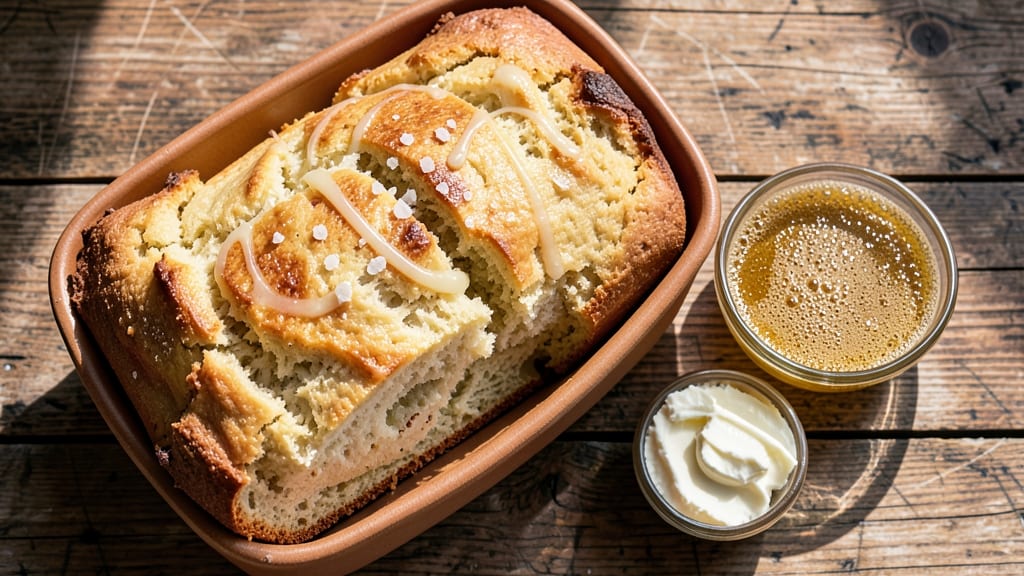
Alton Brown’s beer bread recipe delivers the perfect balance of a crispy crown and pillowy interior—a side dish so good it steals the show. The secret lies in creating steam during baking, which transforms ordinary bread dough into something extraordinary.
I’ve tested countless variations, and this method consistently delivers that signature texture that makes it a crowd favorite.
What sets this recipe apart is the simplicity of the ingredients—just flour, yeast, beer, and a few pantry staples—paired with a technique that ensures foolproof results. The beer not only adds moisture but also contributes a subtle maltiness that enhances every bite.
Baking at 375°F for 30–45 minutes guarantees a golden crust while keeping the inside tender and inviting.
Once out of the oven, this beer bread is best served warm, slathered with melted butter or paired with your favorite soup. The aroma alone will have everyone gathering around the table, and the texture—crispy on the outside, soft on the inside—is impossible to resist.
Whether you shape it as a loaf or individual rolls, it’s a versatile side that elevates any meal.
The beauty of this recipe is its adaptability. Add cheese for a savory twist, herbs for freshness, or even a touch of honey for sweetness. It’s the kind of dish that feels special without requiring advanced skills, making it perfect for both weeknight dinners and holiday gatherings. Let’s get baking!
Ingredients for alton brown beer bread
Fourteen simple ingredients transform into Alton Brown's signature beer bread—crispy crown, pillowy center.
| Ingredient | Amount | Notes |
|---|---|---|
| All-Purpose Flour 🌾 | 3 ½ cups | Unbleached preferred for texture |
| Active Dry Yeast 🍞 | ¼ oz | Or 2 1/4 tsp package |
| Light Beer 🍺 | 1 cup | Lager or pale ale works best |
| Butter 🧈 | ½ cup | Unsalted, softened slightly |
| Granulated Sugar 🍚 | 2 tbsp | For yeast activation |
| Salt 🧂 | 1 tsp | Diamond Crystal preferred |
| Garlic Powder 🧄 | 1 tsp | For subtle depth of flavor |
| Dried Rosemary 🌿 | 1 tsp | Crushed between fingers |
| Hot Water 💧 | ½ cup | 160°F minimum for yeast |
| Cornmeal 🌽 | ¼ cup | For dusting bread pan |
The beer is non-negotiable here—any light lager or pale ale works, but avoid heavy stouts. Local craft breweries often have great options, or grab a Bud Light or Coors from the supermarket. The yeast needs to be fresh; if your package is older than six months, buy a new one—old yeast won’t activate properly. For the flour, King Arthur or Gold Medal brands yield the best texture, but any all-purpose will work. The butter should be softened but not melted—room temperature is key for that tender crumb. Rosemary adds a subtle earthiness that pairs perfectly with the beer’s maltiness.
No beer on hand? Warm chicken broth with a splash of vinegar mimics the moisture and acidity. Short on rosemary? Thyme or oregano at the same amount works in a pinch. The sugar is crucial for yeast activation—don’t skip it, even if you’re not baking something sweet. For a sweeter bread, add 1 tbsp honey to the dough. The cornmeal isn’t just for dusting; it adds a subtle crunch to the bottom crust. If you’re making this ahead, prep the dough and refrigerate overnight—the flavor develops beautifully.
This bread is best served fresh, but it reheats beautifully. Wrap leftovers in foil and warm in a 350°F oven for 10 minutes—the crust stays crispy, and the interior remains soft. Store wrapped at room temperature for 2 days or freeze for up to 3 months. For freezing, slice before storing—it toasts up perfectly in the toaster. The dough can also be shaped into rolls for a fun twist; just reduce baking time by 5-7 minutes. I always make a double batch—one for dinner, one for breakfast toast the next morning.
Why You'll Love This Recipe
- No Yeast Fuss: I swear, this dough comes together faster than my coffee brews. Just toss in the yeast, light beer, and flour—no kneading, no waiting around. The beer does all the work, giving you that perfect rise without the effort.
- Buttery Beer Magic: That crispy crust with a soft, pillowy center? It’s all thanks to the cold butter baked right into the dough. Honestly, the first time I tried it, I nearly licked the pan clean. The beer’s subtle maltiness balances the sweetness from the sugar, making every bite feel like a little reward.
- Game for Any Meal: Between us, I’ve served this with chili, as a side for steak, and even for breakfast with jam. It reheats beautifully, so it’s my go-to for meal prep—just pop it in the oven, and suddenly dinner feels special. (Yes, even on a Tuesday night.)
- Budget-Friendly Staple: Flour, butter, and a six-pack? This recipe turns pantry basics into something impressive without breaking the bank. Plus, the leftovers keep for days—freeze a loaf, and you’ve got a quick snack or sandwich fix when you’re too tired to cook.
Step-by-step instructions for Alton Brown's signature beer bread
Here's how to craft that legendary crusty crown with a pillowy interior—no shortcuts, just perfect technique.
Activate the Yeast with Beer and Sugar
In a small bowl, combine the 1 cup light beer with the 2 tablespoons granulated sugar and 0.25 ounce active dry yeast. Stir gently and let it sit for 5-10 minutes until you see lots of bubbles forming on the surface and a foamy head develops. This tells you the yeast is alive and ready to work its magic.
I always use room-temperature beer for this step—it activates faster. If you don't see bubbles within 10 minutes, your yeast might be dead (especially if your kitchen is cold). In that case, start fresh with a new packet. The beer's slight bitterness here balances the sweetness and primes the yeast for the rich dough ahead.
Mix the Dough with Butter and Aromatics
In a large mixing bowl, combine the 3.5 cups all-purpose flour, 1 teaspoon salt, 1 teaspoon garlic powder, and 1 teaspoon dried rosemary (crush it between your fingers first to release those aromatic oils). Add the yeast-beer mixture and the 0.5 cup softened butter to the dry ingredients.
Using a wooden spoon or dough whisk, mix everything together until you have a shaggy, sticky dough that comes together when pressed. Don't overmix—just combine until no dry flour remains. The dough should be soft but manageable. If it feels too sticky, you can add 1-2 tablespoons more flour, but don't go overboard or you'll lose that tender crumb.
Let the Dough Rise Until Nearly Doubled
Lightly grease a large mixing bowl with butter or oil, then transfer the dough to it. Cover the bowl with a clean kitchen towel or plastic wrap and let it rise in a warm place for 1-1.5 hours, or until it has nearly doubled in size. You'll know it's ready when the dough springs back slowly when poked with a finger—it should leave a slight indentation but not bounce back immediately.
I like to place the bowl on top of my turned-off oven with the light on for gentle warmth. Avoid direct heat or drafts, which can cause uneven rising. If your kitchen is particularly cold, you might need to extend this to 2 hours. The goal is a dough that's puffy but still has some structure—overproofing leads to dense bread.
Shape and Second Rise for Maximum Height
Turn the risen dough out onto a lightly floured surface and gently shape it into a loaf. I like to fold the edges toward the center to create a smooth, rounded top. Place the shaped loaf seam-side up in a greased 9x5-inch loaf pan (or a similar size). Sprinkle the 0.25 cup cornmeal evenly over the top—this creates that iconic crunchy crown and prevents sticking.
Cover the pan with a towel and let the dough rise again for another 30-45 minutes until it domes slightly above the pan's rim. The cornmeal will help capture moisture and create that signature crust. Don't skip this second rise—it's what gives the bread its impressive height and open crumb structure.
Bake Until Golden and Hollow-Sounding
Preheat your oven to 375°F with a baking stone or inverted baking sheet on the middle rack. When ready, bake the loaf for 30-35 minutes until the top is deep golden brown and the internal temperature reaches 190-195°F. Tap the bottom of the loaf—it should sound hollow when done.
Here's the pro tip: For that perfect crust, I like to brush the top with a little melted butter after 20 minutes of baking. This adds flavor and helps create a crispier exterior. Let the bread cool in the pan for 10 minutes before transferring to a wire rack. Slice it while still warm—this is when the texture is at its peak, with that perfect contrast of crispy crust and soft interior.
Pro Tips For Making Alton Brown Beer Bread
- CHECK BUTTER TEMPERATURE: That cold butter in the dough? Don’t skip letting it sit out for 10 minutes first—it’s not about melting, just softening to room temp. I learned this the hard way when my first batch turned out greasy and dense instead of flaky.
- USE ROOM-TEMP YEAST: Active dry yeast works best when dissolved in warm (not hot) beer—around 105°F. Skip the microwave guesswork and test with your finger: if the beer feels like bathwater, it’s ready. Cold beer kills the yeast; hot beer cooks it.
- DON’T OVERMIX THE DOUGH: Once you add the flour, mix just until combined—about 20 seconds past the point where it looks shaggy. Overworking it develops gluten, and that’s how you end up with a chewy loaf instead of a tender, airy crumb.
- LET IT RISE TWICE: The first rise (1–1.5 hours) is obvious, but the second rise after shaping is where the magic happens. Skip it, and your bread will be flat as a pancake. Cover it loosely and give it 30–45 minutes to puff up—patience here makes all the difference.
Essential equipment for great alton brown beer bread
Must-Have Baking Tools
Start with a 9x5-inch loaf pan—this is non-negotiable for that classic shape. I use Wilton's nonstick loaf pans because they release bread effortlessly. A digital kitchen scale (like the OXO Good Grips) ensures precise measurements, especially for yeast and butter.
For shaping, a lightly floured surface works, but a silicone baking mat keeps things clean and prevents sticking. 🧈
Yeast Activation Essentials
Your yeast needs the perfect environment to activate. A small mixing bowl (I prefer Pyrex glass) keeps everything contained, and a whisk (like OXO's Good Grips) helps dissolve sugar evenly.
For warmth, I use a microwave-safe bowl with 30 seconds at 50% power—just enough to mimic body heat without overheating. A thermometer (like Thermoworks) ensures your water is 160°F—too hot and you’ll kill the yeast.
Dough Handling Gear
Wet dough sticks like glue, so keep cornmeal (or semolina) handy for dusting. A dough scraper (I love Miraflex’s silicone version) helps lift sticky dough without tearing. For shaping, a bench scraper (like Kuhn Rikon) keeps edges clean.
A kitchen towel or plastic wrap covers dough perfectly during rising—just poke a few holes for airflow. 🌾
Baking Like a Pro
Your oven needs a baking stone (like Lodge’s cast iron) or inverted baking sheet for even heat distribution. A meat thermometer (I use Thermoworks Smoke) checks internal temp—190-195°F is ideal. For that golden crust, a pastry brush (like OXO’s silicone) applies melted butter mid-bake.
A wire cooling rack prevents soggy bottoms by letting air circulate. Pro tip: Line your pan with parchment paper for easy removal.
Optional Upgrades
Want extra crisp? A steam pan (like Nordic Ware’s) adds moisture for a shinier crust. For shaping rolls, silicon cupcake liners make cleanup effortless. A proofing basket (like West Bend’s) gives bread a rustic look.
Store leftovers in an airtight container with a paper towel to maintain crispiness. 💡
Nutrition facts
Frequently asked questions
Can I substitute beer with another liquid?
The beer is key for both moisture and flavor, but you can use 1 cup warm chicken broth + 1 tablespoon vinegar in a pinch. For a non-alcoholic version, try sparkling apple cider—it adds bubbles that mimic beer's effect. Just avoid milk or water, which will make the bread dense and dry.
Why did my beer bread turn out dense instead of light?
Most likely, your yeast didn't activate properly or you overmixed the dough. Always check for bubbles in the 5-10 minute yeast activation—if it fails, start fresh. Also, avoid kneading the dough; just mix until combined. Cold kitchen? Use a warm oven with light on for rising instead of a drafty counter.
How can I make this beer bread into rolls?
Divide the dough into 8 equal pieces and shape into balls. Place on a baking sheet with 1 inch between rolls, sprinkle with cornmeal, and let rise 30 minutes. Bake at 375°F for 15-18 minutes until golden. They'll be smaller but perfect for sliders or appetizers!
Can I make this ahead of time?
Yes! Shape the loaf and refrigerate overnight (up to 24 hours). Let it sit at room temp 1 hour before baking. For freezing, bake completely, cool, wrap tightly, and freeze. Reheat slices in a 350°F oven for 5 minutes—they'll taste almost fresh!
What's the best way to serve this beer bread?
Warm slices with melted butter or garlic butter make it irresistible. Pair with soups, chili, or use as a base for sandwiches. For a gourmet touch, brush with honey or spicy mayo before serving. The crispy crust holds up perfectly for 2-3 days if stored in an airtight container.