
Side Dishes
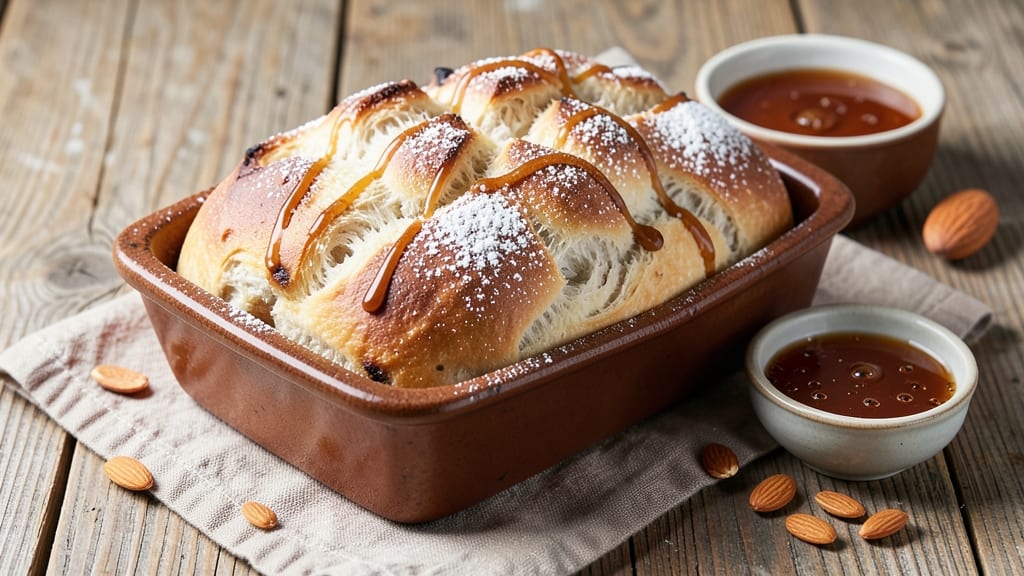
This amaretto bread recipe transforms ordinary yeast bread into a showstopper with its nutty vanilla swirls and golden, crispy crown. The amaretto liqueur infuses every bite with warm almond and vanilla notes, creating a texture that's both tender inside and perfectly crisp on top.
I developed this recipe after years of baking, perfecting the balance between rich dough and that signature crunchy crust.
The secret lies in the dough—kneaded just enough to develop gluten without overworking it, then enriched with amaretto for depth. A simple vanilla-amaretto swirl adds visual appeal while keeping the bread moist.
Baking at high heat ensures that crispy crown everyone craves, while the interior remains soft and flavorful. This isn't just bread; it's a dessert-worthy centerpiece.
What makes this recipe stand out is its versatility. Shape it into a classic loaf, pull-apart rolls, or even brioche-style buns—each variation delivers the same nutty, boozy aroma and satisfying texture.
The amaretto enhances the dough's natural sweetness, making every slice irresistible. Perfect for breakfast, gifts, or holiday tables, this bread proves you don't need fancy ingredients for extraordinary results.
Once baked, brush the warm loaf with melted butter for extra shine, or drizzle with a light amaretto glaze for a restaurant-quality finish. Slice into thick pieces to showcase those beautiful swirls and serve with coffee or tea. The aroma alone will have everyone asking for seconds. Let's get baking!
Ingredients for amaretto bread
Sixteen ingredients for a loaf that tastes like dessert and smells like a bakery.
| Ingredient | Amount | Notes |
|---|---|---|
| All-Purpose Flour 🌾 | 4 ½ cups | Spooned and leveled for accuracy |
| Granulated Sugar 🍚 | ¼ cup | White or light brown preferred |
| Instant Yeast 🍞 | 2 ¼ tsp | Ensure it's fresh and active |
| Salt 🧂 | 1 ½ tsp | Fine sea salt preferred |
| Unsalted Butter 🧈 | ½ cup | Cold, cubed for easier mixing |
| Large Eggs 🥚 | 2 whole | Room temperature for even mixing |
| Whole Milk 🥛 | ¾ cup | Warmed to room temperature |
| Vanilla Extract 🍯 | 1 ½ tsp | Pure, high-quality extract |
| Amaretto Liqueur 🍸 | ½ cup | High-quality, 25% alcohol |
| Vanilla Bean Seeds 🍯 | 1 tbsp | Scraped from 1 bean for depth |
| Powdered Sugar 🍚 | ¼ cup | For glaze, sifted for smoothness |
| Almond Extract 🌰 | ½ tsp | Pure, for authentic flavor |
| Coarse Sugar 🍚 | ¼ cup | For sprinkling on top |
The yeast and flour are the foundation—King Arthur or Gold Medal flour work best for that perfect crumb. Amaretto isn't cheap, so pick up a good bottle at Total Wine or your local liquor store. The vanilla bean seeds are non-negotiable for that restaurant-quality depth. If you can't find fresh seeds, double the vanilla extract but know it won't be quite the same. The butter should be cold when you mix it in—this keeps the dough from getting too soft. For the sugar, Domino or C&H brands are reliable, but any granulated will do.
No amaretto? Substitute with 0.25 cup almond extract plus 0.25 cup water, but the flavor won't be identical. Fresh vanilla bean seeds unavailable? Use 2 tsp pure vanilla extract—just know it lacks that subtle complexity. The powdered sugar glaze can be made with confectioners' sugar from any grocery store, but sift it well to avoid lumps. For a richer dough, replace 0.25 cup milk with heavy cream. The coarse sugar on top? Turbinado or sanding sugar gives the best caramelization, but regular granulated works in a pinch.
This dough keeps in the fridge for 2 days wrapped tightly in plastic. For longer storage, freeze shaped loaves for up to 3 months—thaw at room temperature before baking. The baked bread stays fresh for 3-4 days at room temperature, but I recommend wrapping it in a clean kitchen towel to maintain that crispy crown. Slice it thick to show off those beautiful swirls, and always serve it warm with a pat of butter or a drizzle of amaretto glaze.
Why You'll Love This Recipe
- No-Fuss Dough: I swear by the simplicity of this—just mix, knead (or don’t, if you’re using a stand mixer), and let the yeast do the work. The butter keeps it tender without requiring fancy techniques, and honestly? I’ve made this while scrolling through emails. No stress, no mess.
- Almond-Kissed Magic: That amaretto swirl? It’s the star. The sugar caramelizes just enough to give you a buttery, nutty finish that tastes like dessert but isn’t. Between us, I’ve caught myself sneaking slices straight from the pan—still warm, still gooey.
- Breakfast or Snack Hero: This bread is my secret weapon for lazy mornings (toast it with jam) or afternoon cravings (slather with butter). Freezes beautifully, too—pull out a loaf on a whim, and it’s like it was just baked. My kids think it’s "fancy bread," so win-win.
- Budget-Friendly Staple: Flour, sugar, butter—these are pantry basics that stretch far. One batch feeds my family for days, and the leftovers? Perfect for French toast or croutons. I’ll be real: it’s the kind of recipe that makes me feel like I’m feeding them gourmet without breaking the bank.
Step-by-step instructions for amaretto bread with nutty vanilla swirls
Follow this precise method to create a rich, aromatic loaf with a crispy crown and tender crumb.
Mix the Dough for Optimal Texture
In a stand mixer fitted with the dough hook attachment, combine the 4.5 cups all-purpose flour, 0.25 cup granulated sugar, 2.25 tsp instant yeast, and 1.5 tsp salt. Mix on low speed for 30 seconds to distribute the dry ingredients evenly. This ensures the yeast activates properly throughout the dough.
Add the 0.5 cup cold cubed unsalted butter and mix on low speed until the butter is fully incorporated and the mixture resembles coarse crumbs. The butter should be cold enough to maintain structure during kneading. In a separate small bowl, whisk together the 0.75 cup warmed whole milk, 1.5 tsp vanilla extract, 0.5 cup amaretto liqueur, and 0.5 tsp almond extract. Pour this liquid mixture into the flour mixture with the dough hook running on low speed.
Knead Until Elastic and Smooth
Increase the mixer speed to medium and knead the dough for 5-7 minutes until it becomes smooth, elastic, and springs back when gently pressed. The dough should feel slightly tacky but not sticky. If it's too dry, add 1 teaspoon warm milk at a time until it reaches the proper consistency. The kneading develops gluten, which gives the bread its structure and chewiness.
Once the dough is properly kneaded, transfer it to a lightly greased large bowl. Cover the bowl with a damp kitchen towel and let the dough rise in a warm place for 1-1.5 hours, or until it has doubled in size. You'll know it's ready when the dough puffs up and leaves an indentation when pressed gently with a finger.
Prepare the Swirl Dough and Combine
While the dough rises, prepare the swirl filling by mixing together 0.5 cup unsalted butter (softened), 0.25 cup granulated sugar, 1.5 tsp vanilla extract, 1 tbsp vanilla bean seeds, and 0.5 tsp almond extract in a small bowl until smooth and creamy. This filling will create those signature nutty vanilla swirls throughout the bread.
Once the dough has risen, punch it down to release the air and transfer it to a lightly floured surface. Roll the dough into a 12x18-inch rectangle, about ½-inch thick. Spread the butter mixture evenly over the surface, leaving a ½-inch border around the edges. Starting from the long side, tightly roll the dough into a log, pinching the seam to seal. This creates the classic swirl pattern when sliced.
Shape and Proof for the Perfect Rise
Transfer the rolled dough to a greased 9x5-inch loaf pan, seam-side down. Cover the pan with a damp towel and let the dough rise again for 45-60 minutes until it has risen about 1 inch above the pan. This second rise ensures the bread will be light and airy. Preheat your oven to 375°F during the final 15 minutes of proofing to ensure it's fully heated when you bake.
Once the dough has risen, brush the top with 1 egg beaten with 1 tablespoon water for a shiny finish. Sprinkle evenly with the 0.25 cup coarse sugar to create that signature crispy crown. Bake for 35-40 minutes until the bread is golden brown and sounds hollow when tapped on the bottom. The internal temperature should reach 190-200°F.
Cool and Glaze for Maximum Flavor
Remove the bread from the oven and let it cool in the pan for 10 minutes. Then transfer it to a wire rack to cool completely. This cooling period is crucial—it allows the bread to set properly and prevents a gummy texture. While the bread cools, prepare the glaze by whisking together 0.25 cup powdered sugar and 2-3 tablespoons warm milk until smooth.
Once the bread has cooled completely, drizzle the glaze evenly over the top and sides. The glaze enhances the sweetness and adds a professional finish. Slice the bread with a serrated knife for clean, even pieces. Each slice should reveal those beautiful swirls of nutty vanilla butter and a crispy, golden-brown crust that's perfect for toasting or serving fresh.
Pro Tips For Making Amaretto Bread
- Mix Butter Last: Amaretto bread’s signature richness comes from the cold butter cutting into the dough—don’t melt it first. I learned this the hard way when my first batch turned out greasy instead of flaky. Add the butter cubes right before shaping, and handle the dough gently to avoid overworking it.
- Bloom Yeast in Warm Sugar: Dissolve the yeast in warm sugar water (110°F) for 5 minutes before adding to the flour. This guarantees it’s active and cuts down on kneading time. Skip this, and you’ll end up with a dense loaf that tastes more like a brick than bread.
- Don’t Overproof the Dough: Amaretto bread dough rises fast—stop when it’s just puffed past the bowl’s rim, not doubled. Overproofing kills the flavor and makes the texture gummy. Poke it gently; if it springs back slowly, it’s ready.
- Brush with Amaretto Twice: Brush the baked loaf with amaretto syrup before and after baking—once when it’s golden, again when cool. The first coat caramelizes into a glossy crust; the second soaks in for real flavor. (Yes, even if you’re impatient like me.)
Storing and reheating this amaretto bread
Refrigerator Storage
Store your freshly baked amaretto bread in an airtight container or wrapped tightly in plastic wrap with a clean kitchen towel on top. This helps maintain that crispy crown while keeping the interior soft.
The bread stays fresh for 3-4 days at room temperature, but refrigerating extends its life to 5-6 days—just let it sit at room temperature for 10-15 minutes before serving to revive the texture.
Freezer Storage
For longer storage, slice the bread and wrap each piece individually in plastic wrap, then place them in a freezer bag with all the air squeezed out. This prevents freezer burn and keeps the bread fresh for up to 3 months.
When ready to enjoy, thaw at room temperature for 1-2 hours or warm in a 350°F oven for 5-7 minutes for that freshly baked feel. 🥶
Reheating Methods
To revive stale bread, wrap it in aluminum foil and reheat in a 350°F oven for 8-10 minutes until warm and crispy. For a quicker option, use the microwave on medium power for 20-30 seconds, then finish with a 10-second blast to crisp the crust.
Avoid high heat—it can dry out the bread or make the crust rubbery.
Glaze Refresh
If your bread loses its glaze, simply mix 2 tablespoons powdered sugar with 1 teaspoon warm milk and brush it over the slices. For extra flavor, add ½ teaspoon amaretto to the glaze mixture.
This not only adds moisture but also brings back that nutty vanilla aroma that makes this bread so special. A little glaze goes a long way—don’t overdo it! ✨
Reviving Crust
If the crust loses its crispness, sprinkle 1 tablespoon coarse sugar on top and broil for 1-2 minutes at 375°F until golden. This works wonders for restoring that crunchy texture without drying out the interior.
For an even quicker fix, toast slices in a buttered pan over medium heat for 1-2 minutes per side until golden brown.
Portioning Tips
Slice the bread thick (about ½-inch) to showcase those nutty vanilla swirls and maintain moisture. Store slices in a single layer in an airtight container with parchment paper between them to prevent sticking. Reheat individual slices as needed—this keeps the bread fresh and ready for breakfast or dessert. 💫
Nutrition facts
Frequently asked questions
Can I make this amaretto bread without alcohol?
Yes! Simply replace the 0.5 cup amaretto with 0.25 cup almond extract plus 0.25 cup warm milk. The flavor won't be identical, but it will still have that nutty, vanilla-forward taste. For extra depth, add 1 tsp vanilla bean paste to the dough.
Why does my bread turn out dense instead of light and airy?
Over-kneading or under-proofing usually causes dense bread. Knead only until the dough is smooth and elastic (5-7 minutes max), and let it rise until it doubles in size. Also, ensure your yeast is fresh—test it by mixing with warm water and 1 tsp sugar; it should foam within 5-10 minutes. If the dough feels too sticky, add 1 tbsp flour at a time.
How can I make this into pull-apart rolls instead of a loaf?
Divide the shaped dough into 12 equal pieces and roll each into a ball. Arrange them close together in a greased 9x13-inch baking dish, covering the bottom completely. Let them rise for 30-45 minutes until puffy, then bake at 375°F for 20-25 minutes until golden. Brush with melted butter and coarse sugar while warm for extra shine.
Can I use a different type of flour for this recipe?
All-purpose flour works best for this recipe, but you can substitute bread flour for a slightly chewier texture. Avoid whole wheat or rye—they absorb more liquid and can make the dough too dense. If using bread flour, reduce the water by 1-2 tablespoons to maintain the right consistency.
What’s the best way to serve this bread?
Slice it thick to showcase the swirls, then serve warm with butter or jam for breakfast, or pair it with cheese and charcuterie for appetizers. For a dessert twist, dust with powdered sugar and drizzle with warmed amaretto glaze. It’s also perfect with coffee or espresso to enhance the nutty flavors!