Side Dishes
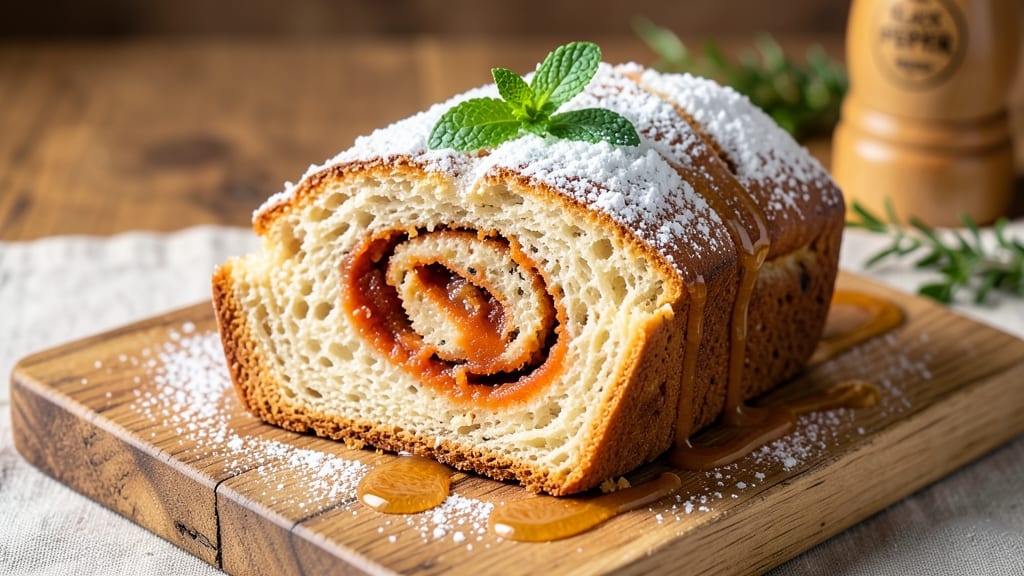
This American persimmon bread recipe delivers a perfect balance of sweet and tart fruit swirls encased in a buttery, golden crust. The secret lies in using ripe persimmons—soft enough to mash but still holding their signature honeyed flavor.
I've perfected this recipe over years of baking, ensuring every slice offers tender crumb and bursts of fruit in every bite.
The recipe combines classic bread-making techniques with the unique qualities of persimmons, which add natural sweetness without needing extra sugar. A simple dough comes together with flour, butter, and sugar, then gets swirled with mashed persimmons before baking.
The result? A loaf that's moist, fragrant, and packed with that signature persimmon tang.
What makes this bread truly special is how the persimmons transform during baking—caramelizing slightly while keeping their shape, creating pockets of fruit throughout. The crust stays crisp just long enough to hold its shape, while the interior remains soft and inviting.
Perfect for breakfast, dessert, or as a welcome treat during harvest season.
For extra richness, consider adding a sprinkle of cinnamon or chopped pecans to the dough before baking. The possibilities are endless, but the core recipe remains foolproof for achieving that perfect persimmon bread texture. Let's get started on creating a loaf that will become a household favorite.
Ingredients for american persimmon bread
Fourteen simple ingredients transform into a fragrant loaf bursting with persimmon swirls.
| Ingredient | Amount | Notes |
|---|---|---|
| All-Purpose Flour 🌾 | 3 ½ cups | Sifted for lighter texture |
| Granulated Sugar 🍚 | ¾ cup | White or light brown |
| Unsalted Butter 🧈 | 1 cup | Cold, cubed for easier mixing |
| Large Eggs 🥚 | 2 whole | Room temperature preferred |
| Ripe American Persimmons 🍈 | 2 medium | Mashed, skin removed |
| Milk 🥛 | ½ cup | Whole milk for richness |
| Baking Powder 🍞 | 2 tsp | Aluminum-free preferred |
| Salt 🧂 | ½ tsp | Fine sea salt preferred |
| Ground Cinnamon 🌿 | 1 tsp | Freshly ground for warmth |
| Vanilla Extract 🌸 | 1 tsp | Pure vanilla preferred |
| Pecans 🌰 | ½ cup | Chopped, optional topping |
| Granulated Sugar 🍚 | ¼ cup | For sprinkling on top |
The persimmons are non-negotiable here—American varieties like Fuyu or Hachiya work best when ripe enough to mash but still firm. Local farmers markets often have them in season, or check the produce section at Whole Foods or Trader Joe's for pre-ripened ones. Look for vibrant orange skin with no soft spots. If they're too hard, leave them on the counter for a day or two. The butter should be cold—European-style brands like Plugrá have higher fat content for extra richness. For the flour, King Arthur or Gold Medal are my go-tos—they bake up light and consistent.
No ripe persimmons? Substitute with 1.5 cups mashed banana (add 1 tsp lemon juice to prevent browning) or 1 cup unsweetened applesauce. Running low on milk? Heavy cream or Greek yogurt work in a pinch. The vanilla extract can be swapped for 1 tsp vanilla sugar if you're out. For the pecans, any nut works—walnuts or almonds are great alternatives. If you want to skip the optional topping, just brush the bread with melted butter after baking for extra shine. The cinnamon is key—Ceylon cinnamon has a lighter, sweeter flavor if you want to splurge.
This bread keeps beautifully—3 days at room temperature wrapped in a cotton towel, or 1 week refrigerated in an airtight container. For longer storage, freeze slices wrapped in plastic for up to 3 months. I always bake an extra loaf—toast the next day is even better with a smear of butter. The persimmon flavor intensifies when reheated, so don't skip this step. If you make a double batch, try swapping half the persimmons for diced apples—it creates a beautiful striped effect.
Why You'll Love This Recipe
- No Peel Required: I’ll admit—peeling persimmons sounds like a chore, but ripe American persimmons here just melt into the batter with no prep at all. Slice them straight from the skin, toss in the bowl, and let the flour do the work. Honestly, that’s my favorite part.
- Sweet-Spiced Magic: The butter and sugar team up to create this caramelized crust that cracks open into golden shards, while the persimmons add a honeyed depth that’s not too sweet, not too tart—just right. It’s the kind of bread that disappears faster than toast at a brunch.
- Breakfast to Dessert: Serve it warm with butter for a weekend brunch, or slice it thin for a quick snack when the kids get home. The texture holds up perfectly, whether you’re pairing it with jam or using it to soak up coffee. Between us, I’ve even used stale slices as a pancake topping—don’t judge.
- Pantry Staple Power: Flour, sugar, butter, eggs—these are ingredients you already have. And American persimmons? They’re cheap in season and last forever if you freeze them. Plus, this loaf keeps for days, so you’re not scrambling to bake something fresh every morning. My go-to for lazy days.
Step-by-step instructions for American persimmon bread
This sweet-tart bread delivers perfect swirls and a buttery crust every time—here's how to make it.
Prepare the Persimmon Filling
Peel the 2 medium ripe American persimmons and mash them thoroughly with a fork until completely smooth. You want a consistency similar to applesauce—no lumps at all. Stir in 1 teaspoon vanilla extract and set aside. The persimmons should be very ripe (they should be soft when gently squeezed), or the filling will be too firm for proper swirling.
In a small bowl, mix the mashed persimmons with the 1 teaspoon vanilla extract and set aside. This filling will add that signature sweet-tart flavor that makes this bread special. If your persimmons aren't perfectly ripe, you can speed up the process by placing them in a paper bag with a banana for a few hours—the banana's ethylene gas will help ripen them faster.
Cream Butter and Sugars
In a large mixing bowl, combine the 1 cup unsalted butter (cold, cubed) with the 0.75 cup granulated sugar. Using a hand mixer or stand mixer on medium speed, beat for 3-4 minutes until light and fluffy. You'll know it's ready when the mixture nearly doubles in volume and becomes pale in color. This step is crucial for creating that tender, moist crumb we're after.
Scrape down the sides of the bowl with a rubber spatula to ensure even mixing. Add the 2 whole large eggs, one at a time, beating well after each addition. Then add the 0.5 cup milk and mix until just combined. The batter should be smooth and creamy—this is your base dough, and getting it right now will make all the difference in the final texture.
Combine Dry Ingredients
In a separate bowl, whisk together the 3.5 cups all-purpose flour (sifted), 2 teaspoons baking powder, 0.5 teaspoon salt, and 1 teaspoon ground cinnamon. Gradually add this dry mixture to the wet ingredients, mixing on low speed just until combined. Be careful not to overmix—you should still see some flour streaks. Overmixing develops gluten and can make the bread dense instead of tender.
Once combined, fold in the 0.5 cup chopped pecans (if using) with a silicone spatula. The pecans add a nice crunch that contrasts beautifully with the soft bread. Divide the dough in half, shaping each portion into a 10-inch round on a parchment-lined baking sheet. Flatten each round slightly to about 1-inch thickness, then create a well in the center of each round.
Assemble and Swirl
Spoon half of the persimmon filling into the center well of one dough round, then top with half of the 0.25 cup granulated sugar. Repeat with the remaining dough and filling. Using a spatula, gently swirl the filling into the dough, creating a marbled effect. The goal is to distribute the filling evenly without tearing the dough. Place both rounds on the same baking sheet, spacing them about 2 inches apart.
Sprinkle the tops of both rounds with additional 0.25 cup granulated sugar for that signature caramelized crust. This sugar will melt slightly during baking, creating a beautiful golden-brown top. Let the dough rest at room temperature for 15-20 minutes while you preheat your oven to 350°F. This resting period allows the dough to relax and ensures even baking.
Bake to Golden Perfection
Bake the bread in the preheated oven for 45-50 minutes, or until a toothpick inserted into the center comes out clean. The edges should be golden brown, and the tops should have a beautiful caramelized sheen from the sugar. If the tops brown too quickly, tent the baking sheet with aluminum foil to prevent over-browning while the centers finish baking.
Once baked, transfer the bread to a wire rack to cool for at least 30 minutes before slicing. The bread will be warm and fragrant, with a perfect balance of sweet and tart flavors from the persimmons. Slice into wedges and serve warm with a pat of butter or a dollop of whipped cream for the ultimate experience. Store any leftovers in an airtight container at room temperature for up to 3 days or freeze for up to 3 months.
Pro Tips For Making American Persimmon Bread
- Pulp First, Then Peel: American persimmons are stubborn—if you peel before mashing, you’ll end up with a watery mess. Scoop out the flesh with a spoon (leave the skin behind), then purée it smooth. The skin’s bitterness ruins the bread’s sweetness, and skipping this step is how you get a dense, soggy loaf.
- Butter at Room Temp: Cold butter makes tough bread. Let that stick of unsalted butter sit out for 30–60 minutes before creaming it with the sugar—just until it’s soft enough to dent with a finger. I used to rush this and wondered why my bread always felt heavy.
- Skip the Overmixing: Once you fold in the persimmon purée, stop mixing the second the flour disappears. Overworking the dough develops gluten, and this bread needs a tender, cake-like crumb. Two turns of a spatula is all it takes—any more and you’re fighting the recipe.
- Test for Doneness Early: Persimmon bread sinks in the middle faster than you think. Start checking with a toothpick at 45 minutes (if baking at 350°F). If it comes out clean but the center’s still jiggly, tent with foil for 5 more minutes—no need to overbake. Dry bread is a crime here.
Best sauces and condiments for these flavors
Honey Butter Glaze
Warm 2 tablespoons unsalted butter in a small saucepan with 1 tablespoon honey and ½ teaspoon ground cinnamon. Simmer for 2 minutes until smooth, then brush onto warm slices. The honey enhances the persimmon's natural sweetness while adding a glossy finish. 🍯
Cream Cheese Frosting
Beat 4 ounces cream cheese (softened) with 2 tablespoons powdered sugar and 1 teaspoon vanilla extract until fluffy. Spread between two slices for a tangy contrast to the bread's richness. For extra flair, dust with ½ teaspoon cinnamon before serving.
Maple Walnut Spread
Toast ¼ cup walnut halves in a dry skillet for 3 minutes, then blend with 2 tablespoons maple syrup and 1 teaspoon lemon juice until chunky. Spread on toasted bread slices for a nutty-sweet pairing that complements the persimmon's tartness.
Spiced Whipped Cream
Whip ½ cup heavy cream with 1 tablespoon powdered sugar and ¼ teaspoon cardamom. The subtle spice echoes the cinnamon in the bread while adding airy texture. Dollop onto slices or use as a filling for sandwiches.
Caramelized Onion Jam
Cook 1 cup thinly sliced yellow onions in 1 tablespoon butter over low heat for 45 minutes until deep golden. Stir in 1 tablespoon brown sugar and 1 teaspoon balsamic vinegar, then spread on bread slices. The jam's depth cuts through the bread's sweetness beautifully.
Citrus Zest Compote
Simmer ½ cup orange juice, 2 tablespoons sugar, and 1 teaspoon grated orange zest for 5 minutes** until slightly thickened. Drizzle over slices to brighten the persimmon's flavor with a refreshing citrus note. 🍊
Nutrition facts
Frequently asked questions
Why do I need ripe persimmons for this bread?
Ripe persimmons are essential because they mash smoothly into a thick, spreadable filling that swirls beautifully into the dough. Unripe persimmons will be too firm and grainy, resulting in a lumpy texture rather than the silky fruit pockets you want. Look for persimmons that yield slightly when pressed—just like a ripe avocado.
Can I make this bread without nuts?
The pecans are optional and can be omitted entirely. If you prefer, swap them for chopped walnuts, almonds, or even omit them completely—the bread will still be delicious. The fruit swirls remain the star of the show, so don't let nut allergies stop you from baking this recipe.
How do I know when the bread is fully baked?
Your bread is done when a toothpick inserted into the center comes out clean and the edges are golden brown. For extra assurance, the internal temperature should reach 190°F. If the top browns too quickly, tent with foil to prevent over-browning while the center finishes baking.
Can I use Asian persimmons instead of American?
No, this recipe specifically requires American persimmons (like Fuyu or Hachiya) because they're naturally sweet and soften perfectly when ripe. Asian persimmons are astringent when unripe and don't work well in baked goods. If you must substitute, use 1.5 cups mashed banana or 1 cup unsweetened applesauce for similar texture.
Why is my bread dense instead of tender?
Overmixing the dough develops too much gluten, which makes bread dense. Mix just until combined—you should still see flour streaks. Also ensure your butter is cold and your persimmons are properly ripe. Another common mistake is underbaking—always check with a toothpick for doneness.