
Side Dishes
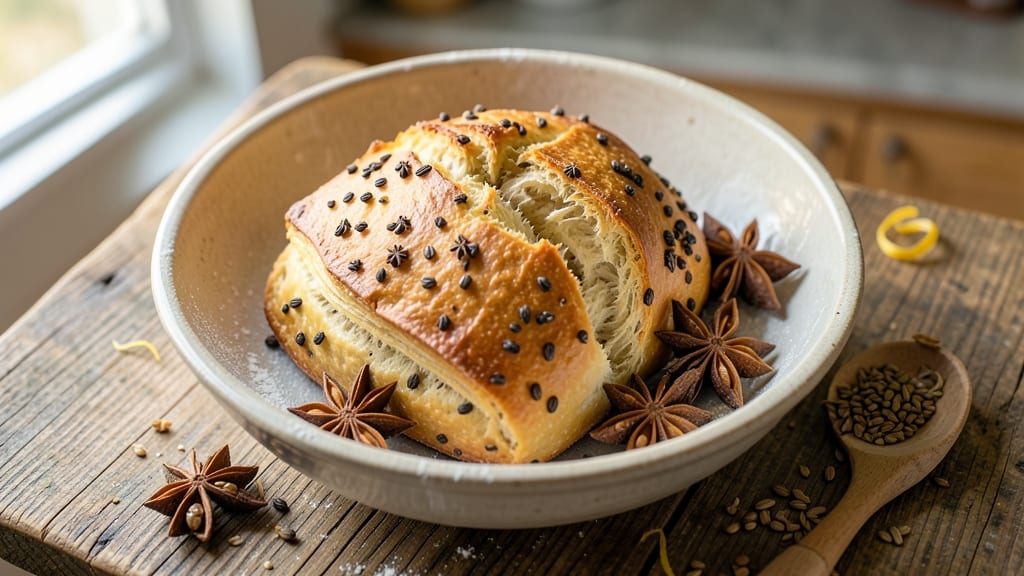
This aniseed bread recipe delivers a licorice-kissed crust and fragrant, tender crumb that transports you to a European bakery. The subtle aniseed flavor—warm, slightly sweet, and herbal—elevates simple bread into something extraordinary.
Baking at 375°F for 25-30 minutes ensures a golden crust with a soft, airy interior, perfect for sandwiches or serving alongside soups.
The secret lies in proper proofing—letting the dough rise until it nearly doubles in size creates that signature open crumb. A light hand when kneading prevents overdevelopment, which can mute the aniseed flavor.
For best results, use star anise or whole aniseeds (not ground), as they infuse the dough more evenly and create beautiful flecks in the finished loaf.
What you’ll end up with is a fragrant, slightly sweet loaf with a crackly crust and a crumb so tender it melts in your mouth. The aniseed aroma lingers deliciously, making this bread ideal for breakfast toast, charcuterie boards, or gifting.
Once baked, let it cool completely before slicing—this ensures clean cuts and preserves that perfectly balanced texture.
This recipe yields one 9x5-inch loaf, but the dough can be shaped into rolls or a free-form boules for variety. Pair it with sharp cheeses, cured meats, or a simple butter spread to highlight its distinctive, aromatic profile.
Ready in under 2 hours, it’s a rewarding bake for any occasion.
Ingredients for aniseed bread
Gather these ingredients for a fragrant loaf with licorice-kissed crust and tender crumb.
| Ingredient | Amount | Notes |
|---|---|---|
| All-Purpose Flour 🌾 | 4 ½ cups | Spooned and leveled for accuracy |
| Active Dry Yeast 🍞 | 2 ¼ tsp | Fresh yeast at half amount |
| Granulated Sugar 🍚 | ¼ cup | For yeast activation |
| Star Anise Pods 🌿 | 2 whole | Crushed lightly for infusion |
| Whole Aniseeds 🌶️ | 1 tbsp | For visible flecks and flavor |
| Salt 🧂 | 1 ½ tsp | Diamond Crystal preferred |
| Unsalted Butter 🧈 | ½ cup | Cold, cubed for dough |
| Warm Water 💧 | 1 ¼ cups | 110-115°F for yeast activation |
| Large Eggs 🥚 | 1 whole | Room temperature |
| Milk 🥛 | ¼ cup | Warmed for tenderness |
| Poppy Seeds 🌻 | 1 tbsp | Optional for texture |
| Sesame Seeds 🌿 | 1 tbsp | Optional for texture |
The star anise and whole aniseeds are non-negotiable for that authentic European flavor. Whole Foods or specialty spice shops often carry star anise pods—look for plump, closed pods with no cracks. If you can only find ground anise, toast it lightly before adding to intensify the aroma. The yeast needs to be fresh; if your packet is past its expiration, test it first in warm water with a pinch of sugar—it should foam within 5-10 minutes. For the flour, King Arthur or Gold Medal are my go-tos—they develop gluten beautifully without overworking the dough.
No star anise? Fennel seeds at half the amount mimic the licorice note, though the texture will differ. Running short on aniseeds? Anise extract (1/4 tsp) works in a pinch, but it lacks the visual appeal. The butter should be cold—pull it from the fridge 20 minutes before use—so it incorporates smoothly without melting. Swapping milk for unsweetened almond milk keeps the bread vegan, though the crumb may be slightly denser. For the seeds, skip them entirely if you're pressed for time—they're purely decorative.
Store the dough in an airtight container with a damp towel for up to 12 hours in the fridge if you need to proof overnight. Once baked, this loaf keeps at room temperature for 2 days wrapped in a bread bag, or 5 days in the fridge. For longer storage, slice and freeze—3 months is standard. The crust stays crisp for about 2 hours after baking, so slice when still warm for the best texture. Leftovers? Toast them—the aniseed flavor shines when warmed.
Why You'll Love This Recipe
- No Yeast Nightmare: I’ve made bread that demanded precision—this one just asks for patience. Toss in the yeast, let it sit, and boom—no kneading, no fuss. The star anise and whole seeds infuse while you’re making dinner, so you’re not stuck babysitting dough.
- Warm Spice Magic: That first bite? Like biting into a cozy hug. The star anise pods and whole seeds release a licorice-kissed warmth that lingers—subtle but unforgettable. Honestly, it’s the kind of flavor that makes you pause mid-slice and go, “Wait, why haven’t I done this sooner?”
- Bread That Works Hard: Slice it fresh for toast, pack it for lunches, or serve it with soup—it’s the ultimate neutral canvas. My kids even ask for it plain (yes, really). And because it’s just flour, yeast, and spices? It’s the kind of bread that doesn’t go to waste.
- Budget-Friendly Staple: A loaf costs me pennies, feeds the family for days, and still tastes like a bakery bought it. Between us, I’ve stretched this into garlic bread, French toast, and even croutons. Not the prettiest, but the taste makes up for it every time.
Step-by-step instructions for aniseed bread
Here's how to craft this aromatic bread with a licorice-kissed crust and tender interior.
Activate the Yeast and Infuse the Water
In a small bowl, whisk together the 1.25 cups warm water (between 110-115°F), 0.25 cup granulated sugar, and 2.25 tsp active dry yeast. Let it sit for 5-10 minutes until frothy—you'll see bubbles forming on the surface and a yeasty aroma. This confirms your yeast is alive and ready to work.
While that bubbles away, crush the 2 whole star anise pods lightly with a rolling pin or mortar and pestle. Add them to the yeast mixture along with the 1 tbsp whole aniseeds and let steep for 10 minutes. The water will develop a subtle licorice fragrance—this is the soul of your bread. The crushed pods will infuse the dough with their signature warmth while the whole seeds will add delightful flecks throughout the crumb.
Mix the Dough and Develop the Gluten
In the bowl of a stand mixer fitted with the dough hook, combine the 4.5 cups all-purpose flour and 1.5 tsp salt. Add the yeast mixture (straining out the anise pods if you prefer no surprises in each bite) along with the 0.5 cup cold cubed unsalted butter and 0.25 cup warm milk. Mix on low speed until the dough comes together, then increase to medium and knead for 5-7 minutes until the dough is smooth and elastic.
Here's where the magic happens: the dough should pull cleanly away from the bowl and sides of the mixer, forming a windowpane when stretched gently. If it's too sticky, add 1 tablespoon flour at a time until it reaches the right consistency. The gluten development creates that perfect balance of softness and structure—don't rush this step. Real talk: under-kneaded dough leads to dense bread, and nobody wants that.
First Rise and Shape the Loaf
Lightly grease a large bowl with neutral oil and transfer the dough inside. Cover with a damp kitchen towel and let rise in a warm place (like your turned-off oven with a bowl of hot water inside) for 1-1.5 hours, or until doubled in size. You'll know it's ready when you poke it gently and the indentation springs back slowly.
Once risen, turn the dough out onto a lightly floured surface and gently deflate it. Divide the dough in half and shape each portion into a 10-inch round loaf (or a 9x5-inch oval for a classic pull-apart loaf). For the round loaves, tuck the edges under and roll them toward the center to create a tight seal. Place them on a parchment-lined baking sheet, cover again, and let rise for 30-45 minutes until puffy. This second rise ensures those beautiful air pockets in the final crumb.
Prepare the Topping and Bake
Preheat your oven to 375°F and position a rack in the middle position. In a small bowl, whisk together 1 large egg and 1 tablespoon water until smooth. Brush this egg wash over the risen loaves, then sprinkle evenly with 1 tablespoon poppy seeds and 1 tablespoon sesame seeds. The seeds will add both texture and visual appeal—plus, they're packed with flavor.
Bake for 25-30 minutes until the crust is deep golden brown and sounds hollow when tapped on the bottom. The internal temperature should reach 190-195°F at the center. If the top browns too quickly, tent loosely with foil. That licorice-kissed crust should be crisp but not burnt—watch it carefully in the last 5 minutes of baking. The bread is done when it pulls away from the sides of the pan with ease and has a rich, caramelized aroma.
Cool and Enjoy
Remove the bread from the oven and transfer to a wire rack to cool completely. I know it's tempting to slice into that warm loaf immediately, but resist! Letting it cool for at least 30 minutes allows the crumb to set properly, preventing a gummy texture. The contrast between the crisp crust and soft interior will be even more pronounced once fully cooled.
Slice the bread into ½-inch thick pieces and serve warm with butter or jam. Each bite should deliver that signature aniseed warmth with a hint of licorice sweetness, balanced by the nutty seeds. Store any leftovers in an airtight container at room temperature for up to 3 days, or freeze for up to 3 months—just thaw at room temperature before serving for the best texture.
Pro Tips For Making Aniseed Bread
- TOAST THE ANISE SEEDS: Crush whole aniseeds lightly before adding them to the dough—this releases their flavor without overpowering. I used to just toss them in whole, and the bread tasted like it was missing something. A quick 30-second dry toast in a pan (no oil) before mixing makes a real difference.
- USE WARM WATER FOR YEAST: Dissolve sugar and yeast in warm water (105–110°F) and wait 5–10 minutes until it foams before mixing with flour. Cold water kills yeast; too-hot water cooks it. This step guarantees your dough rises properly—no waiting around for a sluggish start.
- DON’T SKIP THE KNEADING: Knead the dough for at least 8–10 minutes by hand (or 5–6 minutes with a mixer) until it’s smooth and springs back when poked. Under-kneaded aniseed bread turns dense and chewy—those star anise pods need proper gluten development to distribute flavor evenly.
- STEAM THE LOAF FIRST: Place a baking tray on the oven rack below your bread pan before baking. The steam helps create a crisp crust while keeping the interior tender. I learned this the hard way—dry oven = tough aniseed bread. Five minutes of steam at 375°F, then broil for color if needed.
Wine and beer pairings for this recipe
White Wine Pairings
Aniseed bread’s licorice-kissed warmth pairs beautifully with crisp, aromatic white wines that complement its herbal notes. A dry Riesling from Germany—like Dr. Loosen Blue Slate—cuts through the richness with its bright acidity and subtle mineral finish.
The stone fruit and citrus notes in Riesling mirror the aniseed’s sweetness without overpowering it. For something lighter, try a Pinot Grigio from Alto Adige, such as Santa Margherita Pinot Grigio. Its clean, citrusy profile enhances the bread’s delicate aniseed aroma while keeping the palate fresh. 🍷
Beer Complements
Beer lovers should reach for wheat beers or Belgian ales to balance the bread’s bold flavors. A witbier like Hoegaarden or Stella Artois works wonders—their coriander and orange peel notes create a refreshing contrast to the aniseed’s licorice depth.
For a bolder option, a Belgian Dubbel such as Westmalle Dubbel adds a malty sweetness that rounds out the bread’s herbal complexity. Avoid heavy stouts or IPAs, which can clash with the bread’s delicate crumb. 🍺
Spiritous Sips
If you’re serving aniseed bread as an appetizer or dessert, consider liqueur pairings for a sophisticated touch. A small glass of Ouzo (the Greek anise-flavored spirit) enhances the bread’s licorice notes, creating a cohesive flavor experience.
For a non-alcoholic option, anise-infused tea—like sweet fennel tea—echoes the bread’s herbal profile without the boozy kick. Serve it chilled for a refreshing contrast to the warm bread. 💫
Regional Variations
In Southern Italy, where aniseed bread is traditional, locals pair it with dry, sparkling wines like Prosecco or Franciacorta. The bubbles cleanse the palate between bites of the fragrant loaf.
Meanwhile, in France, a Sancerre (a crisp Loire Valley Sauvignon Blanc) highlights the aniseed’s herbal brightness with its grassy, citrusy notes. Each regional pairing reflects the bread’s adaptability—whether you’re in a rustic Italian trattoria or a Parisian bistro. 🗺️
Nutrition facts
Frequently asked questions
Can I substitute ground anise for whole seeds?
While ground anise works in a pinch, whole seeds create beautiful flecks in the bread and infuse flavor more evenly. For best results, lightly toast 1 teaspoon ground anise before mixing into the dough. The flavor will be slightly more concentrated, but you'll lose the visual appeal of whole seeds.
Why does my aniseed bread taste bland?
Bland flavor usually means underproofed dough or insufficient aniseed infusion. Make sure your yeast is active (it should foam within 5-10 minutes in warm water) and that the star anise pods steeped in the water for at least 10 minutes. Also check that your aniseed amount is correct—1 tablespoon whole seeds is essential for proper flavor.
How do I store aniseed bread to keep it fresh?
Wrap the cooled loaf tightly in a bread bag or foil and store at room temperature for up to 2 days. For longer storage, place in the fridge (up to 5 days) or freeze sliced bread (up to 3 months). To revive stale bread, warm slices in a 350°F oven for 5-10 minutes—the aniseed aroma intensifies when heated!
Can I make this bread without a stand mixer?
By hand, knead the dough on a lightly floured surface for 8-10 minutes until smooth and elastic. Use the "windowpane test"—stretch a small piece of dough thin enough to see light through it. If it tears, knead another 2 minutes. The dough should be slightly tacky but not sticky when properly developed.
What's the best way to shape this bread?
The recipe suggests round loaves or a pull-apart oval, but you can also shape it into a free-form boule or batard. For a rustic look, use your hands to create an irregular shape with dimples pressed into the top. Just ensure all edges are sealed tightly to prevent air pockets. Brush with egg wash before baking for a beautiful golden finish.