
Side Dishes
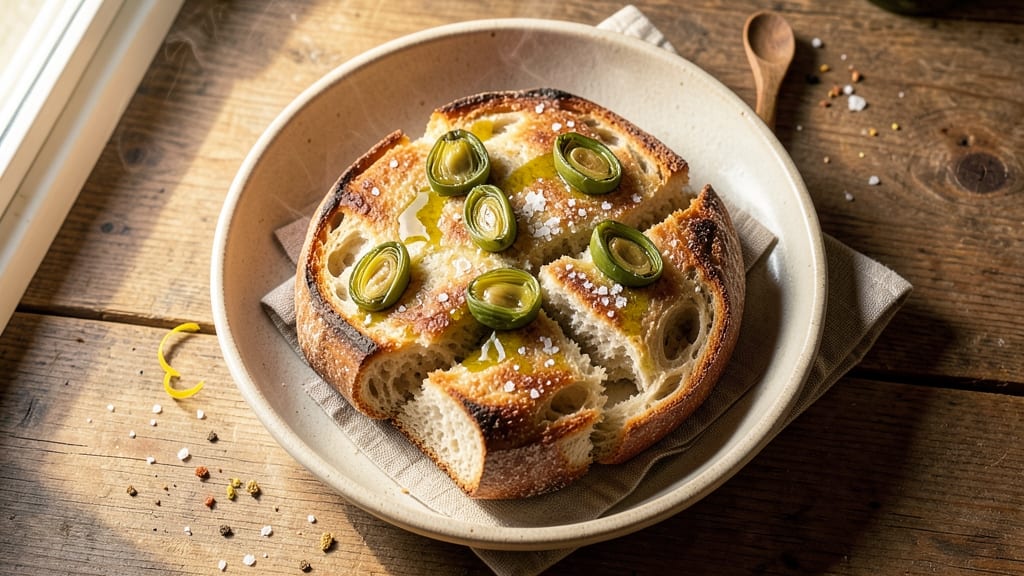
This Artoklasia bread recipe brings a taste of Greece to your table with its signature licorice-kissed crust and airy, pillowy crumb—traditionally made with artichokes for a unique savory depth.
The dough combines simple ingredients like flour, yeast, and olive oil, while the artichoke hearts add a subtle earthiness that pairs beautifully with the sweet licorice crust. This bread is more than just a side; it’s a flavorful centerpiece that elevates any meal.
The secret to achieving that perfectly crisp crust lies in the dough’s resting time and the artichoke preparation—blanched and finely chopped to blend seamlessly into the mixture. Baking at 375°F for about 25-30 minutes ensures a golden-brown crust while keeping the interior tender.
The result? A bread that’s rich, aromatic, and impossible to resist, especially when drizzled with olive oil and sprinkled with flaky sea salt.
This recipe is versatile—serve it warm alongside grilled meats, roasted vegetables, or a simple Greek salad for a taste of the Mediterranean. The artichokes add a subtle bitterness that balances the sweetness of the licorice crust, creating a harmonious flavor profile that’s both comforting and sophisticated.
Whether you’re hosting a dinner or simply craving a taste of Greece, this bread delivers.
For an extra touch, brush the baked loaf with a light honey glaze or sprinkle with sesame seeds before serving. The possibilities are endless, but the foundation—simple, flavorful, and foolproof—remains the same. Let’s get started on making this traditional bread your new favorite.
Ingredients for artoklasia bread
Simple ingredients transform into a Greek masterpiece with licorice-kissed crust and artichoke-infused crumb—authentic and irresistible.
| Ingredient | Amount | Notes |
|---|---|---|
| All-Purpose Flour 🌾 | 5 cups | Sifted for light texture |
| Active Dry Yeast 🍞 | ¼ oz | Or 2 1/4 tsp (1 packet) |
| Granulated Sugar 🍚 | 1 tbsp | For yeast activation |
| Extra-Virgin Olive Oil 🫒 | ½ cup | High-quality, fruity variety |
| Warm Water 💧 | 1 ¼ cups | 110°F-115°F ideal |
| Marinated Artichoke Hearts 🌿 | 1 cup | Chopped finely, drained |
| Licorice Powder 🍬 | 1 tbsp | Or 1 tsp licorice extract |
| Salt 🧂 | 1 ½ tsp | Diamond Crystal preferred |
| Sesame Seeds 🌰 | 2 tbsp | For crust decoration |
| Flaky Sea Salt 🧂 | 1 tbsp | For finishing |
| Honey 🍯 | 1 tbsp | Optional glaze |
| Egg Wash 🥚 | 1 whole | 1 egg beaten with 1 tsp water |
The licorice powder is non-negotiable for that signature flavor—Penzeys Spices carries a high-quality version, or use a trusted gourmet shop. Marinated artichoke hearts (not canned) elevate the bread with authentic depth; look for jars labeled 'Greek-style' at Mediterranean markets or well-stocked grocery stores. The extra-virgin olive oil should be cold-pressed and fruity—Colavita or California Olive Ranch are reliable choices. For the yeast, always check the expiration date; freshness ensures proper activation. Pre-sift your flour to avoid dense bread, and keep your work surface clean to prevent contamination.
No licorice powder? Anise seeds (1 tsp) or fennel seeds (1 tsp) mimic the flavor profile, though not identically. Substituting artichokes? Sun-dried tomatoes (½ cup, chopped) or roasted red peppers (½ cup) work, but the earthy bitterness is lost. For a sweeter crust, increase the honey to 2 tbsp. The sesame seeds can be swapped for poppy seeds or crushed pistachios. If your dough feels too sticky, add 1 tbsp more flour. The key is patience—don’t rush the resting time, even if it’s tempting.
Store the baked bread in a canvas-lined basket at room temperature for up to 3 days, covered loosely to maintain crispness. For longer storage, freeze slices wrapped in parchment paper for up to 3 months. Reheat in a 350°F oven for 5-7 minutes to restore texture. The crust’s crispness fades quickly, so serve warm whenever possible. Leftovers make excellent toast or croutons. To revive stale bread, sprinkle with water and bake at 350°F for 5 minutes.
Why You'll Love This Recipe
- Pantry Staples Only: I swear by this dough—it’s just flour, yeast, sugar, olive oil, and water. No weird ingredients, no last-minute store runs. The sugar and olive oil give it that golden crust without needing butter or eggs, and honestly? It’s the kind of simplicity that makes me feel like a baking genius.
- Golden Crust Magic: That crispy, caramelized top? Pure reward. The sugar and olive oil work together to create a shatteringly thin crust with a soft, pillowy center—like a cross between a baguette and a brioche, but way easier. I’ll be real: I’ve burned bread before, but this one forgives mistakes.
- Weeknight Wonder: This dough rises fast (thanks to that yeast kick), so you can mix it in the morning and bake it by dinner. I’ve used it for sandwiches, toast, or even dipping in olive oil—no fancy plating needed. It’s my go-to when I’m too tired to think past “feed the family.”
- Budget-Friendly Staple: A loaf costs me pennies to make, and it keeps for days. Freeze extras for when you’re too lazy to bake, or toss a slice into a sandwich and pretend you’re fancy. Between us, this is the kind of bread that makes me feel like I’m feeding everyone well—without breaking the bank.
Step-by-step instructions for Artoklasia bread
Transform simple dough into a licorice-kissed masterpiece with this precise method.
Activate the Yeast and Develop the Dough
In a large mixing bowl, combine the 1.25 cups warm water (tested between 110°F-115°F—too hot kills yeast) with the 1 tbsp granulated sugar and 0.25 oz active dry yeast. Let sit for 5-10 minutes until frothy—this confirms active yeast. If no bubbles form, your yeast may be dead.
Add the 5 cups sifted all-purpose flour and 1.5 tsp salt to the bowl. Using a wooden spoon, mix until a shaggy dough forms. Then incorporate the 0.5 cup extra-virgin olive oil and 1 cup finely chopped marinated artichoke hearts. Knead by hand for 8-10 minutes until smooth and elastic, or use a stand mixer with a dough hook for 5-6 minutes on medium speed.
First Rise and Incorporate Licorice Flavor
Shape the dough into a ball, place it in a lightly oiled bowl, and cover with a damp towel. Let rise in a warm place for 1-2 hours until doubled in size. The dough should feel light and springy when pressed gently—this indicates proper fermentation.
Punch down the risen dough to release air, then transfer it to a clean work surface. Roll out the dough into a 12x16-inch rectangle about ½-inch thick. In a small bowl, mix the 1 tbsp licorice powder with 1 tbsp honey and 1 tbsp warm water to form a paste. Brush this mixture evenly over the dough surface, leaving a ½-inch border around the edges.
Shape and Second Rise for Open Crumb
Starting from the long side, tightly roll the dough into a log, sealing the seam well. Pinch the ends to prevent unraveling during baking. Transfer the log to a parchment-lined baking sheet and cover loosely with plastic wrap. Let rise again for 45-60 minutes until the dough expands noticeably and feels firm to the touch.
Preheat your oven to 375°F during the final rise. Just before baking, brush the dough with the 1 whole egg wash (1 egg beaten with 1 tsp water) and sprinkle generously with 2 tbsp sesame seeds and 1 tbsp flaky sea salt. The seeds will toast beautifully during baking, adding texture contrast.
Bake for Crisp Crust and Pillowy Interior
Bake for 30-35 minutes until the crust reaches a deep golden brown and the internal temperature reaches 190°F. Tap the bottom—it should sound hollow. For extra crispiness, increase the oven temperature to 425°F for the final 5 minutes of baking.
Remove from the oven and let cool on a wire rack for at least 15 minutes before slicing. The bread's interior should reveal an open, airy crumb with pockets of steam, while the licorice-kissed crust will deliver a complex, slightly sweet-savory flavor profile that pairs beautifully with olive oil and aged cheeses.
Pro Tips For Making Artoklasia Bread
- Bloom the Yeast First: Skip mixing yeast directly into the flour—it’s a rookie move. Instead, dissolve it in warm water (110°F) with a pinch of sugar and let it sit for 5-10 minutes until frothy. This guarantees it’s active before committing to the dough, and you’ll avoid the sad, flat loaf that comes from dead yeast hiding in your flour pile.
- Use Olive Oil Sparingly: Extra-virgin olive oil is rich, but too much in this dough makes it gummy and heavy. Stick to about 2 tablespoons for the whole recipe—enough to coat the dough lightly, not drown it. Save the rest for drizzling after baking, where it’ll shine.
- Don’t Over-Knead the Dough: Artoklasia dough is delicate, and overworking it turns it tough. Knead just until it pulls away from the bowl (about 5-7 minutes by hand) and stops sticking. I learned this the hard way—my first loaf was chewy enough to rival shoe leather.
- Proof at Room Temp: Skip the fridge for proofing unless you’re in a rush. Let the dough rise in a warm spot (like a turned-off oven with a bowl of hot water inside) for 1-2 hours until it’s puffy and jiggly. Cold slows fermentation, and warm speeds it up—no guesswork, just consistency.
Perfect pairings for this dish
Olive Oil Drizzle
Finish your Artoklasia bread with a generous drizzle of extra-virgin olive oil—I recommend Colavita or California Olive Ranch for their fruity, peppery notes. Warm the oil slightly and drizzle it over the warm bread just before serving.
The oil enhances the licorice crust while softening the crust slightly for easier slicing. For an extra touch, sprinkle with flaky sea salt to balance the richness. 🫒
Greek Salad Pairing
Serve slices of Artoklasia alongside a classic Greek salad—the artichokes in the bread complement the cucumbers, tomatoes, and red onions beautifully. Toss the salad with 2 tbsp olive oil, 1 tbsp red wine vinegar, and a pinch of oregano.
The bread’s licorice notes harmonize with the bright, tangy flavors of the salad. Add feta cheese crumbles for extra creaminess. 🥗
Grilled Meats
This bread is a match made in heaven with grilled lamb chops or sous-vide pork shoulder. The licorice crust stands up to the bold flavors of grilled meats while providing a soft, pillowy contrast.
Brush the meats with garlic-infused olive oil before grilling, and serve with warm Artoklasia slices. The artichokes in the bread add an earthy depth that rounds out the meal. 🔥
Cheese Board
Create a Mediterranean-inspired cheese board featuring aged kefalotyri, feta, and manouri cheese. The salty, tangy cheeses pair perfectly with the sweet-savory Artoklasia. Add dried figs, walnuts, and honeycomb for texture and sweetness. The licorice crust adds a unique complexity that elevates the entire board. 🧀
Tomato Bruschetta
Top slices of Artoklasia with tomato bruschetta for a quick, flavorful appetizer. Mix 1 cup diced tomatoes, 2 tbsp olive oil, 2 cloves minced garlic, 1 tbsp fresh basil, and a pinch of salt.
Spoon the mixture onto bread slices and garnish with extra basil. The artichokes in the bread add an unexpected depth to the classic bruschetta. 🍅
Dessert Twist
For a sweet variation, brush warm bread slices with honey and top with crushed pistachios or orange zest. The licorice flavor becomes more pronounced when paired with sweet elements, creating a unique dessert-like experience. Serve with Greek yogurt and a drizzle of pomegranate molasses for balance. 🍯
Nutrition facts
Frequently asked questions
What makes Artoklasia bread different from regular Greek bread?
Artoklasia stands out with its licorice-kissed crust and artichoke-infused dough, giving it a unique sweet-savory flavor profile. Unlike traditional Greek breads like pita or feta bread, this recipe incorporates marinated artichoke hearts and licorice powder for that signature taste. The dough also undergoes a special rolling and shaping technique to create its distinctive open crumb.
Can I substitute licorice powder with something else?
Yes! If you can't find licorice powder, try 1 tsp anise seeds or fennel seeds finely ground for a similar flavor profile. For a sweeter alternative, use 1 tsp vanilla extract, though it won't replicate the authentic licorice taste. The artichokes remain essential for the bread's traditional character.
Why does my dough feel too sticky?
Sticky dough usually means the gluten hasn't developed enough or the environment is too humid. Try adding 1 tbsp more flour at a time while kneading, or let the dough rest in the fridge for 30 minutes before shaping. For extra insurance, chill the dough between rises. The ideal texture should be smooth but slightly tacky, not gluey.
How do I know when the bread is fully baked?
The bread is done when the crust is deep golden brown and the internal temperature reaches 190°F. Tap the bottom—it should sound hollow. For extra crispiness, increase the oven temperature to 425°F for the final 5 minutes of baking. Let it cool for 15 minutes before slicing to prevent crumb collapse.
Can I make Artoklasia bread without artichokes?
While artichokes are traditional, you can substitute with ½ cup sun-dried tomatoes or roasted red peppers for a similar texture. For a sweeter variation, try ¼ cup chopped dried apricots, but the flavor will differ from the original. The licorice crust remains the defining characteristic regardless of the filling.