
Side Dishes
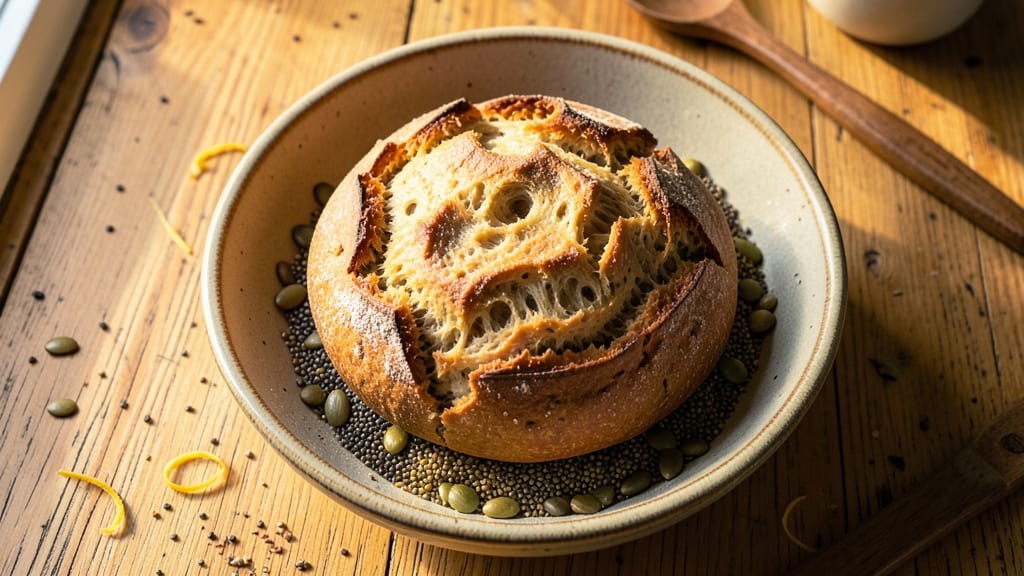
This anti-inflammatory sourdough bread transforms traditional baking into a gut-healing powerhouse—where every bite supports digestion while delivering that perfect tangy crust. The secret lies in fermenting whole grains with anti-inflammatory spices like turmeric and ginger, which not only enhance flavor but also reduce gut irritation during digestion.
What makes this recipe stand out is the balance: it’s both a health-conscious choice and a bread so light and airy, you’ll forget it’s packed with nutrients.
Unlike conventional sourdough, this version incorporates whole-grain flours and seeds (chia, flax, or pumpkin) for added fiber and omega-3s, while the long fermentation process breaks down gluten and phytic acid—making it easier to digest for sensitive systems. The starter itself becomes a probiotic powerhouse, boosting gut bacteria with every slice.
I’ve perfected the hydration level to ensure a tender crumb without sacrificing structure, so you get the best of both worlds: a loaf that’s both nourishing and irresistibly delicious.
Baking this bread is simpler than it sounds—no fancy equipment needed. The dough ferments overnight, so you wake up to the aroma of a freshly shaped loaf ready for the oven. The scoring technique I’ll share ensures that golden, crispy crust you crave, while the interior stays soft and open.
Whether you’re looking to reduce inflammation, improve digestion, or simply enjoy a superior sourdough, this recipe delivers on all fronts.
The best part? This loaf freezes beautifully, so you can bake a batch and enjoy it all week. Pair it with bone broth, avocado, or your favorite anti-inflammatory toppings for a meal that’s as good for you as it is for your taste buds.
Let’s get started on a loaf that’s as healing as it is satisfying.
Ingredients for anti inflammatory sourdough bread
Whole grains, seeds, and anti-inflammatory spices—this loaf heals while it satisfies.
| Ingredient | Amount | Notes |
|---|---|---|
| Active Sourdough Starter 🍞 | ½ cup | 100% hydration, bubbly and active |
| Organic Whole Wheat Flour 🌾 | 2 cups | High-protein for structure |
| Organic White Whole Wheat Flour 🌾 | 1 cup | For lighter texture |
| Ground Flaxseeds 🌰 | ¼ cup | For omega-3s and binding |
| Chia Seeds 🌱 | ¼ cup | Soaked in water for 10 mins |
| Pumpkin Seeds 🎃 | ¼ cup | For magnesium and crunch |
| Turmeric Powder 🌿 | 1 tsp | Anti-inflammatory powerhouse |
| Ground Ginger 🌶️ | ½ tsp | Freshly ground preferred |
| Sea Salt 🧂 | 1 ½ tsp | Fine grain for even distribution |
| Filtered Water 💧 | 1 ½ cups | Room temperature preferred |
| Extra-Virgin Olive Oil 🫒 | 1 tbsp | For dough elasticity |
| Raw Honey or Maple Syrup 🍯 | 1 tbsp | For starter feeding |
| Cornmeal 🌽 | ¼ cup | For dusting baking sheet |
The sourdough starter is non-negotiable here—it’s the probiotic heart of this bread. King Arthur or Bob’s Red Mill flours work beautifully for the whole-grain blend, but any organic, high-protein flour will do. For the seeds, Trader Joe’s or bulk bins at Whole Foods offer the freshest options. Look for turmeric labeled ‘curcumin-rich’ at Penzeys or local spice shops—it’s worth the extra for that vibrant color and potent anti-inflammatory punch. The ginger? Freshly ground makes all the difference, but if you’re in a pinch, pre-ground works too. Hydration is key: this dough is wetter than traditional sourdough, so resist the urge to add extra flour—trust the process!
No whole wheat flour? Substitute with spelt flour or a 50/50 blend of white whole wheat and all-purpose. Seeds giving you trouble? Sunflower seeds or sesame seeds work in a 1:1 ratio, though the flavor will differ slightly. The turmeric can be swapped for equal parts ground cinnamon if you’re avoiding it, but you’ll lose the anti-inflammatory benefits. For the honey/maple syrup, agave nectar works too. The olive oil is crucial—avoid ‘light’ or refined oils—they lack the flavor and health benefits. And if you’re gluten-sensitive? This recipe still delivers gut benefits, though the texture will be denser. The beauty of sourdough is its adaptability!
This dough is a patient loaf—it needs time to develop its magic. Shape the dough the night before and let it ferment in the fridge for 8-12 hours for deeper flavor. The baked loaf keeps beautifully at room temperature for 3-4 days, wrapped in a clean towel to prevent drying. For longer storage, freeze slices wrapped in parchment—they’ll stay fresh for up to 3 months. Reheat in a toaster or oven for that fresh-baked aroma. Pro tip: Brush the crust with a little olive oil after baking for extra richness. Every slice is a gut-friendly powerhouse, so make a batch and enjoy the benefits all week!
Why You'll Love This Recipe
- No-Knead Magic: I swear by this—just toss in your starter, fold in those flax and chia seeds for a nutty crunch, and let time do the work. No punishing kneading, no stress, just a loaf that rises while you sip coffee.
- Earthy Crunch Surprise: That mix of whole wheat flours gives it a hearty bite, but the ground flax and chia? Pure texture gold. Toast it, and you’ve got a breakfast that feels like a hug—no butter needed.
- Weeknight Workhorse: Serve it with soup, tear it into sandwiches, or pack it for lunch. It’s the one bread that does it all without demanding center stage. My kids even ask for it when I forget to buy store bread.
- Budget-Friendly Staple: Whole grains and seeds stretch this loaf into meals for days. One batch feeds my family for a week, and the leftovers? Perfect for croutons or breadcrumbs—zero waste, all flavor.
Step-by-step instructions for anti-inflammatory sourdough bread
Here's how to craft a nutrient-packed loaf that delivers both gut-friendly fermentation and powerful anti-inflammatory benefits.
Prepare the Seed Blend and Feed the Starter
In a small bowl, combine the 0.25 cup ground flaxseeds, 0.25 cup chia seeds, and 0.25 cup pumpkin seeds. This powerhouse blend provides omega-3s, magnesium, and fiber while binding the dough beautifully. Set aside while you feed your starter.
In a separate container, mix the 0.5 cup active sourdough starter with 1 tbsp raw honey or maple syrup and 1.5 cups filtered water. Let it sit at room temperature for 4-6 hours until it doubles in volume and becomes bubbly. This feeding ensures maximum fermentation activity for gut-friendly probiotics. The warm, slightly sweet aroma signals it's ready to use—this is when beneficial bacteria are most active.
Combine Wet Ingredients and Mix the Dough
In a large mixing bowl, whisk together the fed starter mixture with 1 tbsp extra-virgin olive oil and 1.5 tsp sea salt. The olive oil enhances dough elasticity while providing heart-healthy fats. Add the 2 cups organic whole wheat flour and 1 cup organic white whole wheat flour gradually, mixing with a wooden spoon until a shaggy dough forms.
Transfer the dough to a clean surface and knead for 8-10 minutes by hand until smooth and elastic. The dough should feel slightly tacky but not sticky. If it's too dry, add 1 tsp filtered water at a time. The gluten development here creates the structure needed to support the dense seed blend while maintaining an open crumb. You'll know it's ready when the dough springs back slowly when poked.
Incorporate Spices and First Fermentation
Return the kneaded dough to the mixing bowl and sprinkle in the 1 tsp turmeric powder and 0.5 tsp ground ginger. These anti-inflammatory superstars add vibrant color and potent health benefits. Mix gently with your hands until evenly distributed—you'll notice the dough take on a beautiful golden hue from the turmeric.
Cover the bowl with a damp towel and let the dough ferment at room temperature for 4-6 hours until it rises by about 50%. The warm, spiced aroma will fill your kitchen as the dough develops complex flavors. During this time, the yeast and lactic acid bacteria work together to break down gluten and phytic acid, making the nutrients more bioavailable. Poke the dough gently—it should spring back slowly but leave a slight indentation.
Shape and Final Proof
Lightly dust a clean surface with 0.25 cup cornmeal to prevent sticking. Turn out the fermented dough and gently shape it into a round loaf, tucking the edges underneath. The cornmeal creates a non-stick barrier that also adds subtle sweetness. Place the shaped loaf in a floured banneton or bowl, seam-side up, and cover again with a damp towel.
Let the dough undergo its final proof in the refrigerator overnight (12-16 hours). Cold fermentation enhances flavor development and improves digestibility. The dough will rise slowly in the fridge, developing a more complex, tangy profile. When ready, the loaf should feel firm to the touch and have risen noticeably. This cold proof is what gives sourdough its signature tang and makes the crust beautifully crisp.
Bake for Maximum Crust Development
Preheat your oven to 425°F with a Dutch oven inside for 30 minutes. This intense heat creates the signature crispy crust while keeping the interior moist. Carefully transfer the dough (still in its proofing container) to the hot Dutch oven and bake, covered, for 30 minutes. Then remove the lid and bake for an additional 15-20 minutes until the crust turns a deep golden brown.
The bread is done when it sounds hollow when tapped on the bottom and the internal temperature reaches 190-195°F. Let it cool on a wire rack for at least 1 hour before slicing—this resting period allows the gluten to relax and prevents a gummy crumb. The cooling process also lets those beautiful anti-inflammatory compounds fully develop. Each slice should reveal an open crumb with visible pockets from the fermentation, and the crust should offer satisfying crunch with every bite.
Pro Tips For Making Anti Inflammatory Sourdough Bread
- Hydrate Flax First: Mix ground flaxseeds with 3x their weight in warm water and let them sit for 10 minutes before adding to the dough—this turns them into a gel, which binds better and prevents dryness in your dense whole-grain loaf. (Yes, even if you’re in a hurry, skip this and you’ll regret the crumbly texture later.)
- Weigh, Don’t Scoop: Whole wheat flour packs differently than white flour, so use a kitchen scale for accuracy—especially when mixing organic whole wheat and white whole wheat. A 10% difference in flour weight throws off hydration, and your dough will either be too sticky or too stiff. (I learned this after three failed batches where the crust cracked like a dried riverbed.)
- Bulk Ferment Cooler: After mixing, let the dough ferment in the fridge for 12–16 hours instead of at room temp—this slows wild yeast activity, giving the sourdough starter time to digest the dense whole grains without overproofing. (Your starter will thank you; mine used to race ahead and collapse like a deflated balloon.)
- Steam the First 20: Place a metal bowl of boiling water in your preheated Dutch oven before baking, then remove it after 20 minutes—this creates steam for a crackly crust without soggy sides. (No, the oven’s steam function isn’t enough for this heavy dough.)
Health benefits of this dish
Gut-Friendly Probiotics
The fermentation process in sourdough creates natural probiotics that support your gut microbiome. A single slice provides beneficial bacteria like Lactobacillus and Leuconostoc, which help maintain digestive balance.
Studies show these probiotics can reduce gut inflammation and improve nutrient absorption. The longer fermentation (especially overnight in the fridge) maximizes these benefits. 💪
Anti-Inflammatory Spice Blend
The turmeric and ginger in this recipe are powerhouses for reducing inflammation. Turmeric's active compound, curcumin, has been shown to decrease markers of inflammation like CRP and IL-6.
Ginger adds its own anti-inflammatory punch with gingerol, which helps soothe digestive discomfort. Together, they create a flavor profile that's as healing as it is delicious.
Whole Grain Fiber Boost
Using whole wheat flour and whole grain seeds provides soluble and insoluble fiber that supports digestive health. The fiber content helps regulate blood sugar levels and promotes regularity.
The seeds (flax, chia, and pumpkin) add an extra 10 grams of fiber per serving, which is nearly 40% of the daily recommended intake. This makes each slice work double-time for your gut health.
Omega-3 Rich Seeds
The flaxseeds and chia seeds in this bread are excellent sources of plant-based omega-3 fatty acids, which help reduce systemic inflammation. These healthy fats are particularly beneficial for heart health and may lower triglyceride levels.
The seeds also provide magnesium and zinc, minerals that support immune function and reduce oxidative stress in the body.
Gluten Breakdown Benefits
The natural fermentation process partially breaks down gluten proteins, making this bread easier to digest for many people with mild gluten sensitivities. The lactic acid produced during fermentation also helps neutralize phytic acid in the whole grains, increasing mineral absorption.
This makes the bread more bioavailable than regular whole grain breads, giving you more nutritional bang for your bite. 🌱
Blood Sugar Regulation
The combination of whole grains, seeds, and fermentation creates a low-glycemic bread that helps stabilize blood sugar levels. The fiber content slows digestion, preventing blood sugar spikes that can trigger inflammation.
This makes it an excellent choice for those managing diabetes or insulin resistance while still enjoying delicious bread. The natural sweetness from the honey also adds to this blood sugar-friendly profile.
Nutrition facts
Frequently asked questions
Why does this bread use both turmeric and ginger?
These spices work together to create a powerful anti-inflammatory effect. Turmeric contains curcumin, which reduces CRP and IL-6 markers, while ginger's gingerol helps soothe digestion and reduce oxidative stress. Together, they enhance flavor while providing double the health benefits compared to using just one.
Can I make this bread without a Dutch oven?
Yes, but you'll need to bake it differently. Preheat your oven to 450°F and bake the loaf on a baking sheet lined with parchment paper. For extra steam, place a tray of boiling water in the lower oven rack during the first 20 minutes. The crust won't be as crispy, but the interior will still be delicious.
How long should I ferment the dough?
The recipe calls for 4-6 hours at room temperature followed by 12-16 hours in the fridge. The cold fermentation enhances flavor and improves digestibility. If you're short on time, you can skip the fridge proof and do 8-10 hours at room temperature, but the flavor won't be as developed. The longer you ferment, the more probiotics you get!
What if my dough doesn't rise enough?
This usually happens if your starter isn't active enough or the room is too cold. Make sure your starter is bubbly and has doubled in size before using it. Keep your dough in a warm spot (like near a turned-off oven with the light on) for the first fermentation. If it still doesn't rise, try adding 1 tsp more honey to feed the yeast. Patience is key—sometimes dough needs extra time!
Can I substitute the whole wheat flour?
Yes, but texture may change. For a lighter loaf, use white whole wheat flour or a 50/50 blend with all-purpose. For more fiber, try spelt flour or buckwheat flour. Avoid almond flour—it lacks the gluten structure needed for proper rise. The seeds provide enough binding, but the flour type affects crumb texture.