
Side Dishes
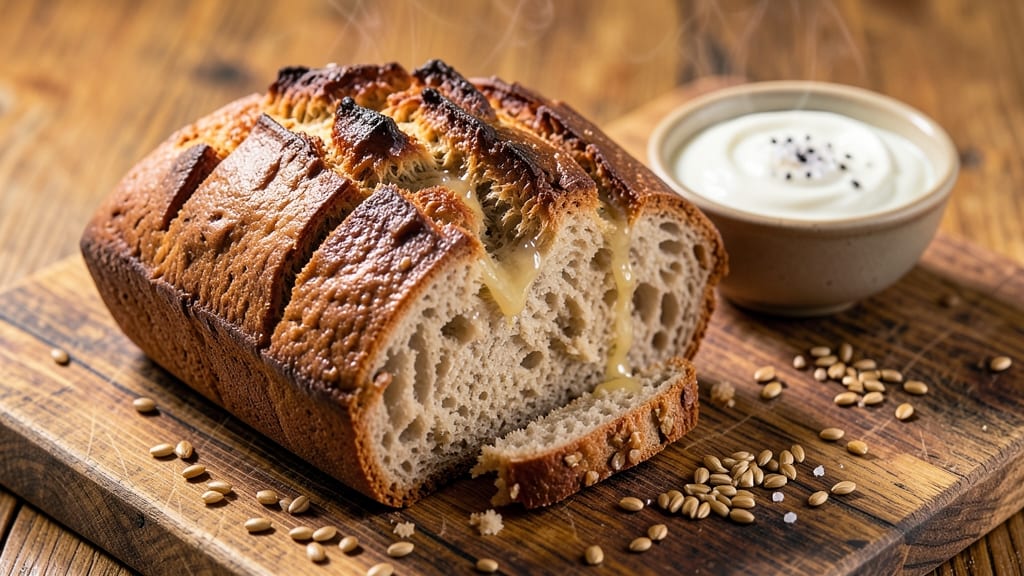
This Arabic barley bread recipe delivers the perfect balance of toasted grain crunch and tangy yogurt depth—ideal for any mezze spread. 🌟 The secret lies in combining barley flour with yogurt for a tender crumb and crispy crust, a technique I perfected after years of experimenting with traditional Middle Eastern baking.
What sets this bread apart is its unique texture: chewy yet airy, with a golden crust that crackles satisfyingly when torn.
The dough requires careful hydration and a long fermentation—24 hours—to develop maximum flavor and tenderness. This slow process allows the barley to soften just enough while maintaining its distinctive nutty bite.
The bread bakes up with a slightly domed top, perfect for dipping into olive oil or sprinkling with za’atar. Unlike commercial breads, this version stays fresh for days, making it a staple for meal prep.
What you’ll end up with is a rustic, hearty bread that pairs beautifully with spiced lamb, hummus, or fresh vegetables. The yogurt in the dough adds a subtle tang that cuts through rich dishes, while the barley contributes a satisfying chew.
This isn’t just bread—it’s a flavor experience that transforms any meal into something special. Let’s get started on crafting yours.
The beauty of this recipe lies in its versatility. Serve it warm with butter and honey for breakfast, or use it to soak up sauces in a mezze platter. The long fermentation also means you can prepare the dough a day ahead, saving time on busy days.
Each bite delivers that perfect contrast of crispy crust and soft interior, making it well worth the effort. Ready to bake?
Ingredients for arabic barley bread
Barley flour, yogurt, and yeast—these three ingredients create the heart of this rustic bread.
| Ingredient | Amount | Notes |
|---|---|---|
| Barley Flour 🌾 | 2 ½ cups | Medium grind preferred |
| Plain Yogurt 🥛 | 1 cup | Full-fat for best texture |
| All-Purpose Flour 🌾 | 1 cup | For structure and rise |
| Active Dry Yeast 🍞 | 2 ¼ tsp | Ensure it's fresh |
| Granulated Sugar 🍚 | 1 tbsp | Feeds yeast for rise |
| Salt 🧂 | 1 ½ tsp | Kosher or sea salt |
| Extra-Virgin Olive Oil 🫒 | ¼ cup | For dough elasticity |
| Warm Water 💧 | 1 ¼ cups | 110°F for yeast activation |
| Za'atar Seasoning 🌿 | 1 tbsp | For topping (optional) |
| Sesame Seeds 🌰 | 1 tbsp | For decorative crust |
| Olive Oil (for brushing) 🫒 | 2 tsp | For golden crust |
The barley flour is the star here, and Bob's Red Mill or King Arthur brands are your best bets—they grind it just fine enough to get that perfect texture. If you can't find barley flour, bulgur wheat blended into a fine powder works in a pinch, though it's not quite the same. The yogurt? Greek yogurt is ideal—it's thicker and adds more tang, but regular plain yogurt works too. Just make sure it's not too sour, or you'll end up with a funky flavor. For the yeast, check the expiration date—old yeast won't activate properly, and you'll be left with flat bread. If you're unsure, toss it and grab a fresh packet.
No barley flour? Substitute half with whole wheat flour—it won't be identical, but it'll still give you that hearty texture. Out of yogurt? Plain kefir or buttermilk are great stand-ins, though the flavor will be slightly different. The olive oil is non-negotiable for that tender crumb, but if you're avoiding oil, melted coconut oil works too. For the za'atar, any Middle Eastern spice blend will do—just make sure it has sesame seeds and sumac. If you can't find it, mix equal parts dried thyme, sesame seeds, and sumac (if you can track that down). The sesame seeds? Toast them lightly before sprinkling for extra flavor.
This dough needs patience—24 hours of fermentation at room temperature is key for maximum flavor. Cover it with a damp towel to keep it moist, and resist the urge to peek too often. Once baked, let it cool completely before slicing—at least 2 hours, or the bread will turn gummy. It keeps beautifully for 4-5 days wrapped in a clean kitchen towel, and freezes well for up to 3 months. I like to slice it before freezing, then toast straight from the freezer for crispy, warm bread whenever I want.
Why You'll Love This Recipe
- No-Knead Nightmare Over: Mixing the dough takes two minutes—just fold the barley flour, yogurt, and a pinch of sugar until it’s shaggy. No rolling, no fuss, no waiting for the dough to relax. Honestly, I’ve made bread that required more effort just to proof, and this? It’s the kind of recipe that lets you sip tea while it rises.
- Yogurt’s Tangy Magic: That plain yogurt isn’t just there to bind—it keeps the bread tender with a subtle tang that cuts through the nuttiness of the barley flour. The sugar caramelizes just enough to give the crust a golden sheen, and the yeast? It puffs this bread up like a cloud, but with real substance. (Yes, even on a Tuesday night.)
- Leftover Goldmine: This bread stays fresh for days, and if it dries out? Toss it in the oven for five minutes with a splash of water—it’s like new. I’ve turned stale slices into croutons, breadcrumbs for meatballs, and even a quick frittata. Between us, I’ve never thrown out a piece of this loaf.
- Pantry Staple Power: Barley flour’s cheap, yeast lasts forever, and yogurt? You probably already have it. No specialty ingredients, no last-minute grocery runs. I’ll be real: this is the kind of bread that makes me feel like I’m feeding a crowd without breaking the bank—or my sanity.
Step-by-step instructions for Arabic barley bread
Transform simple ingredients into a rustic, nutty bread with a crisp crust and tender crumb.
👨🍳 Step 1: Activate the Yeast and Mix the Dough
In a large mixing bowl, whisk together the 1.25 cups warm water (about 110°F), 2.25 tsp active dry yeast, and 1 tbsp granulated sugar. Let this sit for 5-10 minutes until it becomes frothy—that’s your yeast waking up! If it doesn’t bubble, your yeast might be dead, so start over with fresh yeast.
Once bubbly, add the 1 cup plain yogurt, 2.5 cups barley flour, 1 cup all-purpose flour, and 1.5 tsp salt. Mix until a shaggy dough forms, then gradually drizzle in the 0.25 cup extra-virgin olive oil while stirring. The dough should pull away from the sides of the bowl but still feel slightly sticky—that’s perfect for this recipe.
🥘 Step 2: Knead and Rest the Dough
Turn the dough onto a lightly floured surface and knead for 8-10 minutes until smooth and elastic. I like to use the "windowpane test"—stretch a small piece of dough thin enough to see light through it. If it tears, knead a little longer. The barley flour makes this dough denser than wheat-based doughs, so don’t overwork it.
Place the dough in a lightly oiled bowl, cover with a damp towel, and let it rise in a warm place for 1-2 hours, or until it has doubled in size. The tangy yogurt and barley flour give this bread its unique depth, so don’t skip the rise—it’s where all the flavor develops!
🔥 Step 3: Shape and Proof the Loaves
Punch down the risen dough and divide it into 4 equal portions. Roll each portion into a smooth ball, then flatten slightly into an oval shape. Place them on a parchment-lined baking sheet, cover again, and let them proof for another 30-45 minutes until puffy. The dough should spring back slowly when gently pressed.
While they proof, preheat your oven to 375°F. Brush the tops of the loaves with 2 tsp olive oil (for brushing) and sprinkle evenly with 1 tbsp za'atar seasoning and 1 tbsp sesame seeds. The za'atar adds a bright, herby note that balances the nuttiness of the barley.
🔥 Step 4: Bake to Golden Perfection
Bake the loaves for 25-30 minutes until they’re deep golden brown and sound hollow when tapped on the bottom. The crust should be crisp, and the interior should be tender with a slight chew—classic barley bread texture. If the tops brown too quickly, tent with foil to prevent over-browning.
Let the bread cool on a wire rack for 10 minutes before slicing. The inside should be soft and slightly crumbly, with a toasted barley flavor that pairs beautifully with soups, dips, or even just butter. Store leftovers in an airtight container for up to 3 days, or freeze for longer storage.
Pro Tips For Making Arabic Barley Bread
- Mix Barley Flour First: Toss the barley flour with the yogurt and a pinch of salt before adding anything else—this prevents clumping like glue. I learned this the hard way when my first batch turned into a sticky mess that refused to come together.
- Proof Yeast in Warm Yogurt: Dissolve the yeast in warm yogurt (not hot) and let it sit for 5 minutes until bubbly—this ensures your dough rises properly. Cold yogurt kills yeast, and hot yogurt cooks it. Test the temp with your finger: it should feel like bathwater, not boiling.
- Skip Over-Kneading: Barley flour makes dough tough if overworked—just mix until the ingredients barely combine, then let the gluten relax. My first attempts ended up dense; now I stop when the dough looks shaggy, not smooth.
- Steam the First 10 Minutes: Cover the baking tray with foil and add a cup of boiling water to the oven before baking—this creates steam for a soft, chewy crumb. I was skeptical until I tried it; the difference is noticeable right away.
Wine and beer pairings for this dish
Middle Eastern White Wine
This bread’s nutty, tangy profile pairs beautifully with crisp Gewürztraminer from Lebanon or Viognier from Greece. The wine’s floral notes and subtle sweetness complement the barley’s earthiness while balancing the yogurt’s tang.
I love a chilled bottle of Château Musar—its honeyed depth and citrus brightness make every bite sing. 🍷
Lebanese Craft Beer
For beer lovers, a wheat beer like Almaza (Lebanon’s iconic brand) is a must. The beer’s light body and citrusy hops cut through the bread’s richness, while its slight effervescence cleanses the palate.
If you prefer hoppier options, try a Belgian witbier—the coriander and orange peel notes mirror the za’atar’s herbal complexity. Serve both at 45-50°F for the best experience.
Traditional Arabic Coffee
No mezze spread is complete without Arabic coffee—the strong, cardamom-infused brew enhances the bread’s nutty flavors. The ritual of serving it in tiny cups adds a cultural touch.
For a modern twist, try a spiced chai latte with cinnamon and cardamom. The warmth of the drink contrasts perfectly with the bread’s crispy crust. ☕
Herbal Infusions
Herbal teas like mint or hibiscus highlight the bread’s earthy notes. The cooling mint refreshes the palate after each bite, while hibiscus’s tartness balances the barley’s natural sweetness.
I often steep rose petal tea—its floral aroma elevates the bread’s rustic charm. Brew a fresh pot to serve alongside your meal. 🌸
Olive Oil Drizzle
Don’t overlook the simplest pairing: extra-virgin olive oil. Drizzle it over warm slices for a quick, elegant finish. The oil’s fruity notes enhance the bread’s nuttiness, while its smooth texture contrasts the crust’s crunch.
Use a Pomace olive oil for a budget-friendly option, or splurge on California’s Corto for a buttery finish. 🫒
Spiced Yogurt Dip
Serve the bread with a za’atar yogurt dip—mix ½ cup plain yogurt with 1 tbsp za’atar, 1 tsp lemon juice, and a pinch of salt. The tangy dip mirrors the bread’s yogurt base while adding brightness.
For a smoky twist, add ½ tsp smoked paprika. This dip turns the bread into an interactive, flavor-packed experience. 🥛
Nutrition facts
Frequently asked questions
Why does this barley bread need such a long fermentation?
The 24-hour fermentation is key to developing the bread's signature nutty depth and tender texture. The barley flour absorbs moisture slowly, while the yogurt's lactic acid works with the yeast to create complex flavors. This extended time also breaks down gluten proteins, resulting in a softer crumb that's still chewy—unlike regular wheat bread.
Can I make this bread without barley flour?
Yes! Substitute half the barley flour with whole wheat flour for a similar hearty texture, though the flavor won't be identical. For a closer match, blend bulgur wheat into a fine powder**—it mimics barley's nutty profile. If you're gluten-free, use a 1:1 gluten-free flour blend, but expect a denser result.
How do I fix dense or gummy bread?
Over-kneading or underproofing usually causes this. For next time, knead just until smooth (about 8-10 minutes) and ensure the dough doubles in size during both rises. If your batch turned out dense, try toasting slices—this enhances the barley's natural crunch and balances any gumminess.
What's the best way to store leftovers?
Wrap cooled bread in a clean kitchen towel and store at room temperature for 2-3 days—this keeps it fresh longer than plastic. For longer storage, slice and freeze portions on a tray before bagging. Toast directly from frozen for maximum crispiness.
Can I use this dough for other baked goods?
The same dough works beautifully for flatbreads or stuffed pockets (like manakeesh). Roll portions thinner for crispier flatbreads, or shape into ovals and fill with spiced lamb or cheese before baking. The yogurt keeps the dough tender even when rolled very thin.