
Side Dishes
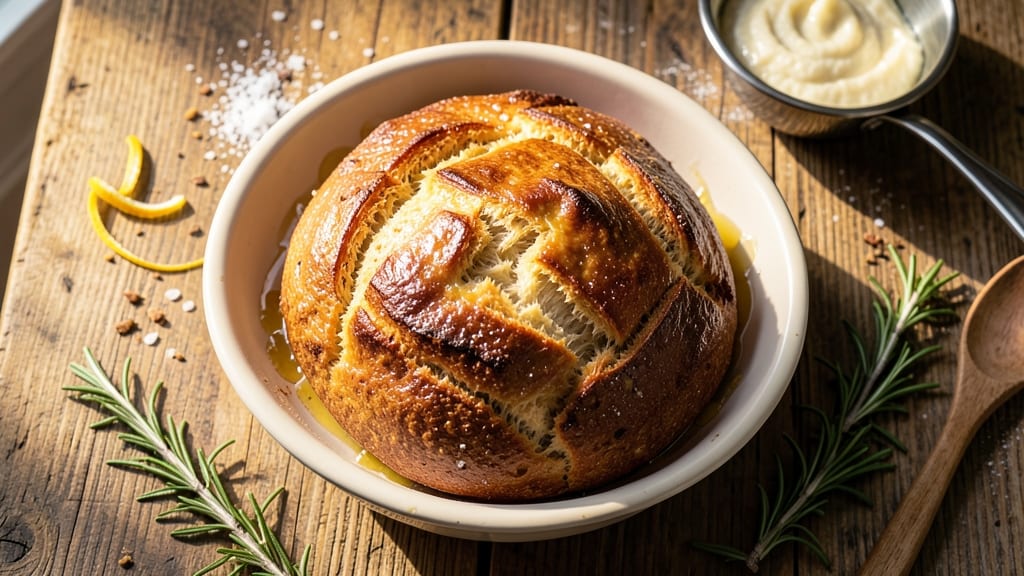
Adding tangzhong to a bread recipe delivers unmatched softness that stays fresh for days—no steam basket required. The secret lies in this pre-gelatinized starch slurry, which creates a tender crumb and chewy crust without complicating your routine.
I’ve perfected this method over years of baking, ensuring even home ovens produce bakery-quality results with minimal effort.
What makes this recipe work is the tangzhong technique: a simple mixture of flour and water cooked until thick, then cooled before mixing with your dough. This step transforms ordinary bread into something light, airy, and irresistibly soft.
The dough develops naturally during a single rise, and baking at high heat creates that perfect golden crust while keeping the interior impossibly tender.
By the time your bread emerges from the oven, you’ll have a loaf with a fluffy, cloud-like crumb that stays moist for days—no soggy middle here. The crust has just enough chew to satisfy, while the interior remains soft enough to cut with a butter knife.
This is the kind of bread that makes toast taste like a treat and sandwiches feel like an indulgence.
Perfect for breakfast, sandwiches, or serving with soups, this tangzhong bread requires just 30 minutes of active time and delivers results that will impress even skeptical family members. Let’s get started on mastering this Japanese baking secret.
Ingredients for adding tangzhong to bread
Four cups flour kickstarts this bakery-worthy loaf with Japanese-inspired softness.
| Ingredient | Amount | Notes |
|---|---|---|
| All-Purpose Flour 🌾 | 4 cups | Plus 1 cup for tangzhong |
| Water 💧 | 2 ½ cups | Divided for tangzhong and dough |
| Instant Yeast 🍞 | 2 ¼ tsp | Active dry works too |
| Granulated Sugar 🍚 | ½ tsp | Feeds the yeast |
| Salt 🧂 | 1 ½ tsp | Diamond Crystal preferred |
| Unsalted Butter 🧈 | ½ cup | Cold, cubed for mixing |
| Large Eggs 🥚 | 1 whole | Room temperature |
| Milk 🥛 | ½ cup | Warm, 110°F |
| Cornmeal 🌽 | ¼ cup | For dusting pan |
| Egg Wash 🥚 | 1 whole | 1 egg + 1 tbsp water |
| Coarse Sugar 🍚 | 1 tbsp | For sprinkling crust |
The flour is your MVP here—King Arthur or Gold Medal are my go-tos, but any all-purpose works. For the tangzhong, use 1 cup flour + 0.25 cup water cooked until thick like pudding. Pro tip: King Arthur's website has a perfect tangzhong ratio calculator if you want to scale. The rest of the flour (3 cups) goes into the dough. No need to sift—just whisk it in the bowl. If your kitchen's humid, chilled flour prevents sticky dough. I always measure by weight (450g total) for precision, but cups work fine too.
No instant yeast? Active dry works at same amount. Milk too warm? Microwave 10 seconds to hit 110°F. Butter too soft? Freeze 10 minutes before cubing. The tangzhong slurry needs to cool to room temp before mixing—30 minutes in the fridge speeds this up. For a sweeter loaf, add 1 tbsp honey to the dough. Gluten-free? Swap flour for a 1:1 GF blend, but expect denser texture. The egg wash? Separate the egg—yolk for richness, white for shine.
Dough keeps 24 hours in fridge, wrapped tight. Tangzhong slurry lasts 3 days refrigerated. For extra softness, reheat loaf in 350°F oven for 10 minutes before serving. Freeze slices for 3 months—toast straight from frozen. The crust stays crisp for 2 days if stored in a bread bag. No bag? Aluminum foil works too. Leftovers? Toast them—butter + jam is a must.
Why You'll Love This Recipe
- No-Fuss Dough: Mixing this dough takes less effort than deciding what to watch on Netflix. Just toss flour, water, and a tiny bit of tangzhong—thickened flour paste—into a bowl, let the yeast work its magic, and you’re done. No kneading, no stress, just a soft, pillowy loaf that feels like a hug.
- Soft All Day: That tangzhong trick? It turns bread into a cloud. The outside stays tender even after sitting out, which means you can slice it fresh for sandwiches or toast it up later without drying out. Honestly, my lunchbox has never been happier.
- Budget Bread Magic: Five ingredients, zero waste. You’re not buying fancy sourdough starters or specialty flours—just the basics you already have. Stretch a loaf into meals all week: toast, French toast, or even breadcrumbs for fried chicken. It’s the kind of recipe that makes grocery shopping feel like a victory.
- Leftovers? Still Great: This bread doesn’t turn stale overnight. I’ve pulled it from the fridge three days later, toasted it, and it still melts in your mouth. Freeze slices for quick breakfasts, or wrap a whole loaf in foil—it’s the kind of bread that works harder than you do.
Step-by-step instructions for Japanese-style soft bread with tangzhong
Here's how to create that signature soft, fluffy texture using the tangzhong method.
Create the Tangzhong (Rice Flour Paste)
In a small saucepan, combine 1 cup of the all-purpose flour and ½ cup of the water from the ingredients list. Stir until smooth, then cook over medium heat while stirring constantly. You'll see the mixture thicken dramatically—this takes about 3-5 minutes.
When it reaches a pudding-like consistency that coats the back of a spoon, remove from heat. Let it cool completely to room temperature before using. This tangzhong will absorb excess moisture during baking, creating that signature soft, pillowy texture that lasts for days. Don't skip cooling it—adding warm paste to your dough can kill the yeast.
Mix the Dough with Tangzhong
In the bowl of a stand mixer fitted with the dough hook, combine the cooled tangzhong with the remaining 3 cups of all-purpose flour, 2.25 teaspoons instant yeast, ½ teaspoon granulated sugar, and 1½ teaspoons salt. Mix on low speed until fully incorporated—about 1 minute.
Add the ½ cup cold cubed butter and mix until it's evenly distributed and the dough begins to come together. Then add the ½ cup warm milk and 1 whole large egg (room temperature). Increase speed to medium and knead for 5-7 minutes until the dough is smooth, elastic, and pulls away from the sides of the bowl. If it's too sticky, add 1 tablespoon more flour at a time until it comes together.
First Rise and Shape the Loaf
Lightly oil a large bowl, place the dough inside, and cover with a damp towel or plastic wrap. Let it rise in a warm place (like your turned-off oven with the light on) for 1-2 hours, or until doubled in size. You'll know it's ready when you gently press a finger into the dough and it springs back slowly.
Once risen, punch down the dough to release air, then turn it out onto a lightly floured surface. Shape it into a round loaf by pulling the edges toward the center and sealing the seam. Place it seam-side down in a 9x5-inch loaf pan that's been dusted with ¼ cup cornmeal. Cover again and let it rise for another 30-45 minutes until it's just above the pan rim.
Bake to Golden Perfection
Preheat your oven to 375°F. Brush the risen loaf with the egg wash (1 whole large egg beaten with 1 tablespoon water) and sprinkle evenly with the 1 tablespoon coarse sugar. Bake for 30-35 minutes until the top is deep golden brown and the internal temperature reaches 190-200°F.
For the best results, bake on the middle rack where heat circulates evenly. The bread should sound hollow when tapped on the bottom. Let it cool in the pan for 10 minutes before transferring to a wire rack. This cooling period is crucial—it allows the steam inside to redistribute, ensuring that signature soft, moist crumb throughout.
Pro Tips For Making Adding Tangzhong To Bread
- STIR THE TANGZHONG STIFF: Mix your tangzhong (flour + water roux) until it’s thick enough to hold a peak when lifted—like a stiff pudding. I learned this the hard way: undercooked roux = gummy bread later, and nobody wants that.
- COOL THE ROUX FIRST: Let your tangzhong cool to room temp before adding it to the dough. Dumping hot roux into yeasted dough kills the yeast faster than a New York winter—your bread will rise like a sad deflated balloon.
- WEIGH YOUR FLOUR: Use a kitchen scale for the tangzhong’s flour and the rest of the dough. Spoon-and-level? Nope. That’s how you end up with bread that’s either too dense or disappointingly airy but dry.
- REST THE DOUGH LONGER: Skip the 30-minute autolyse—give the tangzhong dough a full 1–2 hour rest before shaping. The extra time lets the roux fully hydrate and the gluten relax, so your bread doesn’t fight you when you try to shape it (yes, even if you’re impatient like me).
Serving suggestions for this recipe
Breakfast Pairings
This bread is a breakfast game-changer when paired with scrambled eggs and crispy bacon. The soft crumb soaks up egg yolks beautifully, while the crust adds satisfying texture.
For a sweeter morning, spread with whipped butter and top with sliced strawberries or banana slices—the tangzhong's moisture keeps fruit from drying out. 🥞
Sandwich Essentials
Transform your lunches with this bread's perfect sandwich structure. It handles grilled chicken, turkey, and avocado without collapsing. For a classic, try peanut butter and honey or ham and Swiss—the soft interior contrasts beautifully with crisp veggies.
I love adding sliced cucumber or tomato for freshness. 🥪
Soup Companions
Serve warm slices alongside creamy soups like tomato basil or butternut squash—the bread's softness mops up every last drop. For heartier pairings, try French onion soup or chicken noodle soup. The crust stays crisp even when dipped, making it ideal for baked potato soup or clam chowder. 🍲
Dessert Twists
Warm slices make incredible dessert toast—spread with Nutella, top with sliced almonds, and broil for 2 minutes for a crispy finish. For a grown-up treat, pair with mascarpone cheese and fresh berries. The bread's softness balances rich toppings perfectly. 🍫
Coffee & Tea Pairings
This bread is buttery enough to stand up to strong coffee or tea. Try it with espresso and a sprinkle of cinnamon sugar for a European café vibe. For afternoon tea, serve with clotted cream and strawberry jam. The bread's moisture keeps it from becoming dry or crumbly. ☕
Meal Prep Serving
Slice and toast fresh portions for quick lunches—pair with hummus and sliced veggies for a balanced meal. For charcuterie boards, include provolone cheese, salami, and olives. The bread's long-lasting softness makes it perfect for grab-and-go sandwiches. 🧀
Nutrition facts
Frequently asked questions
What exactly is tangzhong and why does it make bread softer?
The tangzhong is a pre-gelatinized flour-water mixture that creates a moisture-retaining network in your bread. When baked, it absorbs excess steam and releases it slowly, keeping the crumb soft for days. Think of it as a built-in bread keeper! The starches in the tangzhong absorb moisture that would normally dry out regular bread, giving you that signature Japanese bakery texture.
Can I substitute rice flour for all-purpose flour in the tangzhong?
Yes, but the texture will differ slightly. Traditional recipes use all-purpose flour for the tangzhong because it creates a more neutral flavor and consistent texture. If you use rice flour, your bread will be slightly lighter but may lack the chewy quality. For best results, stick with all-purpose flour unless you're specifically aiming for a lighter, more delicate crumb.
What happens if I don't let the tangzhong cool completely before mixing?
Your yeast could die! Warm tangzhong can kill active yeast, preventing proper rising. Always let it cool to room temperature (about 30 minutes) before mixing. For faster cooling, place it in the fridge for 15-20 minutes. This step is crucial for both texture and rise.
How do I know when my tangzhong is ready?
It's ready when it reaches a pudding-like consistency that coats the back of a spoon and leaves a clear trail when you drag your finger through it. It should take about 3-5 minutes of constant stirring over medium heat. If it's too thin, cook longer; if too thick, you've overshot it.
Can I make this bread without a stand mixer?
Mix the dough by hand in a large bowl using a wooden spoon or dough scraper. Knead for 10-12 minutes on a floured surface until smooth and elastic. Just be prepared for more arm work—this dough is quite sticky with the tangzhong. The extra effort is worth the incredible results!