Side Dishes
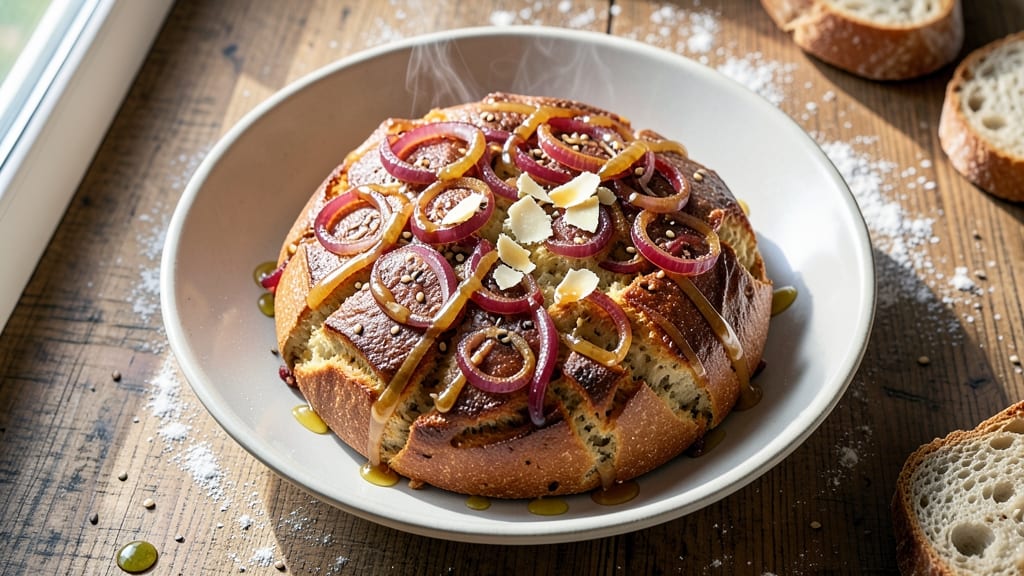
This artisan onion bread recipe delivers the perfect balance of crusty exterior and chewy interior with layers of caramelized onions baked right into the loaf. The secret lies in a slow-fermented dough that develops deep flavor while the onions caramelize into sweet, golden pockets.
I've perfected this technique after years of testing—no shortcuts, just layers of texture and taste that make every slice worth savoring.
The dough starts with high-protein flour and a touch of honey, creating a structure that holds up to the caramelized onions without becoming dense. While the bread bakes, the onions soften and develop that signature sweetness, creating pockets of flavor that transform ordinary bread into something extraordinary.
This isn't your average onion bread—it's a textural masterpiece with a crisp crust that gives way to tender, chewy layers infused with caramelized goodness.
What makes this recipe truly special is how the flavors evolve during baking. The onions caramelize gradually, releasing their natural sugars while the bread develops a golden-brown crust that's irresistibly crisp. Each bite delivers that perfect contrast—crunchy exterior, soft interior, and bursts of sweet, savory onion throughout.
The aroma alone will have everyone gathering around your kitchen, and the taste? Pure comfort food at its finest.
Perfect for holiday tables, family dinners, or as a showstopping side dish, this artisan onion bread requires just a few hours of hands-off time. The long fermentation process develops complex flavors, while the caramelized onions add depth that makes every slice memorable.
Once you try this, store-bought onion bread will never compare. Let's get baking!
Ingredients for artisan onion bread
These twelve ingredients transform into a masterpiece of crusty crunch and caramelized sweetness.
| Ingredient | Amount | Notes |
|---|---|---|
| High-Protein Bread Flour 🌾 | 4 cups | King Arthur or similar preferred |
| Yellow Onions 🧅 | 4 large | Yellow or red, thinly sliced |
| Granulated Sugar 🍚 | ½ cup | For caramelization |
| Honey 🍯 | ¼ cup | Wildflower preferred |
| Active Dry Yeast 🍞 | 2 ¼ tsp | Or 1 packet |
| Unsalted Butter 🧈 | ½ cup | Cold, cubed |
| Salt 🧂 | 1 ½ tsp | Diamond Crystal preferred |
| Warm Water 💧 | 1 ¼ cups | 110°F for yeast activation |
| Olive Oil 🫒 | ½ cup | Extra-virgin for richness |
| Baking Soda 🧪 | 1 tsp | For rise enhancement |
| Dried Thyme 🌿 | 1 tsp | Or 1 tbsp fresh |
| Cornmeal 🌽 | ¼ cup | For dusting parchment |
The King Arthur high-protein flour is non-negotiable here—it creates that perfect chewy interior while supporting the crisp crust. For the onions, yellow or red work best, but avoid sweet onions like Vidalia—they won't caramelize properly. I always grab yellow onions from Trader Joe's when I'm making this because their sweetness level is consistent. Thinly slice them (about 1/8-inch thick) and soak in cold water for 30 minutes before using—this prevents the dough from absorbing too much moisture and keeps the texture perfect. The honey should be wildflower if you can find it; it adds subtle floral notes that complement the caramelized onions beautifully. For yeast, Saf-Instant is my go-to because it doesn't require proofing in warm water—just toss it directly into the dry ingredients.
No high-protein flour? King Arthur all-purpose works in a pinch, though the texture will be slightly less chewy. Running short on honey? Maple syrup at the same amount gives similar sweetness without altering the flavor profile. The olive oil is crucial—don't skimp on quality. California Avocado Ranch or Bertolli are my top picks for their fruity notes that cut through the richness of the butter. For the onions, if you accidentally used sweet onions, roast them separately before adding to the dough to prevent over-sweetening. The thyme can be swapped for rosemary if you prefer a piney note, but stick with dried at one-third the amount of fresh. And here's a pro tip: if your kitchen is cold, warm your yeast and water slightly (up to 110°F) to ensure proper activation—cold environments slow yeast activity.
This dough is a marathon, not a sprint—plan for at least 4 hours of hands-off time. The caramelized onions can be prepped 2 days ahead and stored in the fridge, saving you time on baking day. For the final shape, dust your work surface with cornmeal to prevent sticking—it also adds a subtle crunch to the bottom crust. The bread keeps well at room temperature for 3 days, but it's best enjoyed fresh. For longer storage, freeze the shaped loaf (unbaked) for up to 3 months—thaw overnight in the fridge before baking. And if you're feeling ambitious, make two loaves—this dough recipe doubles perfectly for holiday gatherings. Trust me, the aroma alone will have everyone anticipating every bite.
Why You'll Love This Recipe
- No-Knead Magic: I swear by this dough—just mix, let it rise, and bake. The high-protein flour handles all the work for you, so no overworking or guessing.
- Sweet-Savory Crunch: That caramelized onion jam with honey? It’s the star. The sugar melts into a sticky, golden glaze while the yeast keeps the bread light—like a hug in every bite.
- Weeknight & Holiday Hero: Toss it in a basket for dinner, slice it for sandwiches, or serve it warm with butter at Thanksgiving. Honestly, I’ve made it for everything from lazy Sundays to family gatherings.
- Budget Baking Win: Onions are cheap, yeast stretches a loaf far, and leftovers toast up perfectly. Between us, this recipe’s my go-to when I need something hearty without breaking the bank.
Step-by-step instructions for artisan onion bread
Here's how to create a masterpiece with caramelized onions baked right into a golden, crusty loaf.
Activate the Yeast and Prepare the Dough
In a large mixing bowl, combine the 1.25 cups warm water (tested at 110°F with your finger—it should feel warm but not hot) with the 2.25 teaspoons active dry yeast. Let it sit for 5-10 minutes until it becomes frothy. This step is crucial—if it doesn't bubble, your bread won't rise properly. In a separate bowl, whisk together the 4 cups high-protein bread flour, 1.5 teaspoons salt, 1 teaspoon dried thyme, and 1 teaspoon baking soda. The high-protein flour gives this bread its signature chewy texture and open crumb.
To the yeast mixture, add the 0.5 cup olive oil and 0.5 cup unsalted butter (cold, cubed). Mix until the butter melts slightly, then gradually incorporate the dry ingredients while stirring with a wooden spoon. The dough will be shaggy at first, but don't worry—it's normal. Once combined, turn it out onto a lightly floured surface and knead for 8-10 minutes until smooth and elastic. You'll know it's ready when it springs back slowly when poked. If the dough feels sticky, add a little more of the high-protein bread flour—just enough to make it manageable.
Caramelize the Onions for Sweet, Rich Layers
While the dough rests, it's time to create the star of this bread—the caramelized onions. In a large skillet, melt 2 tablespoons unsalted butter over medium heat. Add the 4 large yellow onions, sliced ¼-inch thick, and cook for 10 minutes, stirring occasionally. The onions will begin to soften and release their moisture. After 10 minutes, reduce the heat to low, add the 0.5 cup granulated sugar and 0.25 cup honey, and stir well to coat the onions evenly.
Let the onions caramelize for 20-25 minutes, stirring frequently, until they're deep golden brown and syrupy. This is where the magic happens—the sugar and honey break down, creating a rich, sweet glaze that will infuse the bread with incredible flavor. If the onions start to stick, add a splash of water and scrape up any browned bits from the bottom of the pan—those bits are packed with flavor. Once fully caramelized, remove the onions from the skillet and set them aside to cool slightly while you shape the dough.
Shape the Dough and Incorporate the Onions
Divide the dough into 8 equal pieces (about 6 ounces each) and roll each piece into a 12-inch rope, keeping the seams sealed. This step ensures an even rise and a uniform loaf. Place each rope onto a parchment-lined baking sheet, spacing them about 2 inches apart. Now, take the cooled caramelized onions and gently press them into the center of each rope, creating a pocket. Fold the dough over the onions to encase them completely, sealing the edges tightly. This technique traps the onions inside, ensuring they bake through without burning.
Cover the baking sheet loosely with a clean kitchen towel and let the dough rise in a warm place for 1-1.5 hours, or until the loaves have nearly doubled in size. The dough should feel light and springy to the touch. If your kitchen isn't warm enough, place the baking sheet near a warm oven (with the oven off) or use a proofing box. Avoid overproofing—this bread needs structure, not collapse. Once the dough has risen sufficiently, preheat your oven to 375°F and prepare to bake.
Bake to Golden Perfection with a Crispy Crust
Before baking, brush the tops of each loaf with a little olive oil and sprinkle lightly with cornmeal for a beautiful, crispy crust. Bake for 25-30 minutes until the bread is deep golden brown and sounds hollow when tapped on the bottom. The internal temperature should reach 190°F—this ensures the onions are fully cooked and the bread is perfectly baked. If the tops brown too quickly, tent the loaves with foil for the last 10 minutes of baking to prevent over-browning.
Remove the bread from the oven and let it cool on the baking sheet for 5 minutes before transferring to a wire rack. The onions inside will continue to soften and release their sweet, caramelized juices as the bread cools. Serve warm, sliced thickly to showcase those luscious onion layers. Each bite should deliver a perfect balance of crispy crust, chewy bread, and sweet, caramelized onions—this is what makes artisan onion bread truly special.
Pro Tips For Making Artisan Onion Bread
- CARAMELIZE ONIONS LOW: After burning three batches, I finally figured out—keep the heat consistent at medium-low. Too high, and you’ll get bitter, burnt edges. Too low, and you’ll wait forever for that sweet, jammy texture. Stir often, and don’t rush; 20-25 minutes is better than 15 minutes of frustration.
- HYDRATE THE FLOUR: High-protein bread flour absorbs water like a sponge. Mix the wet ingredients first, then fold in the flour gradually—just until combined. Overmixing develops gluten too early, and your bread turns dense. Stop when it’s shaggy, not smooth.
- PROOF AT ROOM TEMP: I used to proof this bread in the fridge overnight, thinking it’d be better. Wrong. Yeast works best at 75-80°F—warm, but not hot. Let it rise until it’s almost doubled (about 1.5 hours), then shape. Cold slows it down; warmth makes it lazy.
- BRUSH HONEY LAST: Sounds weird, but it works: brush the egg wash on first, then sprinkle sugar, then honey after baking. The honey burns fast—even at 375°F—and ruins the crust. A quick glaze post-bake keeps it sticky and sweet without sacrificing texture.
Wine and beer pairings for these flavors
Crisp White Wine
This bread's sweet, caramelized onions pair beautifully with a dry Riesling or Sauvignon Blanc from the Loire Valley. The wine's crisp acidity cuts through the richness while complementing the sweetness of the onions.
I love Louis Latour Sancerre—its citrus notes and mineral finish create a perfect balance. Serve it slightly chilled (45-50°F) to enhance the wine's refreshing qualities. 🍷
Malty Amber Ale
For beer lovers, an amber ale with caramel and biscuit notes is ideal. Look for Allagash White or Samuel Adams Noble Pils—both have subtle sweetness that harmonizes with the caramelized onions.
The beer's malty backbone stands up to the bread's crusty texture while adding a touch of hoppy brightness. Serve at 48-52°F for optimal flavor balance. 🍺
Rich Red Blend
If you prefer red wine, a light-bodied Pinot Noir or Chianti works surprisingly well. The acidity in Chianti mirrors the bread's crust, while Pinot Noir's earthy notes complement the caramelized onions.
I recommend Bartoli Chianti Classico—its cherry and herbaceous flavors bridge the gap between the sweet and savory elements. Serve at 60-65°F to let the wine's structure shine. 🍇
Creamy Stout Contrast
For a bold pairing, try a dark stout like Guinness or Founders Kentucky Breakfast Stout. The beer's roasted malt and coffee notes create an unexpected contrast with the bread's sweetness.
The creamy texture of the stout also softens the bread's crusty edges. Serve at 45-50°F to highlight the beer's smoothness. ⚡
Sparkling Wine Spark
A dry Prosecco or Cava adds effervescence that cleanses your palate between bites. The bubbles enhance the bread's crispy crust, while the wine's light fruitiness balances the caramelized onions.
I love La Marca Prosecco—its bright acidity and pear notes make it a refreshing match. Serve well-chilled (40-45°F) for the best experience. 🥂
Nutrition facts
Frequently asked questions
Can I make this bread without caramelized onions?
If you prefer a simpler version, you can skip the caramelization and fold in raw thinly sliced onions during shaping. The flavor will be milder but still delicious. For best results, sauté the onions in butter for 5 minutes first to soften them before adding to the dough.
Why does my dough feel too sticky?
Sticky dough usually means you need more flour or the gluten hasn't developed enough. Sprinkle a little more high-protein bread flour (about 1 tablespoon at a time) while kneading. If the dough still feels too wet, let it rest for 10 minutes covered with a towel—this helps the gluten relax and absorb moisture. Never add too much flour or the bread will become dense.
How do I know when the caramelized onions are done?
The onions are perfectly caramelized when they're deep golden brown, syrupy, and smell intensely sweet. They should take about 20-25 minutes total. If they start to burn, reduce the heat immediately. A good test: lift a spoonful—the onions should hold their shape but still be soft. Any browned bits stuck to the pan are flavor gold!
Can I make this bread in a Dutch oven?
Yes! Shape the dough into a single loaf instead of individual ropes, then bake in a preheated Dutch oven at 450°F for 30 minutes. Remove the lid and bake 10-15 minutes more until golden. The Dutch oven creates a steamy environment that gives an even more crusty exterior and open crumb. Just be sure to use enough onions—about 2 cups caramelized!
What's the best way to store leftover onion bread?
Wrap the bread in a beeswax wrap or place in an airtight container at room temperature for up to 3 days. For longer storage, freeze the bread (unwrapped) for up to 3 months. To reheat, wrap slices in foil and warm in a 350°F oven for 5-7 minutes to restore that fresh-baked crunch.