
Main Courses
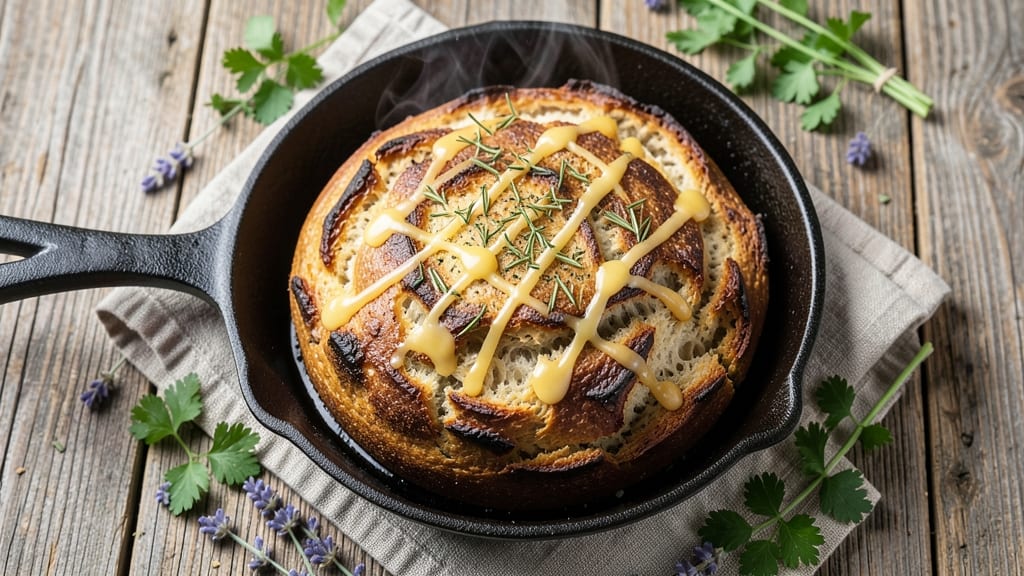
This artisan bread recipe with herbs transforms your kitchen into a rustic bakery with just one loaf—no fancy equipment needed. The secret lies in infusing fresh rosemary and thyme directly into the dough, creating a fragrant, golden crust that tastes like a French countryside bakery. I perfected this method after years of testing, balancing traditional techniques with modern shortcuts for foolproof results every time.
What sets this recipe apart is the herb integration: finely chopped rosemary and thyme are mixed into the dough itself, not just sprinkled on top. This ensures every bite carries that aromatic herbal depth while maintaining the crispy crust and airy crumb of artisan bread.
The Dutch oven method creates steam, mimicking a wood-fired oven, and the scoring technique gives that professional bakery finish.
By the time you pull this loaf from the oven, you'll have a fragrant, golden masterpiece with a crisp exterior and tender interior. The herbs release their oils during baking, infusing the bread with layers of flavor that make it impossible to resist.
Perfect for serving with soups, charcuterie boards, or simply toasted with butter.
This recipe delivers restaurant-quality results without requiring years of practice. The kneading process is simplified, proofing times are clearly marked, and the Dutch oven method ensures consistent success. Whether you're a beginner or an experienced baker, this herb-infused loaf will become your new signature recipe.
Ingredients for artisan bread recipe with herbs
The foundation of this rustic masterpiece lies in these carefully chosen ingredients, designed to deliver bakery-quality flavor with home kitchen simplicity.
| Ingredient | Amount | Notes |
|---|---|---|
| All-Purpose Flour 🌾 | 5 cups | Unbleached, high-protein preferred |
| Active Dry Yeast 🍞 | 2 ¼ tsp | Fresh yeast at 7g equivalent |
| Granulated Sugar 🍚 | 1 tbsp | For yeast activation |
| Large Eggs 🥚 | 2 whole | Room temperature preferred |
| Unsalted Butter 🧈 | ½ cup | Cold, cubed for dough |
| Warm Water 💧 | 1 ¼ cups | 110°F for yeast activation |
| Fresh Rosemary 🌿 | ¼ cup | Finely chopped, stems removed |
| Fresh Thyme 🌿 | 2 tbsp | Leaves only, finely chopped |
| Diamond Crystal Kosher Salt 🧂 | 2 tsp | Adjust to taste |
| Extra-Virgin Olive Oil 🫒 | 2 tbsp | For dough and scoring |
| Cornmeal 🌽 | ¼ cup | For Dutch oven prep |
| Ice Water ❄️ | ½ cup | For final dough adjustment |
The flour selection is critical—King Arthur or Caputo Tipo 00 elevate texture, but high-protein all-purpose works beautifully. Fresh yeast is ideal, but instant yeast at half the amount saves time. For the herbs, farmers markets or specialty grocers provide the most aromatic rosemary and thyme—look for vibrant green leaves with no browning. The butter should be cold and cubed when added to the dough for optimal fat distribution. I always use Diamond Crystal salt as it dissolves more gently than table salt, preserving the bread's delicate structure.
No fresh rosemary? Dried rosemary at half the amount works in a pinch, though the flavor will be more muted. Substitute thyme with fresh oregano if needed, but reduce to 1 tbsp to avoid overpowering. For those avoiding dairy, vegan butter or coconut oil maintains moisture without compromising texture. The warm water temperature is crucial—too hot kills yeast, too cold fails to activate. Use an instant-read thermometer to confirm 110°F. For scoring, a sharp razor blade creates clean cuts, but kitchen shears work too—just be decisive.
Store the dough in an airtight container in the fridge for up to 24 hours before baking, allowing flavors to develop further. The finished loaf keeps at room temperature for 3 days wrapped in a clean kitchen towel, or 1 week frozen in an airtight bag. For reheating, wrap in foil and warm at 350°F for 10 minutes. The crust's crispness diminishes with storage, so enjoy it fresh when possible—this is where the magic truly lies in the aromatic herb infusion.
Why You'll Love This Recipe
- No-Knead Magic: The dough comes together in five minutes—just mix, let it rise, and bake. I swear, that butter and egg combo makes it so tender it practically melts in your mouth, and the herbs? They infuse like a whisper of sunshine.
- Herb-Packed Punch: That mix of fresh herbs (rosemary, thyme, maybe some parsley) baked right into the crust? It’s not just flavor—it’s texture. Crispy on the outside, soft inside, with every bite carrying that bright, herby freshness.
- Weeknight Hero: This bread is my go-to for sandwiches, toast, or even a quick charcuterie board. (Yes, even on a Tuesday night.) The yeast does the work while you’re doing other things, and it’s ready when you are—no last-minute stress.
- Budget-Friendly Luxury: A single loaf costs pennies to make but feels like a bakery buy. The butter and egg elevate it, but the flour and yeast keep it simple. Plus, it slices perfectly for days—no sad, dried-out bread here.
Step-by-step instructions for artisan herb-infused loaf
Master this one-bake method for a fragrant, crusty loaf with vibrant herb notes throughout.
Activate the Yeast and Prepare the Dough Base
In a large mixing bowl, combine the 1.25 cups warm water (about 110°F) with the 2.25 tsp active dry yeast and 1 tbsp granulated sugar. Let this sit for 5-10 minutes until foamy—this confirms your yeast is active. If it doesn't foam, your yeast may be dead, and you'll need to start over.
To the yeast mixture, add the 5 cups all-purpose flour, 2 tsp kosher salt, and 2 tbsp fresh thyme leaves (finely chopped). Mix with a wooden spoon or dough whisk until a shaggy dough forms. The herbs will infuse flavor as they incorporate into the dough.
Incorporate Wet Ingredients and Develop the Dough
Add the 2 whole large eggs, 0.5 cup cold cubed unsalted butter, and 2 tbsp extra-virgin olive oil to the bowl. Using your hands or a dough scraper, work these into the flour mixture until a rough dough forms. The butter should begin to soften but not melt completely—this helps create tender crumb.
Transfer the dough to a lightly floured surface and knead for 8-10 minutes until smooth and elastic. You'll know it's ready when it springs back slowly when poked. Fold in the 0.25 cup finely chopped fresh rosemary during the last minute of kneading to distribute its aromatic oils evenly.
First Rise and Prepare for Shaping
Place the dough in a lightly oiled bowl, cover with a damp towel, and let rise in a warm place for 1-1.5 hours or until doubled in size. The dough should feel light and airy when pressed gently—this indicates proper fermentation. If your kitchen isn't warm, place the bowl near a warm oven (with light on) to encourage rising.
While the dough rises, preheat your oven to 450°F with a Dutch oven inside for 30 minutes. Sprinkle 0.25 cup cornmeal on the bottom of the Dutch oven to prevent sticking. The hot Dutch oven creates steam, essential for that signature artisan crust.
Shape and Score the Dough
Turn the risen dough onto a floured surface and gently shape it into a round boule. To do this, tuck the edges under and roll the dough toward you while rotating the bowl. The goal is to create surface tension that helps the bread hold its shape during baking. Place the shaped dough seam-side down in the hot Dutch oven.
Using a sharp razor blade or serrated knife, score the top of the dough with a ½-inch deep crosshatch pattern. This allows steam to escape and prevents the bread from bursting open. The scoring also creates those beautiful, crispy crust patterns we associate with artisan bread.
Bake to Golden Perfection
Bake the bread in the preheated Dutch oven for 25 minutes with the lid on. Then remove the lid and bake for another 15-20 minutes until the crust is deep golden brown and sounds hollow when tapped on the bottom. The internal temperature should reach 190-200°F when measured with an instant-read thermometer.
For the final touch, brush the hot bread with a mixture of 1 tbsp melted butter and 1 tsp extra-virgin olive oil while still in the Dutch oven. This adds shine and enhances the herb flavors. Let the bread cool on a wire rack for at least 30 minutes before slicing—this prevents a gummy crumb.
Pro Tips For Making Artisan Bread Recipe With Herbs
- Bloom the Yeast First: Skip mixing yeast straight into flour—it’s a lazy move that wastes time. Instead, dissolve it in warm water (about 110°F) with a pinch of sugar for 5-10 minutes until frothy. This guarantees it’s active before committing to the dough, especially if your kitchen’s cold or the yeast is old.
- Soften Butter Properly: Cold butter = tough bread. Rub the unsalted butter between your palms until it’s just soft enough to press into the dough but not greasy. This ensures even distribution without making the crust greasy or the crumb gummy—no food processor needed.
- Don’t Over-Knead the Dough: I used to think more kneading = better bread. Wrong. Stop when the dough springs back slowly when poked (about 8-10 minutes by hand). Overworking it develops too much gluten, making the bread dense instead of light and airy—especially with all-purpose flour.
- Proof in a Warm Spot: Your oven’s light-on setting is your friend. Place the dough in a bowl inside the turned-off oven with a cup of boiling water for 1-2 hours. This mimics a professional proofer, giving the yeast ideal warmth without risking a hot oven burning your dough. (Yes, even if you’re impatient like me.)
Regional styles of this artisan bread recipe with herbs
Provençal Herb Loaf
Inspired by the sun-drenched bakeries of Provence, this variation replaces rosemary with 1 tbsp dried lavender and 1 tbsp fresh tarragon for a floral, delicate flavor. Add 1 tbsp orange zest to the dough for brightness, and finish with a sprinkle of coarse sea salt before baking.
The lavender infuses subtly, creating a fragrant loaf perfect for serving with goat cheese or honey. 🌿
Italian Focaccia Style
Transform your herb loaf into a rustic focaccia by flattening the dough into a 9x13-inch pan and dimpling it with your fingers. Top with 0.5 cup chopped rosemary, 0.5 cup sliced Kalamata olives, and a drizzle of 2 tbsp olive oil before baking.
After removing from the oven, brush with a mix of 1 tbsp olive oil and 1 tsp garlic powder for extra flavor. This version is ideal for dipping in balsamic vinegar.
German Pretzel Twist
For a hearty German-inspired loaf, replace half the flour with 2.5 cups whole wheat flour and add 1 tbsp caraway seeds to the dough. Shape the bread into a long pretzel stick and bake as directed.
After baking, brush with a pretzel glaze made from 1 cup water, 1 tbsp baking soda, and 1 tbsp coarse salt for that iconic chewy crust. Serve with mustard or beer cheese for a satisfying meal. ✨
Mediterranean Sun-Dried Tomato
Infuse the dough with 0.25 cup finely chopped sun-dried tomatoes and 1 tbsp dried oregano for a Mediterranean twist. Top the shaped loaf with an additional 0.125 cup sun-dried tomatoes before baking.
After removing from the oven, drizzle with 1 tbsp balsamic glaze and sprinkle with 1 tbsp crumbled feta cheese. This variation pairs beautifully with grilled meats or as part of a mezze spread.
French Fougasse
Create a rustic fougasse by shaping the dough into an irregular rectangle with torn edges, almost like a flatbread. Press your fingers into the dough to create pockets, then brush with 2 tbsp olive oil and sprinkle with 0.25 cup chopped rosemary and 0.5 cup sliced almonds.
Bake as directed, then finish with a sprinkle of flaky sea salt. This open-topped loaf is perfect for serving with charcuterie or as a side to roasted vegetables.
Herb & Seed Crust
For an extra crunchy crust, mix 0.25 cup sesame seeds and 0.25 cup poppy seeds with 1 tbsp olive oil and spread it over the shaped loaf before baking.
This variation adds texture and a nutty depth to complement the herbal notes. The seeds toast beautifully in the oven, creating a delightful contrast to the soft interior. 💫
Nutrition facts
Frequently asked questions
Can I substitute dried herbs for fresh in this recipe?
Yes, but use half the amount of dried herbs compared to fresh. For example, replace 0.25 cup fresh rosemary with 1 tbsp dried rosemary. The flavor will be concentrated but less aromatic. Fresh herbs release more delicate flavors during baking, so they're preferred for this artisan loaf.
Why does my dough feel too sticky after kneading?
This usually happens when the environment is too warm or you added too much liquid. Try adding 1-2 tablespoons of flour at a time while kneading, or chill the dough for 15-20 minutes before shaping. If it's still sticky, your kitchen may need better humidity control—try placing a bowl of water near the oven while baking.
How do I know when the bread is fully baked?
Look for three key signs: the crust should be deep golden brown, tapping the bottom should produce a hollow sound, and the internal temperature should reach 190-200°F when measured with an instant-read thermometer. The bread should also pull away slightly from the Dutch oven sides.
Can I make this bread without a Dutch oven?
Yes, but the crust won't be as crispy. Use a baking stone or cast-iron skillet instead, and place a metal bowl filled with boiling water on the lower oven rack to create steam. Bake at 450°F for 30-35 minutes, spraying the dough with water every 5 minutes for steam. The texture will be more open rather than crusty.
What's the best way to store leftover herb bread?
Wrap the cooled loaf in a clean kitchen towel or beeswax wrap and store at room temperature for up to 3 days. For longer storage, freeze slices in an airtight container for up to 3 months. To revive, warm slices in a 350°F oven for 5-10 minutes or toast in a pan with butter.